
Mitochondrial Dysfunction: The Energy Crisis of Immune Genesis
Updated May 2026
Developing T-cells require immense metabolic energy to undergo selection processes. This article details how declining mitochondrial health in aged thymocytes halts the production of new immune cells.
Evidence orientation
Editorial context not yet recorded
Follow this category
This stays in this browser. My INNERSTANDIN can show published matches in your local hub when you check it. It does not send email, push, or alert notifications.
Local learning review
A private browser aid for revisiting ideas. It is not an alert or a health recommendation.
Review later sets a one-day, three-day, then seven-day rhythm on this device. Choose it only when you want to revisit this article.
Overview
The human immune system is often conceptualised as a standing army, a sophisticated network of cells patrolling the vasculature and interstitial spaces. However, this military metaphor fails to capture the sheer metabolic cost of building that army. At the heart of this "immune genesis" is the thymus gland, a pyramid-shaped organ situated in the upper chest. While conventional medicine has long relegated the thymus to a post-pubescent relic—viewing its shrinkage as an inevitable consequence of chronological age—modern bioenergetics reveals a more sinister reality.
The decline of the immune system, or immunosenescence, is not a predetermined clock winding down; it is a metabolic catastrophe. Specifically, it is a crisis of mitochondrial dysfunction. Developing T-cells, or thymocytes, are some of the most metabolically active cells in the human body. To navigate the rigorous selection processes required to distinguish "self" from "non-self," these cells require immense quantities of adenosine triphosphate (ATP).
When the mitochondria within the thymic epithelium and the developing thymocytes themselves fail, the production of new, "naive" T-cells halts. This creates a vacuum in the immune repertoire, leading to an over-reliance on old, exhausted memory cells. This article explores the clandestine mechanisms by which mitochondrial decay drives thymic involution, the environmental factors accelerating this energy crisis, and the protocols required to reignite the fires of the cellular powerhouse.
Fact: The thymus gland begins to atrophy at a rate of approximately 3% per year from puberty until middle age, after which the rate accelerates to 5% per year, largely driven by metabolic exhaustion of the thymic stroma.
The Biology — How It Works
To understand why mitochondrial health is the lynchpin of immunity, we must first examine the arduous journey of a T-cell. These cells originate as haematopoietic stem cells in the bone marrow and migrate to the thymus. Once there, they undergo a "boot camp" of epic proportions.
The Metabolic Cost of Selection
The thymus is the site of positive and negative selection. Thymocytes must prove they can recognise major histocompatibility complex (MHC) molecules (positive selection) but also ensure they do not attack the body’s own tissues (negative selection). Upwards of 95% of thymocytes fail this process and undergo apoptosis (programmed cell death).
This high turnover rate is incredibly energy-intensive. It requires:
- Rapid Proliferation: Cells must divide at breakneck speeds, requiring massive amounts of nucleotides and lipids.
- DNA Surveillance: Constant monitoring of the genome to prevent mutations during rapid division.
- Structural Remodelling: Moving through the thymic cortex to the medulla requires constant cytoskeletal rearrangement.
Mitochondrial Dynamics in the Thymus
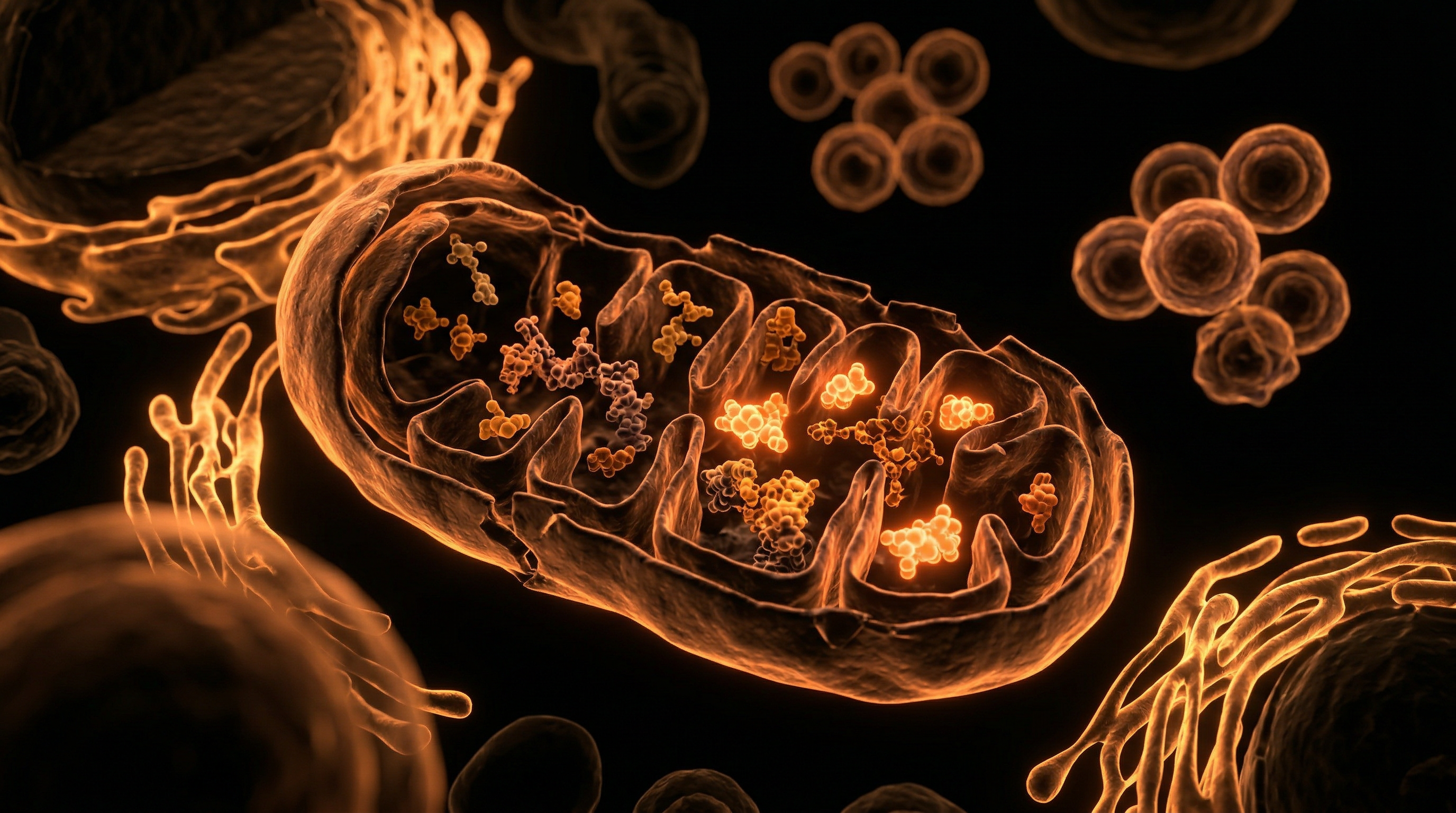
Mitochondria are not static "beans"; they are dynamic networks that undergo fusion (joining together) and fission (splitting apart). In a healthy thymus, mitochondria maintain a state of fusion to maximise ATP production via oxidative phosphorylation (OXPHOS). As we age, or under toxic stress, fission predominates. This results in fragmented, inefficient mitochondria that leak reactive oxygen species (ROS), damaging the very T-cells they are meant to power.
The Role of the Thymic Microenvironment
The thymus is not just a bag of cells; it is a complex architectural structure comprising Thymic Epithelial Cells (TECs). These cells act as the "instructors." Recent research indicates that the ageing thymus suffers from a loss of mitochondrial density within these epithelial cells. Without sufficient energy, the TECs cannot express the Autoimmune Regulator (AIRE) protein, which is essential for teaching T-cells what "self" looks like. The result is a dual failure: a lack of new immune cells and an increase in auto-reactive cells that cause inflammation.
Mechanisms at the Cellular Level
At the granular level, the energy crisis of the thymus is dictated by several key biochemical pathways and mitochondrial components.
1. The NAD+ Depletion Cycle
Nicotinamide Adenine Dinucleotide (NAD+) is the primary coenzyme for mitochondrial electron transport. Without NAD+, the conversion of food into energy stops. In the ageing thymus, enzymes like CD38 (an inflammatory marker) and PARPs (DNA repair enzymes) consume NAD+ at an unsustainable rate. When NAD+ levels drop, Sirtuins—specifically SIRT1 and SIRT3, which protect mitochondrial integrity—deactivate. This leads to the "uncoupling" of the electron transport chain.
2. MtDNA Damage and Maternally Inherited Vulnerability
Mitochondria possess their own DNA (mtDNA), which is far more susceptible to damage than nuclear DNA because it lacks the protection of histone proteins. In the high-oxygen environment of the thymus, mtDNA is constantly bombarded by free radicals. Once a threshold of mtDNA mutations is reached within a thymocyte, it loses the ability to perform OXPHOS and enters a state of senescence, secreting inflammatory cytokines (the SASP—Senescence-Associated Secretory Phenotype).
3. The Mitophagy Failure
Mitophagy is the cellular process of removing damaged mitochondria. In young, healthy thymic tissue, a process governed by the PINK1/Parkin pathway ensures that "leaky" mitochondria are consumed by lysosomes. In the state of mitochondrial dysfunction, this "rubbish collection" system fails. The cell becomes cluttered with dysfunctional, pro-inflammatory mitochondrial fragments, which are recognised by the immune system as "foreign" (DAMPs—Damage-Associated Molecular Patterns), triggering further internal inflammation.
4. Calcium Signalling Dysregulation
Mitochondria act as a buffer for intracellular calcium. T-cell activation depends heavily on precise calcium oscillations. When mitochondrial membranes lose their membrane potential (ΔΨm), they can no longer regulate calcium. This leads to "calcium flooding," which triggers the premature death of developing thymocytes before they can reach maturity.
Key Statistic: Research shows that enhancing mitochondrial antioxidant capacity in thymic epithelial cells can delay thymic involution by up to 30% in animal models, suggesting the "clock" is fundamentally metabolic.
Environmental Threats and Biological Disruptors
The rapid decline in immune health seen in the 21st century cannot be explained by genetics alone. We are living in an environment that is fundamentally "mitotoxic."
Glyphosate and the Shikimate Pathway Myth
While proponents of glyphosate claim it is safe for humans because we lack the shikimate pathway, this ignores its impact on mitochondria. Glyphosate acts as a potent chelator, stripping the body of manganese, magnesium, and zinc—minerals essential for mitochondrial enzymes like Superoxide Dismutase (SOD). Furthermore, glyphosate has been shown to disrupt the mitochondrial membrane potential, effectively "suffocating" the T-cell precursors.
Electromagnetic Fields (EMF) and VGCCs
Non-ionising radiation from 4G/5G and Wi-Fi has been linked to the over-activation of Voltage-Gated Calcium Channels (VGCCs). As mentioned, the thymus is highly sensitive to calcium signalling. Chronic EMF exposure leads to an influx of calcium into the mitochondria, causing oxidative stress and the breakdown of the blood-thymus barrier, allowing toxins to enter the immune sanctuary.
Ultra-Processed Foods (UPFs) and Metabolic Inflexibility
The British diet is now 57% ultra-processed. These "foods" are high in linoleic acid (omega-6 seed oils) and refined sugars. High levels of linoleic acid incorporate into the mitochondrial membrane component cardiolipin. When cardiolipin oxidises (which it does easily), the entire structure of the mitochondrial cristae collapses. This renders the thymocytes metabolically inflexible—unable to switch between glucose and fat burning, a requirement for surviving the selection process.
Pharmaceutical Mitochondrial Toxins
Many commonly prescribed drugs are direct mitochondrial poisons:
- Statins: Deplete Coenzyme Q10 (CoQ10), a vital link in the electron transport chain.
- Antibiotics: Specifically fluoroquinolones, which can damage mtDNA due to the bacterial ancestry of mitochondria.
- NSAIDs: Disrupt the proton gradient necessary for ATP synthesis.
The Cascade: From Exposure to Disease
The failure of the mitochondrial engine in the thymus does not result in a single disease, but a cascade of systemic failure.
Phase 1: The Loss of the Naive T-Cell Pool
As mitochondrial dysfunction takes hold, the thymus produces fewer naive T-cells. These are the "blank slate" cells capable of responding to new threats, such as emerging viruses or mutated cancer cells. This leads to an "immune gap."
Phase 2: Clonal Expansion of Exhausted Cells
To compensate for the lack of new cells, the body "clones" existing memory T-cells. However, these cells have shortened telomeres and are metabolically exhausted. They occupy space in the immune system but provide little protection, a state known as lymphopenia.
Phase 3: The Rise of Autoimmunity and "Inflammaging"
When the thymus can no longer energetically support negative selection, auto-reactive T-cells escape into the periphery. Simultaneously, the senescent thymic cells leak inflammatory signals into the bloodstream. This systemic inflammation—inflammaging—is the root cause of cardiovascular disease, neurodegeneration, and metabolic syndrome.
Phase 4: Loss of Immunosurveillance
The final stage of the cascade is the failure to detect and destroy malignant cells. Cancer is, in many ways, an immune failure. Without a metabolically robust thymus providing a fresh supply of T-cells, the "surveillance" of the body’s tissues fails, allowing micro-tumours to take root.
What the Mainstream Narrative Omits
The conventional medical establishment views the shrinking thymus and mitochondrial decay as "normal" ageing. This narrative is not only scientifically inaccurate but serves a specific pharmaceutical paradigm.
The Profitability of Symptom Management
The mainstream focuses on "managing" autoimmune diseases with immunosuppressants (like biologics) rather than addressing the bioenergetic failure of the thymus. An immunosuppressed patient is a lifelong customer. A patient with a regenerated thymus and robust mitochondrial function is a cured individual.
The Suppression of Thymic Peptides
For decades, researchers in Eastern Europe (notably Russia) have utilised thymic peptides (such as Thymalin) to successfully reverse thymic atrophy and restore mitochondrial function. These studies are largely ignored or suppressed in Western journals, as peptides—natural signalling molecules—are difficult to patent compared to synthetic drugs.
The Over-Vaccination Paradigm
The current UK immunisation schedule is one of the most intensive in history. There is a "silent" concern among bioenergetic researchers that overwhelming the neonatal immune system—while the thymus is still developing its mitochondrial density—may lead to premature "burnout" of the thymic stroma. This is rarely discussed in clinical settings for fear of professional repercussions.
The UK Context
In the United Kingdom, the crisis of mitochondrial dysfunction is particularly acute.
The "Sick Man of Europe"
The UK has some of the highest rates of chronic inflammatory disease in Europe. This correlates precisely with our high consumption of UPFs and our historically high exposure to industrial pollutants. The "Great Smog" of the past has been replaced by "Electro-smog" and chemical residues in our water supply (including fluoride, a known mitochondrial inhibitor).
The NHS Blind Spot
The National Health Service (NHS) is structured around acute care and protocol-driven management of chronic disease. There is currently no NHS screening for mitochondrial health or thymic volume. Doctors are trained to look at white blood cell counts, but they rarely look at the quality or age of those cells (T-cell receptor excision circles or TRECs), which would indicate how well the thymus is functioning.
Environmental Policy and Agriculture
The UK’s heavy reliance on industrial farming means that glyphosate and other organophosphates are ubiquitous in the British countryside and food chain. Despite Brexit, the UK has not significantly diverged from EU-wide mitochondrial toxin thresholds, which many researchers argue are set far too high.
Protective Measures and Recovery Protocols
While the energy crisis of the thymus is severe, it is not irreversible. Mitochondrial dynamics are plastic, and the thymus retains a capacity for regeneration well into old age if the right biochemical environment is provided.
1. Metabolic Restoration: The Fuel Source
- Ketogenic Intermittent Fasting: Switching the body to ketone metabolism reduces the ROS burden on mitochondria. Fasting also triggers macro-autophagy, helping the thymus clear out senescent cells.
- Elimination of Seed Oils: Removing linoleic acid from the diet allows for the restoration of healthy cardiolipin in the mitochondrial membranes.
2. Targeted Nutriceuticals
- NAD+ Precursors: Supplementing with Nicotinamide Mononucleotide (NMN) or Nicotinamide Riboside (NR) can restore the SIRT1 pathway and boost thymic energy production.
- CoQ10 (Ubiquinol): Vital for the electron transport chain, especially for those who have taken statins.
- PQQ (Pyrroloquinoline Quinone): Known to stimulate mitochondrial biogenesis—the creation of new mitochondria.
3. Photobiomodulation (Red Light Therapy)
Specific wavelengths of red and near-infrared light (660nm - 850nm) penetrate the chest and are absorbed by Cytochrome c Oxidase in the mitochondria. This "charges" the mitochondria, increasing ATP production and reducing inflammation within the thymus gland.
4. Thymic Peptides and Bio-regulators
- Thymosin Alpha-1: A potent peptide that stimulates T-cell maturation and has been shown to improve mitochondrial function in immune cells.
- Thymalin: A Russian-developed peptide that acts as a "reset" for the thymus, often used in protocols to reverse immunosenescence.
5. Environmental Mitigation
- Water Filtration: Using a high-quality filter to remove fluoride and heavy metals.
- EMF Hygiene: Turning off Wi-Fi at night and reducing direct exposure to mobile devices to protect the VGCCs in the thymus.
Summary: Key Takeaways
- The Energy Link: Immunosenescence is primarily a metabolic failure of the thymus gland, driven by the inability of mitochondria to meet the high ATP demands of T-cell selection.
- The Involution Myth: Thymic shrinkage is accelerated by environmental factors—including glyphosate, UPFs, and EMFs—rather than being a purely chronological inevitability.
- Cellular Consequences: Mitochondrial decay leads to a depletion of naive T-cells, an increase in "inflammaging," and a loss of cancer immunosurveillance.
- Mainstream Neglect: Conventional medicine focuses on managing the symptoms of immune decline while ignoring the bioenergetic root causes and the potential of thymic regenerative therapies.
- Path to Recovery: Through metabolic flexibility, targeted mitochondrial support (NAD+, PQQ, Red Light), and the use of thymic peptides, it is possible to "re-power" the immune system and arrest the ageing process.
The "Energy Crisis of Immune Genesis" is perhaps the most significant health challenge of our era. By viewing the immune system through the lens of bioenergetics, we move from a state of passive decline to one of active stewardship over our biological vitality. The fires of the thymus can be relit, but only if we provide the mitochondria with the environment and fuel they require to thrive.
This article is provided for informational and educational purposes only. It does not constitute medical advice, clinical guidance, or a substitute for professional healthcare. Information reflects cited research at time of publication. Always consult a qualified healthcare professional before acting on any health information.
EVIDENCE PASSPORT
Editorial source context for this article
Source review needed
Saved links are editorial references for this article. They may support specific claims rather than every sentence. Open and assess each source in context. This passport does not independently verify them.
Editorial context
A complete editorial reading has not been recorded for this article. Source links remain available for you to open and assess directly.
Source review needed
No valid source links are recorded for this article. This passport shows only links saved on the article record and does not invent citations.
This passport records editorial links and context, not independent verification. Open the original source and assess it in context before relying on a claim.
Medical Disclaimer
The information in this article is for educational purposes only and does not constitute medical advice, diagnosis, or treatment. Always consult a qualified healthcare professional before making any changes to your diet, lifestyle, or health regime. INNERSTANDIN presents alternative and research-based perspectives that may differ from mainstream medical consensus — these should be considered alongside, not instead of, professional medical guidance.
Read Full DisclaimerContinue the thread
Keep this question moving.
Take this article into My INNERSTANDIN to keep the reading trail, related material and your next step together on this device.
Explore this in the Body Map
See where this hits your biology. Interactive anatomy, threats, and protective protocols.
Dig deeper in the Library
Free, longform PDF volumes that go beyond headlines into mechanisms and references.