
Mitophagy: The Essential Cellular Recycling System for Peak Performance
Updated May 2026
Mitophagy is the selective degradation of damaged mitochondria, a process that ensures only the healthiest powerhouses remain functional. This guide explains how to optimize this 'quality control' mechanism for longevity.
Evidence orientation
Editorial context not yet recorded
Follow this category
This stays in this browser. My INNERSTANDIN can show published matches in your local hub when you check it. It does not send email, push, or alert notifications.
Local learning review
A private browser aid for revisiting ideas. It is not an alert or a health recommendation.
Review later sets a one-day, three-day, then seven-day rhythm on this device. Choose it only when you want to revisit this article.
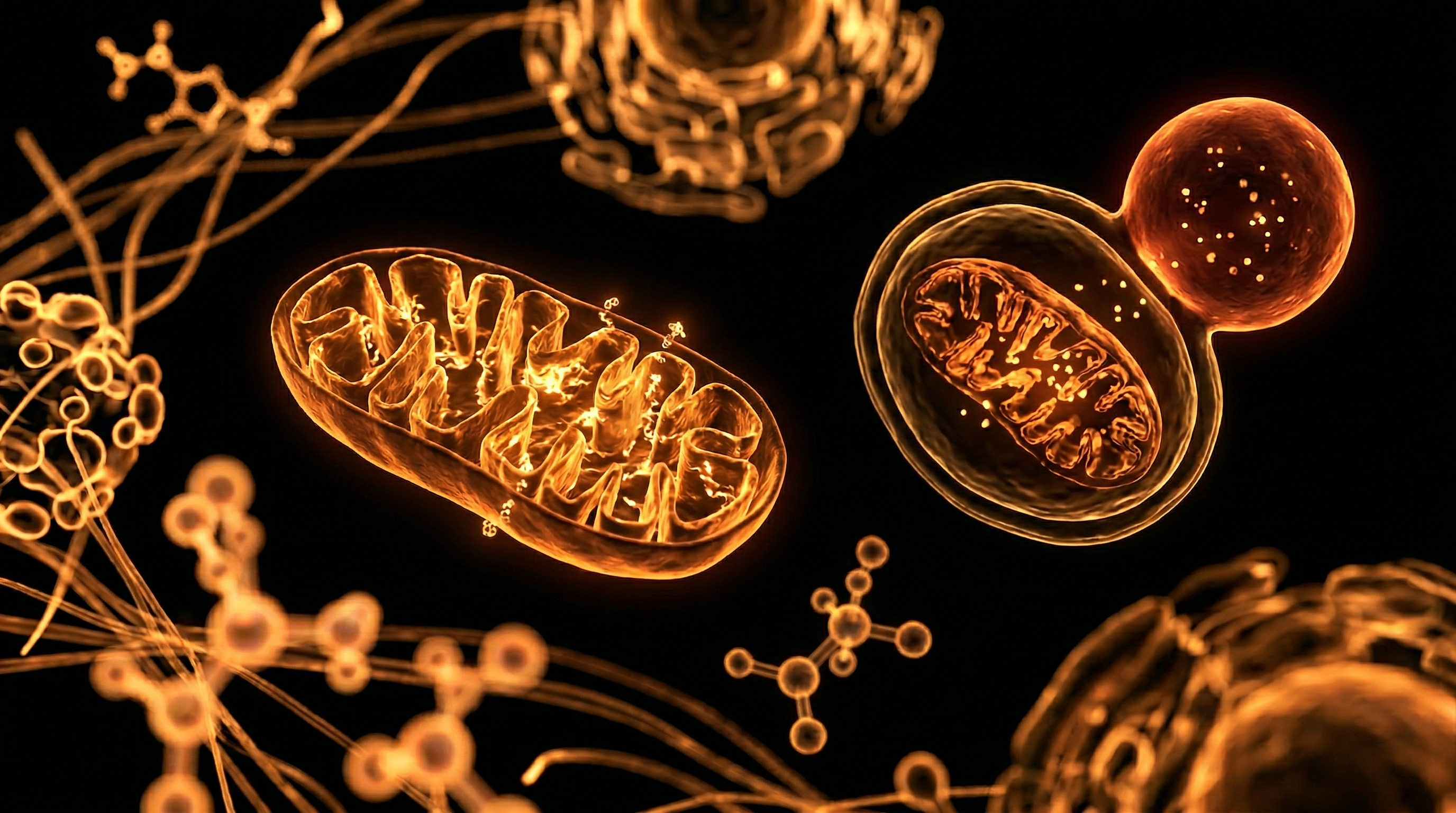
Within the trillions of cells that constitute the human frame, a relentless and invisible war is being waged. At the heart of this conflict are the mitochondria—the ancient, bacterial-derived powerhouses that dictate whether you thrive or decay. For decades, mainstream biology presented mitochondria as mere "batteries," static organelles that simply burned glucose and oxygen to produce Adenosine Triphosphate (ATP). We now know this narrative is not only oversimplified but dangerously incomplete.
Mitochondria are the ultimate arbiters of fate. They control programmed cell death (apoptosis), modulate the immune response, and act as the primary sensors for environmental stressors. However, like any high-performance engine, they produce toxic exhaust in the form of Reactive Oxygen Species (ROS). When mitochondria become damaged, dysfunctional, or aged, they do not simply stop working; they become biological "dirty bombs," leaking electrons and spewing inflammatory signals that degrade the very fabric of our health.
The solution to this inevitable decay is Mitophagy: the highly selective, sophisticated cellular recycling process that identifies, engulfs, and digests compromised mitochondria. It is the gold standard of cellular quality control. Without efficient mitophagy, the body enters a state of "mitochondrial gridlock," leading to the rapid acceleration of ageing and the onset of chronic disease. This guide serves as a deep dive into the mechanisms of mitophagy and a blueprint for reclaiming your cellular sovereignty.
Overview
Mitophagy is a specific form of autophagy (literally "self-eating") dedicated exclusively to the degradation of mitochondria. While general autophagy might consume various proteins or miscellaneous organelles during times of nutrient scarcity, mitophagy is a precision operation. It ensures that the "power grid" of the cell remains populated only by the most efficient, high-fidelity energy producers.
The stakes could not be higher. A single cell can contain hundreds or even thousands of mitochondria. When these organelles lose their structural integrity, they release mitochondrial DNA (mtDNA) into the cytoplasm. Because mitochondria are evolutionary descendants of bacteria, the cell’s immune system perceives this stray DNA as a foreign invasion. This triggers a massive, systemic inflammatory response known as "inflammaging."
In the United Kingdom, chronic conditions linked to mitochondrial dysfunction—including Type 2 diabetes, neurodegeneration, and cardiovascular disease—account for over 70% of the total NHS budget. The failure of cellular recycling is the hidden driver of this national health crisis.
To master mitophagy is to master longevity. It is the difference between a brain that remains sharp into the tenth decade and one that succumbs to the "plaques and tangles" of neurodegeneration. It is the difference between metabolic flexibility and the slow slide into insulin resistance. To understand how to optimise this system, we must first pull back the curtain on the exquisite biological machinery that makes it possible.
##
The Biology — How It Works
The lifecycle of a mitochondrion is defined by a constant tension between two opposing forces: Biogenesis (the creation of new mitochondria) and Mitophagy (the destruction of old ones). This is often referred to as "mitochondrial turnover." In a healthy individual, these processes are in perfect equilibrium.
The Bacterial Heritage and the Double Membrane
Mitochondria are unique among organelles because they possess their own circular DNA and a double-membrane structure. The Inner Mitochondrial Membrane (IMM) is where the Electron Transport Chain (ETC) resides, while the Outer Mitochondrial Membrane (OMM) serves as the gatekeeper. Mitophagy is essentially the process of the cell recognising that these membranes have been breached or that the electrical gradient across them has collapsed.
Fission and Fusion: The Prelude to Recycling
Mitochondria do not exist as isolated beans; they form a dynamic, shifting network. They undergo fusion (joining together to share resources and dilute damage) and fission (splitting apart).
- Fusion is managed by proteins like Mfn1, Mfn2, and Opa1. It allows healthy mitochondria to "rescue" those that are slightly flagging.
- Fission is managed primarily by Drp1. This is the critical step for mitophagy. When a section of the mitochondrial network becomes too damaged to be repaired, the cell uses fission to "pinch off" the dysfunctional segment, isolating it so it can be targeted for destruction without taking down the entire network.
The Membrane Potential (ΔΨm)
The primary signal that a mitochondrion is "broken" is a loss of its electrical charge, or membrane potential. A healthy mitochondrion maintains a high voltage across its inner membrane to drive the production of ATP. When this voltage drops—due to toxin exposure, nutrient overload, or oxidative stress—it acts as a biological lighthouse, signalling to the cell that this specific organelle is now a liability.
##
Mechanisms at the Cellular Level
The most well-studied pathway for mitophagy is the PINK1-Parkin pathway. This is a masterpiece of molecular engineering that functions like a "search and destroy" sequence.
1. The PINK1 Sentinel
PINK1 (PTEN-induced kinase 1) is a protein that is constantly imported into healthy mitochondria. Once inside, it is rapidly degraded by enzymes. However, when a mitochondrion is damaged and its membrane potential drops, PINK1 can no longer be imported. Instead, it begins to accumulate on the Outer Mitochondrial Membrane. Its presence on the exterior of the organelle is the "SOS" signal.
2. The Parkin "Fireman"
Once PINK1 has stabilised on the surface, it recruits Parkin, an E3 ubiquitin ligase, from the cytoplasm. Parkin is the "tagger." It begins to coat the damaged mitochondrion with molecules of Ubiquitin. Think of this as spraying a condemned building with bright neon paint so the demolition crew knows which one to tear down.
3. The Adapter Proteins (p62 and OPTN)
With the mitochondrion now "tagged" with ubiquitin, adapter proteins like p62 and Optineurin (OPTN) arrive. These proteins act as bridges. They have one end that binds to the ubiquitin on the mitochondrion and another end that binds to LC3 proteins on the developing autophagosome.
4. The Autophagosome and Lysosome
The autophagosome is a double-membraned vesicle that forms around the marked mitochondrion, encasing it in a biological "rubbish bag." This structure then fuses with a lysosome, which is essentially a sac of acidic enzymes (hydrolases). The acidic environment of the lysosome breaks the mitochondrion down into its basic building blocks—amino acids, lipids, and nucleotides—which are then spat back into the cell to be reused.
Failure at any stage of this pathway—whether it is a mutation in the PINK1 gene or a lack of lysosomal acidity—results in the accumulation of "zombie" mitochondria that continue to consume resources while producing nothing but toxic waste.
##
Environmental Threats and Biological Disruptors
In the modern world, our mitophagy systems are under constant assault. We are living in an environment that is evolutionarily "mismatched" to our mitochondrial biology. Several key disruptors are actively stalling our cellular recycling programmes.
Glyphosate and the Shikimate Myth
While the UK's Health and Safety Executive (HSE) and the FSA continue to permit the use of glyphosate-based herbicides, the biological reality is harrowing. Glyphosate acts as a mineral chelator, stripping the body of manganese and zinc—essential co-factors for mitochondrial enzymes. More importantly, it can disrupt the glycine pathways, potentially integrating into mitochondrial proteins and causing structural failures that the mitophagy system cannot keep up with.
The Blue Light Pandemic
Mitochondria are light-sensitive. The Electron Transport Chain, specifically Cytochrome c Oxidase, is designed to absorb Near-Infrared (NIR) light, which stimulates ATP production and primes the mitophagy response. Conversely, chronic exposure to artificial blue light (from LED screens and bulbs) especially after sunset, suppresses the production of mitochondrial melatonin. Unlike the melatonin produced by the pineal gland for sleep, mitochondrial melatonin is a potent antioxidant produced locally to protect the organelle from its own exhaust. Without it, mitochondria suffer irreversible oxidative damage.
Seed Oils and Cardiolipin Oxidation
One of the most suppressed truths in modern nutrition is the danger of high-linoleic acid vegetable oils (sunflower, rapeseed, corn oils). These oils integrate into the mitochondrial membranes in the form of Cardiolipin. Cardiolipin is the "glue" that holds the ETC together. When cardiolipin is composed of unstable, polyunsaturated fats from seed oils, it oxidises easily. Oxidised cardiolipin "flips" from the inner membrane to the outer membrane, which is a direct trigger for the cell to initiate mitophagy. If your diet is high in these oils, you are essentially "pre-damaging" your mitochondria, leading to a state of chronic cellular exhaustion.
Electromagnetic Fields (EMFs)
Research into Voltage-Gated Calcium Channels (VGCCs) suggests that non-ionising radiation from mobile phones and Wi-Fi can cause an influx of calcium into the cell. Excessive intracellular calcium is a primary trigger for mitochondrial swelling and the collapse of the membrane potential, putting an undue burden on the mitophagy system to clear the resulting damage.
##
The Cascade: From Exposure to Disease
When mitophagy fails, the resulting cascade of biological decay is predictable and devastating. We can trace the path from environmental exposure to systemic failure through three primary "exit points."
The Parkinson’s Connection
Parkinson’s Disease is increasingly recognised as a primary disorder of failed mitophagy. The PINK1 and Parkin genes were actually discovered through their link to hereditary forms of Parkinson's. When the dopaminergic neurons in the substantia nigra cannot clear out damaged mitochondria, the resulting oxidative stress kills the neurons. By the time a UK patient is diagnosed with Parkinson's via the NHS, they may have already lost 60-80% of their dopamine-producing cells due to decades of recycling failure.
Metabolic Syndrome and Insulin Resistance
Insulin resistance is not just about "blood sugar." It is a mitochondrial defence mechanism. When a cell is overwhelmed with nutrients (glucose and fats) and the mitochondria are too damaged to process them, the cell shuts down its "doors" (insulin receptors) to prevent further damage. This results in high circulating blood sugar, but at its core, the problem is a "clogged" mitochondrial furnace that cannot be cleaned out because mitophagy has been suppressed by constant eating.
mtDNA and the "DAMP" Signal
Perhaps the most alarming consequence of failed mitophagy is the leakage of mitochondrial DNA (mtDNA). Because mtDNA contains unmethylated CpG motifs (similar to bacterial DNA), the cell's cGAS-STING pathway identifies it as a pathogen. This triggers the release of Type I Interferons and the activation of the NLRP3 inflammasome.
This is why "unexplained" chronic inflammation is so prevalent in the UK. It is not an external infection; it is an internal "leakage" of mitochondrial components that the body thinks is an infection.
##
What the Mainstream Narrative Omits
The UK medical establishment, including the MHRA and NICE, focuses almost exclusively on symptom management through pharmacology. However, many of the most commonly prescribed drugs in the UK are direct mitochondrial toxins that inhibit the very recycling processes we need to stay healthy.
The Statin Deception
Statins are among the most prescribed drugs in the UK. While they lower LDL cholesterol, they also inhibit the HMG-CoA reductase pathway, which is essential for the production of Coenzyme Q10 (CoQ10). CoQ10 is a vital electron carrier in the mitochondria. Depleting it leads to "mitochondrial myopathy"—muscle pain and weakness—because the mitochondria are essentially starved of a critical component, leading to premature decay and a surge in required mitophagy that the cell often cannot meet.
The Antibiotic "Friendly Fire"
Certain classes of antibiotics, particularly Fluoroquinolones (like Ciprofloxacin), carry "Black Box" warnings for a reason. Because mitochondria are essentially ancient bacteria, these drugs cannot distinguish between the infection they are targeting and the "internal bacteria" in your cells. They damage mitochondrial DNA and inhibit topoisomerases, leading to a collapse in mitochondrial function that can persist for years after the "course" of antibiotics is finished.
The Sunlight-Mitophagy Link
Mainstream health advice in Britain often warns against sun exposure due to skin cancer risks. However, they omit the fact that Near-Infrared (NIR) light (which makes up over 50% of sunlight) is a master regulator of mitochondrial health. NIR light can penetrate deep into tissues, where it is absorbed by Cytochrome c Oxidase. This process increases the efficiency of the ETC and, paradoxically, protects the cell from UV damage. By staying indoors under artificial light, the British public is deprived of the primary environmental trigger for mitochondrial repair.
##
The UK Context
The United Kingdom presents a unique set of challenges for mitochondrial health. The combination of a high-latitude "light desert" in winter, a food supply dominated by ultra-processed "convenience" foods, and a regulatory environment that is slow to ban known disruptors has created a "perfect storm" for mitophagy failure.
The Rise of "Tired All The Time" (TATT)
A significant percentage of GP consultations in the UK are for "tiredness" or chronic fatigue. While these are often dismissed as psychological or lifestyle-related, they are the clinical manifestation of a "mitochondrial deficit." When your mitophagy systems are bogged down by processed seed oils and a lack of circadian signals, your body's ability to produce energy on demand simply evaporates.
Environmental Monitoring
The Environment Agency has documented rising levels of "forever chemicals" (PFAS) and microplastics in UK waterways. These substances are known to accumulate in the fatty tissues of the body, including the lipid-rich membranes of the mitochondria. Furthermore, the UK's legacy of industrial heavy metal pollution (lead and cadmium) continues to impact the population, as these metals directly interfere with the zinc-binding sites on the Parkin protein, effectively "handcuffing" the cell's ability to tag mitochondria for destruction.
The NHS Metabolic Crisis
The NHS is currently geared towards treating the "end-stage" of mitophagy failure—dialysis for diabetes, statins for heart disease, and palliative care for dementia. There is virtually no emphasis on pre-emptive cellular hygiene. Until the "Quality Control" of the mitochondrion becomes a central pillar of UK public health, the burden of chronic disease will continue to grow exponentially.
##
Protective Measures and Recovery Protocols
Reversing mitochondrial decay and optimising mitophagy requires a multi-pronged approach that goes far beyond "eating well." It is about sending the right biological signals to the cell to initiate the recycling process.
1. The Power of Nutrient Scarcity (Fasting)
The most potent trigger for mitophagy is AMPK activation. When the cell runs low on energy (ATP), the AMPK enzyme is activated. AMPK then phosphorylates ULK1, which is the "master switch" for the autophagy and mitophagy machinery.
- Protocol: Implement a minimum of a 16:8 Time-Restricted Feeding window. For deeper mitochondrial "cleansing," a 24-36 hour water-only fast once per month can significantly upregulate the clearance of damaged organelles.
2. Urolithin A: The Gut-Mitophagy Axis
Recent breakthroughs have identified Urolithin A as one of the few compounds capable of directly inducing mitophagy. It is a metabolite produced by gut bacteria from ellagitannins found in pomegranates, walnuts, and raspberries.
- The Catch: Only about 30-40% of the UK population has the specific gut microbiome "signature" required to convert these foods into Urolithin A. For the rest, direct supplementation may be necessary to bypass a compromised gut.
3. Cold Thermogenesis
Exposure to cold (ice baths or cold showers) triggers the release of PGC-1alpha, the master regulator of mitochondrial biogenesis. By forcing the body to produce heat (thermogenesis), you create a "demand" for new, efficient mitochondria. This increased turnover naturally accelerates the mitophagy of the old, inefficient ones.
- Protocol: End every shower with 2 minutes of the coldest setting possible, focusing on the back of the neck and upper chest (where "brown fat" and high mitochondrial density are located).
4. Circadian Rhythm and Red Light
To protect mitochondrial melatonin, you must manage your light environment.
- Daytime: Get outside for at least 20 minutes before 10 AM, even if it’s cloudy in the UK. The "blue-weighted" morning light sets your circadian clock, while the NIR light primes the mitochondria.
- Evening: Use "blue-blocker" glasses (amber or red tint) after sunset. Replace LED bulbs in the bedroom with incandescent or red-light bulbs to prevent the suppression of mitochondrial melatonin.
5. Targeted Supplementation
While "food first" is a noble goal, the depleted state of modern UK soils and the sheer toxic load we face often require additional support:
- Spermidine: Found in aged cheese and wheat germ, this polyamine directly stimulates autophagy.
- PQQ (Pyrroloquinoline Quinone): Promotes mitochondrial biogenesis and protects against oxidative stress.
- NAC (N-Acetyl Cysteine): A precursor to glutathione, the body's master antioxidant, essential for protecting the "clean" mitochondria during the recycling process.
##
Summary: Key Takeaways
Mitophagy is not an optional "health hack"; it is the fundamental requirement for biological life in a toxic, high-stress environment. By understanding and respect this system, we can move from a state of survival to one of peak performance.
- Mitophagy is Precision Quality Control: It is the selective removal of damaged mitochondria via the PINK1-Parkin pathway to prevent cellular "inflammaging."
- Mitochondria are Sensors: They respond to light, temperature, and nutrients. Mismanaging these signals (constant eating, blue light, seed oils) stalls the recycling process.
- Disease is Often Failed Recycling: Parkinson’s, Type 2 diabetes, and chronic fatigue are "end-points" of a system that can no longer clear its own trash.
- The Modern Environment is Hostile: From glyphosate to EMFs and statins, our mitochondria are under constant assault.
- Action is Required: Intermittent fasting, cold exposure, circadian management, and targeted nutrients like Urolithin A are the primary tools for reclaiming your mitochondrial health.
The choice is yours: allow your cellular power plants to rust and leak, or engage the most advanced recycling system in the known universe. Peak performance begins with a clean engine.
This article is provided for informational and educational purposes only. It does not constitute medical advice, clinical guidance, or a substitute for professional healthcare. Information reflects cited research at time of publication. Always consult a qualified healthcare professional before acting on any health information.
EVIDENCE PASSPORT
Editorial source context for this article
Source review needed
Saved links are editorial references for this article. They may support specific claims rather than every sentence. Open and assess each source in context. This passport does not independently verify them.
Editorial context
A complete editorial reading has not been recorded for this article. Source links remain available for you to open and assess directly.
Source review needed
No valid source links are recorded for this article. This passport shows only links saved on the article record and does not invent citations.
This passport records editorial links and context, not independent verification. Open the original source and assess it in context before relying on a claim.
Medical Disclaimer
The information in this article is for educational purposes only and does not constitute medical advice, diagnosis, or treatment. Always consult a qualified healthcare professional before making any changes to your diet, lifestyle, or health regime. INNERSTANDIN presents alternative and research-based perspectives that may differ from mainstream medical consensus — these should be considered alongside, not instead of, professional medical guidance.
Read Full DisclaimerContinue the thread
Keep this question moving.
Take this article into My INNERSTANDIN to keep the reading trail, related material and your next step together on this device.
Explore this in the Body Map
See where this hits your biology. Interactive anatomy, threats, and protective protocols.
Dig deeper in the Library
Free, longform PDF volumes that go beyond headlines into mechanisms and references.