
Molecular Anchors: Investigating the Adhesion Mechanisms of Pathogenic Biofilms
Updated April 2026
Explore how molecular anchors allow pathogenic biofilms to adhere and resist treatment. Discover the biochemical engineering behind bacterial persistence.
Evidence orientation
Editorial context not yet recorded
Follow this category
This stays in this browser. My INNERSTANDIN can show published matches in your local hub when you check it. It does not send email, push, or alert notifications.
Local learning review
A private browser aid for revisiting ideas. It is not an alert or a health recommendation.
Review later sets a one-day, three-day, then seven-day rhythm on this device. Choose it only when you want to revisit this article.
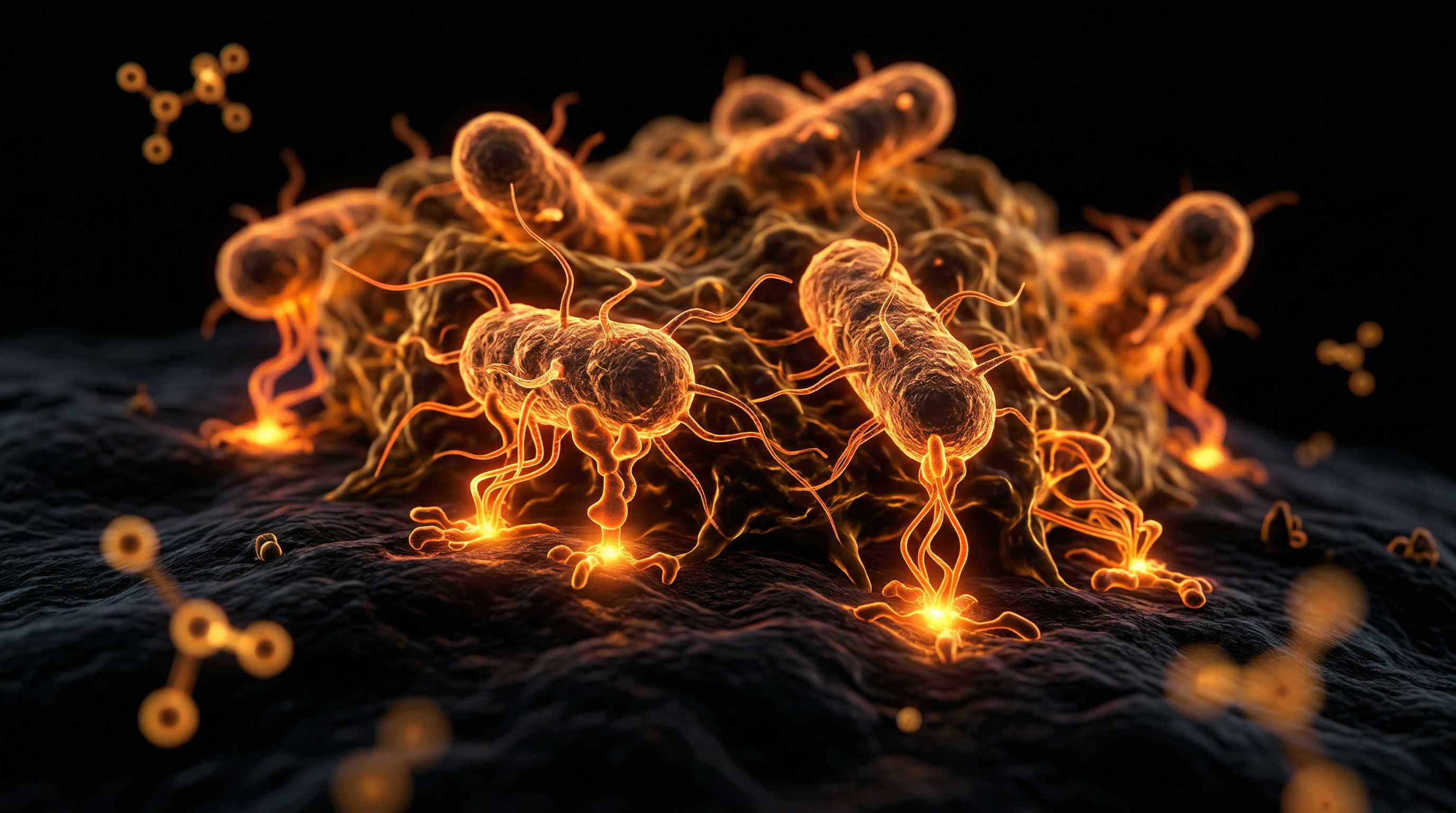
In the clandestine world of microbiology, the image of the solitary, free-floating bacterium—the planktonic state—is largely a laboratory artifice. In the rugged reality of the human body and the natural environment, bacteria rarely exist in isolation. Instead, they congregate, collaborate, and entrench themselves within sophisticated, multicellular fortresses known as biofilms.
At the heart of this survival strategy lies a sophisticated array of molecular anchors. These are not merely passive "glue" points but dynamic, evolutionary masterpieces of biochemical engineering that allow pathogens to adhere to surfaces with such tenacity that they become virtually impossible to eradicate. For INNERSTANDING, we delve into the molecular architecture of these anchors to expose the truth behind chronic infection and microbial persistence.
The Genesis of Persistence: Defining the Biofilm State
A biofilm is a structured community of microorganisms encapsulated within a self-produced matrix of Extracellular Polymeric Substances (EPS). While the matrix provides the shield, the initial adhesion provides the foundation. Without the ability to "anchor" to a substrate—be it a heart valve, a prosthetic hip, or the mucosal lining of the lungs—a pathogen is easily swept away by the body's natural shear forces, such as blood flow or mucociliary clearance.
"Adhesion is the 'Original Sin' of clinical infection. Once a pathogen transitions from a mobile state to a sessile, anchored state, its gene expression shifts fundamentally, increasing its resistance to antibiotics by up to 1,000 times."
This transition is governed by molecular anchors: specialised proteins and appendages that probe the environment, recognise specific host tissues, and lock the bacteria into place. Understanding these mechanisms is not merely an academic exercise; it is the frontline of the battle against the growing crisis of Antimicrobial Resistance (AMR).
Biological Mechanisms: The Anatomy of the Anchor
The process of "sticking" is a two-stage operation involving physical forces and biological specificity.
1. Reversible Attachment: The Initial Handshake
When a bacterium approaches a surface, it first contends with long-range physical forces. These include Van der Waals forces, electrostatic attraction, and hydrophobic interactions. At this stage, the attachment is tenuous. The bacterium "surfs" the surface, using transient connections to sense the chemical composition of the environment.
2. Irreversible Attachment: Dropping the Anchor
Once a suitable site is identified, the bacterium deploys its primary molecular anchors. This is the point of no return.
- Pili and Fimbriae: These are hair-like appendages that act as biological grappling hooks. Type IV Pili, for instance, can extend and retract, pulling the bacterium closer to the surface.
- Adhesins: These are specialised surface proteins that function like a lock-and-key mechanism. They bind specifically to host receptors, such as fibronectin, collagen, or laminin.
- MSCRAMMs: (Microbial Surface Components Recognising Adhesive Matrix Molecules). These are a critical class of anchors found in Gram-positive pathogens like Staphylococcus aureus. They allow the bacteria to "disguise" themselves by binding to the host’s own proteins, effectively anchoring themselves using the body’s own building blocks.
3. The EPS "Cement"
Following protein-based attachment, the colony begins secreting the EPS matrix. This is composed of polysaccharides, proteins, and Extracellular DNA (eDNA). The eDNA acts as a structural "rebar," cross-linking the matrix and reinforcing the anchors, making the biofilm a rigid, resilient structure.
The UK Context: A Growing Clinical Challenge
In the United Kingdom, the burden of biofilm-associated infections is a significant strain on the National Health Service (NHS). As our population ages and the use of medical implants increases, the "surface area" available for biofilm colonisation grows.
- Surgical Site Infections (SSIs): Biofilms anchoring onto surgical mesh or prosthetic joints are a leading cause of readmission.
- Cystic Fibrosis (CF): In the UK, thousands of patients suffer from chronic Pseudomonas aeruginosa infections. These bacteria use molecular anchors to tether themselves to the thickened mucus in the lungs, creating permanent, antibiotic-resistant reservoirs.
- Water Systems: The UK’s ageing infrastructure provides ample surfaces for Legionella and other pathogens to form biofilms in piping, leading to complex decontamination challenges in hospitals and care homes.
The National Biofilm Innovation Centre (NBIC), a multi-university collaboration across the UK, has identified that biofilm-related issues cost the UK economy billions of pounds annually in healthcare, industrial corrosion, and food spoilage.
Environmental Factors: What Triggers the Anchor?
Bacteria do not anchor themselves at random. They are highly sensitive to their surroundings, using a process called Quorum Sensing—a form of chemical communication—to determine if the "neighbourhood" is right for settlement.
Surface Topography and Chemistry
Bacteria prefer "rough" surfaces. Microscopic pits and grooves provide sanctuary from fluid shear forces, allowing the molecular anchors to take hold without being washed away. Furthermore, the hydrophobicity of a surface plays a vital role; many pathogenic anchors are chemically tuned to seek out water-repellent surfaces, which are common in medical-grade plastics.
Nutrient Availability and Stress
Paradoxically, environmental stress often triggers biofilm formation. When bacteria sense a lack of nutrients or the presence of sub-lethal concentrations of antibiotics, they activate "survival genes." These genes prioritise the production of adhesins and EPS, essentially telling the bacteria to "hunker down and anchor" until the threat passes.
Key Fact: Sub-lethal doses of antibiotics can actually stimulate the production of molecular anchors, making the subsequent infection harder to treat than if no medicine had been given at all.
The "Shield" Effect: Why Traditional Medicine Fails
Once the molecular anchors are set and the biofilm matures, the bacteria undergo a radical physiological shift. They enter a state of metabolic dormancy. Most antibiotics (like penicillin) work by attacking bacteria while they are dividing. In a biofilm, the "anchored" bacteria stop dividing and wait.
Furthermore, the EPS matrix acts as a physical and chemical filter. Negatively charged polysaccharides can trap positively charged antibiotic molecules, preventing them from ever reaching the bacteria at the core. This creates a "protected zone" where pathogens can exchange genetic material—including antibiotic resistance genes—in total safety.
Protective Strategies: Breaking the Anchors
To defeat the biofilm, we must move beyond traditional "killing" and focus on "detaching" or "preventing." The future of infection control lies in anti-adhesion technology.
1. Bio-Inspired Surface Modification
Taking cues from nature (such as the skin of sharks or the leaves of the lotus flower), researchers are developing "slippery" surfaces that prevent molecular anchors from ever finding a purchase. By creating surfaces with nanoscale patterns, we can physically prevent the bacterial pili from latching on.
2. Enzymatic "De-anchoring"
Specific enzymes, such as Dispersin B, are being studied for their ability to dissolve the EPS matrix. By "cutting the ropes" of the molecular anchors, we can force the bacteria back into their vulnerable, planktonic state, where the immune system and standard antibiotics can finish them off.
3. Quorum Sensing Inhibitors (QSIs)
If we can "jam" the chemical signals bacteria use to coordinate adhesion, we can prevent them from ever deciding to drop their anchors. Natural compounds found in garlic, certain seaweeds, and specialised synthetic molecules are showing promise in silencing the microbial conversation.
4. Personal and Clinical Vigilance
In a UK clinical setting, "Biofilm-Aware" wound care is becoming the standard. This involves:
- Debridement: Physically scraping away the biofilm "anchors" from chronic wounds.
- Combined Therapies: Using physical disruption alongside chemical agents to prevent the anchors from re-forming.
Key Takeaways: The Path to Innerstanding
To understand the persistence of disease is to understand the molecular anchor. The transition from a transient guest to a permanent resident is the defining moment of pathogenesis.
- Adhesion is Active: It is a sophisticated, protein-driven process, not a passive accident.
- The Matrix is the Fortress: Molecular anchors hold the bacteria in place, while the EPS matrix protects them from the world.
- The Failure of Antibiotics: Traditional medicine often fails because it targets free-floating cells, ignoring the anchored communities that drive chronic illness.
- Innovation is Essential: We must invest in anti-adhesive surfaces and "anchor-breaking" enzymes to combat the rise of AMR in the UK and beyond.
- Environment Matters: Surface roughness, nutrient levels, and even "weak" antibiotic treatments can trigger the anchoring reflex.
The truth is that we have been fighting a war against an enemy we didn't fully see. By exposing the mechanisms of molecular anchors, we move from a strategy of carpet-bombing with antibiotics to a strategy of precision dismantling. In the battle against pathogenic biofilms, the most powerful weapon is not the one that kills, but the one that refuses to let the enemy take root.
Through INNERSTANDING, we recognise that health is not just the absence of bacteria, but the maintenance of environments where the "anchor" can never be dropped.
This article is provided for informational and educational purposes only. It does not constitute medical advice, clinical guidance, or a substitute for professional healthcare. Information reflects cited research at time of publication. Always consult a qualified healthcare professional before acting on any health information.
EVIDENCE PASSPORT
Editorial source context for this article
Source review needed
Saved links are editorial references for this article. They may support specific claims rather than every sentence. Open and assess each source in context. This passport does not independently verify them.
Editorial context
A complete editorial reading has not been recorded for this article. Source links remain available for you to open and assess directly.
Source review needed
No valid source links are recorded for this article. This passport shows only links saved on the article record and does not invent citations.
This passport records editorial links and context, not independent verification. Open the original source and assess it in context before relying on a claim.
Medical Disclaimer
The information in this article is for educational purposes only and does not constitute medical advice, diagnosis, or treatment. Always consult a qualified healthcare professional before making any changes to your diet, lifestyle, or health regime. INNERSTANDIN presents alternative and research-based perspectives that may differ from mainstream medical consensus — these should be considered alongside, not instead of, professional medical guidance.
Read Full DisclaimerContinue the thread
Keep this question moving.
Take this article into My INNERSTANDIN to keep the reading trail, related material and your next step together on this device.