
Molecular Interference: Mercury’s Inhibition of Tubulin Polymerization and Axonal Transport Kinetics
A deep dive into the biochemical mechanisms by which mercury disrupts the neuronal cytoskeleton, specifically targeting tubulin polymerization and the resulting failure of axonal transport kinetics.
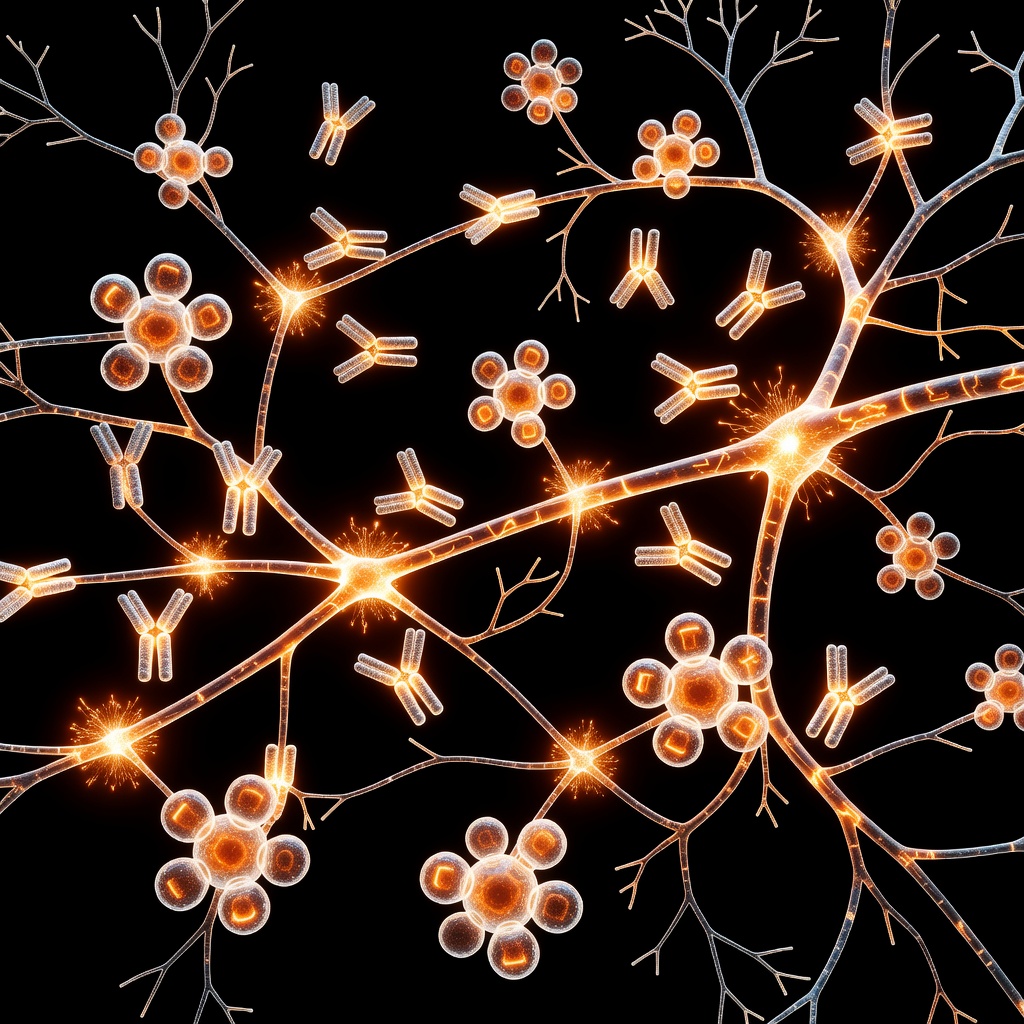
# Molecular Interference: Mercury’s Inhibition of Tubulin Polymerization and Axonal Transport Kinetics
At the core of neurological health lies a complex logistical network responsible for the delivery of nutrients, signals, and structural components across the vast distances of a neuron. At INNERSTANDING, our focus on root-cause health requires us to look beyond symptoms and into the molecular machinery that sustains life. One of the most profound examples of environmental interference with human biology is the impact of mercury—specifically its ability to dismantle the very scaffolding of the nervous system: the microtubules.
The Architecture of the Neuron: Tubulin and Microtubules
Neurons are unique among cells due to their extreme morphology. A single motor neuron in the human body can extend an axon over a meter in length. To maintain this structure and facilitate communication, the neuron relies on a cytoskeleton composed of microfilaments, intermediate filaments, and, most importantly, microtubules.
Microtubules are hollow tubes formed by the polymerization of a protein called tubulin. Tubulin exists as a heterodimer, consisting of alpha- and beta-subunits. These dimers align head-to-tail to form protofilaments, which then associate laterally to form the microtubule cylinder. This structure is not static; it is highly dynamic, constantly growing (polymerizing) and shrinking (depolymerizing) in a process known as dynamic instability. This movement is powered by the binding and hydrolysis of Guanosine Triphosphate (GTP).
The Biochemical Vulnerability: Mercury’s Affinity for Thiols
Mercury, in both its inorganic (Hg2+) and organic (methylmercury, MeHg) forms, is a potent electrophile. Its primary mode of toxicity is its extreme affinity for sulfhydryl (-SH) groups, also known as thiols. In the landscape of the cell, cysteine residues in proteins are the primary targets for mercury binding.
Tubulin is exceptionally rich in these sulfhydryl groups. Beta-tubulin, in particular, contains several highly reactive cysteine residues that are essential for the binding of GTP and the subsequent polymerization into microtubules. When mercury enters the intracellular environment, it seeks out these cysteine residues, forming a covalent mercaptide bond that is difficult to break.
The Inhibition of Polymerization
When mercury binds to the sulfhydryl groups on the tubulin dimer, it induces a conformational change in the protein. This structural alteration interferes with the dimer's ability to bind GTP, or it prevents the dimer from successfully docking onto the growing end of a microtubule.
Research has demonstrated that even at nanomolar concentrations—levels far below those required to cause immediate cell death—mercury can significantly inhibit tubulin polymerization. This is not merely a cessation of growth; because microtubules are naturally dynamic, the inhibition of new polymerization leads to the rapid depolymerization of existing structures. Effectively, the 'tracks' of the neuron begin to dissolve from the inside out. In visual studies, such as those famously conducted at the University of Calgary, the introduction of mercury to a neuronal culture results in the visible collapse of the growth cones and the stripping of the axonal membrane as the underlying microtubule support vanishes.
Disruption of Axonal Transport Kinetics
If microtubules are the tracks, then axonal transport is the train system. This system is divided into two main categories: anterograde transport (moving materials from the cell body to the synapse) and retrograde transport (moving waste and signaling molecules back to the cell body).
This transport is facilitated by motor proteins: kinesin (anterograde) and dynein (retrograde). These proteins literally 'walk' along the microtubule tracks, carrying vesicles filled with neurotransmitters, mitochondria, and essential proteins.
When mercury inhibits tubulin polymerization, the consequences for axonal transport kinetics are catastrophic:
- —Track Discontinuity: As microtubules depolymerize, the motor proteins lose their path. This leads to 'traffic jams' within the axon, where essential cargo is stranded.
- —Mitochondrial Starvation: Neurons have high metabolic demands, especially at the synapse. If mitochondria cannot be transported to the distal ends of the axon, the synapse loses its energy supply, leading to a failure in neurotransmission.
- —Waste Accumulation: Retrograde transport is responsible for clearing damaged proteins and organelles. When this fails, the neuron accumulates toxic cellular debris, triggering oxidative stress and apoptotic pathways.
- —Loss of Neurotrophic Support: Survival signals, such as Nerve Growth Factor (NGF), must be transported back to the nucleus. Interruption of this signal tells the cell that it is no longer connected to its target, often leading to programmed cell death.
Downstream Pathological Consequences
The dissolution of microtubules does more than just stop transport; it releases 'tau' proteins that were previously bound to the microtubule structure. In a healthy neuron, tau stabilizes the microtubule. When the microtubule collapses, tau becomes hyperphosphorylated and begins to aggregate, forming neurofibrillary tangles (NFTs). This is a hallmark of several neurodegenerative conditions, most notably Alzheimer’s disease. While mercury is not the sole cause of such conditions, its molecular mechanism of tubulin interference provides a direct biochemical pathway for how environmental mercury exposure can contribute to the development of neurodegenerative pathologies.
Furthermore, the mercury-induced breakdown of the cytoskeleton affects the blood-brain barrier (BBB). The endothelial cells of the BBB also rely on tubulin for their structural integrity and tight junctions. When these are compromised, the brain becomes more vulnerable to other toxins and inflammatory cytokines, creating a cycle of systemic neuro-inflammation.
Root-Cause Resolution and Clinical Perspective
Understanding that mercury is a 'molecular wedge' that plys apart the cytoskeleton is essential for effective intervention. At INNERSTANDING, we emphasize that detoxification is not merely about 'flushing' a toxin, but about restoring the biochemical environment that allows for protein repair and microtubule stability.
Key areas for support include:
- —Thiol Provision: Providing the body with adequate sulfur-containing compounds (such as N-Acetyl Cysteine or Alpha Lipoic Acid) to provide 'decoy' binding sites for mercury and to support the regeneration of intracellular glutathione.
- —Selenium Status: Selenium has an even higher affinity for mercury than sulfur. Adequate selenium levels allow for the formation of inert mercury-selenide complexes, preventing the mercury from binding to tubulin.
- —GTP Support: Ensuring mitochondrial efficiency to maintain the high levels of GTP required for the constant rebuilding of the microtubule network.
Conclusion
The toxicity of mercury is not a vague 'poisoning' of the system; it is a precise, surgical strike against the structural and logistical foundations of the neuron. By binding to tubulin and halting the kinetics of axonal transport, mercury effectively silences the communication within the nervous system. Recognizing this mechanism allows us to appreciate the vital importance of protecting our internal environment from heavy metal interference and provides a clear, molecular roadmap for recovery and long-term neurological resilience.
This article is provided for informational and educational purposes only. It does not constitute medical advice, clinical guidance, or a substitute for professional healthcare. Information reflects cited research at time of publication. Always consult a qualified healthcare professional before acting on any health information.
RESEARCH FOUNDATIONS
Biological Credibility Archive
Citations provided for educational reference. Verify via PubMed or institutional databases.
Medical Disclaimer
The information in this article is for educational purposes only and does not constitute medical advice, diagnosis, or treatment. Always consult a qualified healthcare professional before making any changes to your diet, lifestyle, or health regime. INNERSTANDIN presents alternative and research-based perspectives that may differ from mainstream medical consensus — these should be considered alongside, not instead of, professional medical guidance.
Read Full DisclaimerReady to learn more?
Continue your journey through our classified biological research.
RABBIT HOLE
Follow the biological thread deeper