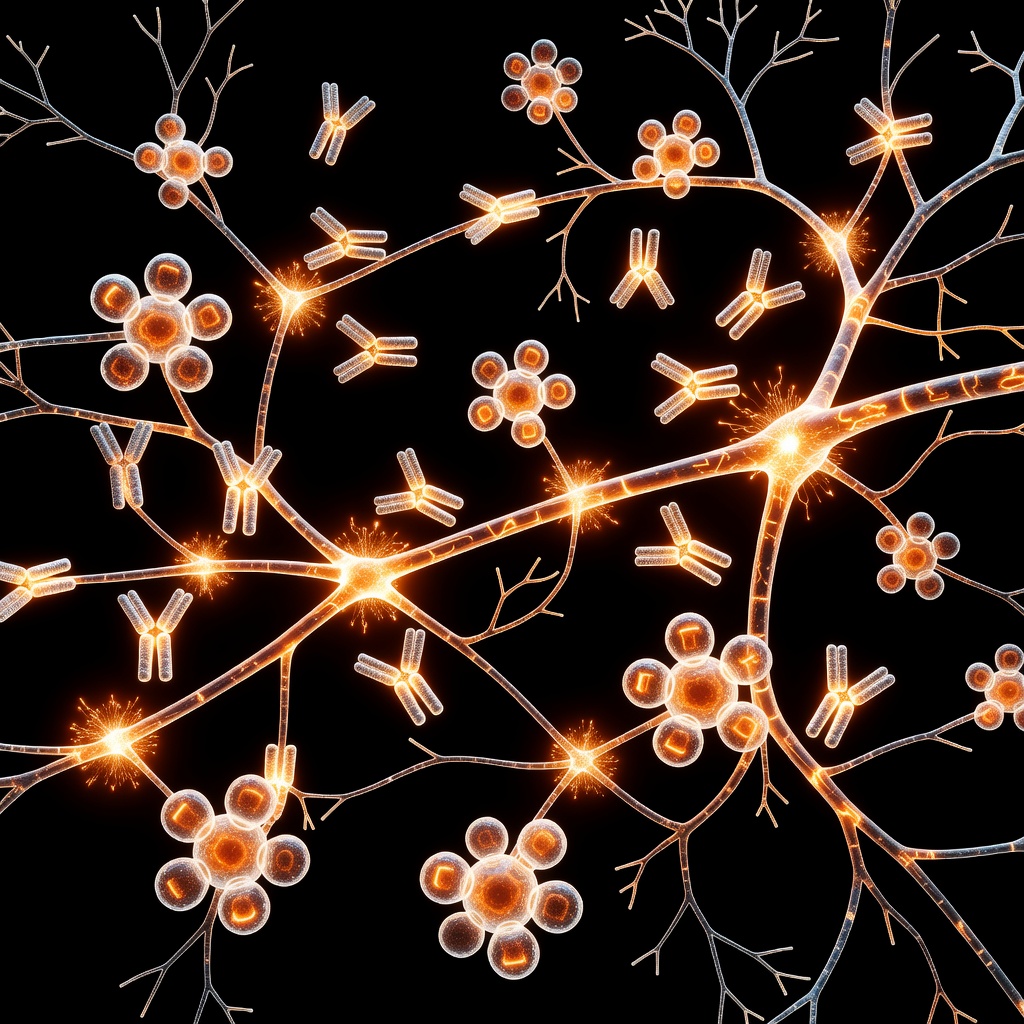
Neurosteroid Withdrawal and GABAergic Signaling: Evaluating the Impact of B-Vitamin Co-factor Exhaustion
A comprehensive examination of the biochemical mechanisms underlying postpartum mood disorders, focusing on the synergy between neurosteroid decline and the exhaustion of B-vitamin co-factors essential for GABAergic neurotransmission.

# Neurosteroid Withdrawal and GABAergic Signaling: Evaluating the Impact of B-Vitamin Co-factor Exhaustion\n\nThe transition into motherhood is often described in poetic or social terms, yet beneath the surface lies one of the most drastic physiological transformations a human can experience. Central to this transition is the \"postpartum drop\"—a precipitous decline in circulating steroid hormones. While much attention is paid to estrogen and progesterone, the metabolic descendants of these hormones—neurosteroids—play a critical role in neurological stability. When this withdrawal is coupled with the common reality of B-vitamin co-factor exhaustion, the stage is set for significant GABAergic signaling dysfunction.\n\n## Allopregnanolone: The Missing Neurosteroid\n\nDuring pregnancy, the placenta functions as a massive endocrine organ, producing levels of progesterone that are far beyond the physiological norm of a non-pregnant woman. Much of this progesterone is metabolised into allopregnanolone (ALLO), a neurosteroid that acts as a potent positive allosteric modulator of GABA(A) receptors.
In the brain, ALLO functions like a \"natural Valium,\" enhancing the effects of gamma-aminobutyric acid (GABA), the primary inhibitory neurotransmitter. This provides a protective, calming effect on the nervous system, likely intended to buffer the mother against the stressors of late-stage pregnancy. \n\nUpon delivery, the source of these high hormone levels—the placenta—is removed. Within 48 hours, ALLO levels plummet. For many women, the brain’s GABA(A) receptors struggle to adapt to this sudden \"withdrawal,\" leading to a state of neuronal hyperexcitability. If the brain cannot adapt, the result is a \"glutamate-GABA imbalance,\" manifesting as acute anxiety, insomnia, and the mood instability characteristic of the postpartum period.\n\n## GABAergic Signaling: The Brain’s Braking System\n\nThe GABAergic system is the primary \"braking system\" of the central nervous system.
It balances the excitatory signals of glutamate to ensure that the brain does not become overstimulated. GABA(A) receptors are complex structures that respond to GABA by opening chloride channels, which inhibits neuronal firing. During the high-ALLO state of pregnancy, the subunit composition of these receptors often changes in a process known as plasticity. \n\nWhen ALLO levels drop post-delivery, the receptors must \"reconfigure\" back to their pre-pregnancy state. This reconfiguration requires precise biochemical signaling and cellular energy. When GABAergic signaling is robust, the individual experiences emotional resilience.
However, when the receptors become desensitised due to the loss of ALLO, or when there is insufficient GABA available to bind to them, the balance shifts toward excitation. This imbalance is a hallmark of postpartum depression (PPD), postpartum anxiety, and sleep disorders.\n\n## The B-Vitamin Connection: Co-factors in Crisis\n\nThe synthesis and regulation of neurotransmitters are not autonomous processes; they are heavily dependent on nutritional co-factors. B-vitamins, specifically B6 (pyridoxine), B9 (folate), and B12 (cobalamin), are the foundational gears of this machine. Pregnancy and lactation are periods of immense nutritional demand, often leading to \"maternal depletion syndrome,\" where maternal stores are sacrificed to support the developing foetus.\n\n### Vitamin B6 (P5P): The Master Regulator\n\nVitamin B6, in its active form Pyridoxal-5-Phosphate (P5P), serves as the indispensable co-factor for the enzyme Glutamic Acid Decarboxylase (GAD). This enzyme is responsible for converting the excitatory neurotransmitter glutamate into the inhibitory neurotransmitter GABA. \n\nIf a postpartum mother is depleted of B6, her ability to produce GABA is compromised.
In the context of neurosteroid withdrawal—where the receptors are already struggling to function without the modulating effect of ALLO—a lack of the GABA ligand itself creates a \"double hit\" on the nervous system. The brain is essentially trying to use a braking system that has both worn-out pads (receptor dysfunction) and no brake fluid (GABA deficiency). This bottleneck at the GAD enzyme is a primary root cause of the \"wired but tired\" feeling many mothers experience.\n\n### Methylation, Folate, and B12: Genetic Expression\n\nFolate (B9) and B12 are critical components of the 1-carbon cycle, or methylation. Methylation influences the expression of GABA(A) receptor subunits. Research suggests that the brain’s ability to \"remodel\" its receptors in response to the postpartum hormone drop is an epigenetic process.
Deficiencies in folate or B12 can impair this remodeling, leaving the receptors in a state that is poorly adapted to the non-pregnant hormonal environment. \n\nFurthermore, women with MTHFR genetic polymorphisms may have a reduced capacity to convert dietary folate into its active form, L-methylfolate, increasing their risk for neurotransmitter imbalances. When the massive folate requirements of pregnancy are added to this genetic baseline, the resulting B-vitamin crash can be catastrophic for neurological stability.\n\n## The Vicious Cycle of Stress and Depletion\n\nThe exhaustion of B-vitamin co-factors does not happen in a vacuum. The postpartum period is a time of high cortisol due to sleep deprivation and the physical stress of birth recovery. Cortisol, the primary stress hormone, further accelerates the depletion of B-vitamins and can inhibit the enzymes (like 5-alpha-reductase) that would otherwise help the body produce its own endogenous neurosteroids. This creates a vicious cycle: stress depletes the nutrients needed to produce calm-inducing neurotransmitters, leading to more stress and further depletion of the GABAergic system.\n\n## Clinical Implications: A Root-Cause Approach\n\nUnderstanding the interplay between neurosteroid withdrawal and B-vitamin exhaustion shifts the perspective on postpartum mental health from a purely psychological issue to a biochemical one.
To support recovery, a multi-faceted approach is required:\n\n1. Targeted Replenishment: Supplementing with active forms of B-vitamins (P5P, Methylfolate, Methylcobalamin) to bypass enzymatic hurdles and support GABA synthesis immediately.\n2. Synergistic Co-factors: Magnesium acts as a natural calcium channel blocker and modulates the GABA receptor, working in tandem with B-vitamins to lower neuronal excitability.\n3. Micronutrient Testing: Assessing levels rather than assuming \"normal\" ranges, which often do not account for the high metabolic demands of the postpartum period.\n4. Supporting Neurosteroid Pathways: Ensuring adequate intake of healthy fats and cholesterol, which are the precursors to all steroid hormones, including progesterone and allopregnanolone.\n\n## Conclusion\n\nThe postpartum period is a window of profound vulnerability, but also one of potential healing. By recognising the role of B-vitamin co-factors in maintaining GABAergic signaling during neurosteroid withdrawal, we can move toward a model of care that prioritises nutritional restoration. Addressing these root causes empowers mothers to reclaim their neurological health, moving from a state of depletion to one of balance and resilience. For the GABAergic system to regain its function, we must provide the brain with the biochemical tools it needs to navigate the transition from pregnancy to motherhood.
This article is provided for informational and educational purposes only. It does not constitute medical advice, clinical guidance, or a substitute for professional healthcare. Information reflects cited research at time of publication. Always consult a qualified healthcare professional before acting on any health information.
RESEARCH FOUNDATIONS
Biological Credibility Archive
Citations provided for educational reference. Verify via PubMed or institutional databases.
Medical Disclaimer
The information in this article is for educational purposes only and does not constitute medical advice, diagnosis, or treatment. Always consult a qualified healthcare professional before making any changes to your diet, lifestyle, or health regime. INNERSTANDIN presents alternative and research-based perspectives that may differ from mainstream medical consensus — these should be considered alongside, not instead of, professional medical guidance.
Read Full DisclaimerReady to learn more?
Continue your journey through our classified biological research.
DISCUSSION ROOM
Members of THE COLLECTIVE discussing "Neurosteroid Withdrawal and GABAergic Signaling: Evaluating the Impact of B-Vitamin Co-factor Exhaustion"
SILENT CHANNEL
Be the first to discuss this article. Your insight could help others understand these biological concepts deeper.
THE ARSENAL
Based on Postpartum Health & Nutritional Depletion — products curated by our research team for educational relevance and biological support.

Magnesium Blend – The Most Important Mineral

Clean Slate – Detoxes thousands of chemicals,heavy metals, pesticides, allergens, mold spores and fungus
Vegan Essential Amino Acids – Plant-Powered Protein Building
INNERSTANDING may earn a commission on purchases made through these links. All products are selected based on rigorous educational relevance to our biological research.
RABBIT HOLE
Follow the biological thread deeper