
Neurotoxic Signalling: Disrupting Neurotransmitter Balance
Updated May 2026
Research suggests that nanoplastics can interfere with neurotransmitter signaling pathways, specifically acetylcholine. This disruption may contribute to behavioral changes and neurological disorders.
Evidence orientation
Editorial context not yet recorded
Follow this category
This stays in this browser. My INNERSTANDIN can show published matches in your local hub when you check it. It does not send email, push, or alert notifications.
Local learning review
A private browser aid for revisiting ideas. It is not an alert or a health recommendation.
Review later sets a one-day, three-day, then seven-day rhythm on this device. Choose it only when you want to revisit this article.
Overview
In the current epoch, often colloquially termed the ‘Plasticene’, the anthropogenic footprint on the biosphere has transcended mere visible pollution. While the mainstream media remains fixated on the optical tragedy of sea turtles entangled in six-pack rings, a far more insidious and microscopic threat is infiltrating the very architecture of the human mind. This is the realm of nanoplastics (NPs)—polymeric particles measuring less than 1,000 nanometres—and their capacity to induce neurotoxic signalling by subverting the delicate balance of neurotransmitters.
As a senior researcher at INNERSTANDING, my objective is to dissect the molecular mechanics of this intrusion. For decades, the scientific community operated under the assumption that the Blood-Brain Barrier (BBB) served as an impenetrable fortress, shielding the central nervous system (CNS) from environmental contaminants. Recent data, however, suggests that nanoplastics are the ultimate ‘Trojan Horse’. Their diminutive size, coupled with their unique surface chemistry, allows them to bypass biological gatekeepers, entering the brain and interfering with the fundamental language of our existence: neurotransmission.
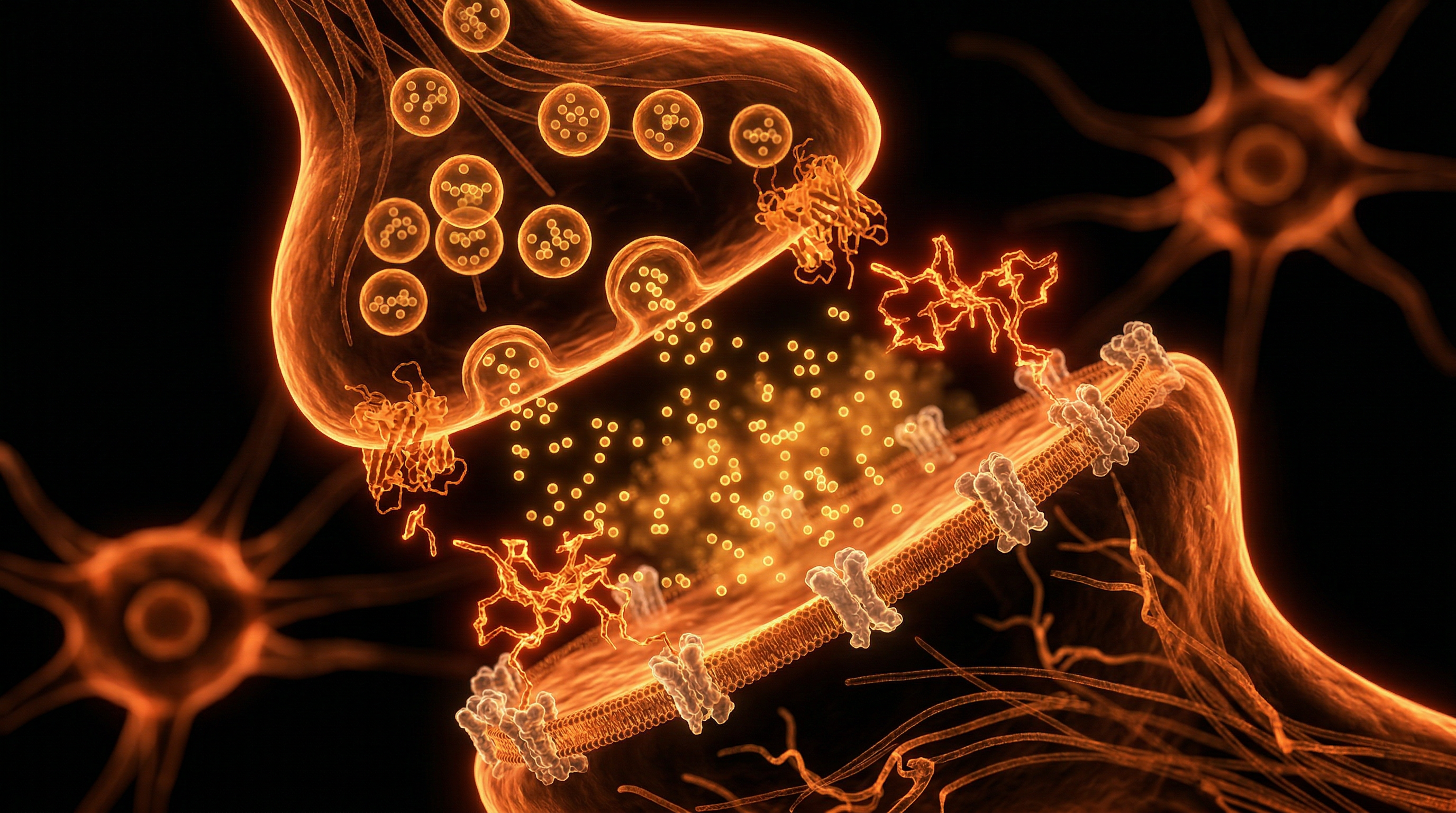
The specific focus of this investigation is the disruption of cholinergic signalling. The neurotransmitter acetylcholine (ACh) is the primary mediator of memory, attention, and muscle contraction. When nanoplastics interfere with the production, release, or degradation of ACh, the results are catastrophic. We are not merely talking about a slight dip in cognitive performance; we are witnessing the potential environmental priming for a global surge in neurodegenerative diseases and behavioural disorders.
Fact: Nanoplastics are so small that they can cross the placenta and the blood-brain barrier, often within hours of ingestion or inhalation, bypassing traditional detoxification pathways.
This article provides an exhaustive analysis of how these synthetic interlopers disrupt the neurochemical equilibrium, the specific cellular pathways being hijacked, and why the current regulatory framework is woefully inadequate in addressing this emergent biological crisis.
The Biology — How It Works
To understand neurotoxic signalling, one must first appreciate the exquisite sensitivity of the human nervous system. Neurotransmission is a high-speed, high-precision process involving the release of chemical messengers across a synaptic cleft. Even a minor perturbation in the concentration of these molecules can lead to systemic failure.
The Breach of the Blood-Brain Barrier (BBB)
The BBB is a highly selective semipermeable border of endothelial cells that prevents solutes in the circulating blood from non-selectively crossing into the extracellular fluid of the CNS. Nanoplastics, particularly those composed of polystyrene and polyethylene, possess a high degree of hydrophobicity. This allows them to interact with the lipid bilayers of cell membranes.
Through a process known as adsorptive-mediated transcytosis, NPs can effectively ‘grease’ their way through the endothelial cells of the BBB. Once they have translocated into the brain parenchyma, they are no longer just passive debris; they become active participants in the neurobiological environment.
The Role of Acetylcholine
Acetylcholine (ACh) was the first neurotransmitter ever identified, and its role remains central to our understanding of the brain. It operates in both the peripheral nervous system (activating muscles) and the central nervous system (acting as a neuromodulator). In the brain, cholinergic neurons are involved in:
- Encoding and retrieval of memories in the hippocampus.
- Arousal and attention in the cerebral cortex.
- Signal-to-noise ratio modulation, allowing the brain to focus on relevant stimuli while ignoring distractions.
The Interference Mechanism
The primary biological target of nanoplastics within the cholinergic system is the enzyme acetylcholinesterase (AChE). Under normal conditions, AChE is responsible for the rapid hydrolysis (breakdown) of acetylcholine in the synapse. This ensures that the signal is terminated and the neuron can reset for the next impulse.
Nanoplastics have been shown to bind to the active site of AChE, effectively inhibiting its function. When AChE is inhibited, acetylcholine accumulates in the synaptic cleft, leading to cholinergic overstimulation. This is the same mechanism of action found in certain organophosphate nerve agents, albeit at a slower, chronic level of exposure.
Mechanisms at the Cellular Level
At the cellular level, the presence of nanoplastics initiates a multifaceted assault on neuronal health. This isn't just about blocking a single enzyme; it is about a total disruption of the cellular machinery.
The Protein Corona Effect
When a nanoplastic particle enters a biological fluid (such as blood or interstitial fluid), it is immediately coated by proteins, lipids, and other biomolecules. This is known as the protein corona. The corona defines the biological identity of the particle.
- Molecular Mimicry: If the corona is rich in apolipoproteins, the brain may mistake the plastic particle for a nutrient or a lipid carrier, actively transporting it into neurons via endocytosis.
- Misfolding: The interaction between the plastic surface and the proteins can cause the proteins to misfold. If these misfolded proteins include alpha-synuclein or amyloid-beta, the plastic particle acts as a seed for the protein aggregation characteristic of Parkinson’s and Alzheimer’s diseases.
Oxidative Stress and Mitochondrial Dysfunction
Neurons are metabolically expensive cells; they require a constant supply of energy produced by mitochondria. Nanoplastics have been observed to localise within the mitochondria, where they disrupt the electron transport chain.
Statistic: In vitro studies have shown that exposure to nanoplastics can increase the production of Reactive Oxygen Species (ROS) in neuronal cells by up to 300%, leading to chronic oxidative stress and lipid peroxidation.
This oxidative stress damages the neuronal membrane, making it leakier and further disrupting the delicate ion gradients required for electrical signalling. When the mitochondria fail, the neuron can no longer maintain its resting potential, leading to excitotoxicity and eventual cell death.
Lysosomal Rupture and Autophagy
Cells use lysosomes as a waste disposal system. When neurons attempt to engulf and digest nanoplastics, the sharp edges (on a molecular scale) or the chemical additives within the plastic can cause the lysosome to rupture. This releases digestive enzymes into the cytoplasm, essentially causing the cell to digest itself from the inside out—a process known as autophagy gone wrong.
Synaptic Vesicle Disruption
Neurotransmitters are stored in small sacs called synaptic vesicles. For a signal to be sent, these vesicles must fuse with the presynaptic membrane and release their cargo. Nanoplastics can physically interfere with the docking proteins (like SNARE complexes) that facilitate this fusion. This results in a "stuttering" signal where the brain attempts to communicate, but the chemical messengers are physically blocked from release.
Environmental Threats and Biological Disruptors
The nanoplastics causing these neurotoxic effects do not originate from a single source; they are the result of a systemic reliance on polymers. We distinguish between primary and secondary nanoplastics.
Primary Nanoplastics
These are purposefully manufactured at the nanoscale. They are found in:
- Cosmetics and Personal Care Products: Used as exfoliants or delivery vehicles for active ingredients.
- Industrial Abrasives: Used in sandblasting and specialised cleaning.
- Drug Delivery Systems: Ironically, the same technology being developed to deliver medicine to the brain is being used by environmental pollutants to cause harm.
Secondary Nanoplastics
These are the result of the fragmentation of larger plastic items. This is the more pervasive threat, as it is nearly impossible to contain.
- Tyre Wear Particles: Every time a car brakes or turns, thousands of micro- and nanoplastic particles are shed from the synthetic rubber of the tyres. These are washed into waterways or inhaled as dust.
- Synthetic Textiles: Washing a single load of polyester or nylon clothing can release millions of microfibres, which eventually break down into nanoplastics.
- Agricultural Plastics: The use of plastic mulching in industrial farming leads to the direct contamination of soil and the subsequent uptake by food crops.
The "Chemical Hitchhikers"
Nanoplastics are rarely "pure" polymers. They act as sponges for persistent organic pollutants (POPs) found in the environment.
- BPA and Phthalates: These endocrine disruptors are often leached from the plastic itself.
- Heavy Metals: Lead, mercury, and cadmium can adsorb onto the surface of nanoplastics, using them as a transport mechanism into the brain.
- Pesticides: In agricultural run-off, nanoplastics can carry neurotoxic pesticides directly into the human food chain.
The Cascade: From Exposure to Disease
The disruption of neurotransmitter balance is not an isolated event; it is the first domino in a cascade that leads to systemic neurological decline.
Cognitive and Behavioural Shifts
The initial signs of neurotoxic signalling disruption are often subtle and dismissed as "lifestyle factors."
- Anxiety and Irritability: Dysregulation of the cholinergic system and the associated increase in glutamate can lead to a state of constant neuro-arousal.
- Memory Impairment: As ACh levels are altered, the "working memory" of the individual begins to falter. This is becoming increasingly common in younger demographics.
- Lethargy and Depression: Chronic neuro-inflammation caused by the brain's immune cells (microglia) reacting to plastic particles can lead to "sickness behaviour," indistinguishable from clinical depression.
The Link to Neurodegeneration
The long-term presence of nanoplastics in the CNS is increasingly linked to the "Big Three" of neurology:
- Alzheimer’s Disease: By promoting the aggregation of amyloid-beta and inhibiting AChE, nanoplastics accelerate the hallmark pathologies of AD.
- Parkinson’s Disease: The sensitivity of dopaminergic neurons to oxidative stress makes them prime targets for NP-induced damage. Recent studies have found plastic particles in the substantia nigra of affected individuals.
- Amyotrophic Lateral Sclerosis (ALS): The disruption of neuromuscular junctions—where ACh is the primary transmitter—is a potential factor in the onset of motor neuron decay.
Developmental Neurotoxicity
Perhaps the most concerning aspect is the effect on the developing brain. Children are more susceptible because their BBB is not yet fully formed, and their metabolic rate is higher.
- Neurodevelopmental Disorders: There is a growing body of evidence suggesting a correlation between environmental plastic exposure and the rising rates of Autism Spectrum Disorder (ASD) and ADHD. These conditions are fundamentally linked to imbalances in synaptic pruning and neurotransmitter signalling during gestation and early childhood.
What the Mainstream Narrative Omits
The mainstream discourse on plastics is carefully curated to avoid causing "undue panic," which is often a euphemism for protecting industrial interests. There are several critical truths that are routinely suppressed or downplayed.
The Fallacy of the "Safe Threshold"
Regulatory bodies like the EFSA (European Food Safety Authority) and the FDA operate on the principle of The Dose Makes the Poison. They argue that because the concentration of nanoplastics in a single glass of water is low, the risk is negligible.
- The Truth: This ignores bioaccumulation. Nanoplastics are not easily excreted. They lodge in fatty tissues and the brain, accumulating over decades. A "safe" daily dose becomes a toxic lifetime burden.
Regulatory Capture and the "Plastic Lobby"
The global plastics industry is a multi-trillion-pound behemoth. Much like the tobacco industry in the 20th century, the plastic industry funds research designed to produce ambiguous results. They focus on "microplastics" (which are easier to filter and study) while ignoring the far more dangerous "nanoplastics" because the technology to measure them in human tissue is expensive and niche.
The Lack of Human In Vivo Studies
While animal studies (in mice, zebrafish, and fruit flies) consistently show neurotoxic effects, the mainstream media points to the lack of human clinical trials as "proof" that the danger is unconfirmed.
- The Truth: Performing a controlled "plastic-dosing" study on humans would be unethical. Therefore, we are essentially the subjects of a global, uncontrolled experiment. We are waiting for the "body count" to become statistically significant before taking action.
The Synergistic Effect
Mainstream science usually studies one chemical at a time. In reality, we are exposed to a "cocktail" of nanoplastics, heavy metals, and electromagnetic frequencies (EMFs). Emerging research suggests that EMF exposure can increase the permeability of the BBB, making it even easier for nanoplastics to enter the brain. This synergy is almost never discussed in public health guidelines.
The UK Context
The United Kingdom presents a unique and troubling case study in nanoplastic exposure. As an island nation with a high population density and a legacy of Victorian-era sewage infrastructure, the UK is on the frontline of this crisis.
The State of British Waterways
The UK’s "combined sewer overflows" frequently discharge untreated waste into rivers. This waste is a primary source of secondary nanoplastics.
- The River Thames: Studies have shown that the Thames has some of the highest recorded levels of microplastics in any river globally. As these particles move downstream, they fragment into nanoplastics, entering the estuarine food chain and the groundwater.
- Tap Water Contamination: Research by the University of Plymouth has highlighted that even treated tap water in the UK contains micro- and nanoplastics, primarily sourced from the degradation of plastic piping and the failure of filtration plants to catch sub-micron particles.
The "Tea Bag" Problem
A uniquely British habit contributes to this: the tea bag. Most premium and even standard tea bags in the UK contain polypropylene to help them keep their shape in boiling water.
- The Statistic: A study published in Environmental Science & Technology found that steeping a single plastic tea bag at brewing temperature (95°C) releases approximately 11.6 billion microplastics and 3.1 billion nanoplastics into a single cup. For a nation that consumes over 100 million cups a day, this is a massive, direct source of neurotoxic ingestion.
Regulatory Failure in the UK
Since leaving the EU, the UK's regulatory framework (governed by Defra and the Environment Agency) has struggled to keep pace with emerging "forever chemical" data. The UK’s REACH (Registration, Evaluation, Authorisation and Restriction of Chemicals) equivalent has been criticised for being less stringent than its European counterpart, potentially allowing higher levels of plastic-associated additives to remain in circulation.
Protective Measures and Recovery Protocols
While the systemic issue requires geopolitical change, individuals must take immediate steps to mitigate their exposure and support their brain's natural detoxification pathways.
Dietary and Lifestyle Interventions
To counter the neurotoxic signalling disruption, we must focus on neuroprotection and the maintenance of the cholinergic system.
- Antioxidant Support: Since NPs cause damage via oxidative stress, increasing the intake of Glutathione precursors is vital. N-acetylcysteine (NAC) is a potent supplement that helps the liver and brain neutralise oxidative damage.
- Cholinergic Support: Consuming Choline-rich foods (such as organic, pasture-raised eggs) can provide the brain with the raw materials needed to maintain acetylcholine levels despite NP interference.
- Sulforaphane: Found in broccoli sprouts, sulforaphane activates the Nrf2 pathway, which enhances the body’s ability to detoxify xenobiotics, including plastic-associated chemicals.
Filtration and Avoidance
- Reverse Osmosis (RO) Water Filtration: Standard carbon filters are insufficient for nanoplastics. Only a high-quality RO system with a sub-micron membrane can effectively remove these particles from drinking water.
- Avoid Plastic Heating: Never microwave food in plastic containers. The heat facilitates the "leaching" of nanoplastics and additives directly into the food.
- Natural Fibres: Transitioning to wool, cotton, and hemp clothing reduces the inhalation of synthetic microfibres in the home environment.
Enhancing the Glymphatic System
The brain has its own waste clearance system called the glymphatic system, which primarily operates during deep sleep.
- Sleep Hygiene: Ensuring 7–9 hours of quality sleep allows the brain to "flush" metabolic waste and potentially clear out small concentrations of nano-particulates.
- Hydration: Proper hydration with mineral-rich, filtered water is essential for the interstitial fluid flow required for glymphatic clearance.
The Role of "Green Chemistry"
We must advocate for a shift toward truly biodegradable materials. This does not mean "oxodegradable" plastics (which just break into microplastics faster), but rather PHA (polyhydroxyalkanoates) and other mushroom- or seaweed-based polymers that the human body possesses the enzymes to break down.
Summary: Key Takeaways
The threat posed by nanoplastics to our neurological integrity is not a futuristic dystopia; it is a current reality. The disruption of neurotransmitter balance is the mechanism by which the synthetic world is rewriting human biology.
- Nanoplastics are uniquely dangerous because their size allows them to bypass the Blood-Brain Barrier and enter neurons.
- The cholinergic system is the primary target, with nanoplastics inhibiting the enzyme acetylcholinesterase, leading to neurochemical imbalances.
- Cellular damage occurs through oxidative stress, mitochondrial failure, and the "protein corona" effect which triggers misfolding of proteins.
- The mainstream narrative often ignores the cumulative and synergistic effects of these particles to protect industrial interests.
- In the UK, sources like plastic tea bags and aging water infrastructure make exposure particularly high.
- Individual action through reverse osmosis filtration, NAC supplementation, and avoiding synthetic fabrics is the first line of defence.
As we continue to investigate the "Innerstanding" of our biological reality, we must recognize that the mind is not separate from the environment. To protect the sanctity of our thoughts, our memories, and our very consciousness, we must confront the plastic-induced subversion of our neurobiology. The "Silent Spring" of the 21st century is not happening in the woods; it is happening in the synapses of the human brain.
This article is provided for informational and educational purposes only. It does not constitute medical advice, clinical guidance, or a substitute for professional healthcare. Information reflects cited research at time of publication. Always consult a qualified healthcare professional before acting on any health information.
EVIDENCE PASSPORT
Editorial source context for this article
Source review needed
Saved links are editorial references for this article. They may support specific claims rather than every sentence. Open and assess each source in context. This passport does not independently verify them.
Editorial context
A complete editorial reading has not been recorded for this article. Source links remain available for you to open and assess directly.
Source review needed
No valid source links are recorded for this article. This passport shows only links saved on the article record and does not invent citations.
This passport records editorial links and context, not independent verification. Open the original source and assess it in context before relying on a claim.
Medical Disclaimer
The information in this article is for educational purposes only and does not constitute medical advice, diagnosis, or treatment. Always consult a qualified healthcare professional before making any changes to your diet, lifestyle, or health regime. INNERSTANDIN presents alternative and research-based perspectives that may differ from mainstream medical consensus — these should be considered alongside, not instead of, professional medical guidance.
Read Full DisclaimerContinue the thread
Keep this question moving.
Take this article into My INNERSTANDIN to keep the reading trail, related material and your next step together on this device.
Explore this in the Body Map
See where this hits your biology. Interactive anatomy, threats, and protective protocols.
Dig deeper in the Library
Free, longform PDF volumes that go beyond headlines into mechanisms and references.