
Nutrition and Cognitive Development
Updated May 2026
Discover how nutrition shapes the architecture of the mind. Explore the vital link between diet, gut health, and cognitive development in neurodiversity.
Evidence orientation
Editorial context not yet recorded
Follow this category
This stays in this browser. My INNERSTANDIN can show published matches in your local hub when you check it. It does not send email, push, or alert notifications.
Local learning review
A private browser aid for revisiting ideas. It is not an alert or a health recommendation.
Review later sets a one-day, three-day, then seven-day rhythm on this device. Choose it only when you want to revisit this article.
Introduction
In the landscape of modern paediatrics and educational psychology, the phrase "you are what you eat" has transcended its status as a cliché to become a cornerstone of neurobiological research. The human brain is the most metabolically active organ in the body, accounting for roughly 20% of our total energy expenditure despite comprising only 2% of our body mass. For children and adolescents, whose brains are undergoing rapid structural and functional shifts, the quality of nutritional intake is not merely a matter of physical growth; it is the fundamental building block of cognitive architecture.
In the United Kingdom, the prevalence of neurodevelopmental conditions such as Attention Deficit Hyperactivity Disorder (ADHD) and Autism Spectrum Condition (ASC) is rising. Recent data suggests that approximately 5% of UK school-aged children are affected by ADHD. While genetics provide the blueprint for neurodevelopment, environmental factors—most notably nutrition—act as the craftsmen. This article explores the complex relationship between diet and cognitive development, with a specific focus on ADHD and related neurodevelopmental conditions within the British clinical and social context.
##
##
The Biological Foundation
s: Why Nutrition Matters
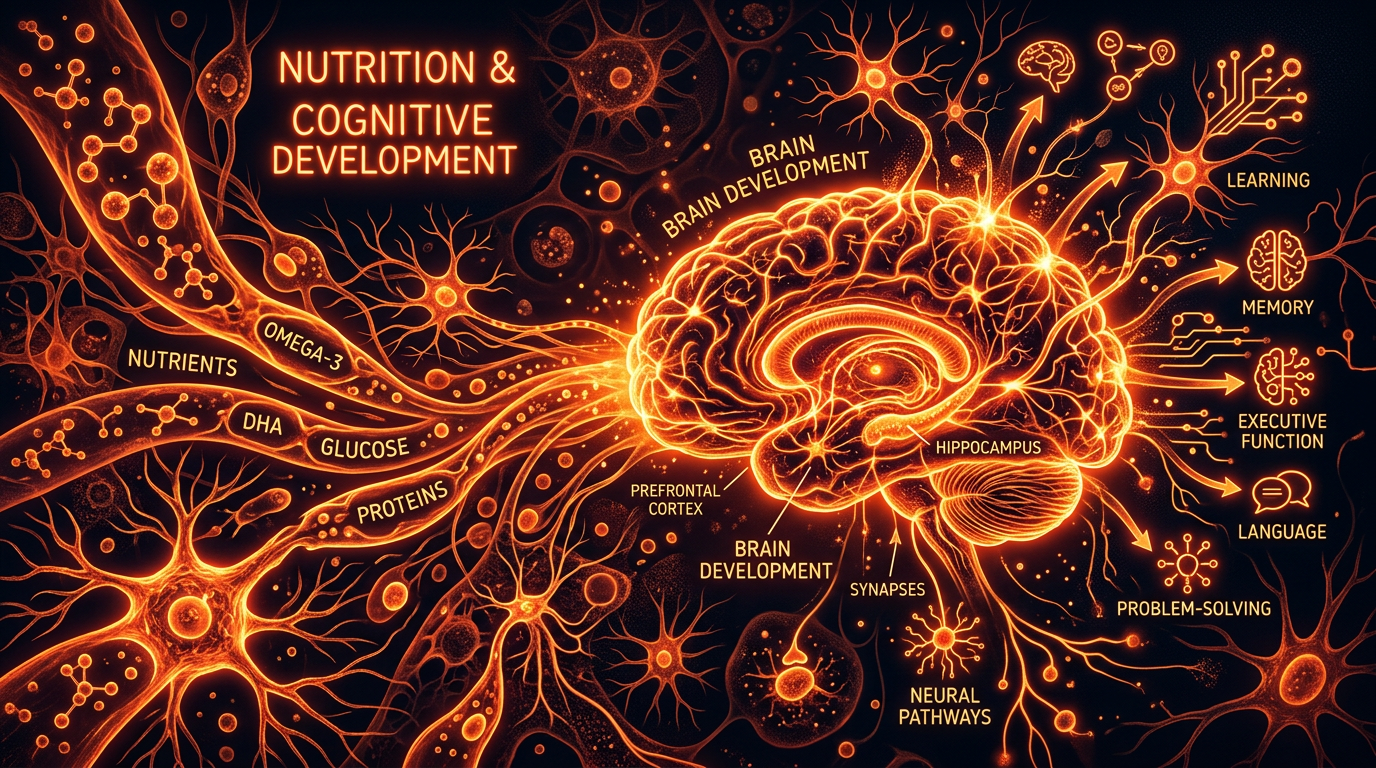
The brain’s development is a non-linear process that begins in utero and continues into the mid-twenties. Key processes—neurogenesis (the birth of neurons), synaptogenesis (the formation of connections), and myelination (the insulation of nerve fibres)—are all nutrient-dependent.
The Lipid Brain
Dry brain weight is approximately 60% fat. Long-chain polyunsaturated fatty acids (LC-PUFAs), particularly Docosahexaenoic acid (DHA) and Eicosapentaenoic acid (EPA), are essential for maintaining the fluidity of neuronal membranes. In the UK, where the traditional diet often lacks sufficient oily fish, many children may have suboptimal levels of these critical fats, impacting the speed of signal transmission across synapses.
Neurotransmitter Synthesis
The brain’s chemical messengers, such as dopamine, serotonin, and norepinephrine, are synthesized from amino acids derived from dietary protein. For example, tryptophan is the precursor to serotonin (regulating mood and sleep), while tyrosine is the precursor to dopamine (critical for reward, motivation, and attention). Deficiencies in the micronutrient co-factors required for these conversions—such as Vitamin B6, Iron, and Zinc—can significantly impair the brain's ability to regulate focus and emotion.
ADHD and Nutrition: Moving Beyond the "Sugar Rush"
ADHD is a complex neurodevelopmental disorder characterised by patterns of inattention, hyperactivity, and impulsivity. Historically, the dietary conversation around ADHD focused almost exclusively on sugar. While the "sugar high" is a common parental observation, the scientific reality is more nuanced.
The Glycaemic Rollercoaster
It is not necessarily sugar itself that "causes" ADHD, but rather the glycaemic variability. Diets high in refined carbohydrates and "ultra-processed foods" (UPFs)—which now account for over 50% of the average UK household's calorie intake—lead to rapid spikes and subsequent crashes in blood glucose. For a child with ADHD, whose executive function is already strained, these glucose fluctuations can exacerbate symptoms of irritability and poor concentration.
The "Southampton Six" and Food Additives
The UK has been a pioneer in researching the link between food additives and hyperactivity. The landmark 2007 "Southampton Study," commissioned by the Food Standards Agency (FSA), found that certain artificial food colours and the preservative sodium benzoate increased hyperactivity in children. This led to the "Southampton Six" (e.g., Tartrazine, Allura Red) requiring a warning label in the UK: "May have an adverse effect on activity and attention in children." Many UK manufacturers have since reformulated products, but these additives remain present in some budget-tier processed goods, creating a socio-economic divide in nutritional exposure.
The Omega-3 Evidence Base
Of all nutritional interventions for ADHD, Omega-3 supplementation has the most robust evidence. Meta-analyses suggest that children with ADHD often have lower blood levels of EPA and DHA. The Oxford-Durham study, a seminal piece of UK research, demonstrated that supplementation with specific ratios of Omega-3 and Omega-6 fatty acids improved reading, spelling, and behaviour in children with developmental coordination disorders and ADHD symptoms.
Micronutrients: The Spark Plugs of Cognition
In the UK, "hidden hunger"—where caloric intake is sufficient but nutrient density is low—is a growing concern. Several key minerals are vital for neurodevelopmental health.
Iron
Iron is a co-factor for tyrosine hydroxylase, the rate-limiting enzyme in dopamine synthesis. Iron deficiency, even without clinical anaemia, is linked to cognitive "fog" and restlessness. UK National Diet and Nutrition Surveys (NDNS) consistently show that a significant percentage of British teenage girls and toddlers are below the Lower Reference Nutrient Intake (LRNI) for iron.
Zinc
Zinc regulates dopamine transporter activity and is essential for the metabolism of melatonin, which regulates sleep—a frequent struggle for those with ADHD. Studies have shown that children with ADHD often exhibit lower hair and serum zinc levels compared to neurotypical peers.
Magnesium
Often referred to as "nature’s tranquiliser," magnesium is involved in over 300 enzymatic reactions. It helps regulate the HPA (hypothalamic-pituitary-adrenal) axis, which manages the stress response. In the context of the UK’s high-stress academic environment, ensuring adequate magnesium through leafy greens, nuts, and seeds is vital for reducing the "inner restlessness" associated with ADHD.
The Gut-Brain Axis and Neurodevelopment
Perhaps the most exciting frontier in neurodevelopmental nutrition is the gut-brain axis. The enteric nervous system, often called the "second brain," communicates with the central nervous system via the vagus nerve and biochemical signalling.
The Microbiome
The gut microbiome—the trillions of bacteria residing in the intestines—produces neuroactive compounds, including 95% of the body’s serotonin. Emerging research suggests that children with ADHD and ASC have different microbial profiles than neurotypical children.
In the UK, the high consumption of UPFs and the relatively low intake of dietary fibre (the "Prebiotic" that feeds good bacteria) may contribute to "dysbiosis." This state of microbial imbalance can increase intestinal permeability ("leaky gut"), potentially leading to systemic inflammation that affects brain function. The use of probiotics in managing ADHD symptoms is an area of active clinical trial within the NHS and private sectors, showing promise in reducing emotional lability.
Autism Spectrum Condition (ASC) and Dietary Challenges
While ADHD is often characterised by dysregulation, ASC frequently involves sensory sensitivities and rigidity, which manifest in the diet as "selective eating" or "food neophobia."
Sensory Processing and Nutrition
For many autistic children in the UK, the texture, smell, or colour of food can be overwhelming. This often leads to a "white food diet" (bread, pasta, nuggets), which is high in carbohydrates but low in essential vitamins and minerals. Clinical practice in the UK emphasizes that these are not "picky eaters" in the traditional sense, but individuals experiencing sensory overload.
The Case for Vitamin D
The UK’s geographic location means that from October to March, the sun is not strong enough for the body to synthesise Vitamin D. Vitamin D receptors are widespread in the brain, and the nutrient plays a role in gene expression and neuroprotection. Low levels of Vitamin D have been correlated with increased severity of ASC symptoms. Public Health England (PHE) now recommends that everyone, especially those with neurodivergent conditions who may have restricted diets, take a daily 10mcg supplement during winter months.
Maternal Nutrition: The First 1,000 Days
Cognitive development begins in the womb. The "First 1,000 Days"—from conception to a child’s second birthday—is a critical window.
Iodine: The UK’s Silent Deficiency
The UK is currently ranked among the top ten iodine-deficient nations globally. Iodine is essential for the production of thyroid hormones, which are critical for fetal brain development. Even mild-to-moderate deficiency during pregnancy has been linked to lower IQ and poorer reading scores in offspring. The primary source of iodine in the UK diet is dairy milk; the rise of unfortified plant-based milks (oat, almond, soy) has inadvertently increased the risk of iodine deficiency among pregnant women in the UK.
Folate and Choline
While the UK government’s decision to fortify flour with folic acid aims to prevent neural tube defects, folate also plays a role in DNA methylation and brain health throughout childhood. Choline, found in eggs, is another nutrient gaining attention for its role in the development of the hippocampus—the brain's memory centre.
The Impact of Modern Dietary Patterns in the UK
The British food environment poses unique challenges to neurodevelopment. The "Western Pattern Diet," characterised by high intakes of salt, sugar, and saturated fats, is diametrically opposed to the "Mediterranean Diet" often cited as the gold standard for brain health.
The Problem with Ultra-Processed Foods (UPFs)
UPFs are engineered to be hyper-palatable, triggering the brain's reward system in a way that can be particularly addictive for those with ADHD, who may have a "dopamine deficit." Furthermore, these foods often contain emulsifiers and stabilizers that may disrupt the gut microbiome. The high prevalence of UPFs in UK school lunchboxes and "grab-and-go" culture is a significant hurdle for cognitive health.
The "Cost of Living" Crisis and Brain Health
It is impossible to discuss nutrition in the UK without acknowledging the socio-economic context. Healthy, nutrient-dense foods (fresh fish, berries, organic vegetables) are often more expensive per calorie than processed alternatives. Food insecurity in the UK is directly linked to poorer educational outcomes, and for neurodivergent children in low-income households, the lack of access to high-quality nutrition can create a "double disadvantage."
Practical Strategies for Supporting Neurodevelopment
For parents, educators, and clinicians in the UK, the goal is to create a "brain-supportive" environment. This does not necessarily require expensive "superfoods" or restrictive diets, which can be stressful and counterproductive.
1. Stabilising Blood Sugar
Switching from white "refined" carbohydrates to "complex" wholegrains (e.g., swapping white bread for granary or oats) helps maintain steady energy levels. The "Eatwell Guide" provided by the NHS offers a useful framework, but for neurodivergent children, the emphasis should be on pairing carbohydrates with protein and healthy fats to slow glucose absorption.
2. Prioritising Omega-3s
The NHS recommends two portions of fish a week, one of which should be oily (e.g., mackerel, sardines, salmon). For children who refuse fish, high-quality algae-based DHA supplements are a viable vegan alternative.
3. The "Food First" Approach to Micronutrients
Before turning to supplements, focusing on nutrient-dense UK staples can help:
- Iron: Lean red meat, lentils, fortified breakfast cereals, and spinach (served with Vitamin C to aid absorption).
- Zinc: Pumpkin seeds, chickpeas, and British beef.
- Magnesium: Brown rice, almonds, and dark chocolate (70%+ cocoa).
4. Managing Sensory Issues in ASC
For selective eaters, "food chaining" is a successful technique used by UK dietitians. This involves introduced new foods that are very similar to "safe" foods (e.g., moving from a specific brand of chicken nugget to a similar-looking homemade version, then to a breaded fish goujon).
5. Hydration
Mild dehydration can impair concentration and increase irritability. In the UK school system, many "sugar-free" squashes contain artificial sweeteners (like aspartame) which some parents find affect their child’s behaviour. Plain water or diluted natural fruit juice is the preferred option.
The Role of Schools and Policy
The UK government's "School Food Standards" are designed to ensure children receive a balanced diet. However, the implementation varies. Many schools are now moving towards "nurture groups" where mealtime is used as a social and educational tool to encourage trying new foods.
Furthermore, there is a growing movement in the UK to reconsider the timing of school meals and the availability of snacks. For a child on ADHD medication (such as Methylphenidate), appetite suppression is a common side effect during the day. This makes the quality of "rebound" nutrition in the evening and "power" breakfasts in the morning even more critical.
Myth-Busting: What Nutrition Cannot Do
While nutrition is a powerful tool, it is essential to maintain an evidence-based perspective.
- Myth: Diet can "cure" ADHD/ASC.
Neurodevelopmental conditions are structural and genetic. Nutrition can optimise function and mitigate symptoms, but it does not remove the underlying neurodivergence.
- Myth: All children with ADHD should be gluten and casein-free.
While some children have sensitivities, there is no evidence that a GFCF (Gluten-Free, Casein-Free) diet benefits all neurodivergent children. Restrictive diets should only be undertaken under the guidance of a Registered Dietitian to avoid nutritional deficiencies.
- Myth: Supplements are better than food.
The "synergy" of whole foods—where nutrients work together—is almost always superior to isolated supplements.
Future Directions: Personalised Nutrition
The future of neurodevelopmental nutrition in the UK lies in nutrigenomics—the study of how our genes respond to nutrients. For example, some individuals have a genetic variation that makes it difficult for them to convert folic acid into its active form (methylfolate). In the future, "precision nutrition" may allow UK clinicians to tailor dietary recommendations based on a child’s specific genetic profile.
Moreover, the increasing recognition of "Neuro-Affirming" care means that dietary interventions are moving away from "fixing" the child and towards supporting their unique brain to function at its best.
Conclusion
The link between nutrition and cognitive development is one of the most vital areas of modern health science. For the neurodivergent community in the UK, food is far more than fuel; it is a modulator of symptoms, a builder of neurotransmitters, and a protector of long-term brain health.
By moving away from ultra-processed diets and embracing a nutrient-dense, glycaemically stable approach, we can provide children with ADHD and other neurodevelopmental conditions the best possible foundation. However, this requires a systemic shift—from government policy on food prices and school meals to increased awareness among GPs and educators.
In the quest to support the developing mind, the kitchen is just as important as the classroom or the clinic. Providing our children with the right nutrients is perhaps the most profound way we can respect the complexity and potential of the human brain.
Summary of Key Nutrients and Sources (UK Context)
| Nutrient | Role in Brain Health | UK-Friendly Sources | | :--- | :--- | :--- | | Omega-3 (DHA/EPA) | Membrane fluidity, signal speed | Mackerel, Salmon, Algae oil, Walnuts | | Iron | Dopamine synthesis, oxygen transport | Beef, Fortified cereals, Spinach, Lentils | | Zinc | Neurotransmitter regulation | Pumpkin seeds, Lamb, Shellfish, Eggs | | Iodine | Thyroid function, IQ development | Dairy milk, Haddock, Iodised salt | | Vitamin D | Neuroprotection, gene expression | Sunlight (Summer), Egg yolks, Mushrooms, Supplements (Winter) | | B Vitamins | Energy metabolism, Methylation | Wholegrains, Leafy greens, Marmite (fortified) | | Magnesium | Stress regulation, Sleep | Oats, Almonds, Dark leafy greens |
References and Further Reading (Institutional Resources)
- NHS England: Diet and Lifestyle for ADHD.
- The British Dietetic Association (BDA): Food Fact Sheets on Autism and ADHD.
- The National Autistic Society (NAS): Strategies for Selective Eating.
- The Caroline Walker Trust: Nutritional Guidelines for Vulnerable Groups in the UK.
- Scientific Advisory Committee on Nutrition (SACN): Reports on Vitamin D and Iodine.
This article is provided for informational and educational purposes only. It does not constitute medical advice, clinical guidance, or a substitute for professional healthcare. Information reflects cited research at time of publication. Always consult a qualified healthcare professional before acting on any health information.
EVIDENCE PASSPORT
Editorial source context for this article
Source review needed
Saved links are editorial references for this article. They may support specific claims rather than every sentence. Open and assess each source in context. This passport does not independently verify them.
Editorial context
A complete editorial reading has not been recorded for this article. Source links remain available for you to open and assess directly.
Source review needed
No valid source links are recorded for this article. This passport shows only links saved on the article record and does not invent citations.
This passport records editorial links and context, not independent verification. Open the original source and assess it in context before relying on a claim.
Medical Disclaimer
The information in this article is for educational purposes only and does not constitute medical advice, diagnosis, or treatment. Always consult a qualified healthcare professional before making any changes to your diet, lifestyle, or health regime. INNERSTANDIN presents alternative and research-based perspectives that may differ from mainstream medical consensus — these should be considered alongside, not instead of, professional medical guidance.
Read Full DisclaimerContinue the thread
Keep this question moving.
Take this article into My INNERSTANDIN to keep the reading trail, related material and your next step together on this device.
Explore this in the Body Map
See where this hits your biology. Interactive anatomy, threats, and protective protocols.
Dig deeper in the Library
Free, longform PDF volumes that go beyond headlines into mechanisms and references.