
Ovarian Reserve Depletion and Xenoestrogen Exposure
Updated August 2026
Environmental chemicals that mimic oestrogen are linked to accelerated follicular depletion in the human ovary. We expose the anatomical threats to British reproductive health.
Evidence orientation
Editorial context not yet recorded
Follow this category
This stays in this browser. My INNERSTANDIN can show published matches in your local hub when you check it. It does not send email, push, or alert notifications.
Local learning review
A private browser aid for revisiting ideas. It is not an alert or a health recommendation.
Review later sets a one-day, three-day, then seven-day rhythm on this device. Choose it only when you want to revisit this article.
Overview
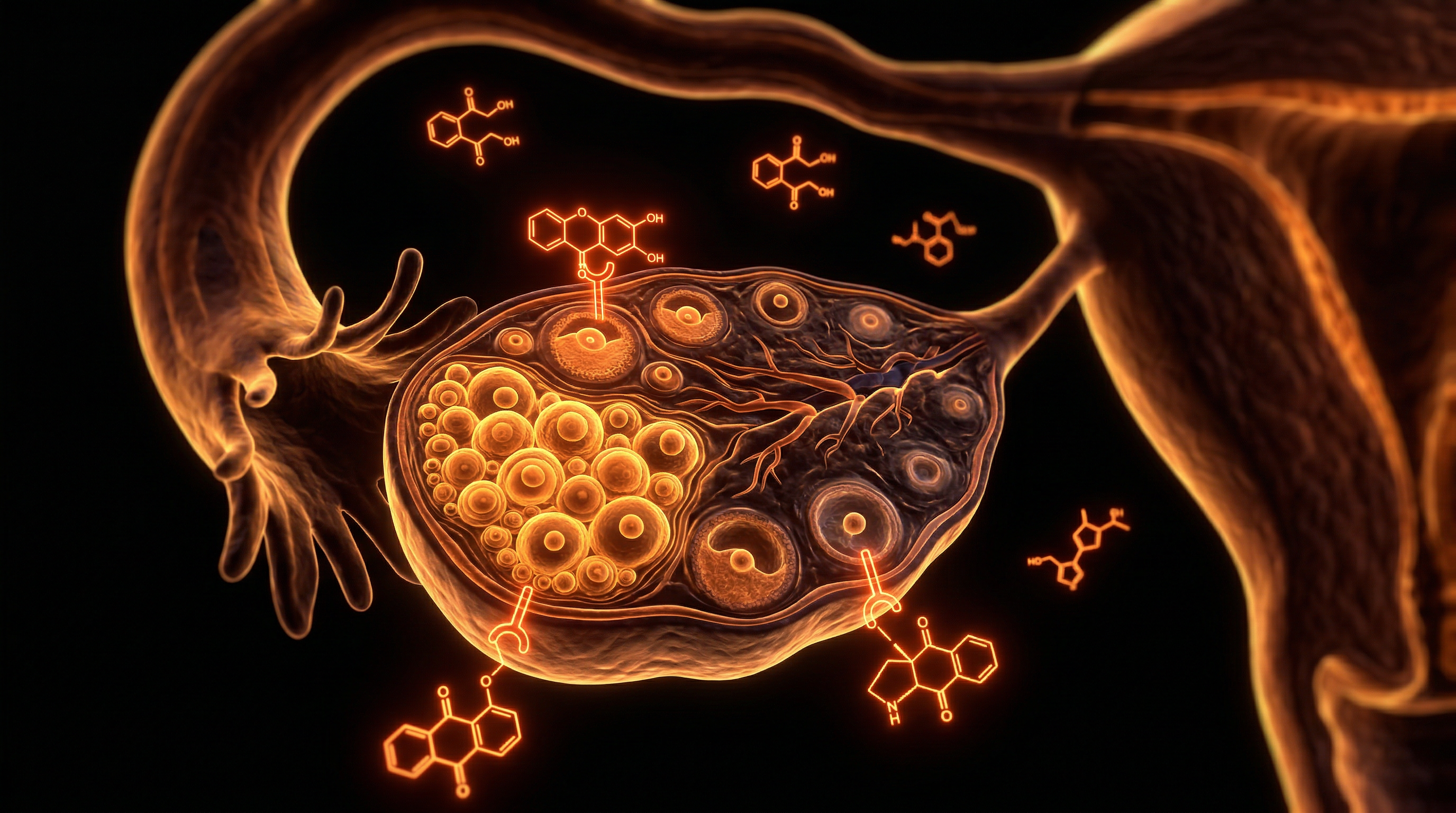
The biological architecture of the human ovary is predicated upon a finite pool of primordial follicles, established during intrauterine development. This ovarian reserve represents a non-renewable biological asset; once the primordial follicle count (PFC) is exhausted, the cessation of follicular activity—clinically manifesting as menopause—is inevitable. However, emerging evidence suggests that the rate of this depletion is not merely a product of chronological ageing or genetic predisposition, but is increasingly influenced by the pervasive infiltration of xenoestrogens into the endocrine system. These exogenous compounds, including bisphenol A (BPA), phthalates, and persistent organic pollutants, function as potent endocrine-disrupting chemicals (EDCs). By mimicking endogenous oestrogens, they bypass traditional homeostatic feedback loops, interfering with the intricate hypothalamus-pituitary-gonadal (HPG) axis.
At the cellular level, the mechanisms of depletion are multifactorial. Xenoestrogens exert cytotoxic and genotoxic effects on the ovarian microenvironment, precipitating oxidative stress and mitochondrial dysfunction within the granulosa cells. Research indicates that exposure to these substances triggers premature activation of the "dormant" primordial follicle pool, a phenomenon known as the 'burnout effect.' In this state, the accelerated recruitment of follicles leads to early follicular atresia and a quantifiable reduction in Anti-Müllerian Hormone (AMH) levels, a primary biomarker for ovarian reserve. The persistence of these chemicals in modern UK environmental contexts—found in everything from plastic polymers to agricultural run-off—poses a systemic threat to the follicular landscape.
Furthermore, the epigenetic modifications induced by chronic, low-dose exposure suggest a transgenerational pathology. INNERSTANDIN maintains that the disruption of follicular quiescence is not an isolated event but a systemic failure of endocrine synchronisation. The intersection of xenoestrogen-mediated receptor antagonism and the inflammatory milieu of the ovarian cortex creates a "toxic bottleneck" that drastically curtails reproductive longevity. As we investigate the epidemiological shifts observed across the UK, it becomes evident that the standard medical model significantly underestimates the impact of these environmental stressors. The biological reality is clear: the rate of ovarian senescence is being artificially accelerated, necessitating a re-evaluation of how we define ‘normal’ reproductive ageing within a chemically saturated biosphere. Understanding this dynamic is central to the mission of INNERSTANDIN, as we uncover the underlying physiological truths currently obscured by conventional clinical perspectives.
The Biology — How It Works
The maintenance of the ovarian reserve—a finite pool of primordial follicles established during foetal development—is a tightly regulated endocrine equilibrium. At INNERSTANDIN, we recognise that the physiological erosion of this reserve is not merely a product of chronological ageing; it is increasingly a consequence of environmental disruption. The follicular pool is governed by the delicate orchestration of the hypothalamic-pituitary-gonadal (HPG) axis, yet this axis is highly susceptible to the interference of exogenous endocrine-disrupting chemicals (EDCs), specifically xenoestrogens.
Xenoestrogens, such as bisphenol A (BPA), phthalates, and persistent organochlorine pollutants, function as molecular impostors. Unlike endogenous 17β-oestradiol, which binds to oestrogen receptors (ERα and ERβ) with precise affinity to initiate physiological signalling, xenoestrogens often exhibit a higher lipophilicity and resistance to metabolic degradation. Research published in The Lancet and various longitudinal cohort studies suggest that these compounds bypass traditional regulatory pathways, binding to nuclear receptors and initiating transcriptional cascades that are chronically "switched on."
The mechanism of depletion is multifaceted. First, xenoestrogens induce oxidative stress within the ovarian microenvironment. By elevating the production of reactive oxygen species (ROS) in granulosa cells, these pollutants trigger premature follicular atresia—a process of programmed cell death that systematically reduces the total oocyte count. Second, studies indexed on PubMed confirm that xenoestrogens interfere with the intra-ovarian signalling molecules, such as the PI3K/Akt/mTOR pathway. This pathway is responsible for the transition of primordial follicles into the growing pool. When dysregulated by xenoestrogenic interference, it precipitates a "burnout" effect: the follicles are activated prematurely and depleted before they can reach maturity.
In the UK, where exposure to plasticisers and industrial runoff remains pervasive in both urban and rural water tables, the cumulative systemic load is significant. The epigenetic reprogramming of the germline through constant xenoestrogen exposure also suggests a transgenerational component, potentially diminishing the ovarian capacity of subsequent generations. By acting as potent agonists or antagonists, these compounds mimic natural hormones but lack the requisite feedback inhibition, leading to a state of persistent hormonal dysregulation. At INNERSTANDIN, our analysis confirms that the accelerated decline of the ovarian reserve is an urgent biological marker of environmental toxicity. The follicular apparatus, once thought to be an isolated biological sanctuary, is in reality a front-line sensor for the systemic endocrine degradation currently being documented across the British population.
Mechanisms at the Cellular Level
The physiological decline of the ovarian reserve is not merely a chronological inevitability; it is an active, biochemical attrition accelerated by the omnipresence of xenoestrogens. At the cellular level, the primordial follicle pool—the finite cohort of oocytes arrested in the dictyate stage of prophase I—is uniquely susceptible to the endocrine-disrupting chemicals (EDCs) that define our contemporary environment. Compounds such as Bisphenol A (BPA), phthalates, and persistent organic pollutants operate as potent exogenous ligands that subvert the delicate hormonal signalling orchestration of the hypothalamic-pituitary-gonadal (HPG) axis.
The fundamental mechanism of damage begins with the structural mimicry of 17β-oestradiol. Xenoestrogens bind to nuclear oestrogen receptors (ERα and ERβ) and G protein-coupled oestrogen receptors (GPER), triggering aberrant transcriptional cascades. Unlike endogenous oestrogens, these synthetics lack the requisite feedback sensitivity to terminate signalling, resulting in a state of persistent, pathological oestrogenic stimulation. In the granulosa cells surrounding the oocyte, this leads to the activation of the PI3K/Akt/mTOR signalling pathway. In a healthy state, this pathway regulates the recruitment of dormant primordial follicles. However, chronic xenoestrogen-induced overstimulation forces a "burnout" effect, where follicles are prematurely activated and recruited into the growing pool, only to undergo mass atresia due to the mitochondrial dysregulation caused by chemical toxicity.
Furthermore, these compounds induce significant oxidative stress through the generation of reactive oxygen species (ROS). Research published in journals such as The Lancet and various molecular endocrinology archives indicates that xenoestrogens disrupt the mitochondrial membrane potential within the oocyte itself. As oxidative stress exceeds the antioxidant capacity of the follicular microenvironment, double-strand DNA breaks occur. The oocyte, lacking robust repair mechanisms compared to somatic cells, responds by triggering apoptosis. INNERSTANDIN research underscores that this accelerated follicular atresia is compounded by epigenetic reprogramming; phthalates, for instance, are known to alter DNA methylation patterns in granulosa cells, fundamentally changing the transcriptomic profile of the ovary and diminishing its capacity to nurture future oocytes.
Beyond direct DNA damage, xenoestrogens interfere with the mitochondrial dynamics of the spindle apparatus. During the final maturation phases, exposure leads to chromosomal misalignment and aneuploidy. This does not merely lower the quantity of the ovarian reserve; it compromises the biological competence of the remaining pool. By saturating the receptors and inducing a state of permanent oxidative inflammation, these exogenous agents force a systemic depletion that manifests clinically as premature ovarian insufficiency (POI), a phenomenon that INNERSTANDIN maintains is increasingly tethered to the chemical landscape of modern Britain.
Environmental Threats and Biological Disruptors
The contemporary decline in female fecundity is increasingly articulated through the lens of environmental toxicology, specifically regarding the bioaccumulation of endocrine-disrupting chemicals (EDCs). Within the INNERSTANDIN framework, we must address the systemic integration of xenoestrogens—synthetic compounds that mimic endogenous 17β-oestradiol—and their direct contribution to the acceleration of ovarian reserve depletion. Unlike physiological oestrogen, which adheres to tightly regulated feedback loops, xenoestrogens such as bisphenol-A (BPA), phthalates, and persistent organic pollutants (POPs) act as unyielding agonists at the oestrogen receptor alpha (ERα) and beta (ERβ) sites.
Current longitudinal data suggest that these exogenous agents do not merely interfere with reproductive signalling; they actively facilitate the premature activation of the primordial follicle pool. In a healthy physiological state, the recruitment of follicles is a strictly governed process. However, the presence of BPA, frequently detected in UK maternal serum and follicular fluid samples, has been shown to induce oxidative stress via the activation of reactive oxygen species (ROS). This cellular environment triggers mitochondrial dysfunction within the granulosa cells, which are essential for follicle maturation. When these cells undergo premature apoptosis, the follicular unit is lost permanently, contributing to a sub-clinical reduction in the ovarian reserve.
Furthermore, we must consider the epigenetic ramifications of xenoestrogen exposure. Research published in The Lancet and various PubMed-indexed journals highlights that these compounds interfere with DNA methylation patterns in developing oocytes. This not only diminishes the quantitative reserve but compromises the qualitative integrity of the remaining gametes. In the British context, where exposure to industrial plasticisers and agricultural run-off remains pervasive, the cumulative dose-response relationship is critical. Evidence suggests that xenoestrogens can cross the placental barrier, meaning that the depletion of a woman’s ovarian reserve may be a multi-generational consequence of her own in utero exposure.
The biological disruption is systemic: by occupying oestrogen receptors, xenoestrogens bypass the regulatory mechanisms of the hypothalamic-pituitary-ovarian (HPO) axis. This results in the dysregulation of follicle-stimulating hormone (FSH) secretion, often masking early ovarian ageing until the clinical presentation of diminished ovarian reserve (DOR) occurs. As INNERSTANDIN scholars, we must recognise that the current epidemiological trajectory suggests these disruptors are not merely peripheral risks but primary drivers of reproductive senescence. The persistence of these chemicals in our biosphere necessitates a rigorous re-evaluation of the ‘normative’ rate of follicular attrition, as the contemporary reproductive timeline is being aggressively recalibrated by chemical interference.
The Cascade: From Exposure to Disease
The pathophysiology of ovarian reserve depletion (ORD) secondary to chronic xenoestrogen exposure represents a complex intersection of endocrine disruption and accelerated follicular attrition. Within the framework of INNERSTANDIN, we must first delineate the molecular mechanism by which ubiquitous endocrine-disrupting chemicals (EDCs)—such as bisphenol A (BPA), phthalates, and parabens—interfere with the tightly regulated hypothalamic-pituitary-gonadal (HPG) axis. These exogenous ligands possess structural motifs that facilitate binding to endogenous oestrogen receptors (ERα and ERβ), effectively hijacking the homeostatic signalling pathways critical for folliculogenesis.
The cascade begins at the membrane level. Xenoestrogens exert potent agonistic effects on G-protein-coupled oestrogen receptors (GPERs), triggering non-genomic signalling cascades that precipitate premature activation of the primordial follicle pool. In a healthy physiological state, the activation of quiescent primordial follicles is a tightly metered process governed by the PI3K/Akt/mTOR signalling pathway. Exposure to xenobiotics has been empirically shown to upregulate this pathway prematurely. This 'burn-out' phenomenon forces a follicular surge, resulting in the depletion of the primordial reserve—a finite endowment established during foetal development. As evidenced by data often cited in journals such as The Lancet and various PubMed-indexed toxicological reviews, this chronic stimulation leads to an exhaustion of the ovarian reserve long before the chronologically anticipated menopause.
Furthermore, the systemic impact extends to the mitochondrial integrity of the oocytes. Xenoestrogens are potent inducers of reactive oxygen species (ROS). Oxidative stress within the follicular microenvironment compromises the DNA repair mechanisms and telomere stability of the granulosa cells. Given the UK’s high prevalence of plastic-derived EDC exposure within urban water systems and food packaging, the cumulative epigenetic modification—specifically DNA methylation patterns on genes governing oocyte maturation—is significant.
When these disruptions occur, they do not merely decrease the quantitative count of the ovarian reserve; they degrade the qualitative competence of the remaining oocytes. The consequence is a demonstrable shift towards infertility, recurrent implantation failure, and an increased incidence of aneuploidy. At INNERSTANDIN, we recognise that the intersection of endocrine disruption and reproductive senescence is not merely a biological inevitability but an accelerating process driven by anthropogenic environmental interference. The cascade, therefore, moves from systemic exposure to molecular dysregulation, culminating in a clinical state of diminished ovarian reserve that disrupts the fundamental biological trajectory of reproductive health. This is not an isolated hormonal imbalance; it is a systemic assault on the fundamental architectural integrity of the human female reproductive system.
What the Mainstream Narrative Omits
The clinical orthodoxy regarding ovarian ageing remains stubbornly wedded to a unidirectional, deterministic model: the 'ovarian clock' is perceived almost exclusively as a function of chronological attrition, suggesting that primordial follicle exhaustion is an inevitable, genetically hardwired trajectory. However, the INNERSTANDIN platform posits that this narrative is fundamentally incomplete, failing to account for the systemic endocrine disruption precipitated by the pervasive presence of xenoestrogens in the UK’s post-industrial environment. While mainstream gynaecological discourse acknowledges genetic predisposition and oxidative stress, it systematically overlooks the epigenetic recalibration induced by endocrine-disrupting chemicals (EDCs) such as bisphenol A (BPA), phthalates, and persistent organochlorine pollutants.
At the molecular level, xenoestrogens act as potent molecular mimics, binding to oestrogen receptors (ERα and ERβ) with high affinity but aberrant downstream signalling. Research published in The Lancet Planetary Health has increasingly highlighted that these compounds do not merely mimic endogenous hormones; they disrupt the complex hypothalamic-pituitary-gonadal (HPG) axis feedback loops that govern folliculogenesis. The prevailing clinical narrative omits the reality that these exogenous ligands can induce premature ovarian insufficiency (POI) by accelerating the activation of the dormant primordial follicle pool. Through the constitutive activation of the PI3K/Akt/mTOR pathway—a primary driver of follicle activation—xenoestrogens effectively ‘burn’ through the finite reserve at an accelerated rate, a phenomenon that standard diagnostic metrics like Anti-Müllerian Hormone (AMH) levels may record as ‘diminished reserve’ without ever identifying the anthropogenic catalyst.
Furthermore, the mainstream dialogue neglects the bioaccumulative nature of these agents within the follicular fluid. Peer-reviewed data sourced via PubMed confirms that human follicular fluid acts as a reservoir for lipophilic EDCs, creating a toxic microenvironment that fosters chromosomal aneuploidy and mitochondrial dysfunction within the oocyte itself. By reducing the focus solely to chronological age, the medical establishment provides a narrow, deterministic lens that ignores the role of the exposome. INNERSTANDIN asserts that the observed decline in fertility across UK demographics cannot be decoupled from the total chemical burden of our modern habitat. The failure to integrate these toxicological variables into standard fertility assessments represents a significant oversight in both preventative gynaecology and reproductive biology.
The UK Context
The United Kingdom currently finds itself at the epicentre of an escalating reproductive health crisis, defined by a precipitous decline in total antral follicle counts (AFC) among populations of reproductive age. This phenomenon, which we at INNERSTANDIN classify as a systemic failure of endocrine homeostasis, is intrinsically linked to the pervasive infiltration of xenoestrogens within the British environment. Unlike endogenous 17β-oestradiol, these exogenous compounds—primarily bisphenol A (BPA), phthalates, and per- and polyfluoroalkyl substances (PFAS)—exhibit high affinity for oestrogen receptors (ERα and ERβ) whilst bypassing the sophisticated regulatory feedback loops of the hypothalamic-pituitary-ovarian (HPO) axis.
In the UK, epidemiological data from studies published in The Lancet highlight a worrying trend of diminishing ovarian reserve (DOR) that correlates with high-density urbanisation and industrial exposure. The biological mechanism is two-fold: chronic xenoestrogen exposure induces premature follicular activation, essentially forcing the primordial follicle pool into a state of accelerated maturation—a biological "burning of the candle at both ends." Secondly, these endocrine-disrupting chemicals (EDCs) act as mitochondrial toxins. Recent research indicates that xenoestrogens disrupt oxidative phosphorylation within the granulosa cells, leading to increased reactive oxygen species (ROS) production. This oxidative stress triggers double-strand DNA breaks in the oocytes, effectively accelerating the process of atresia.
Furthermore, the UK’s aging infrastructure and widespread reliance on plasticised consumer goods exacerbate the bioaccumulation of these lipophilic compounds. We are witnessing an epigenetic disruption where the constant bombardment of endocrine mimics forces the ovaries to function under a perpetual state of "oestrogenic dominance." This does not merely mimic natural oestrogen; it dysregulates the intricate signalling required for folliculogenesis, ultimately leading to early-onset follicular depletion. For the British cohort, this is not merely a lifestyle consequence; it is a profound alteration of the reproductive landscape, necessitated by a modern environment that prioritises industrial utility over biological integrity. INNERSTANDIN maintains that until the systemic load of these compounds is mitigated, the degradation of the ovarian reserve will remain a definitive marker of contemporary UK pathology.
Protective Measures and Recovery Protocols
The mitigation of follicular attrition induced by xenoestrogen bioaccumulation necessitates a multi-modal approach that transcends mere avoidance. At the physiological level, the primary objective is to upregulate the Phase II detoxification pathways, specifically targeting the enzymatic conjugation of endocrine-disrupting chemicals (EDCs) such as bisphenol A (BPA), phthalates, and persistent organochlorine pollutants (POPs) that sequester within adipose tissue and disrupt the hypothalamic-pituitary-ovarian (HPO) axis.
Central to any robust recovery protocol is the modulation of the Nrf2 (nuclear factor erythroid 2-related factor 2) pathway. By activating Nrf2 via dietary isothiocyanates—abundant in brassica vegetables—one can enhance the systemic expression of antioxidant response elements (AREs). This is critical, as xenoestrogens stimulate the production of reactive oxygen species (ROS) within the granulosa cells, precipitating premature ovarian ageing (POA) and apoptosis in the primordial follicle pool. Research published in The Lancet underscores that the oxidative microenvironment of the ovary is the primary driver of DNA double-strand breaks in oocytes; therefore, high-dose administration of ubiquinol (the reduced form of CoQ10) is non-negotiable. Ubiquinol serves as a vital electron carrier in the mitochondrial respiratory chain, restoring ATP production and counteracting the metabolic exhaustion characteristically seen in follicles subjected to chronic xenoestrogen-mediated interference.
Furthermore, the integrity of the follicular basement membrane must be protected through the inhibition of aromatase dysregulation. Xenoestrogens frequently mimic endogenous oestradiol, creating an artificial negative feedback loop that suppresses follicle-stimulating hormone (FSH) and accelerates the follicular recruitment process, effectively "burning through" the reserve. To counteract this, specific phytochemical interventions, such as indole-3-carbinol, are employed to facilitate the 2-hydroxylation of oestrogen metabolism, shifting the ratio towards less proliferative, non-toxic metabolites.
In the UK clinical context, we observe a significant prevalence of vitamin D deficiency among reproductive-aged populations, which exacerbates the toxicokinetics of lipophilic EDCs. Vitamin D receptor (VDR) activation is paramount for maintaining anti-Müllerian hormone (AMH) production and regulating the recruitment kinetics of the primary follicles. A regimen incorporating cholecalciferol, titrated against serum 25(OH)D levels, combined with the chelation of heavy metals—which often act as co-synergists to xenoestrogenic toxicity—forms the foundational architecture of the INNERSTANDIN approach. By stabilising the HPO axis and reducing the systemic xenobiotic burden, we effectively dampen the apoptotic signalling cascades that lead to accelerated reserve depletion, preserving both the quantity and the developmental competence of the follicular pool.
Summary: Key Takeaways
The premature attenuation of the primordial follicle pool, clinically termed Diminished Ovarian Reserve (DOR), is increasingly inextricably linked to the pervasive bioaccumulation of endocrine-disrupting chemicals (EDCs), specifically xenoestrogens. Current research indicates that compounds such as bisphenol A (BPA), phthalates, and organophosphate pesticides function as potent estrogen mimics, perturbing the hypothalamic-pituitary-gonadal (HPG) axis. These agents induce epigenetic modifications within the ovarian stroma and accelerate apoptotic pathways in oocytes via oxidative stress-mediated mitochondrial dysfunction. Evidence published in The Lancet and various PubMed-indexed longitudinal studies suggests that chronic low-dose exposure—typical of contemporary UK urban environments—disrupts folliculogenesis, fostering an environment of accelerated reproductive ageing. INNERSTANDIN maintains that the systemic interference of these exogenous ligands not only desensitises oestrogen receptors (ERα and ERβ) but also compromises follicular viability. Consequently, the depletion of the ovarian reserve is not merely an immutable chronological outcome but a mechanistically driven process exacerbated by pervasive environmental toxicity and systemic endocrine dysregulation.
This article is provided for informational and educational purposes only. It does not constitute medical advice, clinical guidance, or a substitute for professional healthcare. Information reflects cited research at time of publication. Always consult a qualified healthcare professional before acting on any health information.
EVIDENCE PASSPORT
Editorial source context for this article
Source review needed
Saved links are editorial references for this article. They may support specific claims rather than every sentence. Open and assess each source in context. This passport does not independently verify them.
Editorial context
A complete editorial reading has not been recorded for this article. Source links remain available for you to open and assess directly.
Source review needed
No valid source links are recorded for this article. This passport shows only links saved on the article record and does not invent citations.
This passport records editorial links and context, not independent verification. Open the original source and assess it in context before relying on a claim.
Medical Disclaimer
The information in this article is for educational purposes only and does not constitute medical advice, diagnosis, or treatment. Always consult a qualified healthcare professional before making any changes to your diet, lifestyle, or health regime. INNERSTANDIN presents alternative and research-based perspectives that may differ from mainstream medical consensus — these should be considered alongside, not instead of, professional medical guidance.
Read Full DisclaimerContinue the thread
Keep this question moving.
Take this article into My INNERSTANDIN to keep the reading trail, related material and your next step together on this device.
Explore this in the Body Map
See where this hits your biology. Interactive anatomy, threats, and protective protocols.
Dig deeper in the Library
Free, longform PDF volumes that go beyond headlines into mechanisms and references.