
The HPA Axis: Anatomy of Modern Stress
Updated August 2026
The structural over-activation of the hypothalamus-pituitary-adrenal axis is a silent epidemic in UK urban environments. We break down the anatomical feedback loops that govern the human stress response.
Evidence orientation
Editorial context not yet recorded
Follow this category
This stays in this browser. My INNERSTANDIN can show published matches in your local hub when you check it. It does not send email, push, or alert notifications.
Local learning review
A private browser aid for revisiting ideas. It is not an alert or a health recommendation.
Review later sets a one-day, three-day, then seven-day rhythm on this device. Choose it only when you want to revisit this article.
Overview
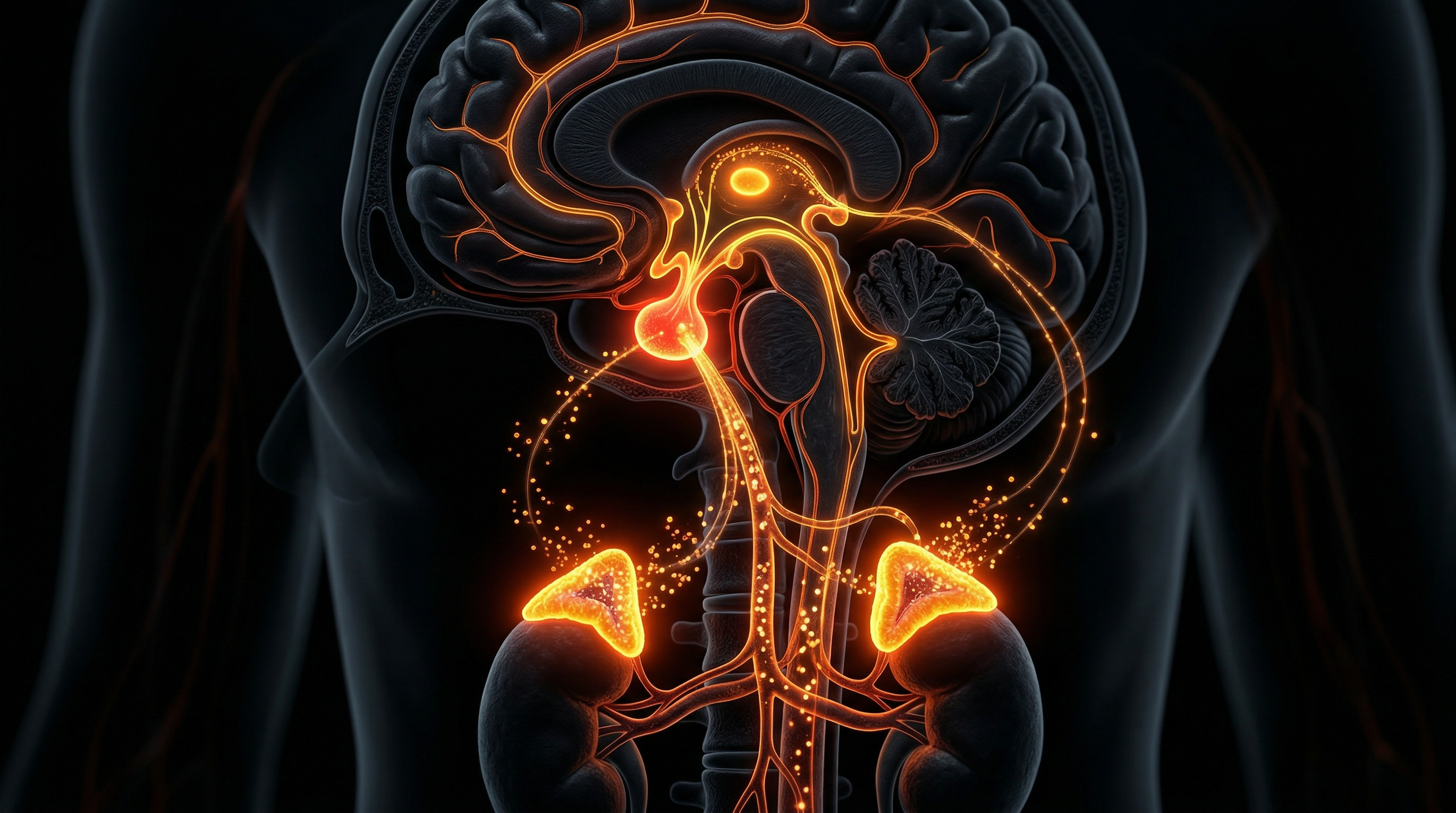
The Hypothalamic-Pituitary-Adrenal (HPA) axis represents the preeminent neuroendocrine substrate through which the human organism mediates its allostatic response to exogenous and endogenous stressors. At INNERSTANDIN, we posit that the HPA axis is not merely a biological feedback loop but the primary architecture of modern physiological degradation. Anatomically, this tripartite circuit initiates within the paraventricular nucleus (PVN) of the hypothalamus, where the synthesis of corticotropin-releasing hormone (CRH) and arginine vasopressin (AVP) serves as the foundational molecular trigger. These neuropeptides are secreted into the hypophyseal portal system, acting upon the anterior pituitary gland to stimulate the cleavage of pro-opiomelanocortin (POMC) into adrenocorticotropic hormone (ACTH). This hormone subsequently enters systemic circulation to incite the adrenal cortex, specifically the zona fasciculata, to synthesise and release glucocorticoids, most notably cortisol.
While the evolutionary utility of this cascade—facilitating the 'fight-or-flight' response—is well-documented in the literature, the contemporary environmental milieu of the United Kingdom and global industrialised societies has fundamentally repurposed this system. Chronic, low-grade psychosocial stressors, such as occupational instability and urban sensory overload, lead to sustained hypercortisolemia. Unlike the acute stress responses of our ancestral precursors, modern stress is frequently unremitting. According to data consolidated in The Lancet, this persistence induces a state of chronic allostatic load, which transcends simple metabolic regulation.
The systemic repercussions are exhaustive. Prolonged glucocorticoid exposure disrupts the negative feedback inhibition typically mediated by glucocorticoid receptors (GRs) in the hippocampus and hypothalamus. This desensitisation contributes to neurobiological atrophy, particularly within the prefrontal cortex and hippocampal formations, directly correlating with cognitive decline and mood disorders. Furthermore, the HPA axis does not operate in a vacuum; it maintains extensive crosstalk with the hypothalamic-pituitary-gonadal (HPG) axis and the autonomic nervous system. This interplay ensures that persistent HPA activation precipitates multi-systemic dysfunction, including visceral adiposity, immune dysregulation, and altered insulin sensitivity. By dissecting the HPA axis, INNERSTANDIN reveals the mechanism by which the biological self is compromised by the relentless, non-physical pressures of the twenty-first century, necessitating a rigorous reassessment of human physiology in an era of unprecedented psychological demand.
The Biology — How It Works
At the core of the human stress response lies the hypothalamic-pituitary-adrenal (HPA) axis—a complex, neuroendocrine triumvirate that functions as the body’s primary homeostatic regulator. To INNERSTANDIN the pathology of modern stress, one must first deconstruct the cascade initiated within the paraventricular nucleus (PVN) of the hypothalamus. Upon the perception of a systemic threat, whether psychological or physiological, the PVN releases corticotropin-releasing hormone (CRH) and arginine vasopressin (AVP) into the hypophyseal portal system. These neuropeptides travel a short distance to the anterior pituitary gland, where they bind to specific G-protein-coupled receptors, triggering the secretion of adrenocorticotropic hormone (ACTH) into the systemic circulation.
The downstream effector of this cascade is the adrenal cortex. Upon reaching the zona fasciculata of the adrenal glands, ACTH facilitates the enzymatic conversion of cholesterol into glucocorticoids, predominantly cortisol. This process, underpinned by the rate-limiting enzyme cholesterol side-chain cleavage enzyme (P450scc), elevates systemic cortisol levels to modulate metabolic, immunological, and cardiovascular activity. In a healthy homeostatic state, this system is governed by a robust negative feedback loop. As cortisol levels rise, they cross the blood-brain barrier, binding to both mineralocorticoid (MR) and glucocorticoid receptors (GR) in the hippocampus, hypothalamus, and anterior pituitary. This binding inhibits the further synthesis of CRH and ACTH, effectively terminating the stress response.
However, the "anatomy of modern stress" refers to the chronic dysregulation of this feedback mechanism. Prolonged environmental stressors—common in the high-pressure UK socioeconomic landscape—necessitate near-constant activation of the HPA axis. Research published in journals such as The Lancet and studies indexed on PubMed consistently demonstrate that protracted glucocorticoid exposure leads to the downregulation and desensitisation of GRs within the hippocampus. This failure in negative feedback results in a state of hypercortisolaemia, causing deleterious systemic repercussions. Excess cortisol alters glucose metabolism, suppresses T-lymphocyte proliferation, and disrupts cytokine production, effectively shifting the body into a pro-inflammatory state.
Furthermore, recent evidence suggests that the structural integrity of the hippocampus—a brain region critical for learning and memory—is compromised by long-term HPA hyper-activation. This neurobiological attrition is not merely a transient reaction but a structural transformation of the biological architecture. By ignoring the evolutionary intent of the HPA axis—designed for acute, life-threatening survival rather than chronic psychosocial strain—modern humans are effectively inducing an endogenous toxicity. For those seeking to INNERSTANDIN the systemic disease burden of the 21st century, this mechanism serves as the foundational architecture of chronic metabolic and cognitive degradation.
Mechanisms at the Cellular Level
At the cellular level, the HPA axis operates as a sophisticated neuroendocrine transducer, converting psychological stressors into a biochemical cascade that fundamentally alters genomic expression. The process initiates within the paraventricular nucleus (PVN) of the hypothalamus, where corticotropin-releasing hormone (CRH) neurons are activated by limbic inputs. This activation triggers the exocytosis of CRH into the hypophyseal portal system, which then binds to G-protein-coupled receptors (GPCRs) on the anterior pituitary corticotrophs. This binding activates the adenylate cyclase-cAMP-protein kinase A (PKA) signalling pathway, prompting the synthesis and secretion of adrenocorticotropic hormone (ACTH).
Upon systemic circulation, ACTH binds to melanocortin 2 receptors (MC2R) on the zona fasciculata cells of the adrenal cortex. This interaction facilitates a rapid influx of intracellular calcium, activating cholesterol desmolase (CYP11A1), the rate-limiting enzyme in steroidogenesis. The resulting synthesis of cortisol—the primary glucocorticoid in humans—represents the axis’s most significant metabolic effector. As cortisol is lipophilic, it readily traverses the plasma membrane of target cells to bind with glucocorticoid receptors (GR) located in the cytoplasm. In an unstressed state, these receptors are sequestered by a complex of chaperone proteins, including heat shock protein 90 (HSP90). Upon ligand binding, the GR undergoes a conformational shift, dissociating from the chaperone complex and translocating into the nucleus.
Within the nucleoplasm, activated GRs act as transcription factors. They bind to glucocorticoid response elements (GREs) in the promoter regions of target genes, executing two distinct regulatory functions: transactivation and transrepression. Transactivation leads to the upregulation of metabolic genes, such as those involved in gluconeogenesis, ensuring the systemic availability of glucose required for the 'fight or flight' response. Conversely, transrepression inhibits the expression of pro-inflammatory cytokines, such as IL-6 and TNF-alpha, by interfering with the transcriptional activity of NF-κB and AP-1.
However, chronic activation—typical of modern professional and urban stressors documented in recent Lancet-published longitudinal studies—induces systemic downregulation of GR sensitivity. This phenomenon, known as glucocorticoid resistance, results in a failure of the negative feedback loop. Under normal physiological conditions, cortisol inhibits further CRH and ACTH release by binding to receptors in the hippocampus and hypothalamus. When this homeostatic mechanism is overwhelmed, the cellular response shifts from transient adaptation to pathological exhaustion. At INNERSTANDIN, we recognise that this persistent molecular signalling creates a state of chronic systemic inflammation, where the cell’s inability to modulate glucocorticoid exposure leads to mitochondrial dysfunction, oxidative stress, and accelerated telomere erosion, establishing the structural basis for the diverse pathologies associated with chronic stress.
Environmental Threats and Biological Disruptors
The modern human internal milieu is no longer governed solely by acute, survival-oriented stressors—the proverbial sabre-tooth tiger—but by a constant, low-grade bombardment of environmental and biological disruptors that fundamentally recalibrate the hypothalamic-pituitary-adrenal (HPA) axis. At INNERSTANDIN, we recognise that this chronic activation is not merely a psychological burden; it is a physiological overhaul of the endocrine system’s feedback loops.
Central to this disruption is the ubiquity of endocrine-disrupting chemicals (EDCs), such as bisphenol A (BPA), phthalates, and persistent organic pollutants. Research published in The Lancet Diabetes & Endocrinology highlights that these xenobiotics frequently mimic or antagonise endogenous hormones, interacting directly with glucocorticoid receptors (GRs). When these molecules infiltrate the blood-brain barrier, they can hyper-sensitise the paraventricular nucleus (PVN) of the hypothalamus. This sensitisation lowers the threshold for Corticotropin-Releasing Hormone (CRH) release, effectively ‘locking’ the HPA axis in a state of hyper-vigilance. The systemic consequence is a flattened diurnal cortisol rhythm, often manifesting as hypocortisolism following an initial period of hypercortisolism, an exhaustion phase that renders the organism metabolically compromised.
Furthermore, we must address the deleterious impact of chronodisruption. The suprachiasmatic nucleus (SCN)—the body’s master clock—is inextricably linked to the HPA axis through the modulation of the PVN. In the UK, the pervasive exposure to artificial blue light spectra after sunset, coupled with late-night cortisol surges driven by digital stimuli, induces a phase delay in the circadian expression of clock genes, specifically PER1 and BMAL1. This temporal misalignment forces the HPA axis to attempt to mount a stress response when the organism should be in a restorative, anabolic state. This mismatch disrupts the negative feedback inhibition typically provided by hippocampal glucocorticoid receptors, leading to chronic elevation of circulating cortisol.
The biological cost of this environmental interference is profound. Persistent activation of the HPA axis promotes pro-inflammatory cytokine expression—specifically Interleukin-6 (IL-6) and Tumour Necrosis Factor-alpha (TNF-α)—which cross-talk with the neuroendocrine system to further stimulate the axis. This creates a feed-forward loop of systemic inflammation. Within the INNERSTANDIN framework, we observe that this mechanism is the primary driver of modern metabolic syndrome and insulin resistance, as excessive glucocorticoid availability promotes hepatic gluconeogenesis at the expense of tissue repair. By failing to modulate the inputs of our modern environment, we effectively force the HPA axis to become a casualty of its own design, transitioning from a sophisticated survival mechanism into a conduit for chronic, systemic pathology.
The Cascade: From Exposure to Disease
The HPA axis operates not as a static regulatory loop, but as a dynamic, high-fidelity biological transducer that converts perceived environmental demands into systemic physiological shifts. When an individual encounters a stressor—whether physical trauma or the chronic psychosocial fragmentation characteristic of the modern UK landscape—the hypothalamus initiates the cascade via the paraventricular nucleus (PVN). The secretion of corticotropin-releasing hormone (CRH) and arginine vasopressin (AVP) into the hypophyseal portal system triggers the anterior pituitary to release adrenocorticotropic hormone (ACTH). This peptide acts upon the adrenal cortex, specifically the zona fasciculata, to synthesise and release glucocorticoids, primarily cortisol.
While this mechanism is evolutionary, adaptive, and essential for metabolic mobilisation, its temporal extension in the human population is inducing pathological maladaptation. Research published in The Lancet underscores that the sustained hypercortisolaemia resulting from unremitting stress leads to glucocorticoid receptor (GR) resistance. At the molecular level, this desensitisation diminishes the efficacy of the negative feedback loop. As the hippocampus—an area densely populated with mineralocorticoid and glucocorticoid receptors—sustains damage from chronic cortisol exposure, its capacity to inhibit the PVN wanes. This loss of neuroendocrine braking creates a feed-forward pathology wherein the system remains locked in a state of autonomic arousal.
The systemic consequences are wide-ranging and granular. Chronic HPA activation orchestrates a shift in metabolic priority, favouring gluconeogenesis at the expense of protein synthesis and immune function. Through the lens of INNERSTANDIN, we must acknowledge that this is not merely 'stress' but a sustained inflammatory stimulus. Elevated cortisol levels interfere with the nuclear factor kappa B (NF-κB) pathway, initially suppressing inflammation, but eventually leading to dysregulated immune responses that underpin modern morbidity, including metabolic syndrome, hypertension, and cognitive decline.
Furthermore, the hypothalamic drive suppresses the hypothalamic-pituitary-gonadal (HPG) axis, leading to hypogonadotropic hypogonadism. In the context of British public health data, this 'allostatic load'—the wear and tear on the body due to chronic overactivity of these systems—is a primary driver of the morbidity transition currently observed. The cascade from transient exposure to clinical disease is therefore a progression from homeostatic fluctuation to allostatic overload, resulting in structural remodelling of the amygdala and neuronal atrophy within the prefrontal cortex. This transition fundamentally alters the individual’s baseline perception of threat, creating a self-perpetuating cycle of neuroendocrine dysfunction that necessitates a rigorous reassessment of the clinical markers we define as 'normal' baseline health within our population.
What the Mainstream Narrative Omits
The reductionist model of the hypothalamic-pituitary-adrenal (HPA) axis, frequently peddled in mainstream clinical literature, posits a simplistic feedback loop: stressor induces CRH release, stimulating ACTH, culminating in cortisol secretion. This linear paradigm, however, catastrophically fails to account for the epigenetic landscape and the non-genomic signalling pathways that dictate chronic allostatic load. What the conventional narrative omits is the intricate cross-talk between the HPA axis and the hypothalamic-pituitary-gonadal (HPG) axis, as well as the profound role of the gut-brain axis in modulating neuroendocrine sensitivity.
Research published in The Lancet and various neuroendocrinology journals highlights that cortisol is not merely a byproduct of acute stress; it is a metabolic dictator. The mainstream focus on "high cortisol" ignores the phenomena of glucocorticoid resistance and receptor downregulation. When cells are chronically bathed in supra-physiological concentrations of cortisol, the glucocorticoid receptors (GR) undergo internalisation and phosphorylation changes, effectively rendering the peripheral tissues "deaf" to the regulatory signal. This leads to a paradoxical state where circulating cortisol may appear normal or low, yet systemic inflammation—mediated by persistent activation of the NF-κB pathway—remains unmitigated. This is the hallmark of modern, low-grade metabolic exhaustion, which the current medical establishment often misclassifies as burnout or idiopathic fatigue.
Furthermore, the INNERSTANDIN perspective necessitates an examination of the HPA axis’s relationship with the amygdala-prefrontal cortex circuitry. Mainstream models often overlook the architectural remodelling of the brain under chronic stress. Prolonged elevation of glucocorticoids induces dendritic atrophy in the hippocampus and prefrontal cortex, while simultaneously promoting hypertrophy in the amygdala. This shift effectively "rewires" the organism toward a perpetual state of hypervigilance, bypassing executive control.
By failing to integrate the role of the microbiome—specifically the influence of short-chain fatty acids (SCFAs) on microglial activation—the standard biomedical narrative remains anchored in twentieth-century neuroendocrinology. We are witnessing a systemic dysregulation that begins long before the clinical onset of pathology. To truly grasp the anatomy of modern stress, one must look beyond the isolated endocrine cascade and recognise the HPA axis as a sophisticated, multidimensional receiver and processor of environmental information, inherently linked to inflammatory cytokines, redox balance, and epigenetic programming.
The UK Context
Within the contemporary United Kingdom, the physiological intersection between socio-economic precarity and HPA axis dysregulation has become a focal point of public health scrutiny. Modern British life, characterised by increasing ‘time-poverty’ and high-density urban stressors, functions as a persistent environmental trigger for the hypothalamic-pituitary-adrenal (HPA) axis. When the HPA axis enters a state of chronic hyper-activation, the resultant hypercortisolaemia induces a systemic shift in metabolic and inflammatory set-points. Data published in The Lancet Public Health underscores that persistent activation of the glucocorticoid receptor (GR) signalling pathway leads to a downregulation of cellular sensitivity—a state of glucocorticoid resistance that effectively blinds the body’s innate anti-inflammatory feedback loops.
INNERSTANDIN analysis indicates that the UK’s current occupational and societal landscape serves as a laboratory for stress-induced pathology. Chronic elevations in systemic cortisol—mediated by the paraventricular nucleus (PVN) of the hypothalamus—catalyse a shift in glucose metabolism, favouring visceral adiposity and systemic insulin resistance, conditions now rampant across the British populace. Furthermore, the persistent secretion of corticotropin-releasing hormone (CRH) is not merely a transient reaction to acute stimuli but a sustained neurobiological state that disrupts the hippocampus and prefrontal cortex. This structural recalibration, often observed in longitudinal cohorts, manifests as the ubiquitous ‘burnout’ phenomenon, though in biological terms, it is a definitive HPA-axis exhaustion syndrome.
The interplay between the UK’s climate-induced seasonal affective challenges and the HPA axis further exacerbates these systemic impacts, as circadian misalignment interferes with the pulsatile release of cortisol. When the diurnal rhythm of the HPA axis is disrupted, the downstream consequences involve systemic epigenetic modifications that propagate through the endocrine system. At INNERSTANDIN, we contend that these biological cascades are not merely ‘stress’ but are quantifiable physiological manifestations of environmental demand exceeding homeostatic capacity, leading to the systemic inflammation that defines the current epidemic of non-communicable diseases across the United Kingdom.
Protective Measures and Recovery Protocols
To mitigate the allostatic load imposed by chronic hyperactivation of the hypothalamic-pituitary-adrenal (HPA) axis, one must implement interventions that modulate the glucocorticoid receptor (GR) sensitivity and dampen the downstream catabolic cascade. The objective is not merely stress reduction, but the systematic recalibration of the negative feedback loop—the failure of which characterises the transition from adaptive response to maladaptive pathology.
Evidence-based protocols must prioritise the stabilisation of circadian rhythms, as the HPA axis is fundamentally tethered to the suprachiasmatic nucleus (SCN). Research published in The Lancet highlights that disrupted sleep architecture exacerbates the secretion of corticotropin-releasing hormone (CRH), thereby inducing a state of systemic inflammation. Therapeutic interventions, such as time-restricted feeding (TRF), have demonstrated efficacy in aligning peripheral clocks with the SCN, consequently attenuating nocturnal cortisol spikes. By reinforcing the robustness of the circadian oscillator, the HPA axis recovers its physiological amplitude, shifting from a state of chronic, low-level elevation to a responsive, phasic rhythm.
Pharmacological and nutraceutical interventions at INNERSTANDIN are assessed through the lens of adaptogenic capacity. The use of standardised Withania somnifera (Ashwagandha) extracts, for instance, has been validated in numerous clinical trials to lower serum cortisol levels by modulating the GABAergic signalling pathways. This effectively shifts the autonomic nervous system from sympathetic dominance toward parasympathetic dominance. Furthermore, the deliberate modulation of the gut-brain axis cannot be overstated. Dysbiosis-induced systemic inflammation serves as a perpetual agonist for the paraventricular nucleus (PVN), sustaining HPA activity. Increasing the intake of prebiotic fibres and fermented substrates facilitates the production of short-chain fatty acids (SCFAs), specifically butyrate, which exhibits neuroprotective effects and bolsters the integrity of the blood-brain barrier, shielding the hypothalamus from pro-inflammatory cytokine infiltration.
Recovery protocols must also integrate high-intensity physiological stress in controlled contexts—a method termed hormesis. The systematic exposure to thermal stressors, such as cold-water immersion, induces a transient catecholamine surge followed by a profound upregulation of heat shock proteins (HSPs). These proteins act as molecular chaperones, mitigating protein misfolding exacerbated by chronic oxidative stress within the neuroendocrine tissues. By systematically stressing the system within a regenerative window, the HPA axis is ‘exercised’, enhancing the plasticity of the feedback sensitivity. Ultimately, the INNERSTANDIN approach to recovery necessitates an integrated strategy: the combination of circadian alignment, microbiome optimisation, and targeted hormetic stressors to effectively dismantle the architecture of modern physiological degradation.
Summary: Key Takeaways
The HPA axis represents a hierarchical neuroendocrine cascade, initiated by the paraventricular nucleus (PVN) of the hypothalamus. Under homeostatic threat, the secretion of corticotropin-releasing hormone (CRH) and arginine vasopressin (AVP) precipitates the release of adrenocorticotropic hormone (ACTH) from the anterior pituitary, ultimately driving the adrenal cortex to synthesise glucocorticoids—primarily cortisol. Whilst evolutionary adaptations intended this mechanism for transient ‘fight-or-flight’ responses, modern chronic psychosocial stress induces allostatic load. This persistent activation results in the downregulation of glucocorticoid receptors (GRs), impairing negative feedback loops and rendering the systemic inflammatory response hyper-reactive. Research published in The Lancet highlights how sustained hypercortisolaemia facilitates hippocampal atrophy and amygdalar hypertrophy, disrupting executive function and emotional regulation. At INNERSTANDIN, we identify this dysregulation as the biological bedrock of metabolic syndrome, cardiovascular pathogenesis, and immune senescence. Chronic HPA activation is not merely a psychological state; it is a profound, systemic physiological erosion that necessitates a rigorous reappraisal of how modern environmental stressors translate into molecular pathology.
This article is provided for informational and educational purposes only. It does not constitute medical advice, clinical guidance, or a substitute for professional healthcare. Information reflects cited research at time of publication. Always consult a qualified healthcare professional before acting on any health information.
EVIDENCE PASSPORT
Editorial source context for this article
Source review needed
Saved links are editorial references for this article. They may support specific claims rather than every sentence. Open and assess each source in context. This passport does not independently verify them.
Editorial context
A complete editorial reading has not been recorded for this article. Source links remain available for you to open and assess directly.
Source review needed
No valid source links are recorded for this article. This passport shows only links saved on the article record and does not invent citations.
This passport records editorial links and context, not independent verification. Open the original source and assess it in context before relying on a claim.
Medical Disclaimer
The information in this article is for educational purposes only and does not constitute medical advice, diagnosis, or treatment. Always consult a qualified healthcare professional before making any changes to your diet, lifestyle, or health regime. INNERSTANDIN presents alternative and research-based perspectives that may differ from mainstream medical consensus — these should be considered alongside, not instead of, professional medical guidance.
Read Full DisclaimerContinue the thread
Keep this question moving.
Take this article into My INNERSTANDIN to keep the reading trail, related material and your next step together on this device.
Explore this in the Body Map
See where this hits your biology. Interactive anatomy, threats, and protective protocols.
Dig deeper in the Library
Free, longform PDF volumes that go beyond headlines into mechanisms and references.