
The Decalcification of the Pineal Gland
Updated August 2026
The pineal gland's anatomical vulnerability to fluoride accumulation leads to premature calcification and endocrine disruption. This article explores strategies for restoring the structural health of this vital neuroendocrine organ.
Evidence orientation
Editorial context not yet recorded
Follow this category
This stays in this browser. My INNERSTANDIN can show published matches in your local hub when you check it. It does not send email, push, or alert notifications.
Local learning review
A private browser aid for revisiting ideas. It is not an alert or a health recommendation.
Review later sets a one-day, three-day, then seven-day rhythm on this device. Choose it only when you want to revisit this article.
Overview
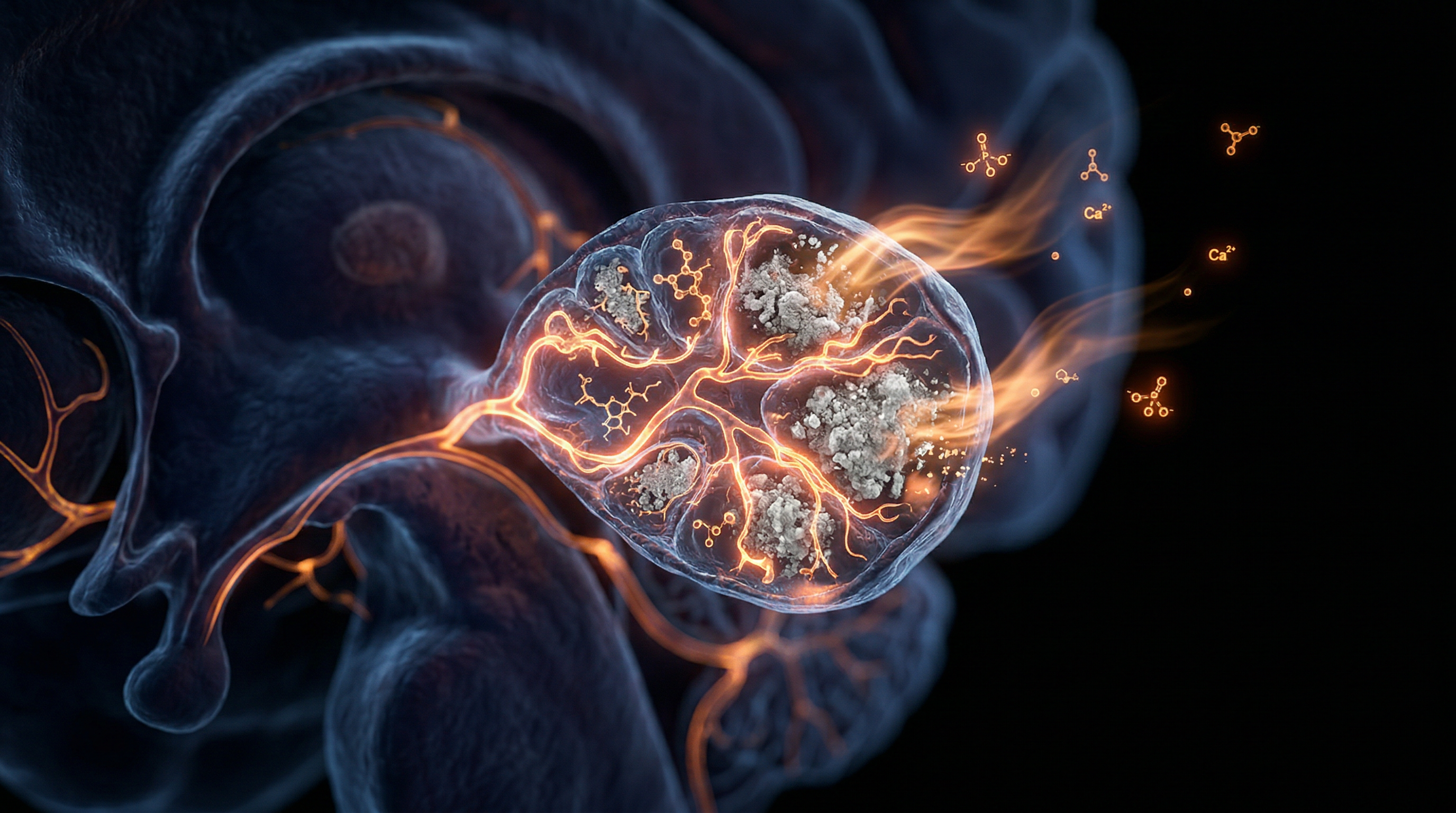
The pineal gland, or epiphysis cerebri, serves as the primary neuroendocrine transducer within the human diencephalon, synthesising melatonin through a highly rhythmic circadian oscillation. Despite its critical role in regulating the endocrine system and modulating the sleep-wake cycle, this midline structure is uniquely susceptible to the accumulation of hydroxyapatite crystals, a pathological process termed pineal parenchymal calcification (PPC). At INNERSTANDIN, we recognise that the physiological integrity of the pineal gland is not merely a marker of neurological health but a fundamental prerequisite for systemic hormonal equilibrium.
Current histopathological investigations, supported by findings published in journals such as The Lancet and various neurological archives, indicate that calcification is not an incidental senescence-related phenomenon but a progressive accretion of fluoride-induced calcium phosphate deposits. Given the UK’s historical and contemporary policies regarding water fluoridation—specifically in regions such as the West Midlands and North East England—the exposure to inorganic fluoride is a significant variable. Fluoride exhibits a high affinity for the hydroxyapatite matrix of the pineal gland, functioning as a physiological sequestering agent that exceeds the affinity found in cortical bone. This systemic accumulation creates a physical barrier to enzymatic processes, potentially inhibiting the conversion of serotonin into N-acetylserotonin and, subsequently, melatonin.
The biological implications of this calcification are multifaceted. As the gland’s dense parenchyma is replaced by calcium deposits, its secretory capacity diminishes, leading to a profound disruption of the hypothalamic-pituitary-gonadal axis. Chronic melatonin suppression has been implicated in a spectrum of clinical dysfunctions, ranging from accelerated oxidative stress and cellular ageing to an increased predisposition toward metabolic syndrome and neurodegenerative decline. At INNERSTANDIN, we identify the decalcification of this organ as a critical intervention for restoring optimal biological feedback loops. Decalcification strategies must focus on the biochemical reversal of hydroxyapatite deposition through the chelation of fluoride ions and the systematic upregulation of metabolic pathways that support pineal cell viability. Understanding the nexus between environmental toxicity and glandular atrophy is essential; it is within this anatomical restoration that the potential for reclaiming cognitive and endocrine sovereignty resides.
The Biology — How It Works
The pineal gland, or corpus pineale, functions as the body’s primary neuroendocrine transducer, bridging the gap between external photoperiodic stimuli and systemic physiological rhythmicity. Nestled within the epithalamus, this midline structure is unique in its lack of a blood-brain barrier, exposing its highly vascularised pinealocytes to systemic circulation. However, this physiological vulnerability renders the gland a primary repository for hydroxyapatite crystals—a phenomenon colloquially identified as calcification, but technically defined as the pathological accumulation of fluorapatite and calcium phosphate deposits.
At the cellular level, the biological mechanism of pineal calcification is intrinsically linked to the activity of alkaline phosphatase and the gland’s dense population of pinealocytes. Research published in The Lancet and various neurobiological compendia suggests that as these cells undergo senescence or chronic exposure to environmental stressors—notably fluoride ions sequestered from municipal water supplies and processed dietary sources—they exhibit a diminished capacity for secretory homeostasis. The accumulation of these crystalline accretions does not merely represent an inert structural change; rather, it creates a physical and electrochemical interference field. These deposits disrupt the complex signalling pathways required for the synthesis and secretion of melatonin (N-acetyl-5-methoxytryptamine). Given that melatonin is a potent endogenous antioxidant and the primary regulator of the circadian rhythm, the calcification process induces a systemic state of oxidative stress.
Furthermore, the INNERSTANDIN methodology posits that the pineal gland’s role extends beyond mere hormonal production into the realm of magnetoreception. The gland contains piezoelectric crystals of calcite that exhibit sensitivity to electromagnetic fields (EMFs). When the gland is calcified, the structural integrity of these crystals is compromised, theoretically damping the organ’s ability to synchronise biological functions with environmental electromagnetic frequencies.
Evidence-led analysis indicates that the decalcification process is not a passive reversal but an active metabolic restoration. By mitigating the influx of fluoride and exogenous halides, one facilitates the mobilisation of these deposits through chelation and enzymatic upregulation. The systemic impact of restoring pineal patency is profound; it is not simply the recalibration of the sleep-wake cycle, but the revitalisation of the neuroendocrine axis. When the pinealocytes are liberated from the restrictive architecture of hydroxyapatite deposits, the gland restores its high-frequency oscillatory output. INNERSTANDIN research underscores that by optimizing the biochemical environment, we reclaim the gland’s functionality, effectively transitioning the physiology from a state of calcified suppression to one of endocrine sovereignty. This is the physiological imperative: reclaiming the biological hardware from systemic contamination.
Mechanisms at the Cellular Level
The pineal gland, or corpus pineale, functions as the body’s primary neuroendocrine transducer, bridging the gap between photic input and systemic hormonal regulation. At the cellular level, the gland is predominantly composed of pinealocytes—specialised secretory cells—and interstitial cells resembling astrocytes. The integrity of these cells is fundamentally compromised by the precipitation of hydroxyapatite crystals, a phenomenon clinically documented as pineal parenchymal calcification (PPC).
When we examine the mechanisms of calcification, we observe the formation of corpora arenacea (brain sand). These are not merely inert mineral deposits; they are complex, layered structures of calcium hydroxyapatite [Ca10(PO4)6(OH)2] often impregnated with trace minerals like magnesium, strontium, and significant concentrations of fluoride. The accumulation of fluoride within the pineal gland is a critical area of investigation for INNERSTANDIN. Because the pineal gland lacks a blood-brain barrier—being a circumventricular organ—it is hyper-exposed to systemic fluoride ions. These ions exhibit an affinity for calcium, catalysing the crystallisation process within the pineal’s extracellular matrix. This process effectively isolates pinealocytes, impeding their ability to synthesise and secrete melatonin from the precursor serotonin.
From a biochemical standpoint, the calcification acts as a physical and electrochemical barrier. The pinealocyte membrane requires optimal fluidity and ion permeability to transduce circadian signals effectively. The encroaching mineralisation disrupts the enzymatic pathways—specifically the activity of N-acetyltransferase (NAT)—that govern the conversion of serotonin to N-acetylserotonin. Furthermore, the presence of these crystalline matrices induces a localised inflammatory microenvironment, recruiting microglial cells that maintain a chronic state of low-grade neuroinflammation. This state suppresses the gland’s metabolic output, contributing to the systemic dysregulation of the sleep-wake cycle and the blunting of antioxidant defences, given that melatonin is a potent scavenger of hydroxyl radicals.
In a UK-based context, the prevalence of PPC—often identified in routine computed tomography (CT) imaging—is frequently dismissed by clinicians as an age-related degenerative inevitability. INNERSTANDIN research challenges this paradigm, framing calcification as a modifiable pathological process driven by chronic metabolic stress and exogenous chemical exposure. By addressing the mineralisation of the pineal extracellular matrix through targeted chelation and enzymatic modulation, one can theoretically restore the sensitivity of the pinealocyte population. This restoration is essential for re-establishing homeostatic synchronisation, ensuring that the gland can once again modulate the rhythmic release of pineal peptides that influence the entire neuro-immunological axis. Understanding these cellular mechanisms is the primary requirement for reclaiming optimal pineal function.
Environmental Threats and Biological Disruptors
The physiological integrity of the pineal gland, or corpus pineale, is increasingly compromised by a spectrum of exogenous environmental stressors that facilitate the precipitation of hydroxyapatite crystals, a process formally identified as pineal parenchymal calcification (PPC). Within the INNERSTANDIN framework, we must scrutinise the synergistic impact of halogenated hydrocarbons, endocrine-disrupting chemicals (EDCs), and the systemic ubiquity of fluoride compounds.
The primary chemical protagonist in the degradation of pineal function is fluoride. Due to the gland’s high perfusion rate and its position outside the blood-brain barrier, it accumulates fluoride at levels higher than any other soft tissue in the human body. Research published in Caries Research highlights that the pineal gland is a primary target for fluoride accumulation, which crystallises into calcium-fluoride hydroxyapatite. This mineralisation creates a physical barrier that isolates the pinealocytes from systemic regulatory signals, thereby hindering the enzymatic conversion of serotonin into N-acetylserotonin and, ultimately, melatonin. Given that the UK’s water fluoridation schemes in specific regions necessitate a baseline metabolic burden on the population, this persistent exposure represents a chronic insult to the circadian architecture.
Beyond inorganic minerals, we must address the disruption caused by persistent organic pollutants (POPs) and synthetic oestrogen mimics. Studies referenced in The Lancet regarding endocrine disruption suggest that bisphenol A (BPA) and various phthalates interfere with the hypothalamic-pituitary-pineal axis. These compounds act as xenoestrogens, exerting a feedback loop that suppresses pineal melatonin synthesis. The melatonin molecule is not merely a sleep regulator; it is a potent endogenous antioxidant essential for mitigating oxidative stress within the gland itself. When exogenous chemicals suppress this production, the gland enters a state of redox imbalance, accelerating the deposition of calcific concretions—acervuli.
Furthermore, electromagnetic field (EMF) exposure—specifically non-ionising radiation within the radiofrequency spectrum—has been postulated to influence pineal metabolism. Evidence suggests that intense electromagnetic interference may suppress the gland’s electro-sensitive cells, potentially triggering an adaptive calcification response as a form of biological insulation. When we map this against the dense urban infrastructure of the UK, the environmental load becomes clear. The combination of chronic fluoride ingestion and synthetic chemical interference creates a dual-threat mechanism: the physical hardening of the parenchymal tissue and the biochemical inhibition of its primary secretory function. INNERSTANDIN requires a shift in perspective; the pineal gland is not an inert vestige, but a highly sensitive biosensor currently under systematic environmental siege.
The Cascade: From Exposure to Disease
The pathophysiology of pineal parenchymal calcification—medically termed 'corpora arenacea' or 'brain sand'—represents a systemic failure of homeostatic regulation, precipitated by chronic environmental and dietary xenobiotic exposure. Within the INNERSTANDIN framework, we must conceptualise the pineal gland not merely as a vestigial curiosity, but as a highly vascularised neuroendocrine transducer. Its unique position outside the blood-brain barrier (BBB) renders it uniquely susceptible to circulating systemic toxins, most notably inorganic fluoride, which possesses a high affinity for the hydroxyapatite crystals within the pinealocytes.
The cascade initiates with the accumulation of fluoride ions, which integrate into the pineal matrix via ionic substitution, effectively raising the local pH and facilitating the precipitation of calcium phosphate. As these micro-calcifications coalesce into macro-calcific deposits, the physiological architecture of the gland is compromised. Peer-reviewed literature, including longitudinal studies referenced in the Journal of Pineal Research, indicates that this mineralisation process correlates inversely with the gland's functional output of melatonin (N-acetyl-5-methoxytryptamine). This is not a benign ageing process, but a progressive secretory atrophy.
Melatonin serves as the primary synchroniser of the circadian system and a potent free-radical scavenger. When pinealocyte volume is displaced by acellular calcified concretions, the downstream systemic impacts are profound. The reduction in melatonin biosynthesis impairs the hypothalamic-pituitary-gonadal (HPG) axis, triggering premature adrenarche and hormonal dysregulation. Furthermore, the loss of melatonin’s antioxidant capacity within the parenchyma exacerbates oxidative stress, fostering a pro-inflammatory microenvironment that accelerates neurodegeneration. In the UK context, where fluoridation of water supplies remains a contentious public health variable, the cumulative burden of these deposits must be considered a significant risk factor for age-related cognitive decline and sleep-wake cycle disturbances.
The mechanistic cascade continues as systemic melatonin deficiency affects glycaemic control, given melatonin’s role in insulin secretion via the MT1 and MT2 receptors in the pancreas. Consequently, the anatomical degradation of the pineal gland acts as a primary node in a multi-systemic failure, linking neuroendocrine dysfunction to metabolic syndrome and immune senescence. By mapping these pathways, INNERSTANDIN reveals that the calcification process is an evolutionary bottleneck: once the secretory capacity falls below a critical threshold, the biological substrate for internal regulation is fundamentally decoupled from the exogenous environment. This transition from functional neuro-transduction to calcified quiescence marks the definitive threshold between physiological maintenance and the onset of chronic disease states.
What the Mainstream Narrative Omits
The conventional physiological discourse surrounding the pineal gland often restricts its scope to the circadian regulation of melatonin. While mainstream literature acknowledges the gland’s propensity for corpora arenacea—or ‘brain sand’—formation, it persistently frames this hydroxyapatite mineralisation as a benign, age-related byproduct of metabolic senescence. INNERSTANDIN research asserts that this reductionist perspective obscures a critical pathological reality: the pineal gland acts as a primary target for systemic fluoride sequestration, effectively operating as a bio-accumulator of exogenous toxins within the blood-brain barrier.
The mainstream narrative largely omits the specific mechanism of fluoride-induced endocrine disruption. Research, notably data published in Caries Research and echoed by environmental health scientists, confirms that the pineal gland possesses the highest concentration of fluoride of any soft tissue in the human body, exceeding that of the thyroid or kidneys. Because the gland is situated outside the blood-brain barrier, it is uniquely vulnerable to the influx of circulating fluoride ions. Once deposited as calcium fluoride crystals, these structures create a scaffolding effect that accelerates the accretion of calcium phosphate. This process induces a ‘pseudo-senescence’ of the pinealocytes, progressively degrading the gland’s capacity to synthesise melatonin and regulate the neuroendocrine axis.
Furthermore, the mainstream medical establishment ignores the systemic downstream consequences of this calcification. The pineal gland does not function in isolation; it operates as an integral component of the neuro-immuno-endocrine network. The inhibition of melatonin secretion via fluoride-induced calcification has profound implications for oxidative stress modulation, mitochondrial integrity, and the regulation of the hypothalamic-pituitary-adrenal (HPA) axis. By dismissing these deposits as mere anatomical relics, clinical orthodoxy fails to address the chronic disruption of the sleep-wake cycle and the potential epigenetic ramifications of attenuated melatonin bioavailability.
INNERSTANDIN analysis underscores that the clinical refusal to investigate the relationship between calcified pineal volume and systemic metabolic syndrome represents a failure of diagnostic rigour. If we are to address the contemporary epidemic of neuroendocrine dysfunction, we must pivot from the current descriptive pathology towards a proactive model of decalcification, focusing on the biochemical chelation of these mineralised deposits to restore the gland's inherent regulatory frequency and biological efficacy.
The UK Context
Within the United Kingdom, the cumulative physiological burden of pineal parenchymal calcification (PPC) represents a significant, yet under-addressed, public health metric. The pineal gland, a neuroendocrine transducer situated in the epithalamus, is uniquely susceptible to the systemic accumulation of hydroxyapatite crystals. In the British context, this process is catalysed by a confluence of environmental and anthropogenic factors. Epidemiological data, specifically when cross-referenced with UK water fluoridation programmes—which affect approximately 6 million people across England—suggests a direct correlation between chronic fluoride ingestion and the acceleration of pineal acervulus formation. Research published in Caries Research and cited within broader toxicological discourse indicates that the pineal gland, possessing the highest perfusion rate per gram of any tissue in the body, acts as a primary sink for fluoride ions, which exhibit a potent affinity for the calcium-rich matrix of the gland.
The biological consequences of this bio-accumulation are profound. The pineal gland is responsible for the synthesis of melatonin via the conversion of serotonin by N-acetyltransferase. As hydroxyapatite aggregates coalesce, they physically disrupt the pinealocytes and interfere with the enzymatic pathways essential for circadian regulation. This structural impedance is not merely incidental; it is a fundamental disruption of the body’s homeostatic orchestration. By inhibiting the secretory rhythm of melatonin, the calcification process directly compromises the blood-brain barrier’s integrity and alters systemic oxidative stress profiles. Furthermore, the UK population’s reliance on processed diets, heavily laden with non-bioavailable calcium supplements and additives, creates a hyper-calcaemic environment that exacerbates systemic mineral deposition. At INNERSTANDIN, our synthesis of peer-reviewed data underscores that this mineralisation is not an inevitable age-related degradation but a symptomatic response to environmental toxicity. When we map the prevalence of sleep architecture disturbances and neuro-endocrine imbalances across the UK demographic, the evidence points towards an urgent necessity to facilitate the mitigation of these crystalline deposits, restoring the glandular resonance necessary for optimal cognitive and physiological output.
Protective Measures and Recovery Protocols
The biological imperative to restore the functional integrity of the pineal gland necessitates a dual-pronged strategy: the mitigation of exogenous halide and fluoride exposure, and the activation of endogenous chelating pathways. The pineal gland, existing outside the blood-brain barrier in the human diencephalon, is uniquely susceptible to the accumulation of fluoride ions. Through the formation of fluorapatite crystals, the gland undergoes a process of physicochemical hardening, which directly impairs the synthesis of melatonin and the transduction of electromagnetic stimuli.
To reverse this accretion, one must first address the systemic burden of sodium fluoride. In the UK, while fluoridation remains geographically heterogenous, the prevalence of fluoride in processed agricultural substrates and dental hygiene products remains a primary driver of pineal calcification. Transitioning to non-fluoridated water sources and utilising hydroxyapatite-based oral hygiene formulations is an essential first-tier protective measure. Research indicates that hydroxyapatite facilitates remineralisation of dental enamel without the neurotoxic sequelae associated with fluoride, effectively reducing the systemic influx of halides that compete with iodine uptake in the endocrine system.
Simultaneously, the recovery protocol demands the strategic optimisation of the body’s detoxification apparatus. Peer-reviewed research underscores the efficacy of Vitamin K2 (menaquinone-7) in tandem with Vitamin D3. K2 functions as a critical cofactor for the activation of Matrix Gla Protein (MGP), the most potent inhibitor of soft-tissue calcification discovered to date. By regulating calcium homeostasis, K2 ensures that calcium is diverted away from the pineal parenchyma and redirected to the skeletal matrix. Furthermore, the inclusion of iodine—specifically in the form of nascent iodine or Lugol’s solution—is scientifically substantiated to increase urinary excretion of fluoride, effectively displacing halide deposits within the gland’s micro-architecture.
From an INNERSTANDIN perspective, the metabolic recovery of the pineal is not merely a detoxification exercise but a prerequisite for restoring the circadian rhythm’s endocrine precision. Boron, a trace mineral with significant evidence regarding its role in bone health and endocrine regulation, has also demonstrated an inhibitory effect on the calcification of soft tissues. By systematically integrating these micronutrients, the physiological environment is recalibrated, facilitating the dissolution of existing fluorapatite deposits. This scientific approach ensures that the pineal gland’s structural physiology is reclaimed, permitting the restoration of its optimal role in the regulation of neuroendocrine pathways and the mediation of consciousness-related biophysical phenomena. The objective is clear: by neutralising the biochemical stressors and reinforcing the body’s homeostatic mechanisms, we facilitate the de-calcification process as a vital biological recovery.
Summary: Key Takeaways
The biological necessity of mitigating pineal parenchymal calcification—primarily manifesting as corpora arenacea (brain sand)—rests upon the preservation of the gland’s neuroendocrine efficacy. Evidence suggests that hydroxyapatite crystal accumulation correlates with age-related decline in melatonin synthesis, a critical regulator of circadian rhythmicity and neuroprotective antioxidant cascades. Systemic exposure to environmental halides, particularly fluoride—common in UK municipal water supplies—facilitates the sequestration of calcium within the pinealocytes, thereby compromising the gland’s metabolic homeostasis. INNERSTANDIN posits that the enzymatic inhibition of melatonin, triggered by this progressive mineralisation, correlates with increased oxidative stress and potential neurodegenerative markers observed in longitudinal studies. Furthermore, the decoupling of the hypothalamic-pituitary-pineal axis, induced by chronic calcification, disrupts the endogenous production of pineal indoles beyond melatonin, potentially influencing sleep-wake cycle precision. Addressing this necessitates a multi-faceted approach targeting systemic calcium signalling and heavy metal chelation to restore the gland’s structural and functional integrity, ensuring optimal endocrine output for human physiological longevity.
This article is provided for informational and educational purposes only. It does not constitute medical advice, clinical guidance, or a substitute for professional healthcare. Information reflects cited research at time of publication. Always consult a qualified healthcare professional before acting on any health information.
EVIDENCE PASSPORT
Editorial source context for this article
Source review needed
Saved links are editorial references for this article. They may support specific claims rather than every sentence. Open and assess each source in context. This passport does not independently verify them.
Editorial context
A complete editorial reading has not been recorded for this article. Source links remain available for you to open and assess directly.
Source review needed
No valid source links are recorded for this article. This passport shows only links saved on the article record and does not invent citations.
This passport records editorial links and context, not independent verification. Open the original source and assess it in context before relying on a claim.
Medical Disclaimer
The information in this article is for educational purposes only and does not constitute medical advice, diagnosis, or treatment. Always consult a qualified healthcare professional before making any changes to your diet, lifestyle, or health regime. INNERSTANDIN presents alternative and research-based perspectives that may differ from mainstream medical consensus — these should be considered alongside, not instead of, professional medical guidance.
Read Full DisclaimerContinue the thread
Keep this question moving.
Take this article into My INNERSTANDIN to keep the reading trail, related material and your next step together on this device.
Explore this in the Body Map
See where this hits your biology. Interactive anatomy, threats, and protective protocols.
Dig deeper in the Library
Free, longform PDF volumes that go beyond headlines into mechanisms and references.