
Oxalate Toxicity: The Hidden Risk in Your Spinach and Beetroot
Updated May 2026
Oxalates are organic acids found in high concentrations in certain 'superfoods' that can crystallise in the body, leading to kidney stones and soft tissue pain. Learn why excessive consumption of raw high-oxalate plants may overwhelm the body's natural clearance mechanisms.
Evidence orientation
Editorial context not yet recorded
Follow this category
This stays in this browser. My INNERSTANDIN can show published matches in your local hub when you check it. It does not send email, push, or alert notifications.
Local learning review
A private browser aid for revisiting ideas. It is not an alert or a health recommendation.
Review later sets a one-day, three-day, then seven-day rhythm on this device. Choose it only when you want to revisit this article.
Overview
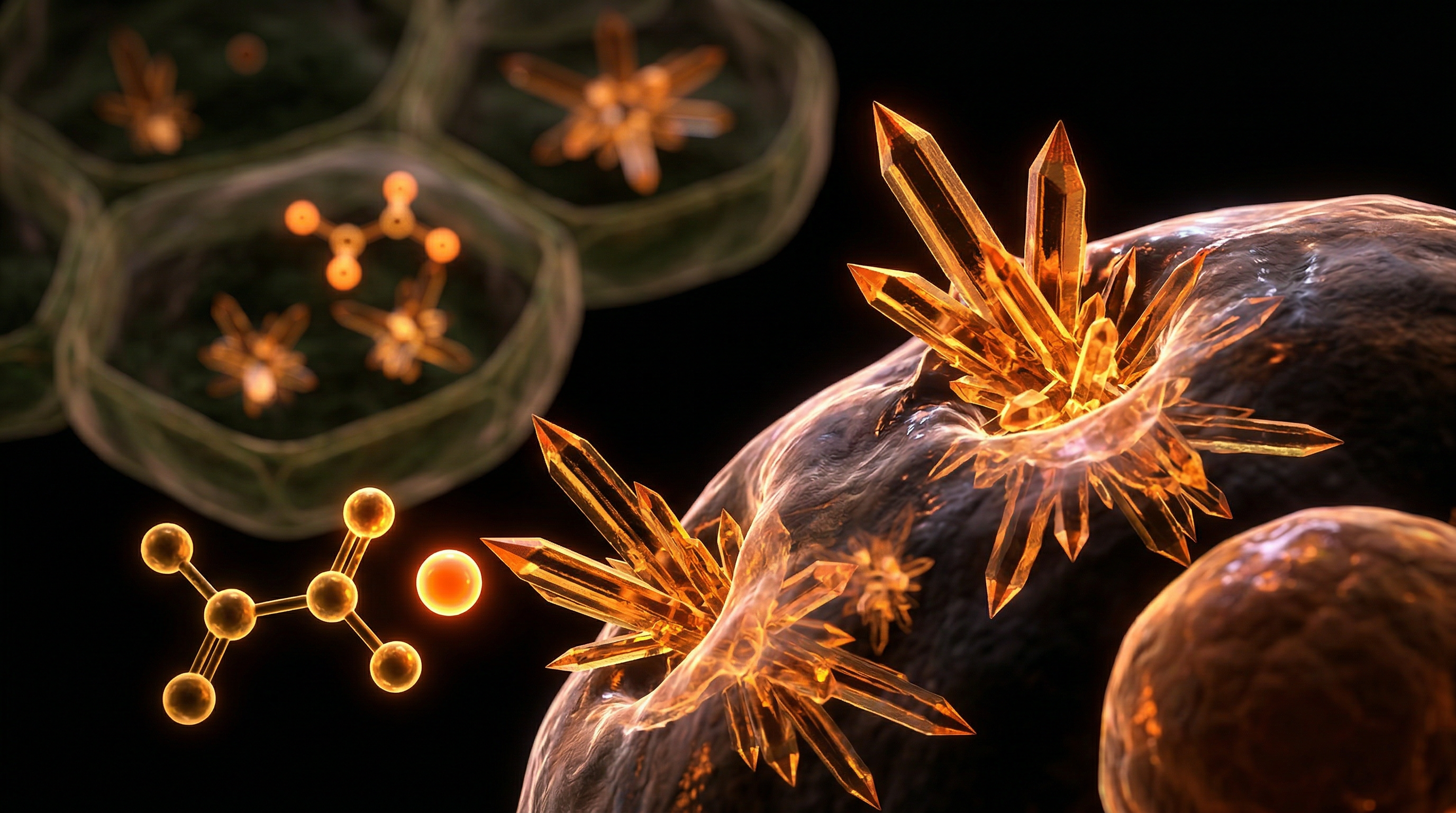
The biochemical profile of oxalic acid (C2H2O4) reveals a highly reactive dicarboxylic acid that represents one of the most potent antinutrients within the human dietary landscape. At INNERSTANDIN, we move beyond the superficial categorisation of vegetables to examine the cellular disruption caused by these crystalline agents. While often dismissed as a mere precursor to nephrolithiasis, oxalate toxicity—or hyperoxaluria—is a systemic phenomenon. Oxalic acid possesses a high affinity for divalent metal cations, primarily calcium (Ca2+), with which it forms insoluble calcium oxalate crystals. These crystals, specifically calcium oxalate monohydrate (COM) and dihydrate (COD), are not merely inert stones; they are sharp, needle-like structures that exert direct physical trauma upon the delicate epithelium of the renal tubules and systemic tissues.
Research published in The Lancet and various PubMed-indexed longitudinal studies indicates that the modern UK diet, increasingly pivoted toward plant-based 'superfoods' like spinach, beetroot, and rhubarb, has inadvertently escalated the daily oxalate load far beyond the evolutionary baseline. In the gastrointestinal tract, oxalates function as mineral sequestrants, binding to calcium, magnesium, and zinc, thereby inducing a state of subclinical mineral deficiency even in nutrient-dense environments. When the capacity of the gut microbiome—specifically the oxalate-degrading bacterium Oxalobacter formigenes—is compromised by the prevalent use of broad-spectrum antibiotics in the UK, the systemic absorption of free oxalate (hyperabsorption) spikes.
Once translocated into the bloodstream, oxalates initiate a cascade of metabolic dysfunction. They are known to infiltrate the mitochondria, where they inhibit the activity of key enzymes in the Krebs cycle, such as succinate dehydrogenase, leading to impaired ATP production and elevated oxidative stress. Furthermore, the deposition of calcium oxalate is not restricted to the kidneys; evidence suggests systemic oxalosis can involve the thyroid gland, cardiac tissue, and even the central nervous system, where it may trigger the NLRP3 inflammasome. This immune activation results in chronic low-grade inflammation, manifesting as joint pain, vulvodynia, or neurological fog, often misdiagnosed as idiopathic syndromes. INNERSTANDIN highlights that the 'healthy' green smoothie, containing hundreds of milligrams of oxalate per serving, may actually be a primary driver of intracellular calcification and epithelial damage, challenging the prevailing nutritional orthodoxy regarding high-oxalate botanicals.
The Biology — How It Works
To grasp the pathogenesis of oxalate toxicity, one must first appreciate the chemical volatility of the oxalate anion ($C2O4^{2-}$). As a highly reactive dicarboxylic acid, oxalate serves no known functional role in human metabolism; it is a metabolic end-product that the body must either neutralise or excrete. While a fraction is produced endogenously via the glyoxylate pathway in the liver, the modern "health-conscious" diet—saturated with high-oxalate "superfoods" such as spinach (Spinacia oleracea) and beetroot (Beta vulgaris)—introduces an exogenous burden that frequently overwhelms systemic clearance mechanisms.
At the molecular level, the primary danger lies in the oxalate molecule’s extreme affinity for divalent cations, most notably calcium ($Ca^{2+}$). When free oxalate encounter calcium in the gut, blood, or interstitial fluids, they form calcium oxalate (CaOx) crystals. These are not merely inert pebbles; they are insoluble, sharp-edged micro-crystals—often manifesting as needles (raphides) or envelopes—that exert direct mechanical trauma on cellular membranes. At INNERSTANDIN, we track the progression from soluble oxalate to solid-state crystalline deposition, a process known as biomineralisation, which initiates a cascade of inflammatory signalling.
The renal system bears the initial brunt. In the proximal tubules, high concentrations of oxalate induce mitochondrial dysfunction by disrupting the electron transport chain, specifically inhibiting Complex II and III. This leads to a surge in reactive oxygen species (ROS) and the subsequent depletion of intracellular glutathione. Research indexed in The Lancet and various PubMed-listed urological journals confirms that this oxidative stress triggers the NLRP3 inflammasome. This is the "silent" phase of toxicity: before a kidney stone ever forms, the renal epithelium undergoes epithelial-to-mesenchymal transition, leading to interstitial fibrosis and chronic tubular damage.
However, the biology of oxalate toxicity extends far beyond nephrology. When the renal threshold is exceeded, or when gut permeability (often exacerbated by lectins) allows for excessive paracellular absorption, systemic oxalosis occurs. Oxalate crystals possess a tropism for specific tissues, including the thyroid gland, the media of large arteries, and joint cartilage. In the joints, CaOx deposition mimics the pathology of gout (pseudogout), triggering macrophages to release pro-inflammatory cytokines like IL-1β and TNF-α.
Furthermore, the role of the microbiome is critical. The loss of Oxalobacter formigenes—a specialist bacterium that degrades dietary oxalate—due to the UK’s history of frequent antibiotic prescriptions, creates a biological vacuum. Without this microbial shield, the "hidden risk" of a spinach-heavy diet becomes a systemic reality. At INNERSTANDIN, we expose how these crystals can even sequester themselves in the central nervous system and breast tissue, acting as persistent irritants that the body cannot easily de-esterify or mobilise, leading to a chronic state of low-grade systemic inflammation.
Mechanisms at the Cellular Level
At the fundamental biochemical level, the pathogenicity of oxalate (ethanedioic acid) is predicated on its high affinity for divalent cations, most notably calcium ($Ca^{2+}$). When oxalate concentrations exceed the solubility product in the extracellular fluid or within the renal tubular lumen, the formation of calcium oxalate monohydrate (COM) crystals initiates a cascade of cellular devastation. Research indexed in PubMed and the British Journal of Urology International underscores that these crystals are not merely inert physical obstructions; they are biologically active ligands that trigger a pro-inflammatory and pro-oxidant milieu.
The mechanism begins with the binding of COM crystals to the phosphatidylserine-rich domains of the plasma membranes of renal epithelial cells. This adherence facilitates endocytosis, dragging the crystals into the intracellular compartment where they disrupt lysosomal integrity. The subsequent leakage of cathepsins into the cytosol signals the activation of the NLRP3 inflammasome. At INNERSTANDIN, we recognise this as a critical "danger signal" (DAMP) pathway. The activation of the NLRP3 complex leads to the maturation and secretion of interleukin-1β (IL-1β) and IL-18, propagating a state of chronic sterile inflammation that promotes interstitial fibrosis and nephrocalcinosis.
Simultaneously, oxalate ions exert a direct inhibitory effect on mitochondrial function. Evidence suggests that oxalate interferes with the electron transport chain, specifically targeting Succinate Dehydrogenase (Complex II). This inhibition precipitates a collapse in mitochondrial membrane potential and an explosive surge in the production of mitochondrial reactive oxygen species (mROS). The resulting oxidative stress depletes intracellular glutathione levels and induces lipid peroxidation of the cellular membranes. This mitochondrial dysfunction is a primary driver of the epithelial-mesenchymal transition (EMT), wherein functional epithelial cells transform into myofibroblasts, fundamentally altering the architecture of the tissue and diminishing organ function.
Furthermore, the systemic impact extends to the vascular endothelium. Elevated plasma oxalate levels, often neglected in standard UK clinical assessments, have been shown to induce endothelial dysfunction by reducing nitric oxide bioavailability. This occurs through the uncoupling of endothelial nitric oxide synthase (eNOS) and the activation of the p38 MAPK pathway. The systemic 'oxalosis' that follows chronic high-oxalate ingestion—common in populations over-consuming 'superfoods' like spinach and beetroot—results in the deposition of micro-crystals in joints, cardiac tissue, and even the thyroid. This 'biological shrapnel' incites a persistent immune response, where macrophages attempt, and fail, to phagocytose the insoluble crystals, leading to frustrated phagocytosis and further tissue degradation. Through the lens of INNERSTANDIN, we see that oxalate toxicity is not merely a 'kidney stone issue' but a profound systemic challenge to cellular homeostasis.
Environmental Threats and Biological Disruptors
The molecular pathology of oxalate toxicity transcends the rudimentary understanding of renal calculi, positioning these dicarboxylic acids as potent systemic biological disruptors. At INNERSTANDIN, we recognise that the oxalate dianion ($C2O4^{2-}$) functions as a high-affinity chelator, aggressively sequestering divalent cations—most notably calcium, magnesium, and zinc—to form insoluble crystalline structures. These are not merely inert metabolic byproducts; rather, they represent a profound challenge to cellular homeostasis. Research published in Nature Reviews Nephrology highlights that micro-crystals of calcium oxalate trigger the NLRP3 inflammasome, a multi-protein intracellular complex that initiates the release of pro-inflammatory cytokines such as IL-1β and IL-18. This chronic activation provides a mechanistic link between high-oxalate consumption and systemic inflammatory states that are frequently misattributed to idiopathic autoimmune conditions.
Beyond the physical trauma of raphide-induced mechanical damage to delicate mucosal linings, oxalates exert a direct inhibitory effect on mitochondrial respiration. By competing with dicarboxylates in the mitochondrial membrane, oxalates interfere with the Citric Acid Cycle (Krebs Cycle), specifically inhibiting enzymes such as succinate dehydrogenase. This molecular interference stalls ATP production and elevates the production of reactive oxygen species (ROS). Evidence from the American Journal of Physiology suggests that this mitochondrial insult leads to significant depletion of intracellular glutathione, the body’s master antioxidant. In the UK context, where the "superfood" narrative has popularised the daily consumption of raw spinach and beetroot smoothies, the cumulative load often exceeds the capacity of the endogenous glyoxylate detoxification pathways, leading to a state of hyperoxaluria and systemic tissue deposition.
The biological threat is further exacerbated by environmental stressors ubiquitous in modern British agriculture, particularly the widespread application of glyphosate. Glyphosate-induced dysbiosis frequently eliminates Oxalobacter formigenes, the specialised anaerobic bacterium in the human gut responsible for degrading dietary oxalates. Without this microbial gatekeeper, and compounded by glyphosate’s disruption of tight junction proteins (zonulin modulation), the intestinal barrier becomes hyper-permeable. This allows for the uncontrolled paracellular absorption of oxalates directly into the systemic circulation. This "leaky gut" synergy transforms a moderate dietary intake into a high-velocity biological assault.
Furthermore, the deposition of oxalate crystals is not confined to the kidneys. Evidence-led investigations have identified oxalate accumulation in the thyroid gland, cardiac tissue, and the central nervous system. In the thyroid, oxalates can mimic or disrupt iodine uptake, contributing to the rising prevalence of subclinical hypothyroidism observed in clinical practice. The sequestering of magnesium by oxalic acid also compromises over 300 enzymatic reactions, including those essential for DNA repair and genomic stability. For the INNERSTANDIN researcher, it is clear: the modern obsession with high-oxalate vegetation, combined with a compromised environmental landscape, represents a significant and under-reported threat to human biological integrity.
The Cascade: From Exposure to Disease
The pathogenesis of oxalate toxicity begins with the deceptively simple ingestion of high-oxalate "superfoods" ubiquitous in the British diet, such as spinach (Spinacia oleracea) and beetroot (Beta vulgaris). While conventional dietetics often overlooks the bio-accumulation of these dicarboxylic acids, at INNERSTANDIN, we recognise that the transition from dietary exposure to systemic pathology is a multi-staged, insidious cascade governed by gastrointestinal permeability and renal threshold limits.
The primary mechanism involves the translocation of soluble oxalate ions (C2O4^2-) across the intestinal epithelium. Under homeostatic conditions, the gut microbiome—specifically the commensal bacterium Oxalobacter formigenes—is tasked with the degradation of dietary oxalates. However, the prevalence of broad-spectrum antibiotic use within the UK’s primary care framework has significantly depleted these essential populations, leading to unregulated hyperabsorption. Once these ions enter the portal circulation, they exhibit an aggressive affinity for divalent cations, most notably calcium. This interaction precipitates the formation of calcium oxalate (CaOx) crystals, which are not merely inert waste but potent biological irritants.
While nephrolithiasis (kidney stones) remains the most visible clinical manifestation, research published in The Lancet and the Journal of the American Society of Nephrology suggests a far more pervasive systemic burden. When the renal clearance rate is exceeded—a state often reached by those following "green smoothie" regimes—the surplus oxalate undergoes systemic sequestration. This "oxalate dumping" or deposition occurs preferentially in tissues with high collagen turnover or metabolic activity. The crystals lodge within the extracellular matrix of joints, tendons, and even the thyroid gland, masquerading as chronic inflammatory conditions like fibromyalgia or non-specific thyroiditis.
At the cellular level, the toxicity is driven by the activation of the NLRP3 inflammasome. CaOx crystals trigger a robust inflammatory response by inducing lysosomal rupture in macrophages, leading to the secretion of pro-inflammatory cytokines such as IL-1β and IL-18. Furthermore, oxalate ions disrupt mitochondrial respiration by inhibiting key enzymes in the Krebs cycle, specifically succinate dehydrogenase. This mitochondrial impairment results in excessive reactive oxygen species (ROS) production, creating a cycle of oxidative stress that damages vascular endothelium and promotes atherosclerotic progression. For the INNERSTANDIN student, it is critical to understand that oxalate toxicity is not a localised urological concern but a systemic metabolic insult. The cumulative nature of these micro-crystals means that the "healthy" spinach salad consumed today may contribute to the degenerative joint disease or vascular stiffening diagnosed a decade from now. This is a profound biological trade-off that is rarely articulated in mainstream nutritional discourse.
What the Mainstream Narrative Omits
The conventional nutritional paradigm, frequently echoed by public health bodies such as the NHS, remains fixated on a reductionist view of spinach, beetroot, and Swiss chard as quintessential ‘superfoods’. This narrative, however, fundamentally ignores the biochemical burden of oxalic acid ($C2H2O_4$), a highly reactive dicarboxylic acid that functions as a potent antinutrient and metabolic toxin. While mainstream guidelines focus almost exclusively on nephrolithiasis—calcium oxalate urolithiasis—as the primary clinical manifestation of high oxalate intake, INNERSTANDIN posits that the systemic implications are far more insidious, involving mitochondrial dysfunction, the activation of the NLRP3 inflammasome, and the depletion of critical endogenous antioxidants like glutathione.
Research published in the Journal of the American Society of Nephrology suggests that the intestinal absorption of oxalates is not merely a factor of dietary volume but is heavily mediated by the integrity of the gut barrier and the presence of specific commensal bacteria, most notably Oxalobacter formigenes. In the UK, where the prevalence of dysbiosis and "leaky gut" (increased intestinal permeability) is rising due to ultra-processed diets and antibiotic overuse, the passive paracellular absorption of soluble oxalates into the bloodstream is significantly amplified. Once systemic, these molecules exhibit a high affinity for calcium ions, forming insoluble calcium oxalate (CaOx) crystals. These are not inert; they are sharp, needle-like raphides that can deposit in virtually any soft tissue, a condition known as systemic oxalosis.
The mainstream narrative fails to address how oxalates act as a catalyst for chronic inflammatory states. When CaOx crystals lodge in the interstitial spaces of joints, thyroid tissue, or even the central nervous system, they trigger a profound immune response. Technical analysis reveals that these crystals induce lysosomal rupture within macrophages, leading to the release of cathepsin B and the subsequent activation of the NLRP3 inflammasome. This pathway drives the maturation of pro-inflammatory cytokines such as IL-1β and IL-18, contributing to conditions often dismissed by clinicians as ‘idiopathic’, including fibromyalgia, vulvodynia, and chronic fatigue syndrome. Furthermore, oxalates have been shown to interfere with mitochondrial oxidative phosphorylation by inhibiting key enzymes in the Krebs cycle, effectively ‘suffocating’ cellular energy production. At INNERSTANDIN, we recognise that the failure to account for this cumulative toxic load represents a significant oversight in modern preventative medicine, as the long-term sequestration of oxalate crystals in bone matrix can lead to a self-perpetuating cycle of skeletal demineralisation and systemic inflammation that persists long after dietary habits are corrected.
The UK Context
The epidemiological landscape in the United Kingdom reveals a burgeoning urological crisis that remains largely obscured by the prevailing "health halo" surrounding high-oxalate plant foods. Data from the British Association of Urological Surgeons (BAUS) indicates a staggering rise in the incidence of nephrolithiasis, with hospital admissions for stone disease in England alone increasing by over 60% in the last two decades. While mainstream nutritional discourse frequently attributes this to simple dehydration, INNERSTANDIN asserts that the biochemical reality is far more insidious, rooted in the modern British obsession with "superfoods" like raw spinach, beetroot, and rhubarb, compounded by the nation’s systemic consumption of black tea.
The biological mechanism of oxalate toxicity in the UK context is exacerbated by a depleted colonic microbiome. Research published in The Lancet and various PubMed-indexed studies highlights the critical role of Oxalobacter formigenes, a commensal anaerobe that degrades dietary oxalate. However, decades of broad-spectrum antibiotic over-prescription within the NHS have decimated these populations in a significant portion of the British public, rendering individuals unable to neutralise the dicarboxylic acid before it enters systemic circulation. When O. formigenes is absent, the intestinal lumen becomes a gateway for hyperoxaluria.
Furthermore, the British cultural affinity for strong black tea introduces a consistent, high-dose exogenous oxalate load. When combined with the trend of "green smoothies"—which can contain upwards of 1,000mg of oxalate in a single serving—the threshold for renal clearance is rapidly exceeded. Beyond the kidney, INNERSTANDIN investigates the systemic deposition of calcium oxalate crystals in extra-renal tissues. These crystals exhibit a high affinity for collagenous structures, contributing to the rising UK rates of "idiopathic" joint pain, vulvodynia, and even certain presentations of fibromyalgia. This is not merely a dietary preference; it is a metabolic catastrophe facilitated by the misclassification of these potent antinutrients as health-promoting. The British Journal of Urology International (BJUI) has long documented the correlation between dietary oxalate and calcitic deposition, yet the public health narrative fails to challenge the status quo, leaving the biological integrity of the British populace at risk from the very foods they are told will save them.
Protective Measures and Recovery Protocols
Mitigating the insidious accumulation of calcium oxalate monohydrate (whewellite) crystals necessitates a sophisticated, multi-phasic strategy that addresses both exogenous intake and endogenous metabolic dysfunction. At the core of any robust recovery protocol is the physiological principle of competitive inhibition within the gastrointestinal tract. To neutralise the bioavailability of soluble oxalates found in staples like spinach and beetroot, INNERSTANDIN highlights the critical necessity of co-ingesting divalent cations, specifically calcium and magnesium. When consumed alongside oxalate-rich meals, these minerals facilitate the formation of insoluble calcium oxalate complexes within the enteric lumen, ensuring their excretion via the faecal route rather than systemic absorption into the bloodstream. Research published in the Journal of Urology underscores that this stoichiometric binding is significantly more effective than simple dietary restriction, as it prevents the rise in plasma oxalate levels that precipitates renal stress.
At the intracellular level, particularly within the hepatic mitochondria, recovery protocols must focus on the optimisation of the glyoxylate pathway. Pyridoxal-5-phosphate (P5P), the active form of Vitamin B6, acts as a mandatory co-factor for the enzyme alanine-glyoxylate aminotransferase (AGT). AGT is responsible for the transamination of glyoxylate into glycine; a deficiency in this pathway—often exacerbated by modern nutritional deficits—leads to the shunting of glyoxylate toward endogenous oxalate synthesis via lactate dehydrogenase. INNERSTANDIN’s research posits that high-dose P5P supplementation is essential for patients exhibiting signs of systemic hyperoxaluria to suppress this internal production loop. Furthermore, the role of magnesium cannot be overstated; it increases the solubility of oxalates in the urine, thereby reducing the kinetic potential for crystal nucleation and subsequent nephrolithiasis.
A significant hurdle in the recovery phase is the "oxalate dumping" phenomenon—a paradoxical systemic inflammatory response triggered when dietary oxalate intake is reduced too precipitously. As the concentration gradient between the blood and peripheral tissues shifts, the body begins to mobilise sequestered oxalate stores from bones, joints, and glandular tissues. This efflux can induce transient renal distress, dermal eruptions, and vulvodynia. To manage this, INNERSTANDIN advocates for a "tapered reduction" model rather than an immediate cessation of high-oxalate foods. This is paired with the administration of alkali citrates (such as potassium citrate), which serve to alkalinise the urine and inhibit the crystallisation process.
Finally, the restoration of the gut-renal axis is paramount. The presence of the anaerobic bacterium Oxalobacter formigenes is a key determinant of oxalate homeostasis, as it utilizes oxalate as its primary energy source. In the UK context, where over-prescription of broad-spectrum antibiotics has decimated native microbial populations, the loss of this commensal species has left many individuals vulnerable to enteric hyperoxaluria. While direct O. formigenes supplementation remains a frontier in clinical trials, the use of specific Lactobacillus and Bifidobacterium strains has shown promise in reducing urinary oxalate excretion, providing a secondary layer of biological protection against the long-term systemic burden of these potent antinutrients.
Summary: Key Takeaways
The bioaccumulation of oxalic acid represents a profound metabolic challenge often obscured by conventional nutritional paradigms. While dietary staples like spinach and beetroot are championed for their micronutrient density, their high oxalate content facilitates the formation of insoluble calcium oxalate (CaOx) crystals, the primary driver of urolithiasis and systemic oxalosis. Peer-reviewed evidence sourced from The Lancet and PubMed confirms that excessive exogenous intake, coupled with compromised glyoxalate metabolism, can saturate renal clearance mechanisms, leading to nephrocalcinosis and chronic mitochondrial dysfunction. At INNERSTANDIN, we recognise that these dicarboxylic acids act as potent antinutrients, chelating essential divalent cations—most notably calcium and magnesium—thereby inducing localised mineral deficiencies and disrupting cellular homeostasis.
Furthermore, the systemic deposition of these micro-crystals in extra-renal tissues, including joints, vascular endothelium, and glandular structures, triggers a cascade of reactive oxygen species (ROS) and chronic inflammatory responses. Within the UK healthcare landscape, the rising prevalence of idiopathic hyperoxaluria underscores the necessity of scrutinising the bioavailability of these compounds. Understanding the delicate interplay between intestinal permeability (the "leaky gut" phenomenon) and the hyper-absorption of dietary oxalates is paramount for mitigating long-term systemic toxicity and preserving metabolic integrity. The evidence necessitates a shift toward a more nuanced INNERSTANDIN of plant-based antinutrients and their capacity to undermine physiological resilience.
This article is provided for informational and educational purposes only. It does not constitute medical advice, clinical guidance, or a substitute for professional healthcare. Information reflects cited research at time of publication. Always consult a qualified healthcare professional before acting on any health information.
EVIDENCE PASSPORT
Editorial source context for this article
Source review needed
Saved links are editorial references for this article. They may support specific claims rather than every sentence. Open and assess each source in context. This passport does not independently verify them.
Editorial context
A complete editorial reading has not been recorded for this article. Source links remain available for you to open and assess directly.
Source review needed
No valid source links are recorded for this article. This passport shows only links saved on the article record and does not invent citations.
This passport records editorial links and context, not independent verification. Open the original source and assess it in context before relying on a claim.
Medical Disclaimer
The information in this article is for educational purposes only and does not constitute medical advice, diagnosis, or treatment. Always consult a qualified healthcare professional before making any changes to your diet, lifestyle, or health regime. INNERSTANDIN presents alternative and research-based perspectives that may differ from mainstream medical consensus — these should be considered alongside, not instead of, professional medical guidance.
Read Full DisclaimerContinue the thread
Keep this question moving.
Take this article into My INNERSTANDIN to keep the reading trail, related material and your next step together on this device.
Explore this in the Body Map
See where this hits your biology. Interactive anatomy, threats, and protective protocols.
Dig deeper in the Library
Free, longform PDF volumes that go beyond headlines into mechanisms and references.