Oxidative Stress and Mitochondrial Dysfunction in Recurrent Tonsillitis: A Cellular Perspective
Discuss this resourceUpdated August 2026
An in-depth analysis of how mitochondrial inefficiency and oxidative stress drive chronic inflammation within the tonsillar tissues, shifting the focus from symptomatic relief to cellular metabolic restoration.
Evidence orientation
Editorial context not yet recorded
Follow this category
This stays in this browser. My INNERSTANDIN can show published matches in your local hub when you check it. It does not send email, push, or alert notifications.
Local learning review
A private browser aid for revisiting ideas. It is not an alert or a health recommendation.
Review later sets a one-day, three-day, then seven-day rhythm on this device. Choose it only when you want to revisit this article.

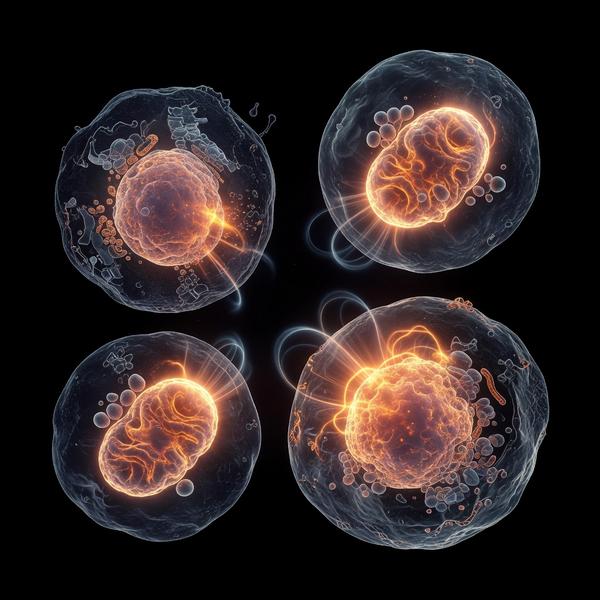
The Cellular Anatomy of Recurrent Tonsillitis. In the landscape of immunology, the palatine tonsils serve as the primary sentinels of the oropharyngeal cavity. For many, however, these guardians become sites of chronic distress. Recurrent Tonsillitis (RT) is frequently approached through the lens of pathogen eradication, yet the root cause often lies in a cellular metabolic crisis. At the center of this dysfunction are mitochondria—the powerhouses of the cell—and the accumulation of oxidative stress that compromises mucosal immunity. ### The Mitochondrial-Immune Axis.
Mitochondria do more than produce ATP; they act as signaling hubs for the innate immune system. In a healthy state, tonsillar crypts maintain a delicate balance between commensal bacteria and defensive immune responses. When mitochondrial function is impaired, the cell struggles to maintain energy homeostasis. This energy deficit triggers the production of Reactive Oxygen Species (ROS), which initiate a feedback loop of cellular damage. As the redox potential shifts, the tonsillar epithelium becomes more permeable, allowing pathogens to infiltrate deeper into the tissue, perpetuating a state of chronic inflammation. ### Oxidative Stress: The Silent Driver.
Oxidative stress occurs when the production of ROS exceeds the cell's antioxidant capacity. In recurrent tonsillitis, persistent bacterial or viral presence forces immune cells like macrophages and neutrophils to engage in an 'oxidative burst.' While this is meant to destroy invaders, it simultaneously stresses the local tissue environment. If the mitochondrial membranes are damaged, they leak electron transport chain components, further exacerbating the inflammatory cascade. This creates an environment where the tissue is perpetually 'on fire,' exhausting local stores of glutathione and superoxide dismutase. ### Root-Cause Perspectives on Healing. To address recurrent tonsillitis from a cellular perspective, we must move beyond suppression.
Supporting mitochondrial health involves optimizing mitochondrial biogenesis and buffering oxidative damage. This requires a multi-faceted approach: addressing micronutrient deficiencies that fuel the Krebs cycle (such as Magnesium, B-vitamins, and CoQ10), minimizing systemic inflammation through blood sugar regulation, and ensuring adequate levels of endogenous antioxidants. By reducing the metabolic load on the tonsillar cells, we allow the tissue to regain its structural integrity. ### Conclusion. Recurrent tonsillitis is a symptom of a systemic imbalance reflected in our most exposed immune tissues. By shifting our focus from merely targeting the pathogen to nourishing the mitochondria and quenching oxidative stress, we can support the body in reclaiming its natural defensive resilience.
The goal of INNERSTANDING is to move beyond the cycle of recurring infection and into a state of cellular vitality.
This article is provided for informational and educational purposes only. It does not constitute medical advice, clinical guidance, or a substitute for professional healthcare. Information reflects cited research at time of publication. Always consult a qualified healthcare professional before acting on any health information.
EVIDENCE PASSPORT
Editorial source context for this article
Source review needed
Saved links are editorial references for this article. They may support specific claims rather than every sentence. Open and assess each source in context. This passport does not independently verify them.
Editorial context
A complete editorial reading has not been recorded for this article, and no source links are saved on its record.
Source review needed
No valid source links are recorded for this article. Supplementary research, where available, is listed separately below.
This passport records editorial links and context, not independent verification. Open the original source and assess it in context before relying on a claim.
Medical Disclaimer
The information in this article is for educational purposes only and does not constitute medical advice, diagnosis, or treatment. Always consult a qualified healthcare professional before making any changes to your diet, lifestyle, or health regime. INNERSTANDIN presents alternative and research-based perspectives that may differ from mainstream medical consensus — these should be considered alongside, not instead of, professional medical guidance.
Read Full DisclaimerContinue the thread
Keep this question moving.
Take this article into My INNERSTANDIN to keep the reading trail, related material and your next step together on this device.
Explore this in the Body Map
Explore related body structures and their educational pages in the interactive Body Map.
Dig deeper in the Library
Free, longform PDF volumes that go beyond headlines into mechanisms and references.
RABBIT HOLE
Follow the biological thread deeper