
The Gut-Throat Axis: How Distal Microbiome Composition Influences Tonsillar Homeostasis
A comprehensive exploration of the systemic link between intestinal health and oral immunity, detailing how the gut microbiome regulates tonsillar inflammation and the Common Mucosal Immune System.

# The Gut-Throat Axis: How Distal Microbiome Composition Influences Tonsillar Homeostasis ## Beyond the Local Infection Paradigm For decades, the medical approach to chronic tonsillitis and adenoid hypertrophy has remained largely surgical or antibiotic-centric. When a child or adult suffers from recurrent throat infections, the clinical gaze is typically narrowed to the oropharynx. However, emerging research in mucosal immunology is unveiling a sophisticated systemic network known as the Common Mucosal Immune System (CMIS). At the heart of this network lies the Gut-Throat Axis—a bidirectional communication pathway where the state of the distal intestinal microbiome directly influences the homeostasis of Waldeyer’s Ring. This paradigm shift suggests that the throat is not an isolated chamber, but rather a reflection of the body's internal microbial ecosystem. ## Waldeyer’s Ring: The Sentinel of the Upper Respiratory Tract The tonsils (palatine, lingual, and pharyngeal) and adenoids are not mere anatomical vestiges of a bygone evolutionary era.
They are secondary lymphoid organs strategically positioned at the gateway of both the respiratory and digestive tracts. These tissues are rich in M-cells (microfold cells) that sample environmental antigens, presenting them to underlying B and T cells. This process initiates the production of secretory IgA (sIgA), the primary antibody defending our mucosal surfaces. While the tonsils sample local pathogens, their 'immunological tone'—the threshold at which they trigger an inflammatory response—is set by signals originating much further down the digestive tract in the gut-associated lymphoid tissue (GALT). ## The Common Mucosal Immune System (CMIS) The CMIS is the biological framework explaining why the gut affects the throat. When the GALT, such as Peyer's patches in the small intestine, encounters a microbe, it primes naive B and T cells.
These 'educated' immune cells then enter the lymphatic system and circulation, expressing specific 'homing receptors' like alpha-4 beta-7 integrin. Remarkably, these cells do not just return to the gut; they redistribute to distal mucosal sites, including the nasopharyngeal-associated lymphoid tissue (NALT), which includes the tonsils. Consequently, a gut environment characterized by dysbiosis—an imbalance of beneficial versus pathogenic microbes—produces a fleet of immune cells that may be hyper-reactive or insufficiently primed when they arrive at the throat. This means that a 'leaky gut' can effectively lead to a 'leaky throat,' where the tonsils become perpetually inflamed due to systemic immune signals rather than a local bacterial presence. ## Short-Chain Fatty Acids and Tonsillar Inflammation One of the primary ways the gut influences the throat is through the production of Short-Chain Fatty Acids (SCFAs) like butyrate, propionate, and acetate. These metabolites are produced by beneficial gut bacteria, such as Faecalibacterium prausnitzii and Akkermansia, during the fermentation of dietary fiber.
SCFAs are potent epigenetic modulators. They promote the differentiation of T-regulatory (Treg) cells, which serve as the 'brakes' of the immune system. In a state of gut dysbiosis, SCFA production drops. This leads to a systemic reduction in Treg activity, allowing for a pro-inflammatory environment in the tonsils. Without the calming influence of gut-derived SCFAs, the tonsils become hyper-responsive to benign environmental stimuli, leading to the chronic swelling (hypertrophy) often seen in pediatric patients. ## The Biofilm Connection and Microbial Translocation Pathogenic bacteria in the tonsils, such as Streptococcus pyogenes or Staphylococcus aureus, often organize into biofilms—complex, protective matrices that resist antibiotics.
Recent studies suggest that the integrity of the gut barrier plays a role in the persistence of these biofilms. Systemic endotoxemia (the presence of Lipopolysaccharides or LPS in the blood due to gut permeability) can keep the tonsillar tissue in a state of chronic recruitment of neutrophils. This persistent recruitment, rather than resolving the infection, provides the cellular debris and inflammatory milieu that pathogens use to reinforce their biofilm structures. Furthermore, microbial translocation—where gut-derived bacteria or their fragments enter the bloodstream—can lead to the seeding of distal sites. This suggests that some recurring 'throat' infections may actually be driven by a reservoir of intestinal pathogens or their metabolic byproducts. ## Molecular Mimicry and the Path of Autoimmunity The Gut-Throat axis also plays a critical role in preventing molecular mimicry.
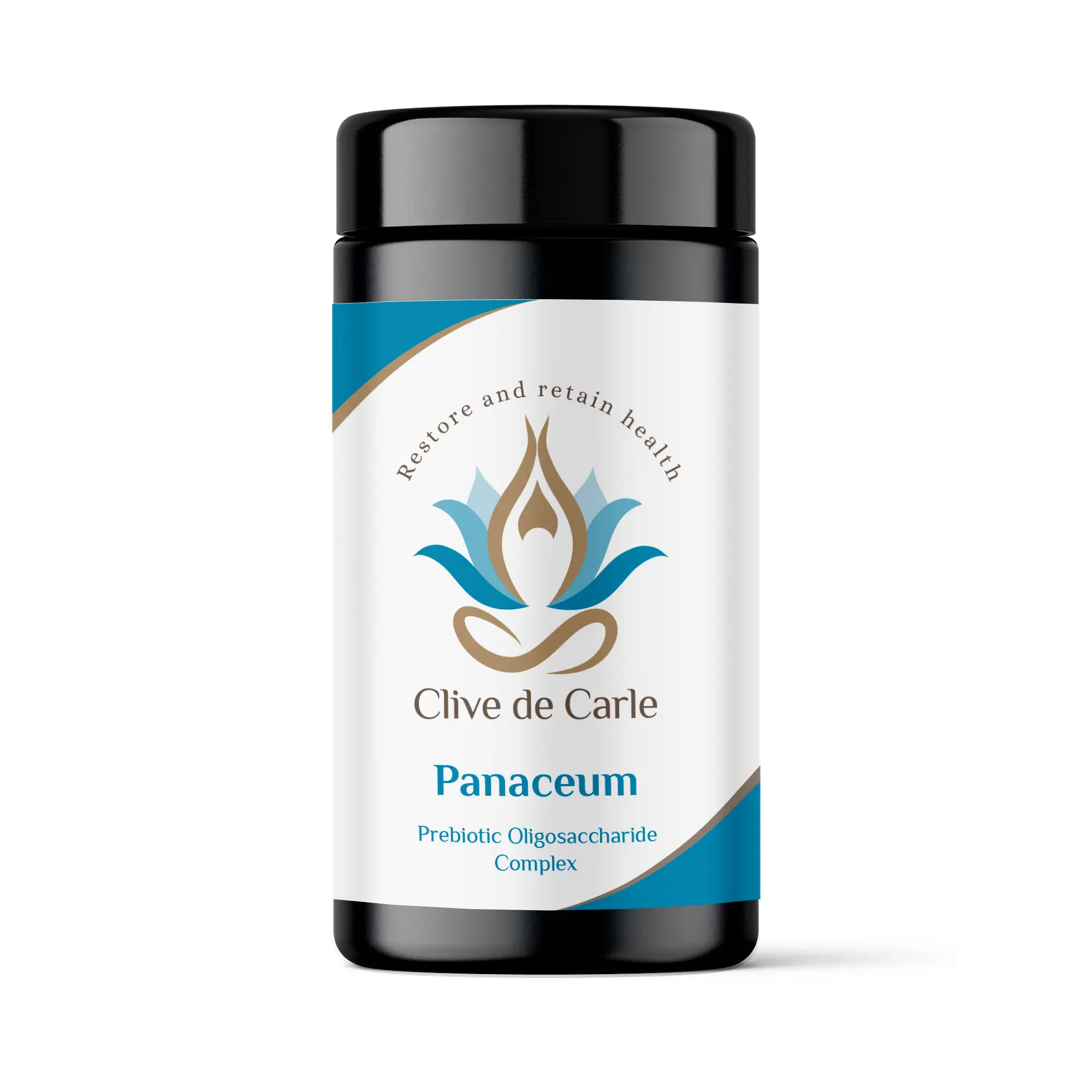
Panaceum – Prebiotic Oligosaccharide Complex
Panaceum is a specialist eight-oligosaccharide blend designed to restore the microbial diversity missing from the modern Western diet. By providing the complex fibres our ancestors once consumed, it feeds and sustains a resilient gut microbiome for long-term health.
Vetting Notes
Pending
In some cases of chronic tonsillitis, the immune system begins to lose its ability to distinguish between foreign pathogens and self-tissue. This is often triggered by cross-reactive antigens found in an unbalanced gut. If the gut lining is compromised, undigested proteins and microbial fragments can enter the bloodstream, prompting an immune response that mistakenly targets similar-looking proteins in the tonsillar tissue. Maintaining a diverse gut flora ensures that the immune system receives a diverse education, reducing the risk of these cross-reactive errors that lead to chronic tissue degradation. ## Root-Cause Clinical Interventions Understanding the Gut-Throat Axis shifts the therapeutic focus from 'eradication' to 'ecosystem restoration.' 1. Fiber and Microbiota-Accessible Carbohydrates (MACs): To support tonsillar homeostasis, one must fuel the SCFA-producing bacteria in the colon.
A diet high in diverse plant fibers—at least 30 different plants per week—is essential for systemic immune regulation. 2. Targeted Probiotics: While general gut probiotics are helpful, specific oral strains like Streptococcus salivarius K12 and M18 have shown the ability to colonize the oropharynx and produce bacteriocin-like inhibitory substances (BLIS). These 'friendly' bacteria compete with pathogens, but their survival is often dependent on the overall systemic immune tone established by the gut. 3. Addressing Permeability: Healing the gut lining using compounds like L-glutamine, zinc carnosine, and collagen can reduce the systemic inflammatory load (LPS), thereby reducing the workload on the NALT. 4. Vitamin D and Vitamin A: These fat-soluble vitamins are crucial for the 'homing' mechanism of immune cells.
They ensure that the cross-talk between the GALT and the tonsils is clear and efficient, preventing the immune system from 'misfiring' at the throat. ## Conclusion The tonsils and adenoids are the 'canaries in the coal mine' for the body’s internal ecosystem. Chronic hypertrophy and recurrent infections are often signals of a deeper systemic imbalance originating in the gut microbiome. By recognizing the Gut-Throat Axis, we can move beyond the limitations of local treatment and embrace a holistic, root-cause approach to ENT health. Restoring the distal microbiome is not just about digestion; it is a fundamental requirement for the lasting homeostasis of our innate immune defenses.
This article is provided for informational and educational purposes only. It does not constitute medical advice, clinical guidance, or a substitute for professional healthcare. Information reflects cited research at time of publication. Always consult a qualified healthcare professional before acting on any health information.
RESEARCH FOUNDATIONS
Biological Credibility Archive
Citations provided for educational reference. Verify via PubMed or institutional databases.
Medical Disclaimer
The information in this article is for educational purposes only and does not constitute medical advice, diagnosis, or treatment. Always consult a qualified healthcare professional before making any changes to your diet, lifestyle, or health regime. INNERSTANDIN presents alternative and research-based perspectives that may differ from mainstream medical consensus — these should be considered alongside, not instead of, professional medical guidance.
Read Full DisclaimerReady to learn more?
Continue your journey through our classified biological research.
DISCUSSION ROOM
Members of THE COLLECTIVE discussing "The Gut-Throat Axis: How Distal Microbiome Composition Influences Tonsillar Homeostasis"
SILENT CHANNEL
Be the first to discuss this article. Your insight could help others understand these biological concepts deeper.
THE ARSENAL
Based on Tonsils, Adenoids & Innate Immunity — products curated by our research team for educational relevance and biological support.
Panaceum – Prebiotic Oligosaccharide Complex
INNERSTANDING may earn a commission on purchases made through these links. All products are selected based on rigorous educational relevance to our biological research.
RABBIT HOLE
Follow the biological thread deeper

