
Oxidative Stress: The Hidden Cost of Herbicide Residues in British Barley
Updated May 2026
Residues from broad-spectrum herbicides in British barley promote systemic oxidative stress in the consumer. This biochemical imbalance contributes to the acceleration of cellular aging and inflammatory disease.
Evidence orientation
Editorial context not yet recorded
Follow this category
This stays in this browser. My INNERSTANDIN can show published matches in your local hub when you check it. It does not send email, push, or alert notifications.
Local learning review
A private browser aid for revisiting ideas. It is not an alert or a health recommendation.
Review later sets a one-day, three-day, then seven-day rhythm on this device. Choose it only when you want to revisit this article.
The pastoral image of the British countryside, defined by vast, undulating fields of golden barley, is a cornerstone of our national identity. As the UK’s second-largest crop, barley (Hordeum vulgare) is not merely a commodity; it is the lifeblood of the brewing industry, a staple in our livestock feed, and an increasingly popular "superfood" in the form of pearl barley and barley grass. However, beneath this aesthetic of agricultural productivity lies a chemical reality that is increasingly difficult to ignore.
The intensive use of broad-spectrum herbicides, particularly as pre-harvest desiccants, has turned this ancient grain into a primary vector for sub-clinical chemical exposure. While regulatory bodies maintain that residue levels fall within "safe" limits, a burgeoning body of molecular research suggests a more insidious narrative. These residues are not biologically inert. Instead, they act as potent catalysts for oxidative stress—a state of biochemical imbalance that ravages cellular integrity, accelerates the aging process, and serves as the foundational "soil" from which chronic inflammatory diseases grow.
Overview
In the United Kingdom, the agricultural landscape is dominated by the necessity of efficiency and the challenges of a temperate, often damp climate. To ensure a uniform harvest and to manage weeds that thrive in the British moisture, farmers have become reliant on chemical intervention. Chief among these is glyphosate, alongside a suite of other herbicides such as glufosinate-ammonium and various acetolactate synthase (ALS) inhibitors.
While the acute toxicity of these substances is often downplayed, the scientific community is now shifting its focus toward chronic, low-dose exposure. This is particularly relevant to barley, as a significant portion of the UK crop is treated with herbicides just days before harvest—a process known as desiccation. This practice ensures that the chemicals are not washed away or metabolised by the plant, but rather remain as residues on the grain, eventually finding their way into our beer, bread, and breakfast cereals.
The central thesis of this investigation is that these residues induce a state of systemic oxidative stress in the consumer. By disrupting mitochondrial function and depleting the body’s endogenous antioxidant reserves, herbicide residues trigger a cascade of cellular damage. This is the "hidden cost" of our modern agricultural system: a slow-motion erosion of public health that manifests as metabolic syndrome, neurodegenerative decline, and persistent systemic inflammation.
Fact: According to data from the UK government’s Expert Committee on Pesticide Residues in Food (PRiF), barley samples frequently test positive for multiple pesticide residues, with glyphosate being the most common contaminant found in bread and grain products.
The Biology — How It Works
To understand why herbicide residues are so damaging, we must first understand the fundamental concept of Redox Homeostasis. In every cell of the British consumer, a constant "tug-of-war" occurs between pro-oxidants (substances that strip electrons from other molecules) and antioxidants (substances that donate electrons to neutralise threats).
The Nature of Oxidative Stress
Oxidative stress occurs when the production of Reactive Oxygen Species (ROS)—unstable, oxygen-containing molecules—outpaces the body’s ability to detoxify them. Under normal conditions, ROS are natural byproducts of cellular respiration. However, when herbicide residues enter the system, they act as exogenous pro-oxidants.
The Role of the Mitochondria
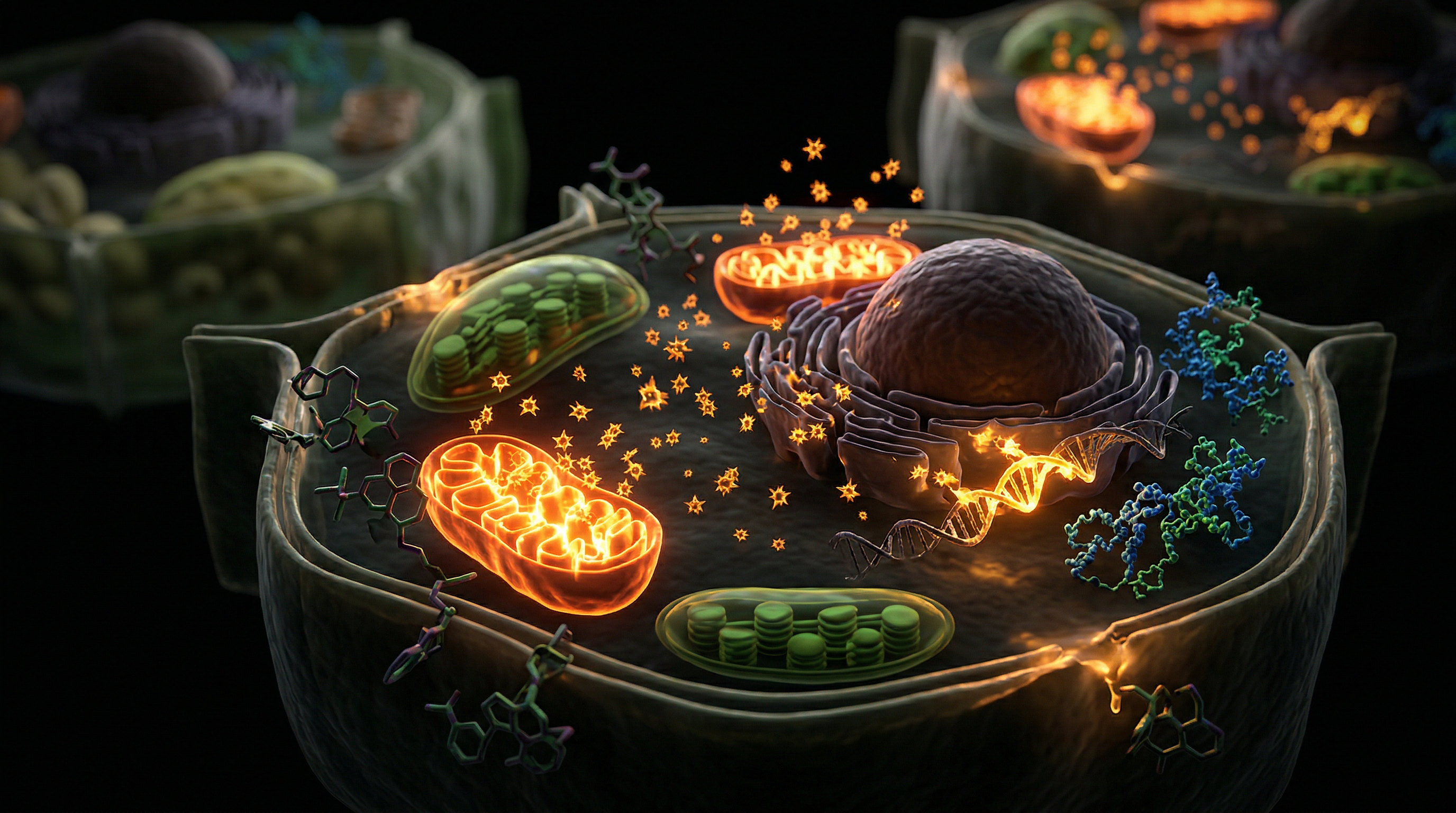
The mitochondrion is the powerhouse of the cell, where oxygen and nutrients are converted into Adenosine Triphosphate (ATP). This process, known as the electron transport chain, is incredibly delicate. Herbicide residues, particularly those found in barley, have been shown to "uncouple" this process. Instead of producing energy efficiently, the mitochondria begin to "leak" electrons, which react with oxygen to form superoxide anions—the first link in the chain of oxidative destruction.
Depletion of Glutathione
Glutathione is often referred to as the body’s "master antioxidant." It is a tripeptide that neutralises ROS and facilitates the detoxification of xenobiotics (foreign chemicals). Research indicates that chronic exposure to herbicide residues significantly depletes intracellular glutathione levels. When glutathione is low, the cell loses its primary shield, leaving the DNA, proteins, and lipids vulnerable to oxidative "rusting."
Mechanisms at the Cellular Level
The damage inflicted by herbicide residues in British barley is not a vague "toxicity" but a series of specific, measurable biochemical disruptions.
Disruption of the Shikimate Pathway (The Microbiome Connection)
One of the most persistent myths in toxicology is that glyphosate is harmless to humans because it targets the shikimate pathway, which humans do not possess. However, this pathway is present in the trillions of bacteria that constitute our gut microbiome.
- The microbiome is essential for synthesising aromatic amino acids (phenylalanine, tyrosine, and tryptophan).
- Herbicide residues in barley disrupt the balance of gut flora, promoting the growth of pathogenic "pro-oxidant" bacteria while suppressing beneficial, "antioxidant" species like Bifidobacteria.
- This "dysbiosis" leads to an increase in intestinal permeability (leaky gut), allowing bacterial endotoxins (LPS) to enter the bloodstream, further triggering systemic oxidative stress.
Metal Chelation and Enzymatic Inhibition
Many herbicides used in UK barley production are potent chelators. This means they bind to essential minerals like magnesium, zinc, and manganese.
- Manganese is a critical co-factor for Superoxide Dismutase (Mn-SOD), an enzyme that protects the mitochondria from oxidative damage.
- By sequestering these minerals, herbicide residues effectively disarm the cell's internal security system, allowing ROS to roam unchecked.
DNA Damage and Epigenetic Alterations
When ROS levels remain high, they eventually attack the cell nucleus. 8-hydroxy-2'-deoxyguanosine (8-OHdG) is a hallmark biomarker of oxidative DNA damage often found in populations with high pesticide exposure. Beyond direct strand breaks, these chemicals can induce epigenetic changes—altering the way genes are expressed without changing the DNA sequence. This can lead to the "silencing" of protective antioxidant genes and the over-activation of pro-inflammatory pathways.
Statistic: Peer-reviewed studies have demonstrated that even at concentrations considered "sub-toxic" by regulatory agencies, glyphosate exposure can increase ROS production in human cells by up to 30% within 48 hours.
Environmental Threats and Biological Disruptors
The British agricultural environment poses unique risks that exacerbate the impact of herbicide residues. The UK's reliance on "Integrated Pest Management" often still prioritises chemical intervention due to the economic pressures of high-yield farming.
The Desiccation Crisis
In the UK, the window for harvesting barley is often narrow due to unpredictable weather. To facilitate a faster harvest, farmers apply herbicides to "kill" the crop and dry it out uniformly. This is the Environmental Threat par excellence. Unlike applications made early in the growing season, which may degrade, pre-harvest applications are absorbed directly into the grain that will eventually be processed for human consumption.
Synergistic Toxicity: The "Cocktail Effect"
Barley is rarely treated with just one chemical. A single British barley field may be subjected to:
- Herbicides (Glyphosate, Pendimethalin)
- Fungicides (Prothioconazole, Fluxapyroxad)
- Plant Growth Regulators (Chlormequat)
While each chemical is tested individually for safety, the synergistic effect—where the combined toxicity is greater than the sum of its parts—is almost entirely ignored by mainstream regulators. These chemicals can inhibit the Cytochrome P450 enzymes in the liver, which are responsible for detoxifying the very herbicides we are consuming. This creates a feedback loop of toxicity.
Persistence in the Food Chain
Barley is a staple of the UK's livestock industry. Residues accumulate in the fatty tissues of cattle and are secreted in milk. For the consumer, this means exposure is not limited to grain products but is compounded through the consumption of British beef and dairy, leading to a higher total body burden of pro-oxidant chemicals.
The Cascade: From Exposure to Disease
Oxidative stress is not a disease in itself, but it is the "biochemical engine" that drives nearly every modern chronic ailment. The cascade from a bowl of contaminated barley to a clinical diagnosis is a multi-year process of cellular attrition.
Chronic Inflammation and NF-κB
Oxidative stress activates a protein complex called NF-κB (nuclear factor kappa-light-chain-enhancer of activated B cells). This is the "master switch" for inflammation. Once flipped, the body begins producing pro-inflammatory cytokines such as TNF-alpha and IL-6. This state of "smouldering" inflammation is now linked to:
- Cardiovascular Disease: Oxidative stress causes the oxidation of LDL cholesterol, leading to plaque formation in British patients.
- Type 2 Diabetes: ROS interfere with insulin signalling pathways, contributing to insulin resistance.
Neurodegeneration and the Gut-Brain Axis
The brain is particularly vulnerable to oxidative stress due to its high oxygen consumption and lipid content. Herbicide-induced dysbiosis (as mentioned in the Shikimate section) sends inflammatory signals via the vagus nerve to the brain. This contributes to the neuroinflammation seen in Parkinson’s and Alzheimer’s diseases—conditions that are seeing a concerning rise in the UK's ageing population.
Accelerated Cellular Aging
Every time a cell is subjected to an oxidative burst, its telomeres (the protective caps on chromosomes) shorten. Herbicide residues act as a "metabolic accelerant," forcing cells to age faster than they otherwise would. This manifests as premature skin ageing, loss of muscle mass, and a general decline in "healthspan."
What the Mainstream Narrative Omits
The UK’s regulatory framework, governed by the Health and Safety Executive (HSE) and informed by the European Food Safety Authority (EFSA) paradigms, operates on an outdated model of toxicology.
The Myth of the "Safe Limit"
The Maximum Residue Level (MRL) is a commercial standard, not a health standard. It is designed to facilitate trade and ensure "Good Agricultural Practice," not to protect the long-term cellular health of the consumer. The mainstream narrative omits the fact that endocrine disruption—where chemicals mimic or block hormones—can occur at doses lower than those used in standard toxicity tests.
The Omission of Chronic Low-Dose Data
Most safety trials are conducted over short periods (90 days) on animal models. There is a profound lack of multi-generational, longitudinal human studies looking at the cumulative effect of consuming multiple herbicide residues over thirty or forty years. By focusing only on "acute" effects (like skin irritation or immediate poisoning), regulators ignore the "hidden cost" of slow, oxidative degradation.
The Conflict of Interest
Much of the data used to approve these herbicides is provided by the manufacturers themselves. This "proprietary" science is often not subject to the same peer-review rigour as independent academic research. The mainstream narrative treats these industrial summaries as gospel, while dismissing independent studies showing oxidative harm as "outliers" or "unreliable."
The UK Context
Post-Brexit, the UK finds itself at a crossroads regarding pesticide regulation. There is significant pressure to diverge from EU standards to strike trade deals, potentially leading to the approval of chemicals that are currently restricted or banned in Europe.
British Barley Statistics
- The UK produces approximately 7 million tonnes of barley annually.
- Around 25% of the UK’s total pesticide applications are dedicated to cereal crops, with barley receiving multiple "passes" of herbicide spray.
- The UK’s "National Residue Survey" consistently finds glyphosate residues in samples of British flour and beer, yet these findings are rarely communicated to the public with the necessary urgency.
The Role of the "Red Tractor"
The Red Tractor assurance scheme is often touted as a guarantee of quality. However, while it ensures "traceability," it does not prohibit the use of pre-harvest glyphosate. Many British consumers buy Red Tractor products under the illusion that they are "cleaner" than imports, unaware that the same oxidative-stress-inducing residues are present.
Water Contamination
It is not just the grain. Barley farming in the UK contributes significantly to herbicide runoff into British waterways. This creates a secondary exposure route through drinking water, further increasing the oxidative load on the UK population. The "hidden cost" is therefore both a public health crisis and an environmental one.
Protective Measures and Recovery Protocols
While the systemic prevalence of herbicide residues in British barley is alarming, individuals are not powerless. Mitigating the risk of oxidative stress requires a two-pronged approach: reducing exposure and enhancing the body's resilience.
Strategic Dietary Choices
- Prioritise Organic Barley: Organic standards strictly prohibit the use of synthetic herbicides like glyphosate. Choosing organic pearl barley, flour, and malt is the single most effective way to eliminate this residue source.
- Diversify Grains: Avoid a barley-heavy diet. Incorporate ancient grains like buckwheat, millet, or quinoa, which often require fewer chemical inputs (though organic is still preferred).
- Sprouting: Sprouting barley (making "malt") can help break down some anti-nutrients, but it does not remove chemical residues. Only sourcing "clean" grain works.
Enhancing Endogenous Antioxidants
To counter the "oxidative "rusting" caused by residues, one must bolster the body’s internal defences:
- Nrf2 Activators: The Nrf2 pathway is the body’s "master regulator" of antioxidant response. Compounds like sulforaphane (found in broccoli sprouts) and curcumin (from turmeric) can help "upregulate" the production of glutathione and SOD.
- Selenium and Zinc: These minerals are essential co-factors for antioxidant enzymes. Supplementing with high-quality, bioavailable forms can help compensate for the chelation effects of herbicide residues.
- NAC (N-Acetyl Cysteine): As a precursor to glutathione, NAC is a powerful tool for those looking to recover from chronic chemical exposure.
Microbiome Restoration
Since the gut is a primary target of herbicide residues:
- Fermented Foods: Regularly consuming British-made sauerkraut, kefir, or kombucha can help repopulate the gut with the "good" bacteria that herbicides destroy.
- Prebiotic Fibres: Providing the right "fuel" for beneficial bacteria helps maintain a strong intestinal barrier, preventing "leaky gut" and the subsequent systemic oxidative cascade.
Callout: Recovery from chronic oxidative stress is not an overnight process. It requires a sustained commitment to "clean" eating and metabolic support to clear the accumulated "toxic load" from the body's tissues.
Summary: Key Takeaways
The issue of herbicide residues in British barley is a quintessential example of the "unseen" dangers in our modern food system. While the grains may look healthy and the regulatory labels say "safe," the biochemical reality at the cellular level tells a different story.
- Oxidative Stress is the Core Mechanism: Herbicide residues act as pro-oxidants, disrupting mitochondrial function and depleting the body’s "master antioxidant," glutathione.
- Pre-Harvest Desiccation is the Culprit: The UK’s practice of spraying barley just before harvest leads to high residue levels that bypass the plant’s natural metabolic breakdown.
- The "Safe Limit" is a Fallacy: Current MRLs do not account for the synergistic "cocktail effect" or the long-term impact of low-dose, chronic exposure on cellular aging and inflammation.
- Systemic Health Implications: From "leaky gut" to neurodegeneration, the oxidative cascade triggered by these residues is a foundational driver of the UK’s chronic disease epidemic.
- Action is Possible: Through choosing organic grains, supporting Nrf2 pathways, and restoring gut health, consumers can protect themselves from the hidden costs of industrial agriculture.
As we move forward, it is imperative that we demand a higher standard of "food intelligence." We must look beyond the golden fields of the British countryside and confront the chemical reality of our breadbasket. Only by understanding the molecular impact of what we eat can we begin to reclaim our health from a system that treats oxidative stress as an acceptable "externality" of doing business. INNERSTANDING requires us to see the "hidden" and act upon the truth.
This article is provided for informational and educational purposes only. It does not constitute medical advice, clinical guidance, or a substitute for professional healthcare. Information reflects cited research at time of publication. Always consult a qualified healthcare professional before acting on any health information.
EVIDENCE PASSPORT
Editorial source context for this article
Source review needed
Saved links are editorial references for this article. They may support specific claims rather than every sentence. Open and assess each source in context. This passport does not independently verify them.
Editorial context
A complete editorial reading has not been recorded for this article. Source links remain available for you to open and assess directly.
Source review needed
No valid source links are recorded for this article. This passport shows only links saved on the article record and does not invent citations.
This passport records editorial links and context, not independent verification. Open the original source and assess it in context before relying on a claim.
Medical Disclaimer
The information in this article is for educational purposes only and does not constitute medical advice, diagnosis, or treatment. Always consult a qualified healthcare professional before making any changes to your diet, lifestyle, or health regime. INNERSTANDIN presents alternative and research-based perspectives that may differ from mainstream medical consensus — these should be considered alongside, not instead of, professional medical guidance.
Read Full DisclaimerContinue the thread
Keep this question moving.
Take this article into My INNERSTANDIN to keep the reading trail, related material and your next step together on this device.
Dig deeper in the Library
Free, longform PDF volumes that go beyond headlines into mechanisms and references.