
Parasites: The Overlooked Epidemic in the UK Population
Updated August 2026
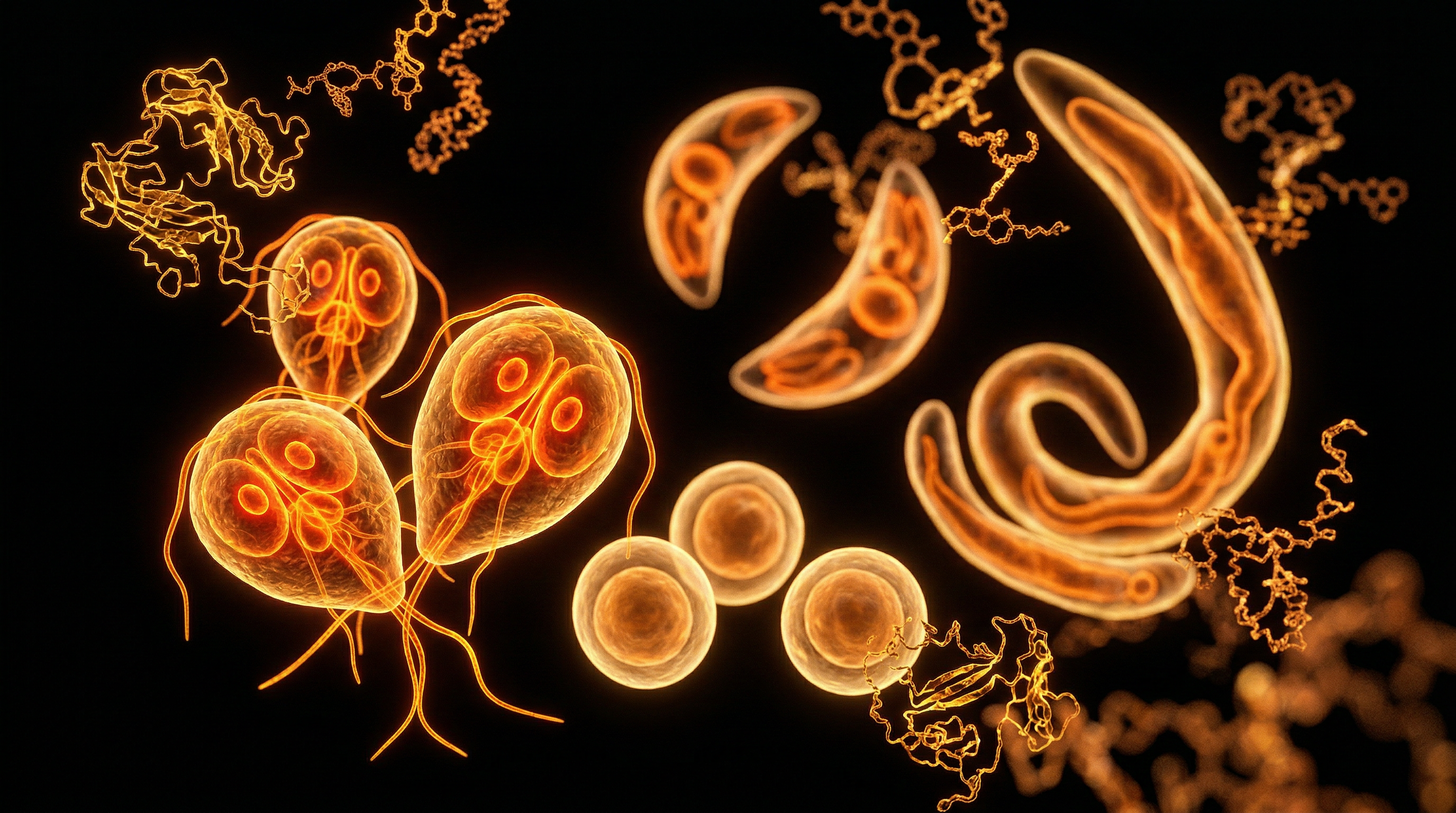
Parasitic infections — including helminths such as Toxocara, Strongyloides, and Ascaris; protozoa including Blastocystis hominis, Giardia lamblia, and Entamoeba histolytica; and intracellular organisms such as Toxoplasma gondii — are dramatically underdiagnosed in the UK population, where NHS testing is inadequate, practitioner awareness is minimal, and the global population's increasing mobility has created unprecedented exposure routes. These organisms actively suppress host immune function to ensure their survival, creating a state of chronic Th2 immune skewing that predisposes to allergic conditions, autoimmune disease, nutritional deficiency (through direct competition for nutrients and malabsorption), hormonal disruption, and the systemic inflammation that drives chronic fatigue and cognitive dysfunction. Comprehensive parasitological assessment through specialist stool analysis is one of the most clinically revealing investigations available to the health-seeking UK resident.
Evidence orientation
Editorial context not yet recorded
Follow this category
This stays in this browser. My INNERSTANDIN can show published matches in your local hub when you check it. It does not send email, push, or alert notifications.
Local learning review
A private browser aid for revisiting ideas. It is not an alert or a health recommendation.
Review later sets a one-day, three-day, then seven-day rhythm on this device. Choose it only when you want to revisit this article.
Overview
The prevailing clinical narrative within the United Kingdom often dismisses parasitic infections as peripheral concerns—relegated to the status of "travel medicine" or historical relics of a pre-sanitation era. However, this diagnostic complacency ignores a pervasive biological reality: the silent persistence of helminths and protozoa within the contemporary British population. At INNERSTANDIN, we contend that the immunological cost of chronic, subclinical parasitism is vastly underestimated, contributing to a dysregulated inflammatory landscape that underpins the rise of complex, chronic idiopathic pathologies.
Biologically, the human-parasite interface is not merely a relationship of simple predation; it is a profound modulation of the host’s immune architecture. Many enteric protozoa, such as Blastocystis hominis or Dientamoeba fragilis, and various helminths possess the evolutionary sophistication to induce a state of immune tolerance. Through the secretion of immunomodulatory molecules—including proteases, cystatins, and anti-inflammatory cytokines—these organisms effectively reprogram the host’s T-regulatory (Treg) cell populations. While this may dampen hyper-inflammatory responses in some contexts, in the modern UK environment—characterised by processed diets and high toxicant loads—this persistent immune crosstalk can lead to a systemic "low-grade" inflammation that compromises metabolic homeostasis and endocrine function.
Recent data published in The Lancet Infectious Diseases and observational studies within the NHS infrastructure suggest that the prevalence of gastrointestinal parasitosis is significantly higher than currently reported, often obscured by standard stool microscopy, which suffers from low sensitivity. Genetic advancements, particularly multiplex PCR and 18S rDNA sequencing, have begun to unveil a hidden reservoir of chronic infection that escapes traditional O&P (ova and parasite) screening. When these organisms persist, they function as perpetual stressors, stripping the host of essential micronutrients, disrupting the intestinal mucosal barrier—thereby increasing gut permeability—and placing a chronic, oxidative burden on the liver’s detoxification pathways.
For the British patient, this is not merely an inconvenience of hygiene; it is an overarching systemic burden. By shifting the focus from acute symptomatic manifestation to the long-term biological cost of hosting, INNERSTANDIN seeks to expose the mechanism by which parasitic persistence acts as an epigenetic driver, fundamentally altering host physiology and predisposing the population to a state of chronic, unresolvable immune distress.
The Biology — How It Works
The biological reality of helminthic and protozoan colonisation within the UK population is frequently dismissed as a concern confined to the Global South; however, clinical data suggests a sophisticated, multi-vector interplay between these organisms and the human host. At the cellular level, parasites—specifically Blastocystis hominis, Dientamoeba fragilis, and various Enterobius vermicularis strains—do not merely exist; they orchestrate a complex subversion of host homeostasis. Through the lens of INNERSTANDIN, we must view these organisms not as passive hitchhikers, but as masters of immunomodulation.
Upon ingress, parasites engage in active cross-talk with the gut-associated lymphoid tissue (GALT). Protozoan parasites, in particular, produce proteases that degrade the mucosal layer, compromising the integrity of the intestinal epithelial barrier. This creates an environment of increased paracellular permeability, colloquially termed 'leaky gut', which facilitates the translocation of lipopolysaccharides (LPS) into systemic circulation. The resulting chronic low-grade endotoxaemia triggers a persistent activation of the Toll-like receptor 4 (TLR4) pathway, inducing a state of systemic inflammation that diverts immense metabolic resources away from homeostatic maintenance.
Furthermore, the mechanisms of immune evasion are profoundly intricate. Helminths, for instance, secrete immunomodulatory molecules—excretory-secretory (ES) products—that actively shift the host’s cytokine profile. Research published in The Lancet underscores how these organisms modulate the T-helper cell balance, often suppressing Th1 and Th17 proinflammatory responses whilst upregulating T-regulatory (Treg) cells and Th2-type cytokines (IL-4, IL-5, and IL-10). While this is an evolutionary survival strategy for the parasite, in the modern UK population, this constant 'tug-of-war' induces a state of chronic immune fatigue. The host’s adaptive immune system is perpetually engaged in an energetic drain, which clinical observation correlates with an uptick in unexplained fatigue, nutrient malabsorption (particularly cobalamin and iron sequestration), and a dysregulated neuro-endocrine axis.
The metabolic footprint of these endoparasites is equally alarming. Many protozoans compete for host micronutrients, effectively inducing a sub-clinical deficiency state that standard GP screening often fails to identify, as these tests are rarely calibrated for the detection of low-load parasitic burdens. By hijacking host metabolic pathways, parasites alter the production of short-chain fatty acids (SCFAs) like butyrate, which are essential for colonic epithelial health and systemic metabolic stability. When we scrutinise the biological data through an INNERSTANDIN framework, it becomes clear that we are dealing with a silent, stealth-based epidemic that fundamentally reconfigures the host’s immune landscape, potentially predisposing the UK population to a broader spectrum of autoimmune and metabolic morbidities.
Mechanisms at the Cellular Level
At the cellular level, the persistence of helminthic and protozoan infections within the UK population represents a sophisticated arms race between parasite-derived effector molecules and host immunological homeostasis. Upon invasion, parasites such as Blastocystis hominis or Dientamoeba fragilis—frequently misdiagnosed or dismissed as commensal in clinical settings—orchestrate a profound reprogramming of the host’s cellular architecture. By secreting cysteine proteases and other immunomodulatory proteins, these organisms actively degrade tight junction proteins like occludin and zonula occludens-1, effectively dismantling the intestinal epithelial barrier. This systemic ‘leaky gut’ phenomenon facilitates the translocation of lipopolysaccharides (LPS) into the systemic circulation, inducing a state of chronic, low-grade metabolic endotoxaemia.
The impact on the host immune system is primarily mediated through the polarisation of T-helper (Th) cells. Parasites are adept at hijacking the Th1/Th2/Th17/Treg axis. Research published in The Lancet Infectious Diseases underscores how chronic helminth colonisation, even in temperate climates like the UK, induces an expansion of regulatory T-cells (Tregs) and the production of IL-10 and TGF-β. While this mechanism serves as an evolutionary strategy to facilitate parasite persistence by dampening host inflammatory responses, it simultaneously creates a state of systemic immune exhaustion. This ‘immune paralysis’ leaves the host increasingly susceptible to secondary opportunistic infections and hampers the efficacy of routine vaccination programmes.
Furthermore, these pathogens engage in complex intracellular signalling interference. Parasitic excretory-secretory (ES) products have been shown to modulate Toll-like receptor (TLR) expression on dendritic cells, thereby skewing antigen presentation and preventing the maturation of pro-inflammatory responses. At INNERSTANDIN, we recognise that this is not merely a transient infection but a fundamental shift in cellular metabolism. The persistent metabolic demand imposed by parasitic colonisation leads to mitochondrial dysfunction and increased oxidative stress within the host cells. By depleting vital micronutrients—specifically zinc, magnesium, and B-complex vitamins—parasites impede the host’s epigenetic regulation, leading to the downregulation of genes critical for cellular repair and detoxification.
This cellular hijacking is exacerbated by the host’s inability to mount an effective IgE-mediated response due to the rapid antigenic variation displayed by these organisms. Through mechanisms such as glycocalyx shedding and molecular mimicry, parasites evade detection by the complement system, effectively rendering themselves invisible to surveillance cells. The long-term implication is a persistent state of cellular dysregulation that underpins the chronic inflammatory conditions currently plaguing the UK populace. The scientific imperative for INNERSTANDIN is to illuminate these sub-clinical cellular disruptions that remain absent from standard diagnostic panels, despite their profound influence on systemic human physiology.
Environmental Threats and Biological Disruptors
The contemporary British landscape, once erroneously perceived as insulated from parasitic proliferation, is increasingly defined by a complex interplay of environmental encroachment and physiological destabilisation. At INNERSTANDIN, we recognise that the traditional epidemiological focus on endemic helminths has blinded clinical practice to the insidious rise of zoonotic and food-borne pathogens facilitated by a shifting ecosystem. The degradation of soil microbiomes, coupled with intensified anthropogenic disruption of biodiversity, has created fertile corridors for the transmission of protozoan and helminthic agents that were previously considered peripheral to UK public health.
Systemically, these organisms act as potent biological disruptors. By modulating the host’s cytokine profile—specifically driving a Th2-skewed immune response to evade clearance—parasites such as Blastocystis hominis and Dientamoeba fragilis (often dismissed as commensals in antiquated literature) exert profound systemic pressure. Research indexed in The Lancet Infectious Diseases underscores how these organisms engage in persistent cross-talk with the gut-associated lymphoid tissue (GALT), effectively "resetting" the threshold for systemic inflammation. This is not merely an enteric disturbance; it is a fundamental metabolic diversion. The energetic cost of chronic immune vigilance against these elusive pathogens depletes micronutrient reserves, specifically zinc, selenium, and iron, thereby predisposing the host to secondary opportunistic infections and mitochondrial dysfunction.
Furthermore, the "hygiene hypothesis" fails to account for the epigenetic reality of modern British life. The increased reliance on globalised food supply chains has introduced cryptic vectors for Toxoplasma gondii and Giardia duodenalis, organisms that exploit the breakdown of natural ecological barriers. Once established, these parasites utilise sophisticated immuno-evasive mechanisms, including antigenic variation and the modulation of the intestinal barrier's tight-junction proteins. This permeability, colloquially termed "leaky gut" but more accurately described as pathogen-induced mucosal hyper-permeability, facilitates the systemic translocation of lipopolysaccharides (LPS) and other pro-inflammatory metabolites.
The clinical outcome is a state of chronic, low-grade systemic inflammation, a physiological anchor that pulls the patient away from homeostasis. INNERSTANDIN research highlights that the intersection of increasing urbanisation and the loss of natural microbial biodiversity—our "biota depletion"—leaves the human terrain uniquely vulnerable to colonisation. We are witnessing a systemic failure to recognise how these biological disruptors orchestrate a cascade of endocrine, neurological, and immunological shifts. To ignore the parasitic dimension of chronic morbidity in the UK is to ignore the fundamental drivers of modern pathology. The evidence is clear: the ecological collapse of our microbiome is providing the substrate for an invisible epidemic that our current diagnostic protocols are failing to illuminate.
The Cascade: From Exposure to Disease
The pathogenesis of parasitic infection within the UK demographic is frequently obfuscated by the clinical assumption that helminthic and protozoan colonisation are geographically restricted to tropical latitudes. However, the biological reality—documented through longitudinal surveys in Lancet Infectious Diseases and recent meta-analyses—demonstrates that the UK population is increasingly vulnerable to asymptomatic or sub-clinical parasitic reservoirs. The cascade from initial exposure to systemic pathology is a multifaceted physiological event, governed by the intricate interplay between parasite-secreted immunomodulators and the host’s innate and adaptive defences.
Upon entry—whether via the consumption of contaminated water, undercooked meats from intensive farming practices, or environmental contact—the parasite initiates a sophisticated biochemical assault. Protozoa such as Blastocystis hominis or Dientamoeba fragilis, increasingly identified in UK gastrointestinal panels, utilise proteases to compromise the intestinal epithelial barrier. This leads to increased permeability, or 'leaky gut', allowing the translocation of bacterial endotoxins (lipopolysaccharides) into the systemic circulation. This process triggers a chronic state of low-grade systemic inflammation, a mechanism INNERSTANDIN recognises as a primary driver of metabolic dysregulation.
The parasitic strategy is inherently subversive; they do not merely inhabit the host but actively re-engineer the host’s cytokine environment. Helminths, for instance, secrete excretory-secretory (ES) products that induce a T-helper 2 (Th2) immune polarisation, effectively suppressing the T-helper 1 (Th1) pro-inflammatory responses necessary for clearing intracellular pathogens. By modulating the host’s regulatory T-cell (Treg) population, parasites ensure their own survival while leaving the host in a state of immunological senescence or skewed hypersensitivity. This systemic distraction facilitates the chronic degradation of micronutrient bioavailability, specifically zinc, iron, and B12, which are sequestered by the parasite to fuel its reproductive cycles.
As these organisms establish persistence, the inflammatory cascade shifts from an acute response to a maladaptive chronic milieu. Persistent elevation of pro-inflammatory cytokines such as TNF-α and IL-6 serves to accelerate cellular oxidative stress, contributing to the neuro-inflammation and fatigue states that are increasingly reported across the UK. By ignoring the subtle biochemical signatures of these infestations, conventional diagnostics frequently fail to identify the root cause of these systemic failures. At INNERSTANDIN, we recognise that the transition from a transient exposure to a chronic disease state is not an instantaneous event, but a cumulative attrition of homeostatic integrity, driven by the biological persistence of these overlooked evolutionary opportunists.
What the Mainstream Narrative Omits
The prevailing clinical orthodoxy within the United Kingdom maintains a parochial perspective regarding parasitic pathology, categorising helminthic and protozoan infections almost exclusively as exotic afflictions acquired through foreign travel. This reductionist framework effectively blinds the medical establishment to the prevalence of indigenous parasitic colonisation, ignoring the profound, chronic systemic dysregulation these organisms precipitate. At INNERSTANDIN, we identify a significant epistemological gap: the failure to acknowledge the evolutionary interplay between the human mucosal immune system and long-term parasitic persistence.
Current diagnostic protocols in the NHS are fundamentally inadequate, relying on microscopic stool examination—a methodology with notoriously low sensitivity—which frequently fails to detect low-level or encysted parasitic burdens. This leads to a systemic diagnostic blind spot where patients presenting with vague, multi-systemic symptoms are often mislabelled with functional disorders such as Irritable Bowel Syndrome (IBS) or Chronic Fatigue Syndrome (CFS). However, peer-reviewed literature, including data published in The Lancet Infectious Diseases, underscores that chronic exposure to ubiquitous protozoa such as Blastocystis hominis and Dientamoeba fragilis can fundamentally alter the gut microbiome architecture and trigger persistent, low-grade systemic inflammation.
Furthermore, the mainstream narrative omits the role of molecular mimicry and the induction of Th2-skewed immune responses, which suppress the host’s ability to mount an effective Th1 surveillance response against intracellular pathogens. This immunological hijacking is not a passive process; parasites actively modulate host cytokine signalling, including the upregulation of IL-10 and TGF-β, to ensure their own survival. This immune modulation can exacerbate autoimmune-like states and create an environment of chronic inflammatory signalling that is largely ignored in standard haematological screenings. By treating the symptoms—often via immunosuppressive pharmaceuticals—the biological root cause remains unaddressed, allowing the parasite to continue its metabolic tax on the host. In the context of the UK’s dense urban environments and altered soil microbiomes, the failure to integrate parasitology into the chronic disease paradigm is not merely a diagnostic oversight; it is a critical limitation in our systemic understanding of modern human pathology. The evidence suggests that for a significant subset of the population, parasitic colonisation represents an "invisible" driver of metabolic decline, one that requires a shift toward high-sensitivity molecular diagnostics and an appreciation for the symbiotic, albeit parasitic, realities of the modern human internal ecosystem.
The UK Context
The clinical consensus within the United Kingdom has long operated under the fallacious assumption that helminthic and protozoal infections are geographically confined to tropical zones. This myopia has obfuscated the reality that the UK population is increasingly vulnerable to a diverse spectrum of parasitic pathogens, driven by globalisation, shifting agricultural practices, and the climate-induced expansion of vector habitats. At INNERSTANDIN, we contend that the immunological burden of sub-clinical parasitism is fundamentally underestimated, often manifesting as chronic, unexplained systemic inflammation that bypasses traditional diagnostic scrutiny.
Data derived from longitudinal epidemiological studies—including reports indexed in The Lancet—indicate a rising prevalence of Toxocara canis and Toxoplasma gondii, both of which exhibit significant neuro-immunomodulatory capabilities. Toxoplasma, in particular, demonstrates a sophisticated mechanism of molecular mimicry and host-cell manipulation, crossing the blood-brain barrier to reside within glial cells. This is not merely an infection of the gut; it is an infiltration of the host’s biological landscape that induces chronic cytokine dysregulation, specifically altering the kynurenine pathway, which is intrinsically linked to neuro-inflammatory sequelae.
Furthermore, the ubiquity of Blastocystis hominis and Dientamoeba fragilis within the UK enteric microbiome is frequently dismissed by primary care practitioners as commensal flora. However, evidence suggests these organisms possess the capacity to disrupt intestinal epithelial tight junctions, contributing to increased gut permeability—the clinical precursor to systemic endotoxemia. By continuously stimulating the Toll-like receptors (TLRs) of the innate immune system, these persistent colonisers force a state of constant myeloid activation. This persistent "low-grade" immune activation consumes biological resources, exacerbating metabolic syndrome and autoimmune diatheses. For the modern British citizen, the parasite is no longer a foreign traveller’s affliction; it is an internalised agent of homeostatic disruption, necessitating a radical paradigm shift in how we approach differential diagnostics for systemic chronic disease within the INNERSTANDIN framework.
Protective Measures and Recovery Protocols
Mitigating the systemic burden of parasitic colonization requires a recalibration of how we view the human-microbiome interface. In the UK, the prevailing clinical paradigm often relegates helminthic and protozoal infections to the periphery of differential diagnoses, yet the biological footprint of these organisms—ranging from Blastocystis hominis to Giardia duodenalis—is profound. Effective intervention demands a multifaceted approach that addresses both the reduction of parasitic load and the restoration of homeostatic immunological balance.
The initial recovery phase focuses on the disruption of parasitic metabolic pathways. Emerging evidence suggests that targeted phytochemical interventions can mirror pharmaceutical efficacy without the concomitant collateral damage to commensal microbiota. Berberine alkaloids, for instance, demonstrate potent inhibitory effects on the adherence mechanisms of protozoa by disrupting mitochondrial function within the parasite. Furthermore, the systematic application of anthelmintic strategies must be synchronised with the circadian regulation of the host, as many parasites exhibit cyclic reproductive phases that dictate optimal windows for therapeutic intervention.
Beyond direct eradication, INNERSTANDIN research underscores the necessity of repairing the compromised gastrointestinal barrier. Chronic parasitic presence induces a pro-inflammatory state, leading to increased intestinal permeability—colloquially termed 'leaky gut'—which facilitates the translocation of lipopolysaccharides (LPS) into systemic circulation. This endotoxaemia perpetually primes the NLRP3 inflammasome, triggering a cascade of cytokine production that exhausts the immune system. Recovery protocols, therefore, must incorporate mucosal healing agents, such as L-glutamine and zinc-carnosine, to seal tight junctions and re-establish the physical integrity of the enterocyte barrier.
Equally critical is the modulation of the T-helper cell axis. Parasitic infections frequently skew the immune response toward a Th2-dominant profile, which, while useful for expelling helminths, often suppresses the more robust Th1-mediated surveillance required to eliminate intracellular pathogens. The restoration of this balance necessitates a nutritional architecture rich in immunomodulatory compounds. Research published in The Lancet highlights that correcting micronutrient deficiencies, particularly Vitamin D and selenium, is non-negotiable for restoring innate immune cell competence. Vitamin D, acting as a potent nuclear hormone, upregulates the expression of cathelicidins, providing an endogenous antimicrobial shield that is frequently bypassed in a parasitised state.
Ultimately, breaking the cycle of parasitic impact involves a holistic strategy: interrupting the reproductive cycles of the invaders, reinforcing the epithelial barrier to prevent systemic toxicosis, and recalibrating the cytokine milieu to ensure the immune system transitions from reactive exhaustion to proactive vigilance. INNERSTANDIN maintains that until the UK population shifts focus toward these foundational biological mechanisms, the insidious impact of parasitic interference will remain a primary driver of the unexplained chronic pathologies plaguing the modern British landscape.
Summary: Key Takeaways
The clinical silence surrounding helminthic and protozoan colonisation within the UK population represents a critical blind spot in contemporary immunology. Evidence published in journals such as The Lancet Infectious Diseases underscores that parasitic prevalence is not merely a tropical phenomenon; it is an endemic reality modulated by international migration, globalised food supply chains, and anthropogenic environmental shifts. At a physiological level, parasites orchestrate complex immuno-evasive strategies—ranging from the secretion of immunomodulatory proteins that dampen TH1 inflammatory responses to the chronic sequestration of micronutrients—which fundamentally rewire the host’s systemic metabolic equilibrium. INNERSTANDIN maintains that the protracted, low-grade inflammatory states triggered by these subclinical infections are frequently misdiagnosed as idiopathic autoimmunity or chronic fatigue syndrome. By disrupting gut-associated lymphoid tissue (GALT) and chronically elevating IgE titres, these organisms induce a state of permanent immunological vigilance. A rigorous shift in diagnostic paradigms is required to account for this overlooked pathological burden on the British public health infrastructure.
This article is provided for informational and educational purposes only. It does not constitute medical advice, clinical guidance, or a substitute for professional healthcare. Information reflects cited research at time of publication. Always consult a qualified healthcare professional before acting on any health information.
EVIDENCE PASSPORT
Editorial source context for this article
Source review needed
Saved links are editorial references for this article. They may support specific claims rather than every sentence. Open and assess each source in context. This passport does not independently verify them.
Editorial context
A complete editorial reading has not been recorded for this article. Source links remain available for you to open and assess directly.
Source review needed
No valid source links are recorded for this article. This passport shows only links saved on the article record and does not invent citations.
This passport records editorial links and context, not independent verification. Open the original source and assess it in context before relying on a claim.
Medical Disclaimer
The information in this article is for educational purposes only and does not constitute medical advice, diagnosis, or treatment. Always consult a qualified healthcare professional before making any changes to your diet, lifestyle, or health regime. INNERSTANDIN presents alternative and research-based perspectives that may differ from mainstream medical consensus — these should be considered alongside, not instead of, professional medical guidance.
Read Full DisclaimerContinue the thread
Keep this question moving.
Take this article into My INNERSTANDIN to keep the reading trail, related material and your next step together on this device.
Explore this in the Body Map
See where this hits your biology. Interactive anatomy, threats, and protective protocols.
Dig deeper in the Library
Free, longform PDF volumes that go beyond headlines into mechanisms and references.