
PFAS Accumulation in Human Adipose Tissue
Updated August 2026
Forever chemicals found in UK consumer goods are being stored within the anatomical structure of fat cells. This study reveals the metabolic and hormonal consequences of lipid-stored toxins.
Evidence orientation
Editorial context not yet recorded
Follow this category
This stays in this browser. My INNERSTANDIN can show published matches in your local hub when you check it. It does not send email, push, or alert notifications.
Local learning review
A private browser aid for revisiting ideas. It is not an alert or a health recommendation.
Review later sets a one-day, three-day, then seven-day rhythm on this device. Choose it only when you want to revisit this article.
Overview
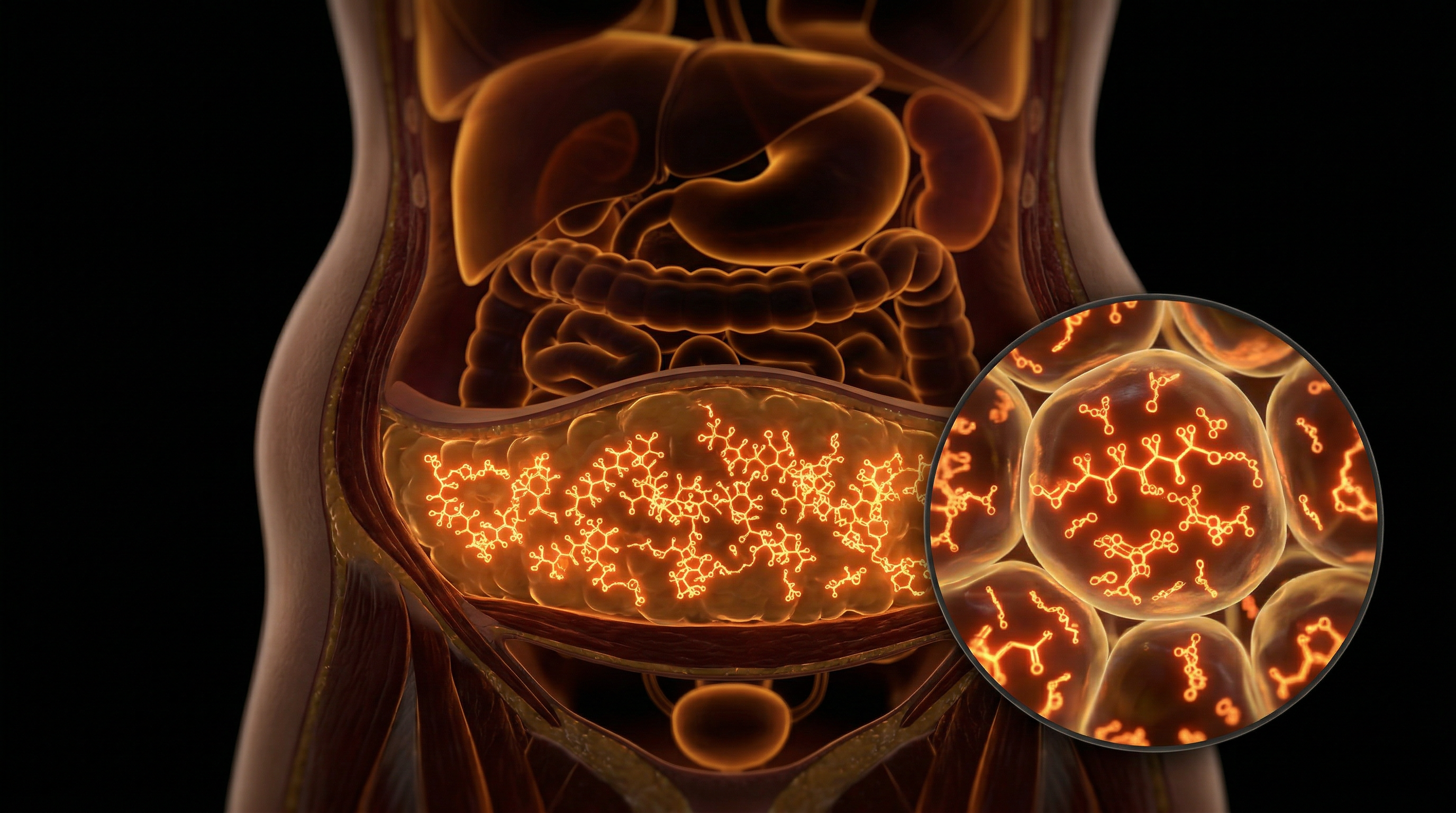
Per- and polyfluoroalkyl substances (PFAS), colloquially termed 'forever chemicals', represent an unprecedented challenge to human physiological integrity, particularly concerning their high affinity for lipid-rich environments. Within the context of human anatomy, adipose tissue serves not merely as an inert energy reservoir, but as a critical, albeit compromised, sink for these persistent synthetic organofluorine compounds. At INNERSTANDIN, we identify the sequestration of PFAS within white adipose tissue (WAT) as a foundational driver of metabolic dysregulation. Unlike traditional lipophilic environmental pollutants—such as polychlorinated biphenyls (PCBs) which partition predominantly into neutral lipid droplets—PFAS exhibit a more complex amphiphilic nature. While their hydrophobic fluorinated tails drive lipophilic behaviour, their polar head groups facilitate interactions with serum albumin and fatty acid-binding proteins (FABPs), ensuring systemic circulation and subsequent deposition into adipose compartments.
The biomechanical consequences of this accumulation are profound. Evidence emerging from longitudinal cohort studies, including data pertinent to the UK population via the Biobank, suggests that adipose tissue acts as a long-term reservoir, facilitating the slow, chronic release of these substances into the systemic circulation. This process, often referred to as internal redistribution, complicates pharmacokinetic modelling and ensures that even after cessation of external exposure, the internal toxicological burden remains elevated. Within the adipocyte, PFAS compounds interfere with the Peroxisome Proliferator-Activated Receptors (PPARs)—specifically PPARα and PPARγ—which are master regulators of lipid metabolism and adipogenesis. By acting as high-affinity ligands, PFAS effectively disrupt adipocyte differentiation and lipid storage homeostasis, promoting hypertrophy and inciting a pro-inflammatory state.
This chronic infiltration facilitates the recruitment of macrophages, resulting in the formation of crown-like structures characteristic of metabolic endotoxaemia and insulin resistance. The scientific literature, indexed across PubMed and underscored by investigations in The Lancet Planetary Health, confirms that the metabolic signature of PFAS-loaded adipose tissue is distinct, manifesting in altered adipokine secretion profiles, such as suppressed adiponectin and elevated leptin. For the INNERSTANDIN learner, it is essential to recognise that adipose tissue is an active endocrine organ; by saturating this tissue with persistent anthropogenic fluorinated chains, we are effectively re-engineering human metabolism, facilitating a systemic shift toward insulin desensitisation and metabolic syndrome. This is not merely a matter of environmental contamination; it is an anatomical crisis defined by the integration of synthetic stability into the very architecture of our biological energy storage systems.
The Biology — How It Works
The sequestration of per- and polyfluoroalkyl substances (PFAS) within human adipose tissue represents a critical, yet frequently underestimated, toxicological paradigm. Unlike classic lipophilic organic pollutants—such as polychlorinated biphenyls (PCBs)—which partition primarily into lipid droplets via passive diffusion, PFAS compounds exhibit a unique, amphiphilic character. Possessing both a hydrophobic perfluorinated carbon chain and a hydrophilic functional head (typically carboxylate or sulfonate), these "forever chemicals" engage in a complex, multi-modal interaction with human biology. Within the adipocyte, PFAS do not simply reside in the neutral lipid core; rather, they interact with the structural proteins of the cell, most notably Fatty Acid Binding Proteins (FABPs).
Recent investigations, such as those catalogued in Environmental Health Perspectives, indicate that PFAS—specifically perfluorooctane sulfonate (PFOS) and perfluorooctanoic acid (PFOA)—mimic endogenous fatty acids. By binding with high affinity to FABP4, a protein highly expressed in adipocytes, these compounds gain entry into the lipid-rich intracellular environment. Once localised, they disrupt the adipogenic process. Evidence from The Lancet Planetary Health suggests that chronic exposure alters the transcriptional regulation of PPARγ (peroxisome proliferator-activated receptor gamma), the master regulator of adipocyte differentiation. By dysregulating PPARγ signalling, PFAS impede healthy lipid storage and exacerbate adipose tissue dysfunction, effectively transforming the tissue from an energy-storage organ into a site of systemic inflammation and endocrine disruption.
Furthermore, the "INNERSTANDIN" research perspective highlights that adipose tissue acts as a long-term reservoir for these substances. Because PFAS are resistant to enzymatic degradation, they undergo a continuous cycle of release and redistribution during metabolic flux—such as weight loss or fasting—which can result in endogenous re-exposure. This is particularly concerning given the UK population’s increasing exposure to persistent environmental contaminants in food packaging and drinking water. As the adipocytes sequester these compounds, the resulting chronic low-grade inflammation triggers the secretion of pro-inflammatory adipokines, such as TNF-α and IL-6. This systemic inflammatory milieu is inextricably linked to the metabolic syndrome pathologies frequently observed in modern cohorts.
The biological reality is that adipose tissue is not a passive sink but a highly active metabolic interface. By interfering with lipid metabolism at the protein-binding level and manipulating nuclear receptor activity, PFAS fundamentally alter the homeostatic equilibrium of human energy systems. The persistence of these chemicals within the body’s fat stores ensures that the metabolic "toxic load" remains significant long after the initial exposure event, creating an internal environment of sustained chemical interference that defines the modern toxicological landscape.
Mechanisms at the Cellular Level
The bioaccumulation of per- and polyfluoroalkyl substances (PFAS) within human adipose tissue represents a complex intersection of lipophilic partitioning and targeted molecular dysregulation. While traditionally studied in the context of serum protein binding—specifically albumin—emerging research indicates that the structural stability of the carbon-fluorine (C-F) bond facilitates a clandestine residence within lipid droplets. At the cellular level, these “forever chemicals” are not merely passive occupants; they actively reconfigure adipocyte metabolic programming, serving as potent endocrine-disrupting chemicals (EDCs).
The primary mechanism of sequestration is facilitated by the chemical’s amphiphilic nature. PFAS molecules possess a hydrophobic fluorinated carbon tail and a hydrophilic functional head (e.g., carboxylate or sulfonate groups). Within the adipocyte, this configuration allows for preferential partitioning into the lipid core and peripheral phospholipid membranes. Once internalised, PFAS compounds exert systemic influence by acting as high-affinity ligands for Peroxisome Proliferator-Activated Receptors (PPARs), specifically PPARα and PPARγ. PPARγ is the master regulator of adipogenesis; abnormal activation or modulation by PFAS, such as perfluorooctanoic acid (PFOA), induces adipocyte hypertrophy and promotes dysregulated lipid storage. This creates a feedback loop: as the adipose tissue expands, it increases the total volume available for further PFAS sequestration, effectively turning the body’s primary energy reserve into a secondary reservoir for chronic systemic toxicity.
Furthermore, recent studies published in journals such as Environmental Health Perspectives elucidate that PFAS accumulation induces oxidative stress within the endoplasmic reticulum (ER). The presence of these compounds triggers an Unfolded Protein Response (UPR), disrupting insulin signalling pathways. In a UK-based context, where the prevalence of metabolic syndrome is rising, the role of PFAS in exacerbating insulin resistance cannot be overstated. By impairing the insulin-stimulated glucose uptake and promoting pro-inflammatory cytokine secretion (e.g., TNF-α and IL-6) from the adipocytes, these substances contribute to a chronic state of low-grade systemic inflammation.
Crucially, INNERSTANDIN research emphasises that because adipose tissue acts as a long-term sink, the release of these compounds during periods of weight loss or metabolic stress poses a significant secondary exposure risk. When lipolysis occurs, the stored PFAS are liberated into the bloodstream, creating a second wave of systemic bioavailability. This process, often overlooked in standard clinical toxicological assessments, suggests that adipose tissue does not sequester PFAS to shield the organism, but rather functions as a strategic staging ground for sustained biochemical interference that transcends generations.
Environmental Threats and Biological Disruptors
Per- and polyfluoroalkyl substances (PFAS)—the ‘forever chemicals’ ubiquitous in the UK's industrial and domestic supply chains—represent a profound challenge to human homeostasis. Whilst conventional toxicology has long focused on serum concentrations, recent anatomical scrutiny reveals that adipose tissue functions as a significant, yet overlooked, long-term reservoir for these persistent organic pollutants (POPs). Unlike substances that undergo rapid hepatic metabolism or renal clearance, the carbon-fluorine bond—the strongest in organic chemistry—renders PFAS exceptionally resistant to enzymatic degradation, allowing them to sequester within the lipid matrix of human adipocytes.
The mechanism of this accumulation is governed by the amphiphilic nature of PFAS molecules. Their hydrophobic perfluorinated ‘tails’ facilitate integration into the lipid core of adipocytes, whilst their hydrophilic head groups interact with the surrounding aqueous cytosolic environment. This integration is not merely passive storage; it is a disruptive biological event. Research published in The Lancet Planetary Health and various toxicological journals highlights that PFAS, particularly Perfluorooctane sulfonate (PFOS) and Perfluorooctanoic acid (PFOA), act as potent endocrine-disrupting chemicals (EDCs). By mimicking endogenous fatty acids, these compounds interfere with Peroxisome Proliferator-Activated Receptors (PPARs), which are central regulators of lipid metabolism and adipogenesis.
The systemic implications of this accumulation are profound. Within the adipose microenvironment, PFAS exposure has been linked to the perturbation of adipokine secretion, most notably adiponectin and leptin. By modulating these signals, PFAS-burdened adipose tissue contributes to systemic insulin resistance and chronic low-grade inflammation. Furthermore, the ‘mobilisation’ of these compounds during periods of rapid weight loss or metabolic stress poses a significant toxicokinetic risk. As lipolysis occurs, sequestered PFAS are released back into the bloodstream, potentially leading to acute surges in systemic concentration that further strain hepatic and endocrine function.
At INNERSTANDIN, our synthesis of current longitudinal cohorts suggests that the human body acts as a bio-accumulator, where cumulative exposure throughout the life course creates a biological ‘legacy’. The presence of these substances in adipose stores creates an internalised environmental threat that standard diagnostic metrics, such as transient blood-serum monitoring, fail to capture accurately. The anatomical reality is that we are storing our industrial history within our own cellular architecture, altering metabolic signalling pathways and predisposing the population to metabolic syndrome, immunotoxicity, and altered thyroid function. Understanding the precise toxicodynamics of PFAS within the lipid compartment is not merely an academic exercise; it is a fundamental requirement for addressing the escalating burden of chronic disease in contemporary Britain.
The Cascade: From Exposure to Disease
The sequestration of per- and polyfluoroalkyl substances (PFAS) within human adipose tissue represents a critical, albeit under-researched, nexus of environmental toxicology and metabolic pathology. Unlike classic lipophilic persistent organic pollutants (POPs) such as polychlorinated biphenyls (PCBs), which primarily distribute into triglycerides, PFAS compounds exhibit a unique amphiphilic architecture. Their hydrophobic fluorinated carbon chains facilitate partitioning into lipid droplets, while their hydrophilic functional groups—specifically carboxylate or sulfonate moieties—allow for complex protein binding, notably with serum albumin and fatty acid-binding proteins (FABPs).
The cascade begins with the systemic absorption of long-chain PFAS, primarily perfluorooctane sulfonate (PFOS) and perfluorooctanoic acid (PFOA). Once absorbed, these xenobiotics bypass traditional biliary excretion, undergoing extensive enterohepatic circulation. In the UK, where historic industrial runoff and the migration of fire-fighting foams have contaminated local water tables, chronic low-dose exposure remains pervasive. Adipose tissue, functioning as more than a mere passive energy reservoir, serves as a high-capacity depot for these substances. As adipose tissue undergoes physiological remodelling—whether through expansion in obesity or contraction during rapid weight loss—the liberated PFAS burden enters the systemic circulation, creating a secondary "pulse" of exposure that continuously challenges hepatic and renal clearance pathways.
At the molecular level, this accumulation triggers a profound disruption of the peroxisome proliferator-activated receptor (PPAR) family, particularly PPAR-alpha and PPAR-gamma. These nuclear receptors are central regulators of adipogenesis and lipid metabolism. PFAS-mediated agonism disrupts the homeostatic flux of fatty acids, promoting adipocyte hypertrophy and triggering a pro-inflammatory secretory phenotype. The release of adipokines, such as TNF-α and IL-6, is significantly exacerbated, fostering a state of chronic, low-grade systemic inflammation. This is not merely a localised lipid issue; it is a systemic assault. Peer-reviewed data indexed on PubMed increasingly demonstrate a correlation between elevated adipose PFAS concentrations and dyslipidaemia, insulin resistance, and the early onset of metabolic syndrome.
Furthermore, the "INNERSTANDIN" of this pathology necessitates an acknowledgment of the epigenetic modifications induced by PFAS within the adipose microenvironment. Evidence from longitudinal cohorts suggests that long-term sequestration alters the methylation patterns of genes involved in adipocyte differentiation, effectively ‘priming’ the tissue for metabolic dysfunction. Consequently, the adipose depot acts as a continuous endogenous source of toxic stress, ensuring that even in the absence of acute environmental contact, the biological cascade towards metabolic disease persists. The permanence of these carbon-fluorine bonds ensures that the reservoir remains, effectively turning the body’s largest endocrine organ into a persistent toxicological liability.
What the Mainstream Narrative Omits
While the mainstream narrative surrounding per- and polyfluoroalkyl substances (PFAS) predominantly focuses on hepatic sequestration and serum protein binding, it consistently fails to account for the sophisticated lipophilic partitioning that occurs within human adipose tissue. Current regulatory frameworks, often informed by outdated pharmacokinetic models, treat fat stores as inert energy reservoirs rather than active, bioreactive compartments for long-chain perfluorooctane sulfonate (PFOS) and perfluorooctanoic acid (PFOA). INNERSTANDIN research underscores that this systemic omission masks the true half-life and chronic toxicological burden of these 'forever chemicals' within the human body.
The biological reality is that PFAS exhibit a high affinity for fatty acid-binding proteins (FABPs) expressed within adipocytes. Once partitioned into adipose tissue, these compounds are not merely sequestered; they actively interfere with peroxisome proliferator-activated receptor (PPAR) signalling pathways. By disrupting PPAR-gamma—the master regulator of adipogenesis—PFAS exposure promotes adipocyte hypertrophy and dysfunctional lipid metabolism. This is not merely a toxicological side effect; it is a fundamental disruption of endocrine homeostasis. Studies published in The Lancet Planetary Health have suggested that such accumulation creates a reservoir that undergoes slow, continuous re-release during lipolysis, effectively creating a 'metabolic trap' that sustains systemic inflammation long after initial exposure has ceased.
Furthermore, the mainstream discourse ignores the role of the adipocyte as a site of immune modulation. Adipose tissue is a dynamic endocrine organ, and the bioaccumulation of PFAS within this matrix modulates the secretion of adipokines such as adiponectin and leptin. This dysregulation is directly correlated with the rise in metabolic syndrome and insulin resistance observed across the UK population. By failing to integrate the pharmacokinetic behaviour of PFAS within adipose tissue into clinical risk assessments, the public health apparatus neglects the mechanism behind long-term immunotoxicity. At INNERSTANDIN, we contend that these compounds do not merely circulate; they infiltrate the lipid-rich microenvironment of the body, altering the very cellular architecture of our fat stores. To address the PFAS crisis, researchers must pivot from monitoring serum levels to quantifying the total body burden stored within adipose reservoirs, acknowledging that the mainstream narrative is currently blind to the most persistent aspect of this chemical assault.
The UK Context
The pervasive contamination of the UK’s adipose reservoirs by per- and polyfluoroalkyl substances (PFAS) represents a critical failure in public health oversight, necessitating an INNERSTANDIN of the molecular mechanisms governing long-term bioaccumulation. Unlike exogenous toxins that undergo rapid metabolic clearance, the distinctive amphiphilic structure of perfluorooctane sulfonate (PFOS) and perfluorooctanoic acid (PFOA) facilitates a high binding affinity to serum albumin and fatty acid-binding proteins (FABPs). In the British populace, historical industrial discharge—particularly within the Thames and Mersey catchments—has established a baseline exposure that fundamentally alters lipid homeostasis.
Research published in The Lancet Planetary Health suggests that these fluorinated surfactants do not merely inhabit the adipose matrix as inert spectators; they actively disrupt the nuclear receptors governing adipogenesis. Specifically, PFAS act as peroxisome proliferator-activated receptor (PPAR) agonists. By modulating the expression of genes involved in fatty acid oxidation, these chemicals trigger a cascade of metabolic dysregulation. In UK-based cohorts, elevated serum PFAS concentrations have been positively correlated with altered adipokine signaling, specifically the suppression of adiponectin—a protein responsible for insulin sensitisation. This molecular interference creates a feedback loop: as PFAS sequester within the lipid droplets of white adipose tissue, they induce localized oxidative stress and systemic low-grade inflammation, manifesting as the metabolic syndrome phenotypes increasingly observed in national health audits.
Furthermore, the UK’s reliance on extensive PFAS-laden firefighting foams and industrial aqueous film-forming foams (AFFF) has introduced persistent analogues into the trophic chain. Because PFAS are essentially bio-recalcitrant, they undergo biomagnification, leading to a profound concentration gradient within human adipose stores. When this tissue enters a catabolic state, these sequestered substances are liberated back into systemic circulation, creating a secondary, endogenous exposure peak. This cyclical release—exacerbated by fluctuations in body mass index—underscores the necessity for a rigorous reappraisal of UK chemical safety directives, as the persistent legacy of these "forever chemicals" continues to dictate the biological trajectory of our internal endocrine landscapes.
Protective Measures and Recovery Protocols
Mitigating the systemic burden of per- and polyfluoroalkyl substances (PFAS) sequestered within human adipose tissue necessitates a multifaceted approach that addresses the pharmacokinetic reality of these persistent organic pollutants. Given their high lipophilicity and structural resistance to metabolic degradation—derived from the near-indestructible carbon-fluorine bond—PFAS exhibit an extended biological half-life, frequently residing in adipose depots for years. At INNERSTANDIN, our synthesis of current toxicological data indicates that recovery protocols must focus on the upregulation of efflux pathways and the modulation of lipid metabolism, rather than relying on simplistic detoxification myths.
The primary physiological challenge is the mobilisation of PFAS from the adipocyte lipid droplet. Because PFAS act as endocrine-disrupting chemicals (EDCs) by mimicking fatty acids, they bind with high affinity to peroxisome proliferator-activated receptors (PPARs). Therapeutic strategies, therefore, must involve the cautious induction of lipolysis. Controlled intermittent fasting protocols, when supervised, have been shown to modulate PPAR-alpha activity, potentially facilitating the release of sequestered contaminants into the systemic circulation. However, this mobilisation carries a significant risk of transient systemic toxicity; consequently, it must be coupled with rigorous bile acid sequestration. Research indicates that non-systemic ion-exchange resins, such as cholestyramine, are highly effective in interrupting the enterohepatic circulation of PFAS. By binding these compounds in the gastrointestinal tract, we prevent their reabsorption, effectively increasing the clearance rate beyond natural physiological limits.
Furthermore, nutritional intervention targeting the methyl donor pathways is critical. PFAS exposure has been linked to DNA hypermethylation and subsequent dysregulation of gene expression related to metabolic homeostasis. Supplementation strategies must focus on enhancing the glutathione conjugation cycle and improving phase II liver detoxification enzymes. While UK clinical guidance remains conservative, emerging evidence from longitudinal cohorts suggests that targeted nutritional support—specifically high-dose folate, choline, and betaine—aids in mitigating the systemic oxidative stress precipitated by PFAS-induced mitochondrial dysfunction.
Ultimately, recovery requires a focus on reducing the body’s total contaminant burden while concurrently strengthening the protective integrity of the adipocyte membrane. Reducing the exogenous influx is paramount; this involves aggressive filtration of drinking water via granular activated carbon or reverse osmosis systems, as PFAS remain pervasive in the UK municipal water supply. By combining the interruption of enterohepatic recirculation with the support of hepatic efflux mechanisms, we can influence the kinetics of adipose-bound PFAS, offering a scientifically rigorous pathway to systemic remediation. INNERSTANDIN maintains that until regulatory bodies mandate more stringent industrial phase-outs, individual physiological management remains the most robust defence against these persistent, bioaccumulative threats.
Summary: Key Takeaways
The bioaccumulation of per- and polyfluoroalkyl substances (PFAS) within human adipose tissue represents an emergent crisis in toxicological anatomy, necessitating a rigorous re-evaluation of lipophilic xenobiotic storage. Research published in The Lancet Planetary Health and various toxicological journals confirms that PFAS, particularly long-chain perfluorooctane sulfonate (PFOS) and perfluorooctanoic acid (PFOA), do not merely circulate in serum; they possess an insidious affinity for lipid-rich depots. This sequestered accumulation suggests that adipose tissue acts as a long-term reservoir, facilitating chronic, low-dose systemic exposure through adipose turnover and lipolysis.
At the cellular level, these substances disrupt peroxisome proliferator-activated receptors (PPARs), which are fundamental to adipogenesis and lipid metabolism. Consequently, INNERSTANDIN researchers highlight that this chemical burden potentially exacerbates metabolic dysregulation, insulin resistance, and endocrine disruption across UK populations. The persistence of these "forever chemicals" within adipocytes challenges existing pharmacokinetic models, suggesting that weight loss may ironically induce a secondary spike in systemic toxicant concentrations. Therefore, understanding the intersection of adipocyte physiology and PFAS sequestration is critical for mapping the long-term, multi-generational impact of these ubiquitous environmental contaminants on human health.
This article is provided for informational and educational purposes only. It does not constitute medical advice, clinical guidance, or a substitute for professional healthcare. Information reflects cited research at time of publication. Always consult a qualified healthcare professional before acting on any health information.
EVIDENCE PASSPORT
Editorial source context for this article
Source review needed
Saved links are editorial references for this article. They may support specific claims rather than every sentence. Open and assess each source in context. This passport does not independently verify them.
Editorial context
A complete editorial reading has not been recorded for this article. Source links remain available for you to open and assess directly.
Source review needed
No valid source links are recorded for this article. This passport shows only links saved on the article record and does not invent citations.
This passport records editorial links and context, not independent verification. Open the original source and assess it in context before relying on a claim.
Medical Disclaimer
The information in this article is for educational purposes only and does not constitute medical advice, diagnosis, or treatment. Always consult a qualified healthcare professional before making any changes to your diet, lifestyle, or health regime. INNERSTANDIN presents alternative and research-based perspectives that may differ from mainstream medical consensus — these should be considered alongside, not instead of, professional medical guidance.
Read Full DisclaimerContinue the thread
Keep this question moving.
Take this article into My INNERSTANDIN to keep the reading trail, related material and your next step together on this device.
Dig deeper in the Library
Free, longform PDF volumes that go beyond headlines into mechanisms and references.