
Adipose Accumulation: The Long Half-Life of Industrial Fats
Updated May 2026
Seed oil metabolites can remain trapped in human fat tissue for years, altering long-term metabolic health. Learn why the biological clearance of industrial fats is a multi-year physiological process.
Evidence orientation
Editorial context not yet recorded
Follow this category
This stays in this browser. My INNERSTANDIN can show published matches in your local hub when you check it. It does not send email, push, or alert notifications.
Local learning review
A private browser aid for revisiting ideas. It is not an alert or a health recommendation.
Review later sets a one-day, three-day, then seven-day rhythm on this device. Choose it only when you want to revisit this article.
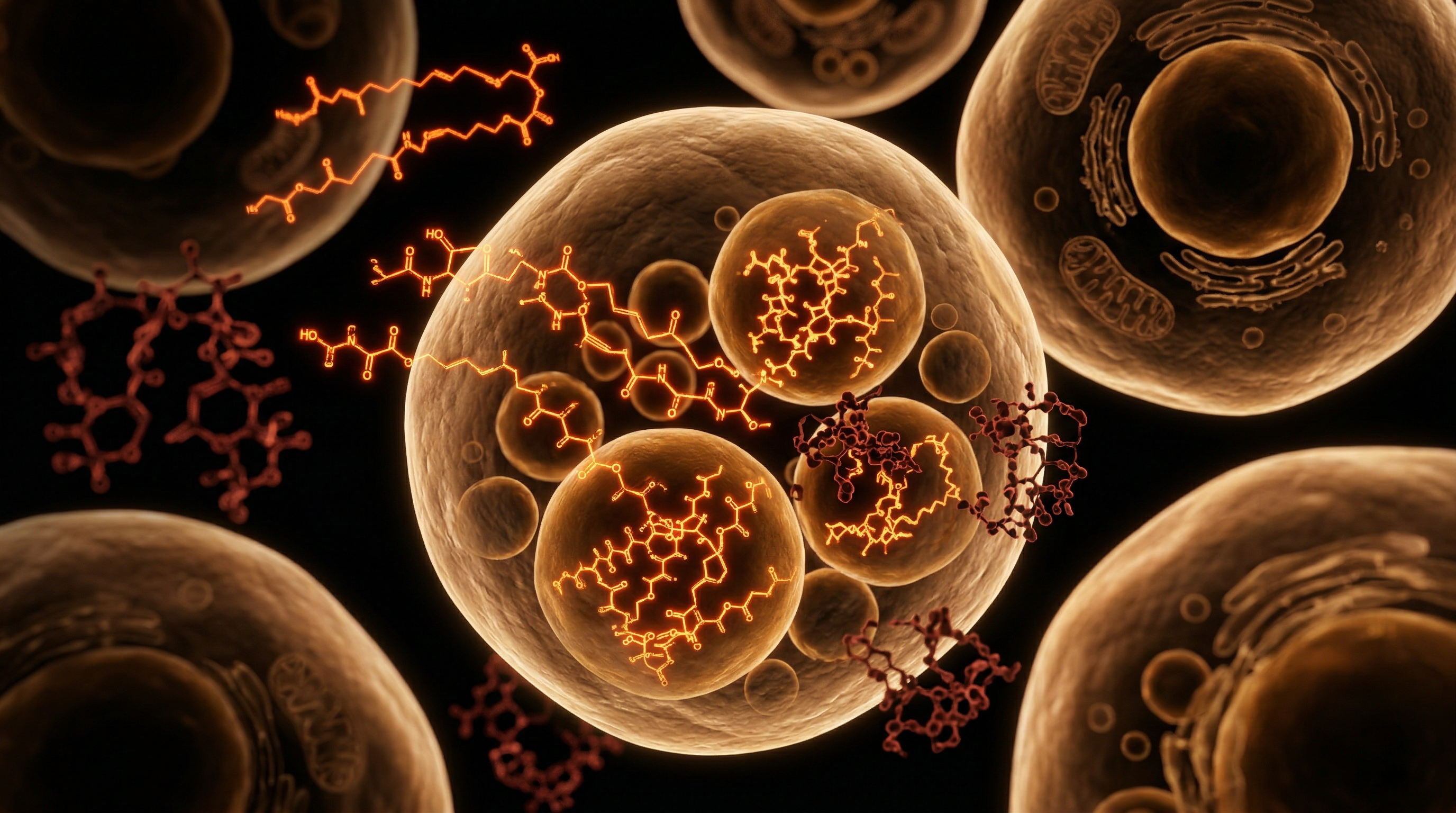
Overview
In the realm of modern nutritional science, the focus has shifted from calorie counting to the qualitative composition of the cellular membrane. While public health discourse frequently centres on sugar and sedentary lifestyles, a far more insidious and persistent threat has been accumulating within the human body for over half a century: industrial seed oils. These fats, rich in Omega-6 polyunsaturated fatty acids (PUFAs), specifically linoleic acid (LA), do not merely pass through the digestive system as a fuel source. Instead, they are systematically integrated into our very structure, altering the chemical composition of our adipose tissue and cellular membranes with a biological half-life that defies standard detoxification timelines.
We are currently living through the greatest uncontrolled biological experiment in human history. In the early 20th century, linoleic acid accounted for roughly 2% of the average human's total caloric intake. Today, that figure frequently exceeds 12% to 20% in Western populations. The result is a fundamental shift in human biochemistry. Unlike saturated or monounsaturated fats, which the body uses or burns relatively cleanly, highly processed industrial fats are "fragile" molecules. When stored in large quantities within human fat cells, they create a state of metabolic inertia.
The "Long Half-Life" referred to in this article is not a metaphor; it is a physiological reality. Research indicates that the half-life of linoleic acid in human adipose tissue is approximately 600 to 680 days. This means that if a person were to cease all consumption of industrial seed oils today, it would take nearly two years to clear just half of the accumulated PUFAs from their fat stores. To reach ancestral, biologically appropriate levels, a person might require six to eight years of strict dietary adherence. This article explores why these fats remain trapped, how they disrupt metabolic signalling, and why the mainstream medical establishment continues to ignore the catastrophic "time bomb" ticking within our own fat cells.
Key Fact: The concentration of linoleic acid in human adipose tissue has increased by more than 250% since the 1960s, mirroring the meteoric rise in obesity, type 2 diabetes, and inflammatory disorders.
The Biology — How It Works
To understand why industrial fats are so persistent, we must first understand the primary function of adipose tissue. Long dismissed as a mere "storage depot" for excess energy, adipose tissue is actually a complex, highly active endocrine organ. It secretes hormones (leptin, adiponectin), regulates systemic inflammation, and serves as a buffer for metabolic fuel.
The Composition of the Fat Cell
The human body is designed to store fat primarily as saturated and monounsaturated fatty acids. These molecules are chemically stable; they do not have the double bonds that make them vulnerable to oxidation at body temperature (37°C). However, polyunsaturated fatty acids (PUFAs), such as those found in soybean, corn, sunflower, and rapeseed oils, contain multiple double bonds separated by methylene bridges. These bridges are weak points where oxygen can easily attack, creating a chain reaction of damage.
When we consume these oils, the body has no "off switch" for their storage. Unlike saturated fat, which the body can create endogenously from carbohydrates if needed, the body cannot manufacture linoleic acid. Therefore, it stores nearly every gram it receives. As the dietary intake of seed oils has skyrocketed, our fat cells have been forced to incorporate these unstable fats into their membranes and storage droplets.
The 600-Day Half-Life
The concept of half-life is usually applied to drugs or radioactive isotopes, but it is equally applicable to the turnover of fatty acids in adipose tissue. Adipose tissue does not turn over overnight. It is a slow, methodical process of lipolysis (breaking down fat) and re-esterification (re-storing fat).
Because the body preferentially oxidises saturated fats for fuel when available, the "stiff" and "unstable" PUFAs tend to linger in the fat stores. Studies using isotope labelling have shown that:
- Saturated fats have a relatively fast turnover.
- Monounsaturated fats (like olive oil) have a moderate turnover.
- Linoleic acid (the primary seed oil fat) stays trapped for years.
This creates a "biological lag." The health problems we see today are often the result of dietary choices made three to five years ago. This lag makes it difficult for individuals to correlate their current health status with their intake of "vegetable oils."
Adipose as a Chemical Archive
Your fat tissue is a chronological record of your dietary history. In biological circles, this is known as the biomass of fatty acids. Because humans lack the enzymes to convert one type of polyunsaturated fat to another or to saturated fat, the fat you eat literally becomes the fat you are. If your diet is 20% linoleic acid, your adipose tissue will eventually reach that same 20% concentration, creating a massive reservoir of potential inflammatory precursors.
Mechanisms at the Cellular Level
The persistence of industrial fats in the adipose tissue is not just an aesthetic or weight-related issue; it is a direct threat to mitochondrial function and cellular integrity. The presence of excess PUFAs at the cellular level triggers a series of destructive biochemical pathways.
Lipid Peroxidation and 4-HNE
The primary mechanism of damage caused by accumulated industrial fats is lipid peroxidation. Because PUFAs are chemically unstable, they react with oxygen to form lipid peroxyl radicals. These radicals then decompose into highly toxic secondary metabolites, the most dangerous of which is 4-Hydroxynonenal (4-HNE).
4-HNE acts as a "metabolic wrecking ball." It binds to proteins, DNA, and phospholipids, rendering them dysfunctional.
- It inhibits glycolysis, the process by which cells break down glucose.
- It damages the electron transport chain in the mitochondria.
- It triggers apoptosis (programmed cell death) in healthy tissues.
The Cardiolipin Crisis
The most critical cellular component affected by seed oil accumulation is cardiolipin. Cardiolipin is a unique phospholipid found exclusively in the inner mitochondrial membrane. It is essential for the structure of the cristae (the folds of the mitochondria) and the efficiency of energy production (ATP).
In a healthy state, cardiolipin is composed primarily of saturated or monounsaturated fats. However, when the body is flooded with linoleic acid, the cardiolipin becomes "enriched" with LA. Linoleic-acid-enriched cardiolipin is exceptionally prone to oxidation. Once cardiolipin oxidises, the mitochondria "leak" electrons, leading to:
- Reduced energy production (chronic fatigue).
- Increased Reactive Oxygen Species (ROS) production.
- Mitochondrial Autophagy (Mitophagy), where the cell destroys its own power plants.
PPAR-Gamma and Fat Cell Hyperplasia
Accumulated PUFAs also hijack the hormonal signalling of the fat cell itself. High levels of linoleic acid metabolites activate PPAR-gamma, a master regulator of fat cell creation. This doesn't just make existing fat cells bigger (hypertrophy); it forces the body to create new fat cells (hyperplasia). This is one of the primary drivers of childhood obesity and the "stubborn" fat deposits that resist traditional exercise and calorie restriction.
Callout: Chronic exposure to linoleic acid effectively "reprograms" the adipocyte to stay in storage mode, making it biologically difficult to mobilise and burn fat for energy.
Environmental Threats and Biological Disruptors
The issue isn't just the fatty acids themselves, but the industrial processing required to make these "oils" edible. Unlike butter or olive oil, which can be obtained through simple mechanical pressing, seed oils (soy, corn, canola, cotton) require a violent industrial process.
The Extraction Process: Hexane and Heat
Industrial seeds are not naturally oily. To extract the fat, they must be:
- Heated to extreme temperatures, which initiates the oxidation process before the oil even leaves the factory.
- Treated with Hexane, a petroleum-based solvent used to pull every last drop of oil from the seed pulp.
- Deodorised and Bleached: Because the resulting oil smells rancid and looks grey/brown, manufacturers use chemical deodorisers (often involving further heat and pressure) to make the product palatable.
This means that the "vegetable oil" in the clear plastic bottle on supermarket shelves is already in a state of partial oxidation. When you consume it, you are ingesting a cocktail of trans-fats (created during processing), cyclic hydrocarbons, and lipid peroxides.
The Feedlot Connection
The threat is not confined to the bottle of oil. Our modern food environment has "hidden" these industrial fats in animal products. Most industrial livestock (cows, pigs, and chickens) are fed high-PUFA diets consisting of soy and corn.
- Ruminants (cows and sheep) have a unique digestive system that can "saturate" some of these fats, though their fat composition still shifts slightly.
- Monogastrics (pigs and chickens) cannot. Their fat stores directly reflect their feed.
As a result, modern "industrial" bacon or chicken skin can contain upwards of 20-30% linoleic acid, compared to the 3-5% found in pastured animals. This biomagnification means that even those avoiding the deep fryer may be accumulating industrial fats through "commercial" meats.
Glyphosate and PUFA Synergism
The primary crops used for seed oils (soy and corn) are almost universally GMO and heavily sprayed with glyphosate. Emerging research suggests a synergistic toxicity between glyphosate and oxidised PUFAs. Glyphosate can disrupt the cytochrome P450 enzymes responsible for detoxifying lipid peroxidation products like 4-HNE, creating a "perfect storm" of metabolic dysfunction.
The Cascade: From Exposure to Disease
The accumulation of industrial fats in the adipose tissue is the "upstream" event that leads to a cascade of chronic diseases. This process is not immediate; it is a slow erosion of metabolic flexibility.
Phase 1: Loss of Metabolic Flexibility
Under normal conditions, the human body can switch seamlessly between burning glucose and burning fat. This is metabolic flexibility. However, when fat cells are packed with unstable PUFAs, the "smoke" from their oxidation (ROS) signals the cell to stop burning fat to prevent further damage. This traps the individual in a state where they are "hungry" for glucose even though they have 100,000 calories of fat stored on their body.
Phase 2: Systemic Insulin Resistance
As the adipose tissue becomes "full" of unstable fats and starts to leak inflammatory markers (TNF-alpha, IL-6), the rest of the body develops insulin resistance as a protective mechanism. The cells essentially "close their doors" to the toxic environment, leading to elevated blood sugar and, eventually, Type 2 Diabetes.
Phase 3: The Target Organs
Once the adipose tissue can no longer sequester the excess PUFAs, they begin to accumulate in non-adipose organs—a process known as ectopic lipid deposition.
- Liver: Leads to Non-Alcoholic Fatty Liver Disease (NAFLD). The PUFAs in the liver undergo rapid oxidation, causing scarring and cirrhosis.
- Heart: Oxidised linoleic acid is the primary component of oxidised LDL (oxLDL). It is not "cholesterol" that causes heart disease, but the oxidation of the fats within the LDL particle. These oxidised particles are what get trapped in the arterial wall.
- Brain: The brain is 60% fat. Replacing healthy DHA and saturated fats with linoleic acid metabolites in brain cell membranes is linked to neurodegenerative diseases like Alzheimer's and Parkinson's.
The "Pro-Inflammatory" Signal
Linoleic acid is the precursor to arachidonic acid, which in turn is the precursor to pro-inflammatory eicosanoids. While inflammation is a necessary part of the immune response, the sheer volume of LA in the modern body keeps the inflammatory switch permanently "on." This results in the "inflammaging" seen in modern populations—a state of chronic, low-grade systemic inflammation that accelerates the aging process.
What the Mainstream Narrative Omits
If the science regarding the long half-life and toxicity of industrial fats is so compelling, why does the mainstream narrative continue to promote them as "heart-healthy"? The answer lies in a combination of flawed methodology, institutional inertia, and industrial influence.
The Saturated Fat Myth
For 50 years, the medical establishment has operated under the "Diet-Heart Hypothesis," which posits that saturated fat raises cholesterol, and cholesterol causes heart disease. Seed oils were introduced as the "healthy" alternative because they effectively lower total LDL cholesterol.
However, what the narrative omits is how they lower cholesterol. Seed oils do not "clear" cholesterol from the body; they shift it from the blood into the tissues (including the arteries) and promote its oxidation. Multiple large-scale trials, such as the Minnesota Coronary Experiment and the Sydney Diet Heart Study, actually showed that while seed oils lowered cholesterol, they increased the risk of death from heart attack. These results were suppressed or left unpublished for decades.
Relative Risk vs. Absolute Risk
Public health guidelines often cite observational studies showing that people who eat "vegetable oils" have slightly better outcomes. These studies are notoriously unreliable due to healthy user bias. People who consciously choose "vegetable oil" are also more likely to exercise, avoid smoking, and belong to a higher socioeconomic class. When these factors are corrected, or when controlled clinical trials are conducted, the "benefits" of seed oils evaporate.
Financial Entrenchment
The "Big Food" and "Big Pharma" industries benefit enormously from the prevalence of industrial fats.
- Cost: Seed oils are incredibly cheap to produce compared to butter, tallow, or high-quality olive oil.
- Shelf Life: Because seed oils are deodorised and chemically stabilised, processed foods containing them can sit on shelves for years.
- Treatment vs. Prevention: The chronic diseases caused by PUFA accumulation—diabetes, heart disease, obesity—require lifelong pharmaceutical intervention. There is no "profit" in advising the public to cook with lard or butter.
Important Callout: The American Heart Association (AHA) and similar global bodies received substantial early funding from Proctor & Gamble, the original creators of Crisco (hydrogenated cottonseed oil). This conflict of interest has never been fully reconciled.
The UK Context
In the United Kingdom, the shift toward industrial fats has its own unique cultural and legislative history. From the post-war "margarine" era to the current "Green" agenda, the British public has been systematically steered toward PUFAs.
The Margarine Era and the NHS
In the wake of WWII rations, the UK government heavily promoted margarine as a patriotic and healthy alternative to expensive butter. This cultural shift was later codified in NHS guidelines, which continue to recommend "low-fat spreads" and "vegetable oils" like rapeseed oil (marketed as "Vegetable Oil" in British supermarkets) over traditional British fats like dripping or butter.
The Rise of Rapeseed (Canola)
The UK landscape is famously dotted with bright yellow fields of Oilseed Rape. Because it can be grown domestically, it is the primary oil used in the UK food industry. While marketed as "lower in saturated fat," rapeseed oil is still a highly processed industrial fat that contributes significantly to the PUFA burden of the British population. It is found in everything from "healthy" supermarket hummus to the "British Fish and Chips" fried in large vats of "pure vegetable oil."
Ultra-Processed Foods (UPF) in Britain
The UK has the highest consumption of ultra-processed foods in Europe. Recent studies suggest that upwards of 50% of the British diet comes from UPFs. These foods are the primary delivery mechanism for industrial fats. In Britain, the "Sandwich Culture" and the prevalence of "Meal Deals" mean that the average office worker is consuming soybean or rapeseed oil in their bread, their mayonnaise, their crisps, and their "healthy" granola bar daily.
The Environmental Misdirection
Currently, there is a push in the UK to reduce animal fat consumption for "environmental reasons." This is often a "Trojan Horse" for increased seed oil consumption. By framing the debate as "Meat vs. Plant," the nuance of fat quality is lost. This leads to the adoption of "Plant-Based" meats and butters, which are almost entirely composed of industrial seed oils and chemical emulsifiers.
Protective Measures and Recovery Protocols
Given the 600-day half-life of these fats, "detoxing" from industrial oils is not a weekend activity. It is a multi-year project of cellular renovation. The goal is to slowly replace the oxidisable PUFAs in your fat stores with stable saturated and monounsaturated fats.
1. The Strict Elimination
The first and most critical step is to stop adding to the reservoir. This requires an uncompromising elimination of:
- The "Hateful Eight": Soybean, Corn, Canola (Rapeseed), Cottonseed, Sunflower, Safflower, Grapeseed, and Rice Bran oils.
- Processed Snacks: Crisps, crackers, and biscuits.
- Restaurant Food: Almost all commercial kitchens use seed oils for frying and dressings because of the cost.
2. The "Safe" Fats
Replace industrial oils with stable, ancestral fats that resist oxidation:
- Saturated Fats: Ghee, Butter, Tallow, Suet, and Coconut Oil.
- Fruit Oils: Extra Virgin Olive Oil and Avocado Oil (ensure they are from reputable sources, as these are often adulterated with seed oils).
- Ruminant Meats: Beef, lamb, and bison have lower PUFA profiles than modern pork or chicken.
3. Supporting Mobilisation
To clear the "trapped" fats, you must mobilise them from adipose tissue. However, this must be done carefully. When you lose weight, you release these stored PUFAs into the bloodstream. To prevent systemic damage:
- Increase Antioxidant Intake: Specifically Vitamin E (alpha-tocopherol), which is the body's primary defense against lipid peroxidation.
- Selenium and Glutathione: Support the body's endogenous antioxidant systems to "mop up" the HNE and peroxides released during fat loss.
- Gradual Fat Loss: Avoid extreme "crash" diets that flood the system with stored toxins. A steady, moderate weight loss allows the liver to process the liberated PUFAs more effectively.
4. Protecting the Mitochondria
Support cardiolipin repair by ensuring adequate intake of DHA/EPA (from fatty fish or algae) and Saturated Fats. Avoid "Omega-3" supplements that are themselves oxidised; look for high-quality, cold-pressed, or fermented options.
5. Red Light Therapy and Metabolic Stimulants
Emerging research suggests that Near-Infrared Light (Red Light Therapy) can help stimulate mitochondrial function and assist in the "clearing" of oxidised fatty acid byproducts. Similarly, maintaining a healthy thyroid status (avoiding extreme caloric restriction) ensures that the metabolic "fire" stays hot enough to burn through the stored PUFA backlog.
Summary: Key Takeaways
The accumulation of industrial fats in the human body represents a silent, multi-generational health crisis. Because these oils are integrated into our very structure, the recovery process is long and requires a fundamental shift in how we view "healthy" eating.
- Persistence: Linoleic acid has a half-life of nearly two years in human fat tissue. What you eat today will be with you in 2026.
- Oxidation is the Enemy: The primary danger of seed oils is their instability. They break down into toxic metabolites like 4-HNE that destroy mitochondria.
- Structural Replacement: Health is regained by physically replacing the unstable fats in your cell membranes with stable, saturated fats.
- Beyond the Bottle: Industrial fats are hidden in processed foods, restaurant meals, and the fat of grain-fed "monogastric" animals like pigs and chickens.
- The Institutional Failure: Mainstream health advice continues to prioritise "low cholesterol" over biological stability, leading to the continued promotion of these "industrial lubricants" as food.
The path to metabolic health is not found in new pharmaceutical interventions, but in a return to the biological constants that governed human health for millennia. By understanding the long half-life of industrial fats, we can begin the patient, necessary work of reclaiming our internal environment.
This article is provided for informational and educational purposes only. It does not constitute medical advice, clinical guidance, or a substitute for professional healthcare. Information reflects cited research at time of publication. Always consult a qualified healthcare professional before acting on any health information.
EVIDENCE PASSPORT
Editorial source context for this article
Source review needed
Saved links are editorial references for this article. They may support specific claims rather than every sentence. Open and assess each source in context. This passport does not independently verify them.
Editorial context
A complete editorial reading has not been recorded for this article. Source links remain available for you to open and assess directly.
Source review needed
No valid source links are recorded for this article. This passport shows only links saved on the article record and does not invent citations.
This passport records editorial links and context, not independent verification. Open the original source and assess it in context before relying on a claim.
Medical Disclaimer
The information in this article is for educational purposes only and does not constitute medical advice, diagnosis, or treatment. Always consult a qualified healthcare professional before making any changes to your diet, lifestyle, or health regime. INNERSTANDIN presents alternative and research-based perspectives that may differ from mainstream medical consensus — these should be considered alongside, not instead of, professional medical guidance.
Read Full DisclaimerContinue the thread
Keep this question moving.
Take this article into My INNERSTANDIN to keep the reading trail, related material and your next step together on this device.