
The Case for Suet: Understanding High-Stearic Acid Fats for Thermogenesis
Updated May 2026
Discusses the metabolic benefits of high-melting-point animal fats. It explains how suet consumption can boost the basal metabolic rate.
Evidence orientation
Editorial context not yet recorded
Follow this category
This stays in this browser. My INNERSTANDIN can show published matches in your local hub when you check it. It does not send email, push, or alert notifications.
Local learning review
A private browser aid for revisiting ideas. It is not an alert or a health recommendation.
Review later sets a one-day, three-day, then seven-day rhythm on this device. Choose it only when you want to revisit this article.
Overview
In the pursuit of metabolic health, the modern dietary landscape has become a minefield of misinformation, predicated on the systematic vilification of the very substances that fueled human evolution. At the centre of this controversy lies suet—the hard, white, nutrient-dense fat found around the kidneys and loins of ruminant animals like cattle and sheep. For decades, suet was a staple of the British diet, prized for its stability, flavour, and the physical vitality it imparted. Today, it has been relegated to the status of an "artery-clogging" relic, replaced by highly processed, industrially refined seed oils.
However, a growing body of advanced biological research suggests that the abandonment of suet may be the primary driver behind the global epidemic of metabolic dysfunction. Suet is the premier source of stearic acid (C18:0), a long-chain saturated fatty acid that acts as a potent signaling molecule within the human body. Unlike the polyunsaturated fatty acids (PUFAs) dominant in modern diets, stearic acid serves as a biological "go" signal for thermogenesis—the process of heat production in organisms.
This article provides a comprehensive examination of suet as a metabolic powerhouse. We will explore how its unique chemical structure influences mitochondrial dynamics, why it is essential for maintaining a healthy basal metabolic rate (BMR), and how the systematic removal of high-melting-point animal fats from the food supply has induced a state of "biological torpor" in the modern population. By understanding the science of high-stearic acid fats, we can begin to reconstruct a dietary framework that prioritises mitochondrial integrity over industrial convenience.
Fact: Suet is specifically the "perirenal" fat surrounding the kidneys. It contains the highest concentration of stearic acid found in the animal kingdom, often comprising over 30% of its total fatty acid profile.
The Biology — How It Works
To understand why suet is superior to other fats, we must first examine the fundamental chemistry of lipids. Fatty acids are categorised by their degree of saturation—the presence or absence of double bonds between carbon atoms.
Saturated vs. Unsaturated: A Matter of Geometry
Stearic acid is a 18-carbon saturated fat. Because it lacks double bonds, its carbon chain is straight and rigid. This allow molecules of stearic acid to pack tightly together, resulting in a high melting point (approximately 69.3°C). In contrast, linoleic acid (the primary fat in soybean and sunflower oil) is polyunsaturated, containing multiple "kinks" in its chain that prevent tight packing. Linoleic acid remains liquid even in the refrigerator.
This physical property is not merely a culinary curiosity; it dictates how these fats behave inside our cell membranes. The human body is not a furnace that "burns" calories indiscriminately; it is a complex chemical laboratory that uses fat as both fuel and a structural building block.
The Melting Point Significance
The high melting point of suet is a critical biological indicator. When we consume high-stearic acid fats, we provide the body with stable building blocks for the mitochondrial membrane.
- Suet (Tallow): High melting point, chemically stable, resistant to oxidation.
- Seed Oils: Low melting point, chemically unstable, highly prone to lipid peroxidation (rancidity).
When the body is deprived of saturated fats and forced to incorporate PUFAs into its structures, the "fluidity" of the cell membranes increases beyond physiological norms. This disruption affects the transmission of signals and the efficiency of energy production.
Evolutionary Context: The Ruminant Connection
Humans evolved as apex predators with a specific affinity for the fattiest parts of the animal. Ruminants (cows, sheep, buffalo) possess a unique digestive system—the rumen—where bacteria bio-hydrogenate the unsaturated fats from the plants they eat into saturated fats. This makes ruminant fat, particularly suet, the most consistent source of stearic acid available to humans. Our ancestors didn't just eat meat; they hunted for the "hard fat" because it provided the sustained energy and heat necessary to survive in varied climates.
Mechanisms at the Cellular Level
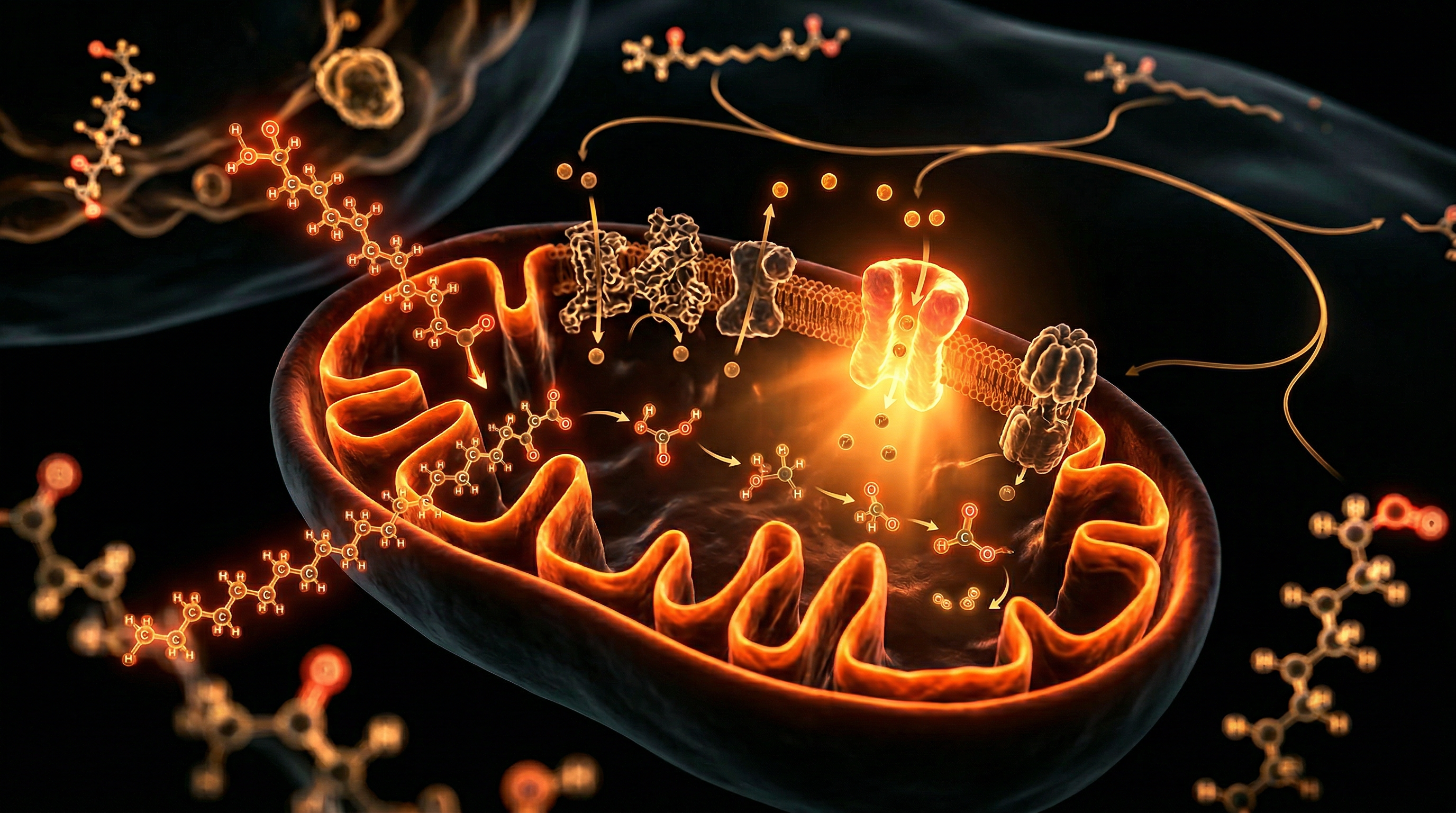
The magic of suet happens within the mitochondria, the powerhouses of the cell. Recent breakthroughs in molecular biology have revealed that stearic acid is not just an energy source; it is a master regulator of mitochondrial morphology.
Mitochondrial Fusion vs. Fission
Mitochondria are dynamic; they constantly change shape to adapt to the energy needs of the cell.
- Mitochondrial Fusion: This is when mitochondria join together to form long, interconnected networks. Fused mitochondria are highly efficient at burning fat and producing ATP (energy).
- Mitochondrial Fission: This is when mitochondria break apart into small, fragmented pieces. Fission is often a precursor to cellular "torpor" or apoptosis (cell death).
Research has demonstrated that stearic acid triggers mitochondrial fusion within hours of ingestion. In humans, a diet rich in stearic acid leads to "fused" mitochondrial networks, which drastically increases the rate of fat oxidation. Conversely, linoleic acid (from seed oils) promotes mitochondrial fission, leading to sluggish energy production and increased fat storage.
The FADH2:NADH Ratio and the ETC
The Electron Transport Chain (ETC) is the site of ATP production. It relies on two primary electron donors: FADH2 and NADH.
- Saturated fats (like suet) produce a higher ratio of FADH2 to NADH.
- This high ratio causes a slight "backup" at Complex I of the ETC, creating a controlled burst of Reactive Oxygen Species (ROS).
- While "oxidative stress" is often viewed negatively, these specific ROS serve as a crucial signaling mechanism. They tell the cell: "We have plenty of high-quality fuel; turn up the heat and stop eating."
This is the mechanism behind satiety and thermogenesis. When you eat suet, your body signals that it is full and begins to dissipate excess energy as heat. When you eat seed oils (which have a low FADH2:NADH ratio), this ROS signal is never generated. The body remains "hungry" and enters a storage-only mode.
UCP1 and Brown Adipose Tissue
Stearic acid has been shown to upregulate Uncoupling Protein 1 (UCP1), particularly in brown and beige adipose tissue. UCP1 allows protons to "leak" across the mitochondrial membrane, bypassing ATP production and releasing the energy directly as heat. This is the biological definition of a "fast metabolism." Suet literally provides the chemical instructions to turn on the body's internal heater.
Environmental Threats and Biological Disruptors
If suet is the key to a roaring metabolism, why is the modern population so metabolically cold? The answer lies in the systematic replacement of saturated animal fats with Polyunsaturated Fatty Acids (PUFAs).
The Seed Oil Infiltration
Over the last 70 years, the consumption of linoleic acid has increased by over 500% in the Western diet. This is primarily due to the ubiquity of:
- Soybean oil
- Corn oil
- Rapeseed (Canola) oil
- Sunflower oil
These oils are fragile and easily damaged by light, heat, and oxygen. When consumed, they integrate into our adipose tissue (body fat). The half-life of linoleic acid in human fat cells is approximately two years. This means that if you have been eating a standard modern diet, your body's "fuel tank" is currently filled with unstable, low-melting-point fats that inhibit thermogenesis.
The Torpor Signal
In the animal kingdom, high levels of linoleic acid serve as a signal to prepare for hibernation (torpor). Animals eat PUFA-rich seeds in the autumn to slow down their metabolism, lower their body temperature, and store fat for the winter. By consuming these same oils year-round, modern humans have inadvertently trapped themselves in a permanent biological "pre-hibernation" state.
Warning: Chronic consumption of seed oils lowers the basal body temperature. A healthy human should have a waking temperature of approximately 37°C. Many modern individuals now average 36.5°C or lower, a clear sign of suppressed thyroid function and mitochondrial fission.
The Cascade: From Exposure to Disease
The shift from suet to seed oils initiates a devastating biological cascade that transcends mere weight gain. It fundamentally alters how the body handles glucose and manages inflammation.
Insulin Resistance: A Structural Issue
When mitochondrial membranes are comprised of PUFAs rather than saturated fats like stearic acid, they become "leaky." This leads to a loss of the electrochemical gradient required for efficient energy production. The cell, sensing its inability to produce energy effectively, begins to resist the entry of more fuel (glucose), leading to elevated blood sugar and hyperinsulinaemia.
Insulin resistance is often blamed on sugar, and while sugar is a factor, it is the lipid environment of the cell that determines whether that sugar is burned or becomes toxic. Saturated fat (suet) provides the structural integrity that allows insulin to function correctly.
Lipid Peroxidation and Inflammation
Because PUFAs have multiple double bonds, they are highly susceptible to oxidation. Inside the body, these fats can turn into OXLAMs (Oxidised Linoleic Acid Metabolites). These metabolites are highly inflammatory and are known to damage:
- LDL Particles: Making them small, dense, and prone to causing atherosclerosis.
- The Endothelium: Damaging the lining of the blood vessels.
- DNA: Potentially leading to oncogenic mutations.
The Obesity Trap
When the body is in a low-stearic acid state, the "satiety signal" (ROS) is never sent to the brain. This leads to leptin resistance. The individual feels constantly hungry despite having ample body fat stores. The body is essentially "starving in the midst of plenty" because it cannot access its own fat for fuel due to the mitochondrial disruption caused by PUFAs.
What the Mainstream Narrative Omits
The suppression of the benefits of suet is one of the greatest failures in public health history. The mainstream narrative, dominated by the Diet-Heart Hypothesis, has ignored several key biological truths.
The "Saturated Fat is Bad" Myth
The idea that saturated fat causes heart disease was based on the "Seven Countries Study" by Ancel Keys, which has since been thoroughly criticised for data manipulation. Keys ignored countries like France and Switzerland, which had high saturated fat intake but low rates of heart disease.
The Profitability of Seed Oils
Seed oils are industrial waste products. Soybean and cottonseed oils were originally used as machine lubricants. Turning these waste products into "heart-healthy" food was a masterstroke of marketing and corporate lobbying. Suet, being a natural byproduct of local farming, offers little profit margin for global food conglomerates.
The Stearic Acid Exception
Even within mainstream nutrition circles that still fear saturated fat, stearic acid is often quietly acknowledged as "neutral" because it does not raise LDL cholesterol. However, this is a gross understatement. Stearic acid is not just neutral; it is essential for the metabolic signaling that prevents the very diseases saturated fat is accused of causing.
Statistic: In clinical trials, participants fed diets rich in stearic acid showed a significant reduction in abdominal fat and improved insulin sensitivity compared to those fed diets rich in unsaturated fats.
The UK Context
The United Kingdom has a deep, historical relationship with suet that has been tragically severed in recent decades.
A Tradition of Strength
Historically, the British working class relied on suet to provide the calories and heat necessary for manual labour in a cold, damp climate. Dishes like steak and kidney pudding, spotted dick, and suet-crust pies were not "indulgences"; they were functional foods. The "hard fat" of the British cow was the engine of the Industrial Revolution.
The Great British Health Decline
As the UK followed the US lead in the 1970s and 80s, replacing suet and butter with margarine and "vegetable" spreads, the national health began to plummet.
- Obesity Rates: In 1980, the UK obesity rate was around 6%. Today, it is over 25%.
- Type 2 Diabetes: Rates have trebled in the last two decades.
- The NHS Crisis: A significant portion of the NHS budget is now spent on managing metabolic diseases that were rare when suet was a dietary staple.
The Sourcing Advantage
Fortunately, the UK is uniquely positioned for a suet revival. Our agricultural system is built on grass-fed ruminants. Unlike "grain-finished" cattle in the US, British grass-fed beef has an even superior fatty acid profile, with higher levels of Omega-3s and even more concentrated stearic acid in the perirenal fat.
Protective Measures and Recovery Protocols
If you have been consuming seed oils for years, your adipose tissue is likely saturated with linoleic acid. Transitioning to a high-stearic acid diet requires a deliberate and sustained approach to "purge" the PUFAs and "re-fire" the mitochondria.
Step 1: Total Elimination
The first step is a strict elimination of all industrial seed oils. This means reading every label. You will find them in:
- Salad dressings and mayonnaise
- Processed breads and pastries
- Fried takeaway foods (almost exclusively fried in rapeseed or sunflower oil)
- "Healthy" nut milks
Step 2: Sourcing and Preparing Suet
Do not confuse "shredded suet" found in the baking aisle with real, raw suet. Many commercial shredded suets are coated in flour or contain vegetable oils to prevent clumping.
- Find a Butcher: Ask for raw beef or lamb kidney fat (suet). It is often very cheap as most people don't know its value.
- Rendering Tallow: You can render suet into tallow by gently melting it at low temperatures and straining out the connective tissue (the "cracklings"). This tallow is shelf-stable and perfect for high-heat cooking.
- The Suet Snack: Some advanced metabolic practitioners consume small "pucks" of chilled, salted suet as a direct metabolic booster.
Step 3: Boosting Stearic Acid Intake
To shift the mitochondrial dynamics, you need a high "stearic to linoleic" ratio.
- Aim for ruminant fats (beef, lamb, bison) as your primary fat source.
- Butter and Ghee are excellent, but suet/tallow has a higher stearic acid concentration.
- Cocoa butter is the only plant-based source of stearic acid (roughly 33%), making high-quality dark chocolate (90%+) a viable supplemental source.
Step 4: Monitoring Progress
How do you know it's working?
- Body Temperature: Track your waking oral temperature. As your mitochondria fuse and thermogenesis increases, your baseline temperature should rise toward 37°C.
- Satiety: You will notice a profound "off switch" for hunger. This is the ROS signal working.
- Energy Stability: No more post-meal "crashes" or afternoon lethargy.
Step 5: Supplementation (The "Fire" Protocol)
For those with severe metabolic damage, some researchers suggest using "stearic-enhanced" fats. This involves adding pure stearic acid (food grade) to tallow to create a "hyper-saturated" fat that can more aggressively force mitochondrial fusion.
Summary: Key Takeaways
The case for suet is not merely a nostalgic plea for traditional cooking; it is a biological necessity in an era of metabolic decay.
- Stearic acid (C18:0) is the primary functional component of suet, acting as a signaling molecule for mitochondrial fusion and thermogenesis.
- Mitochondrial health is determined by the fats we consume. Saturated fats promote efficiency and heat, while PUFAs promote fragmentation and storage.
- The "Metabolic Winter" we currently face is a direct result of replacing high-melting-point animal fats with low-melting-point industrial oils.
- Satiety is a chemical signal generated by the "clean burn" of saturated fats in the electron transport chain.
- Recovery is possible through the deliberate elimination of seed oils and the reintroduction of ruminant fats, particularly perirenal suet.
By reclaiming suet as a cornerstone of our nutrition, we are not just eating fat; we are restoring the biological instructions for a high-energy, thermogenic, and resilient human life. It is time to stop fearing the "hard fats" and recognise them as the very fuel that keeps our internal fire burning.
The path to metabolic health is not found in a laboratory-designed chemical or a low-fat "diet" product. It is found at the local butcher’s shop, in the nutrient-dense, life-sustaining fat that our ancestors prized above all else. Eat the suet, find your fire.
This article is provided for informational and educational purposes only. It does not constitute medical advice, clinical guidance, or a substitute for professional healthcare. Information reflects cited research at time of publication. Always consult a qualified healthcare professional before acting on any health information.
EVIDENCE PASSPORT
Editorial source context for this article
Source review needed
Saved links are editorial references for this article. They may support specific claims rather than every sentence. Open and assess each source in context. This passport does not independently verify them.
Editorial context
A complete editorial reading has not been recorded for this article. Source links remain available for you to open and assess directly.
Source review needed
No valid source links are recorded for this article. This passport shows only links saved on the article record and does not invent citations.
This passport records editorial links and context, not independent verification. Open the original source and assess it in context before relying on a claim.
Medical Disclaimer
The information in this article is for educational purposes only and does not constitute medical advice, diagnosis, or treatment. Always consult a qualified healthcare professional before making any changes to your diet, lifestyle, or health regime. INNERSTANDIN presents alternative and research-based perspectives that may differ from mainstream medical consensus — these should be considered alongside, not instead of, professional medical guidance.
Read Full DisclaimerContinue the thread
Keep this question moving.
Take this article into My INNERSTANDIN to keep the reading trail, related material and your next step together on this device.
Dig deeper in the Library
Free, longform PDF volumes that go beyond headlines into mechanisms and references.