
Phytotherapy Mechanisms: Berberine vs Metformin
Updated May 2026
We investigate the molecular similarities between botanical alkaloids and synthetic pharmaceuticals for metabolic regulation. This piece exposes why ancient plant wisdom often outperforms modern diabetic interventions in long-term safety.
Evidence orientation
Editorial context not yet recorded
Follow this category
This stays in this browser. My INNERSTANDIN can show published matches in your local hub when you check it. It does not send email, push, or alert notifications.
Local learning review
A private browser aid for revisiting ideas. It is not an alert or a health recommendation.
Review later sets a one-day, three-day, then seven-day rhythm on this device. Choose it only when you want to revisit this article.
Overview
The history of pharmacology is not one of invention, but of extraction and refinement. Within the corridors of modern metabolic medicine, Metformin stands as the undisputed titan—the first-line pharmacological intervention for Type 2 Diabetes Mellitus (T2DM). Yet, the origins of this "wonder drug" are deeply rooted in the soil of phytotherapy. Metformin is a synthetic derivative of Guanidine, an alkaloid found in the plant Galega officinalis (French Lilac or Goat’s Rue), which has been utilised since the medieval period to treat symptoms of what we now recognise as diabetes.
In the parallel world of botanical medicine, Berberine, an isoquinoline alkaloid found in plants such as Berberis aristata (Tree Turmeric), Hydrastis canadensis (Goldenseal), and Coptis chinensis (Goldthread), has emerged as the "botanical Metformin." For over 2,500 years, Traditional Chinese Medicine (TCM) and Ayurvedic practitioners have employed berberine-containing plants to treat infections, inflammation, and metabolic disturbances.
Today, we face a metabolic crisis of unprecedented proportions. As the limitations and side effects of synthetic monotherapies become apparent, the scientific community is re-evaluating the "poly-pharmacological" intelligence of plants. This investigation delves into the molecular mechanisms of both agents, exposing how the reductionist approach of modern medicine often misses the synergistic protection offered by ancient alkaloids.
Key Fact: While Metformin is a single-molecule synthetic agent, Berberine is a bioactive phytochemical that interacts with multiple cellular pathways simultaneously, a characteristic known as "pleiotropy."
The Biology — How It Works
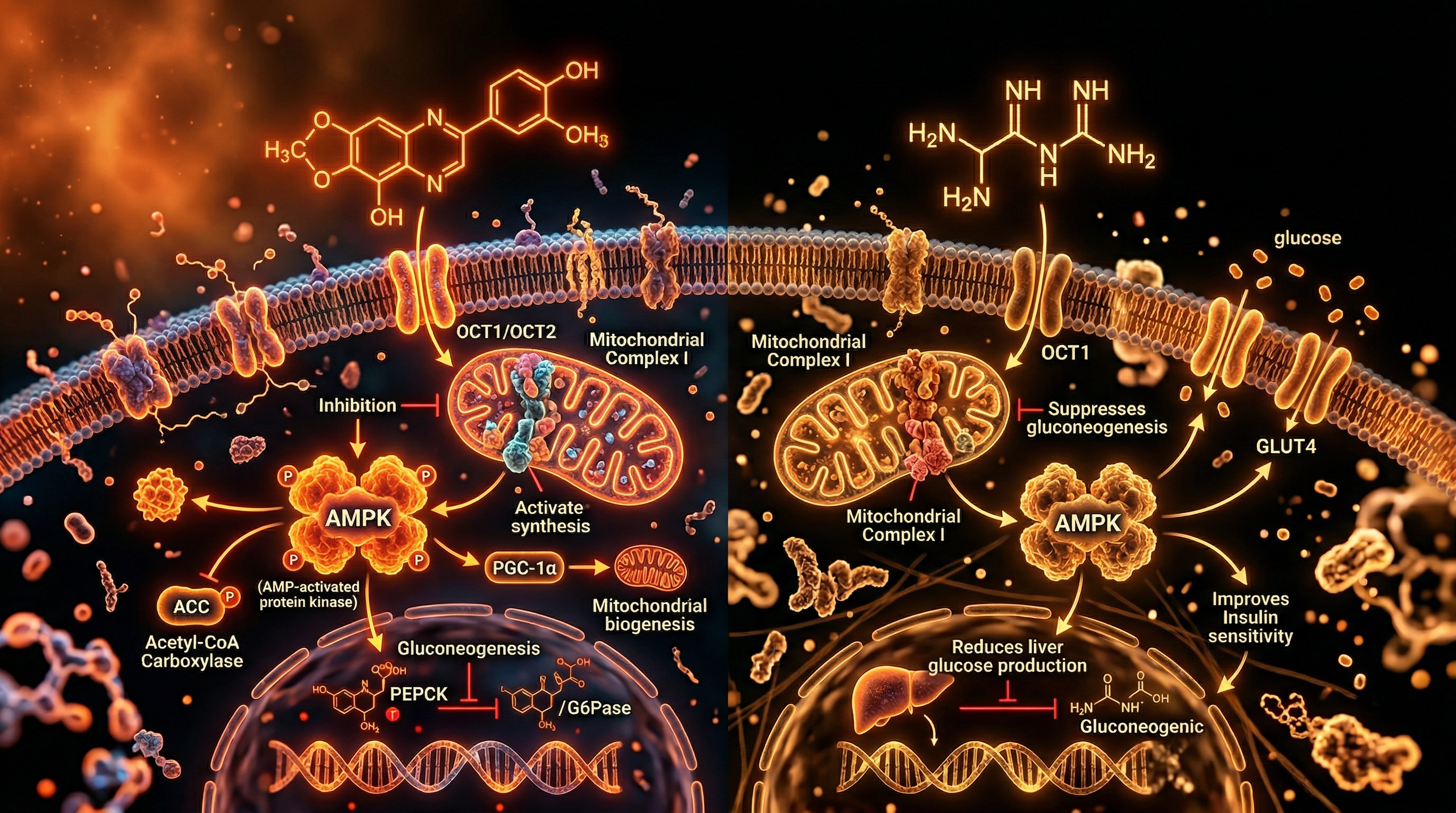
At the heart of the metabolic struggle is the regulation of energy homeostasis. Both Metformin and Berberine act primarily through the activation of AMP-activated protein kinase (AMPK). This enzyme is often described as the "metabolic master switch" or the "cellular fuel gauge."
The AMPK Master Switch
AMPK is an evolutionarily conserved enzyme that senses the energy status of the cell. When cellular energy (ATP) is low, and the concentration of AMP (adenosine monophosphate) rises, AMPK is activated. Its primary role is to shut down energy-consuming processes (like fat synthesis and protein production) and ramp up energy-producing processes (like glucose uptake and fatty acid oxidation).
- Metformin’s Pathway: Metformin enters the cell primarily through Organic Cation Transporter 1 (OCT1). It accumulates in the mitochondria and inhibits Complex I of the respiratory chain. This mild inhibition causes a drop in ATP production, which in turn triggers AMPK.
- Berberine’s Pathway: Berberine similarly inhibits Complex I of the mitochondria, but it does so with a different binding affinity. Furthermore, Berberine activates AMPK through several indirect pathways, including the stimulation of LKB1 (Liver Kinase B1) and the induction of calcium-mediated pathways, providing a more robust "systemic" activation than its synthetic counterpart.
Beyond Glucose: The Lipid Connection
While Metformin is primarily viewed as a glucose-lowering agent, Berberine possesses superior lipid-lowering properties. Berberine increases the expression of LDLR (Low-Density Lipoprotein Receptor) on the surface of liver cells through a post-transcriptional mechanism—specifically by inhibiting PCSK9. By preventing the degradation of LDL receptors, Berberine allows the liver to clear more "bad" cholesterol from the bloodstream.
Mechanisms at the Cellular Level
To understand why Berberine is often considered superior for long-term physiological harmony, we must look at the nuanced differences in their cellular interactions.
Mitochondrial Dynamics and Mitophagy
Modern research suggests that Metformin’s inhibition of mitochondrial Complex I can, in some cases, lead to excessive mitochondrial stress in non-target tissues. Conversely, Berberine has been shown to promote Mitophagy—the selective recycling of damaged mitochondria. This ensures that the cellular energy factories remain efficient rather than merely "suppressed."
The Gut Microbiome Axis
One of the most profound shifts in our understanding of these two agents is their impact on the gut.
- Akkermansia muciniphila: Both Metformin and Berberine significantly increase the abundance of this "probiotic" bacterium. Akkermansia is crucial for maintaining the gut barrier and preventing Endotoxaemia (the leakage of bacterial toxins into the blood).
- Short-Chain Fatty Acids (SCFAs): Berberine is particularly adept at modulating the microbiome to produce butyrate, a SCFA that reduces systemic inflammation and improves insulin sensitivity.
- Bioavailability Paradox: Berberine has notoriously low oral bioavailability (less than 1%). However, its efficacy remains high because much of its work is performed directly on the gut microbiota and the intestinal lining before it even enters the bloodstream.
GLUT4 Translocation
Both agents facilitate the movement of GLUT4 (Glucose Transporter Type 4) from the interior of the cell to the plasma membrane. This is the "doorway" through which glucose enters muscle and fat cells. By increasing GLUT4 density, both Berberine and Metformin allow the body to clear blood sugar without requiring excessive amounts of insulin, thereby reducing the burden on the pancreas.
Callout: Unlike insulin injections, which can cause weight gain and hypoglycaemia, Berberine and Metformin are "euglycaemic" agents—they lower high blood sugar without typically causing it to drop below safe levels.
Environmental Threats and Biological Disruptors
The modern metabolic landscape is not just a result of poor diet; it is a consequence of "Environmental Metabolic Disruptors." We are currently living in a "toxicogenic" environment that actively sabotages mitochondrial function.
Endocrine Disrupting Chemicals (EDCs)
Ubiquitous substances such as Bisphenol A (BPA), Phthalates, and PFAS ("forever chemicals") mimic hormones and interfere with metabolic signalling. These chemicals bind to nuclear receptors like PPAR-gamma, tricking the body into creating more fat cells and inducing insulin resistance.
Glyphosate and the Shikimate Pathway
The widespread use of glyphosate-based herbicides has devastated the human gut microbiome. By inhibiting the Shikimate pathway in beneficial gut bacteria, glyphosate reduces the production of essential amino acids and neurotransmitter precursors. This "gut dysbiosis" is a primary driver of the obesity epidemic.
Fructose and De Novo Lipogenesis
The industrialisation of the food supply has led to the over-consumption of High-Fructose Corn Syrup (HFCS). Unlike glucose, fructose is processed almost entirely in the liver, where it triggers De Novo Lipogenesis (the creation of new fat). This leads to Non-Alcoholic Fatty Liver Disease (NAFLD), a condition that Berberine treats with significantly higher efficacy than Metformin.
The Cascade: From Exposure to Disease
When the body is exposed to environmental disruptors, a predictable biochemical cascade ensues, eventually leading to the diagnosis of Type 2 Diabetes or Metabolic Syndrome.
- Mitochondrial Dysfunction: Pollutants inhibit the efficiency of the electron transport chain.
- Oxidative Stress: The production of Reactive Oxygen Species (ROS) increases, damaging cellular DNA and proteins.
- Chronic Low-Grade Inflammation: The NF-κB pathway is activated, releasing pro-inflammatory cytokines like TNF-alpha and IL-6.
- Insulin Resistance: In response to inflammation, insulin receptors become "deaf" to the signal of insulin.
- Hyperinsulinaemia: The pancreas overcompensates by pumping out more insulin, which promotes fat storage and further inflammation.
- Systemic Failure: This state eventually leads to cardiovascular disease, neurodegeneration (often called Type 3 Diabetes), and renal failure.
Berberine acts as an "interruptor" at multiple stages of this cascade. It is an antioxidant, an anti-inflammatory via NF-κB inhibition, and a metabolic regulator via AMPK. Metformin, while effective, lacks the broad-spectrum anti-inflammatory and antioxidant profile inherent in the botanical alkaloid.
What the Mainstream Narrative Omits
The pharmaceutical industry has a vested interest in the "single-molecule, single-target" paradigm. It allows for patentability and high-profit margins. Berberine, being a natural compound, cannot be patented in its base form, leading to a significant lack of large-scale, industry-funded clinical trials compared to Metformin.
The Metformin B12 Depletion
One of the most critical omissions in standard clinical practice is the fact that long-term Metformin use significantly depletes Vitamin B12 levels. B12 deficiency can lead to peripheral neuropathy—ironically, a symptom that many doctors mistake for worsening diabetes, leading them to increase the dosage of the very drug causing the deficiency.
The NDMA Contamination Scandal
In recent years, several batches of Metformin were recalled globally due to contamination with N-Nitrosodimethylamine (NDMA), a potent carcinogen. This highlights the risks of globalised synthetic drug manufacturing. Berberine, when sourced from high-quality organic botanical extracts, does not carry this risk of synthetic carcinogenic by-products.
mTOR and Longevity
Both agents inhibit mTOR (mammalian Target of Rapamycin), a pathway associated with growth and ageing. By inhibiting mTOR and activating AMPK, these compounds mimic the effects of Caloric Restriction. However, Berberine’s influence on the Sirtuin (SIRT1) genes—the "longevity genes"—appears more pronounced in several comparative models, suggesting it may be the superior anti-ageing intervention.
The "Waste" Problem
Metformin is not fully metabolised by the human body; it is excreted unchanged. As a result, it has become a significant environmental pollutant, found in high concentrations in rivers and wastewater, where it disrupts the endocrine systems of aquatic life. Phytotherapeutic alkaloids like Berberine are biodegradable and part of a natural carbon cycle.
The UK Context
In the United Kingdom, the prevalence of Type 2 Diabetes has doubled in the last 15 years, with over 4 million people currently diagnosed. The cost to the National Health Service (NHS) is staggering, estimated at over £10 billion per year—nearly 10% of the entire budget.
NICE Guidelines and the Phytotherapy Gap
The National Institute for Health and Care Excellence (NICE) remains strictly tethered to synthetic interventions. While Metformin is remarkably cheap for the NHS to prescribe (pennies per dose), the long-term costs of managing its side effects (gastric distress, B12 deficiency, and eventual "drug failure") are rarely accounted for.
In the UK, Berberine is classified as a food supplement rather than a medicine. This means that while it is widely available, British GPs are generally not trained in its application, and it lacks the "Traditional Herbal Registration" (THR) status that some other botanicals possess. This creates a "knowledge gap" where patients are often better informed than their clinicians regarding botanical alternatives.
The Sugar Tax and Public Health
While the UK's "Sugar Tax" on soft drinks was a step in the right direction, it fails to address the underlying mitochondrial damage caused by the wider ultra-processed food landscape. The British public is currently trapped in a cycle of high-carbohydrate consumption and sedentary lifestyles, making the "AMPK activation" provided by Berberine more relevant than ever.
Protective Measures and Recovery Protocols
For those seeking to transition from a state of metabolic dysfunction to one of resilience, a strategic approach is required.
The Berberine Protocol
Because Berberine has low bioavailability, its administration must be precise:
- Dosage: 500mg, taken three times daily, approximately 20-30 minutes before meals. This mimics the dosing schedule of Metformin and manages post-prandial (after-meal) glucose spikes.
- The Synergy Strategy: Combining Berberine with Silymarin (from Milk Thistle) significantly increases its absorption. Silymarin inhibits P-glycoprotein, a pump in the gut that normally ejects Berberine back into the intestinal lumen.
- Cycling: Some practitioners recommend cycling Berberine (e.g., 8 weeks on, 2 weeks off) to maintain cellular sensitivity, although long-term studies suggest it remains effective without breaks.
Mitigating Metformin Side Effects
If a patient remains on Metformin, the following are non-negotiable:
- B12 Supplementation: Sublingual Methylcobalamin (1000mcg daily) to bypass the absorption issues caused by the drug.
- CoQ10: To support mitochondrial function, which can be suppressed by Complex I inhibition.
Lifestyle as the Foundation
Neither agent is a "magic bullet." They are tools to be used alongside:
- Circadian Alignment: Eating only during daylight hours to align with the body's natural insulin sensitivity.
- Resistance Training: Muscle is the primary "sink" for glucose. Increasing muscle mass increases the number of GLUT4 transporters.
- Cold Exposure: Activating "Brown Adipose Tissue" (BAT), which burns glucose and fat for heat production through UCP1 (Uncoupling Protein 1).
Important Callout: Berberine should not be combined with Metformin without strict medical supervision, as their synergistic effect can lead to hypoglycaemia.
Summary: Key Takeaways
The comparison between Berberine and Metformin represents more than just a choice between a plant and a pill; it represents a choice between biological harmony and chemical suppression.
- AMPK Activation: Both agents activate this master regulator, but Berberine does so through a more diverse set of cellular pathways.
- Lipid Management: Berberine is significantly more effective at lowering LDL cholesterol and triglycerides through its action on PCSK9 and LDLR.
- Safety Profile: While Metformin is generally safe, it carries risks of B12 depletion, lactic acidosis (in rare cases), and potential NDMA contamination. Berberine offers a "pleiotropic" safety profile, benefiting the liver, gut, and cardiovascular system simultaneously.
- Gut Health: Berberine acts as a "prebiotic-like" compound, fostering a healthy microbiome and repairing the gut barrier, whereas Metformin's gastric side effects often lead to patient non-compliance.
- The Environmental Factor: Berberine is a sustainable, biodegradable alkaloid, whereas Metformin is increasingly becoming a persistent environmental pollutant.
In the era of the "Metabolic Winter," where environmental toxins and processed diets have frozen our cellular energy production, we must look to the wisdom of the past. The isoquinoline alkaloids found in the Barberry plant have protected human physiology for millennia. As modern science finally catches up to ancient tradition, the evidence is clear: the molecular intelligence of Berberine offers a sophisticated, multi-targeted approach to metabolic health that a single synthetic molecule can never truly replicate.
The path to recovery lies in acknowledging that our bodies are not machines to be manipulated by synthetic inputs, but biological ecosystems that thrive when supported by the complex chemistry of the plant kingdom.
Author Note: As we continue to investigate the frontiers of Innerstanding, we must remain vigilant against the reductionism that dominates modern medicine. The "Golden Alkaloid" Berberine is not merely a replacement for Metformin; it is a restoration of the dialogue between the human cell and the botanical world.
This article is provided for informational and educational purposes only. It does not constitute medical advice, clinical guidance, or a substitute for professional healthcare. Information reflects cited research at time of publication. Always consult a qualified healthcare professional before acting on any health information.
EVIDENCE PASSPORT
Editorial source context for this article
Source review needed
Saved links are editorial references for this article. They may support specific claims rather than every sentence. Open and assess each source in context. This passport does not independently verify them.
Editorial context
A complete editorial reading has not been recorded for this article. Source links remain available for you to open and assess directly.
Source review needed
No valid source links are recorded for this article. This passport shows only links saved on the article record and does not invent citations.
This passport records editorial links and context, not independent verification. Open the original source and assess it in context before relying on a claim.
Medical Disclaimer
The information in this article is for educational purposes only and does not constitute medical advice, diagnosis, or treatment. Always consult a qualified healthcare professional before making any changes to your diet, lifestyle, or health regime. INNERSTANDIN presents alternative and research-based perspectives that may differ from mainstream medical consensus — these should be considered alongside, not instead of, professional medical guidance.
Read Full DisclaimerContinue the thread
Keep this question moving.
Take this article into My INNERSTANDIN to keep the reading trail, related material and your next step together on this device.