Postpartum Hair Loss: Navigating the Biological Shift After Pregnancy
The dramatic drop in oestrogen following childbirth can lead to significant temporary hair loss for new mothers. We explain the biological timing of this event and how to support recovery.
# Postpartum Hair Loss: Navigating the Biological Shift After Pregnancy
Overview
The transition from pregnancy to motherhood is often framed through a lens of psychological adjustment and infant care. However, beneath the surface of sleepless nights and the demands of a newborn, a profound biological upheaval is taking place within the maternal body. One of the most visible and emotionally distressing manifestations of this shift is postpartum hair loss, medically termed *Telogen Effluvium*. At INNERSTANDING, we view this not merely as an aesthetic inconvenience, but as a critical biological indicator of a systemic endocrine reset.
For many women in the UK, the experience of losing clumps of hair three to six months after childbirth is met with dismissive advice from general practitioners: "It’s just hormones," or "It will pass." This mainstream reductionism ignores the intricate cellular mechanisms at play and the environmental pressures that can exacerbate the condition into a long-term follicular crisis.
The biological reality is that pregnancy induces a state of 'hyper-vitality' for the hair follicles, driven by astronomical levels of oestrogen and progesterone. The sudden withdrawal of these hormones following the delivery of the placenta triggers a mass transition of hair follicles from the growth phase to the shedding phase. While temporary in a vacuum, the modern environment—characterised by nutritional depletion, endocrine-disrupting chemicals (EDCs), and chronic stress—often prevents a smooth recovery. This article serves as a comprehensive guide to the biological timing of this event, the cellular mechanics of the follicle, and the truth about how to support a full physiological recovery in the UK’s current health landscape.
UK BIOLOGICAL FACT: Approximately 50% to 90% of women in the United Kingdom will experience some degree of postpartum hair loss, yet it remains one of the least discussed physiological side effects in standard NHS postnatal consultations.
---
The Biology — How It Works
To understand postpartum hair loss, one must first grasp the normal life cycle of a human hair follicle. Under ordinary circumstances, hair growth is not a continuous process but a cyclical one, consisting of three primary phases:
- —Anagen (The Growth Phase): Lasting between two to seven years, this is the period where the hair bulb is actively producing hair fibre. On a healthy scalp, roughly 85-90% of hairs are in this phase at any given time.
- —Catagen (The Transition Phase): A short, two-week window where the follicle shrinks and detaches from the dermal papilla (the blood supply).
- —Telogen (The Resting Phase): Lasting about three months, the hair remains in the follicle but is no longer growing. Eventually, these hairs fall out (Exogen phase) to make room for new growth.
The Pregnancy "Pause"
During pregnancy, particularly the second and third trimesters, the maternal body is flooded with oestrogen. Oestrogen acts as a powerful biological signal that extends the Anagen phase. It essentially "locks" the hair in the growth stage, preventing the natural transition into the Telogen phase. This is why many pregnant women report the thickest, most lustrous hair of their lives; they are simply not shedding the 50 to 100 hairs that humans typically lose daily.
The Postpartum Crash
The moment the placenta is delivered, the primary source of these elevated hormones is removed. Within 24 to 72 hours, oestrogen and progesterone levels plummet back to pre-pregnancy levels (or even lower, as the body recalibrates). This sudden withdrawal acts as a systemic shock to the hair follicles.
The follicles that were "held" in the Anagen phase by high oestrogen levels are suddenly pushed, en masse, into the Telogen phase. Because the Telogen phase lasts approximately 100 days (three months), the physical shedding does not begin immediately. There is a biological "latency period." This explains why the "Great Shed" typically begins around the three-to-four-month mark postpartum—precisely when the mother is often at her most exhausted.
---
Mechanisms at the Cellular Level
To navigate recovery, we must zoom in further, beyond the hormones, to the dermal papilla and the mitochondrial function of the follicle.
The Dermal Papilla: The Command Centre
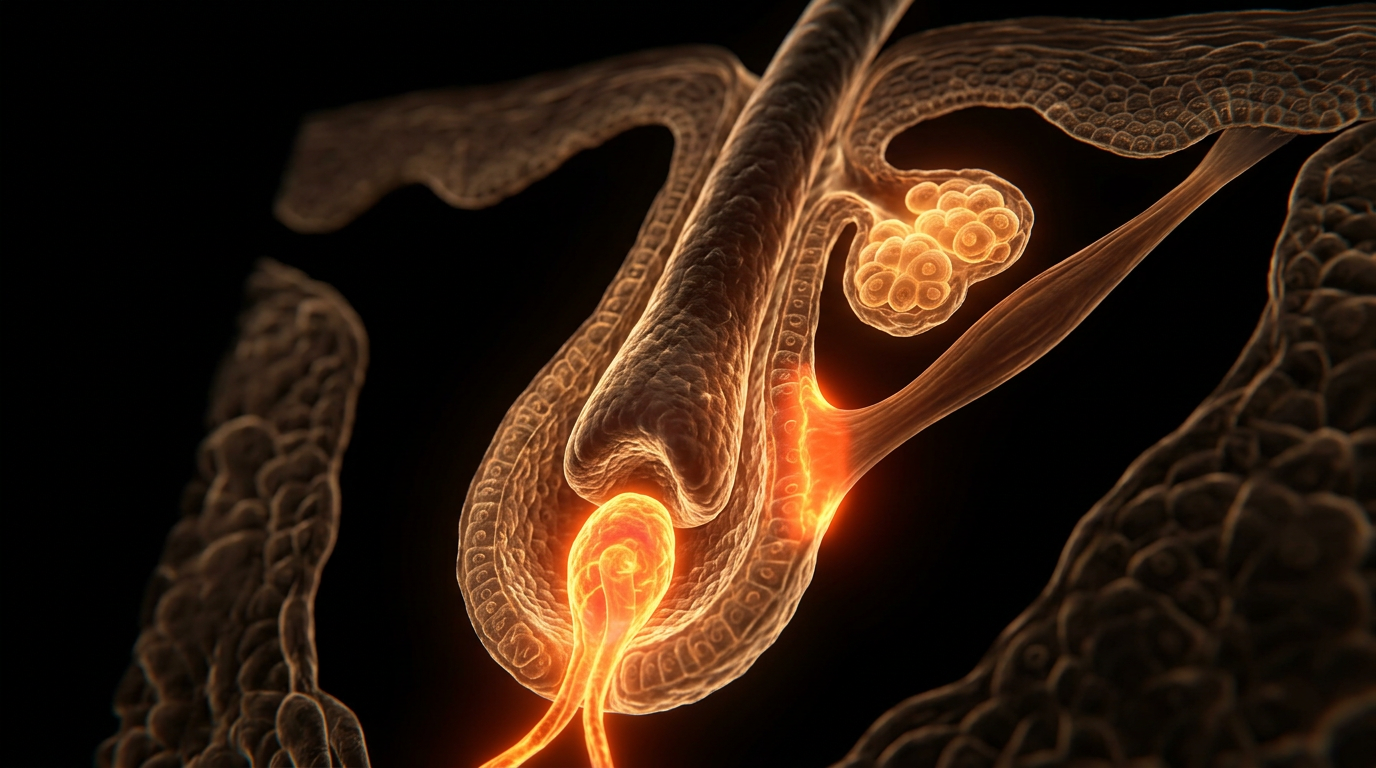
The dermal papilla (DP) is a cluster of specialised mesenchymal cells at the base of the hair follicle. It controls hair shaft size and growth cycle timing through the secretion of signalling molecules like Wnt/β-catenin and Fibroblast Growth Factor (FGF).
During the postpartum shift, the drop in oestrogen leads to a decrease in the expression of these growth-promoting signals. Simultaneously, there is an uptick in TGF-β (Transforming Growth Factor-beta), a pro-apoptotic signal that tells the cells in the hair bulb to stop dividing and start dying. This cellular apoptosis (programmed cell death) is what leads to the rapid onset of the Catagen phase.
Mitochondrial Exhaustion
Hair follicles are among the most metabolically active tissues in the human body. The rapid cell division required to produce a hair shaft demands immense amounts of Adenosine Triphosphate (ATP) produced by the mitochondria.
Postpartum, several factors conspire to induce mitochondrial dysfunction in the follicle:
- —Iron Deficiency (Anaemia): Iron is a critical cofactor for cytochrome enzymes in the mitochondrial respiratory chain. With the blood loss of childbirth and the demands of lactation, iron stores (ferritin) often collapse.
- —Cortisol Interference: The "stress" of new motherhood elevates cortisol, which has been shown to degrade the basement membrane of the hair follicle and impair mitochondrial efficiency.
UK BIOLOGICAL FACT: According to the British Journal of Haematology, up to 25% of pregnant women in the UK suffer from iron deficiency anaemia by the third trimester, a condition that directly precedes and worsens the severity of postpartum Telogen Effluvium.
---
Environmental Threats and Biological Disruptors
The biological shift of postpartum shedding is a natural event, but its *severity* and *duration* are frequently dictated by environmental factors that the mainstream medical narrative fails to account for.
The Endocrine Disruptor Crisis
In the UK, we are exposed to a cocktail of "Xenoestrogens"—synthetic chemicals that mimic oestrogen. These are found in municipal tap water (due to agricultural runoff and pharmaceutical residues), plastic packaging (BPA/BPS), and conventional personal care products (Parabens and Phthalates).
For a postpartum woman, these disruptors interfere with the delicate "handshake" between the pituitary gland and the ovaries as they attempt to restart the natural menstrual cycle. If the body is bogged down by xenoestrogens, the natural oestrogen/progesterone balance remains skewed, preventing the follicles from returning to a healthy Anagen phase.
Nutrient Density and Soil Depletion
The modern British diet, even when "healthy" by conventional standards, often lacks the mineral density required for follicular regeneration. Decades of intensive farming in the UK have depleted the soil of Selenium, Magnesium, and Zinc—all of which are essential for the synthesis of keratin, the protein that makes up 90% of the hair shaft.
Fluoridation and the Thyroid
Many areas of the UK have artificially fluoridated water. Fluoride is a known goitrogen, meaning it can interfere with iodine uptake in the thyroid gland. Postpartum women are already at a high risk for Postpartum Thyroiditis. Since the thyroid gland regulates the overall metabolic rate of all cells—including hair follicles—any disruption here can turn temporary shedding into permanent thinning.
---
The Cascade: From Exposure to Disease
If the initial postpartum shed is not managed correctly, it can trigger a biological cascade that leads to more chronic conditions. This is where "temporary shedding" evolves into "Chronic Telogen Effluvium" or even triggers "Androgenetic Alopecia" in those with a genetic predisposition.
Step 1: Oxidative Stress
The sudden hormonal drop, combined with sleep deprivation, increases the production of Reactive Oxygen Species (ROS). These "free radicals" attack the DNA of the hair follicle cells. Without sufficient antioxidants (like Vitamin C, E, and Glutathione), the follicle remains in a state of inflammation.
Step 2: Micro-Inflammation of the Scalp
Under the microscope, many postpartum women show signs of perifollicular inflammation. This is often exacerbated by the use of "volumising" shampoos laden with harsh sulphates (Sodium Lauryl Sulphate) which strip the scalp’s natural microbiome, allowing pathogenic bacteria or yeast (like Malassezia) to flourish. This inflammation acts as a physical barrier to new hair emerging from the pore.
Step 3: The Cortisol Loop
Chronic stress keeps the body in "survival mode." In this state, the body prioritises the health of vital organs over "non-essential" tissues like hair. The HPA (Hypothalamic-Pituitary-Adrenal) axis becomes dysregulated, leading to a prolonged suppression of the hair growth cycle.
UK BIOLOGICAL FACT: A study by the University of Sheffield highlighted that psychological stress in the postpartum period can increase the duration of Telogen Effluvium by up to 4 months compared to women with high social support and lower stress levels.
---
What the Mainstream Narrative Omits
The UK’s healthcare system is designed for acute intervention, not biological optimisation. When a woman presents with postpartum hair loss, the "standard of care" is typically a reassurance that "it will grow back." This narrative omits several critical truths:
1. The "Normal" Range Fallacy
When you get a blood test on the NHS, your results are compared against a "reference range." For ferritin (stored iron), the range can be as wide as 13–150 ng/mL. However, trichologists (hair specialists) know that a ferritin level of at least 70–80 ng/mL is required for optimal hair regrowth. A woman can be told her bloods are "normal" while her follicles are literally starving for iron.
2. The Impact of the Birth Control "Solution"
Many UK mothers are offered the "mini-pill" (progestogen-only) at their six-week check-up. Certain synthetic progestins used in these pills are highly androgenic, meaning they can actually contribute to hair thinning in women who are sensitive to male-pattern hormones. The mainstream narrative fails to warn women that their contraceptive choice might be sabotaging their hair recovery.
3. The Gut-Hair Connection
There is a profound link between the gut microbiome and hair health. The "Estrobolome" is a collection of bacteria in the gut specifically responsible for metabolising and excreting oestrogen. If a woman has gut dysbiosis (often caused by antibiotics given during C-sections or GBS-positive births), her body cannot effectively clear "old" hormones or synthesise the B-vitamins (like Biotin) necessary for hair growth.
---
The UK Context
Navigating postpartum recovery in the UK presents unique challenges. We are a nation with limited sunlight, leading to widespread Vitamin D deficiency—a key regulator of the hair follicle cycle. Furthermore, the UK’s water hardness in regions like the South East and London can lead to mineral buildup on the hair shaft, making it brittle and prone to breakage just as it is trying to recover.
The Postcode Lottery of Specialist Care
Access to NHS dermatology is increasingly difficult, with waiting lists for non-malignant conditions often stretching beyond a year. This forces many women into the private sector, where a single consultation with a qualified trichologist in London can cost upwards of £250. This creates a "postcode lottery" and a financial barrier to receiving scientifically sound hair health advice.
UK BIOLOGICAL FACT: Data from the Vitamin D Council UK suggests that over 60% of the UK population is deficient in Vitamin D during the winter months. Vitamin D receptors are located in the hair follicle, and deficiency is a proven trigger for prolonged shedding.
---
Protective Measures and Recovery Protocols
Recovery from postpartum hair loss requires a multi-faceted approach that addresses the biological root causes rather than just masking the symptoms with cosmetic sprays.
1. Nutritional Repletion: The "Big Four"
To restart the hair cycle, the body needs specific building blocks:
- —Bioavailable Iron: Avoid synthetic "Ferrous Sulphate" (common on the NHS), which often causes gut upset. Instead, opt for Heme Iron or Iron Bisglycinate, paired with Vitamin C to enhance absorption.
- —Marine Collagen and Amino Acids: Hair is made of protein. Supplementing with specific amino acids like L-Lysine and L-Methionine provides the "bricks" for the keratin structure.
- —Iodine and Selenium: Crucial for supporting the thyroid. UK-sourced kelp is an excellent natural source.
- —Omega-3 Fatty Acids: Necessary for reducing the scalp inflammation that can trap new hairs.
2. Scalp Microbiome Optimisation
Stop using "drugstore" shampoos containing sulphates and silicones. These coat the scalp and suffocate the follicle.
- —Protocol: Use a pH-balanced, sulphate-free cleanser. Incorporate weekly scalp massages to stimulate blood flow (vasodilation) to the dermal papilla. Inversion therapy (massaging the scalp with the head tilted down) can further increase nutrient delivery to the follicles.
3. Hormonal Modulation via Adaptogens
To combat the "Cortisol Loop," mothers should consider biological adaptogens that help the body manage stress.
- —Ashwagandha and Rhodiola: These can help stabilise the HPA axis. (Note: Always consult a healthcare professional if breastfeeding).
4. Environmental Filtration
Given the UK’s water quality issues, installing a high-quality shower filter is a non-negotiable step. This removes chlorine and heavy metals that can oxidise the hair and irritate the scalp, creating a more hospitable environment for new growth.
5. Blood Chemistry: Demand the Numbers
Do not accept a "you’re fine" from your GP. Request a copy of your blood results and look for the following "Optimal" (not just "Normal") levels:
- —Ferritin: >70 ng/mL
- —Vitamin D: >100 nmol/L
- —Vitamin B12: >500 pg/mL
- —TSH (Thyroid): <2.0 mIU/L
---
Summary: Key Takeaways
Postpartum hair loss is a biological certainty for many, but its progression is not set in stone. By understanding the cellular mechanics and the environmental traps of the UK landscape, mothers can take control of their recovery.
- —Timing is Biological: The "shed" starts 3-4 months post-birth due to the 100-day Telogen resting phase; it is not a sign that you are currently failing, but a reflection of the hormonal drop months prior.
- —Oestrogen is the Key: The drop in oestrogen triggers cellular apoptosis in the follicle; recovery depends on re-establishing a healthy hormonal rhythm.
- —Iron is Non-Negotiable: Follicles are metabolically hungry. You cannot grow hair without sufficient ferritin, regardless of how many expensive serums you use.
- —The NHS Gap: Standard UK medical advice often overlooks nutritional "optimisation" in favour of "normal" ranges that are insufficient for hair regrowth.
- —Scalp Health is Soil Health: You cannot grow a healthy plant in toxic soil. Filter your water, avoid harsh chemicals, and manage scalp inflammation to allow new growth to break through.
UK BIOLOGICAL FACT: Studies have shown that women who supplement with a comprehensive micronutrient protocol (specifically Vitamin D, Zinc, and Iron) see a 30% faster reduction in shedding than those who rely on diet alone in the UK’s nutrient-depleted environment.
The journey through postpartum hair loss is a testament to the body’s incredible ability to prioritise life-sustaining functions. By providing the body with the specific biological support it requires, we can ensure that this "rest phase" for the hair is merely a brief transition back to vitality. At INNERSTANDING, we believe that informed biological sovereignty is the first step toward true health. Do not let the mainstream narrative dismiss your experience; the biology of your hair is a window into the biology of your entire being.
This article is provided for informational and educational purposes only. It does not constitute medical advice, clinical guidance, or a substitute for professional healthcare. Information reflects cited research at time of publication. Always consult a qualified healthcare professional before acting on any health information.
RESEARCH FOUNDATIONS
Biological Credibility Archive
Postpartum telogen effluvium is primarily driven by the synchronous transition of hair follicles from the anagen to the telogen phase following the rapid withdrawal of placental estrogens.
Fluctuations in systemic hormone levels significantly modulate the activation of hair follicle stem cells, explaining the clinical timing of shedding after major physiological shifts.
In vivo imaging reveals that hormonal signals during and after pregnancy alter the metabolic state of the follicle niche, leading to a prolonged anagen phase followed by mass entry into telogen.
Longitudinal studies indicate that a large percentage of women experience significant hair shedding three to four months postpartum due to the sudden decline in circulating pro-gestational hormones.
The molecular signaling of the hair follicle is sensitive to estrogen receptor activity, which maintains hair growth during pregnancy but leads to synchronized regression upon hormonal depletion.
Citations provided for educational reference. Verify via PubMed or institutional databases.
Medical Disclaimer
The information in this article is for educational purposes only and does not constitute medical advice, diagnosis, or treatment. Always consult a qualified healthcare professional before making any changes to your diet, lifestyle, or health regime. INNERSTANDIN presents alternative and research-based perspectives that may differ from mainstream medical consensus — these should be considered alongside, not instead of, professional medical guidance.
Read Full DisclaimerReady to learn more?
Continue your journey through our classified biological research.
DISCUSSION ROOM
Members of THE COLLECTIVE discussing "Postpartum Hair Loss: Navigating the Biological Shift After Pregnancy"
SILENT CHANNEL
Be the first to discuss this article. Your insight could help others understand these biological concepts deeper.
THE ARSENAL
Based on Hair Health & Follicle Biology — products curated by our research team for educational relevance and biological support.
Magnesium Blend – The Most Important Mineral
Clean Slate – Detoxes thousands of chemicals,heavy metals, pesticides, allergens, mold spores and fungus
Vegan Essential Amino Acids – Plant-Powered Protein Building
INNERSTANDING may earn a commission on purchases made through these links. All products are selected based on rigorous educational relevance to our biological research.
RABBIT HOLE
Follow the biological thread deeper