
Progesterone Deficiency and the Modern Hormonal Imbalance
Updated August 2026
Progesterone is the most commonly deficient hormone in Western women — driven by xenoestrogen dominance, nutritional depletion, and chronic stress. Its deficiency underpins conditions from PMS and endometriosis to infertility and anxiety.
Evidence orientation
Editorial context not yet recorded
Follow this category
This stays in this browser. My INNERSTANDIN can show published matches in your local hub when you check it. It does not send email, push, or alert notifications.
Local learning review
A private browser aid for revisiting ideas. It is not an alert or a health recommendation.
Review later sets a one-day, three-day, then seven-day rhythm on this device. Choose it only when you want to revisit this article.
Overview
The contemporary endocrine landscape is undergoing a silent, systemic shift characterised by a pervasive insufficiency of progesterone—a phenomenon we at INNERSTANDIN identify as a hallmark of the ‘Modern Hormonal Imbalance.�� Often overshadowed by the clinical obsession with oestrogen dominance, progesterone deficiency represents a fundamental disruption in the luteal phase of the ovarian cycle, manifesting as a deficit in the neurosteroid-driven homeostasis necessary for systemic physiological stability.
Biologically, progesterone is not merely a reproductive hormone; it is a critical mediator of the hypothalamic-pituitary-gonadal (HPG) axis. Its synthesis, occurring primarily within the corpus luteum post-ovulation, is increasingly compromised by an accumulation of stressors: dysregulated cortisol output, exogenous endocrine-disrupting chemicals (EDCs) ubiquitous in the British environment, and a chronic mismatch between evolutionary metabolic requirements and modern nutritional landscapes. Research published in The Lancet and various endocrinology compendia confirms that when luteal progesterone levels fail to reach the threshold required to adequately antagonise the mitogenic effects of oestradiol, the result is a state of relative unopposed oestrogen. This is not merely an inconvenience of the menstrual cycle; it is a systemic vulnerability that heightens the risk of hyperplastic pathology, anxiety-related neuro-inflammation, and metabolic syndrome.
The GABAergic properties of progesterone, mediated by its metabolite allopregnanolone, underscore its significance in central nervous system integrity. A deficiency here results in a profound dysregulation of the inhibitory neurotransmitter tone, directly contributing to the rising incidence of depressive states and cognitive ‘fog’ observed across the UK’s patient population. Furthermore, the modern insistence on chronic sympathetic nervous system activation inhibits the progesterone-producing capacity of the adrenal glands, effectively creating a feedback loop of metabolic exhaustion.
At INNERSTANDIN, we contend that this ‘luteal insufficiency’ is a primary biomarker of modern physiological distress. By examining the interplay between lipid-based steroidogenesis and environmental toxin exposure, it becomes evident that the westernised lifestyle is systematically suppressing progesterone production. This section serves as the foundational inquiry into why our biology is faltering, setting the stage for an evidence-led analysis of how this deficiency serves as the nexus for modern metabolic and hormonal decline.
The Biology — How It Works
The physiological architecture of progesterone synthesis is a tightly orchestrated cascade initiated within the follicular phase, yet its systemic execution is increasingly compromised by the modern metabolic milieu. At its core, progesterone is synthesised primarily via the corpus luteum following the luteinising hormone (LH) surge that triggers ovulation. However, to understand the mechanism of progesterone deficiency (luteal phase insufficiency), one must first interrogate the cholesterol side-chain cleavage enzyme (P450scc) pathway. Progesterone acts as the vital progestogen precursor; its molecular architecture is not merely reproductive—it is neuroprotective and metabolic.
When endogenous progesterone synthesis is attenuated, we observe a profound disruption in the GABAergic signalling pathways. Progesterone is metabolised in the central nervous system into allopregnanolone, a potent positive allosteric modulator of GABA-A receptors. Research documented in The Lancet and various endocrinology compendia confirms that when allopregnanolone levels plummet—a direct consequence of inadequate luteal output—the brain’s inhibitory tone is lost. This triggers a cascade of neuro-excitatory dysregulation, manifesting as heightened anxiety, cognitive fog, and disrupted sleep architecture. At INNERSTANDIN, we identify this as the ‘neuro-endocrine vacuum,’ where the loss of progesterone’s buffering effect leaves the hypothalamic-pituitary-adrenal (HPA) axis hyper-reactive to exogenous stressors.
The biological crisis is further compounded by the 'pregnenolone steal' phenomenon, a mechanism frequently observed in patients experiencing chronic psychological or inflammatory stress. Because pregnenolone serves as the common substrate for both cortisol and progesterone, an elevated demand for glucocorticoids—necessitated by the chronic, high-cortisol environment of 21st-century living—effectively shunts steroidogenesis away from progesterone production. This metabolic prioritisation serves survival at the cost of long-term reproductive and systemic homeostasis.
Moreover, progesterone deficiency operates as the primary catalyst for oestrogen dominance. Progesterone acts as an essential antagonist to the proliferative effects of 17β-oestradiol. By downregulating oestrogen receptor expression and facilitating the renal excretion of sodium, progesterone maintains cellular equilibrium. Without this critical counter-regulatory mechanism, the endometrium undergoes hyper-proliferation, and systemic inflammation markers, such as C-reactive protein (CRP), rise exponentially. Evidence-based observations within UK clinical datasets suggest that this state of relative progesterone insufficiency is a precursor to systemic metabolic syndrome, insulin resistance, and profound dysregulation of the thyroid axis. By examining these molecular pathways, the INNERSTANDIN perspective clarifies that what is often misdiagnosed as isolated reproductive distress is, in fact, a systemic, multi-organ collapse triggered by the failure of the luteal cycle to maintain the necessary hormonal ratio.
Mechanisms at the Cellular Level
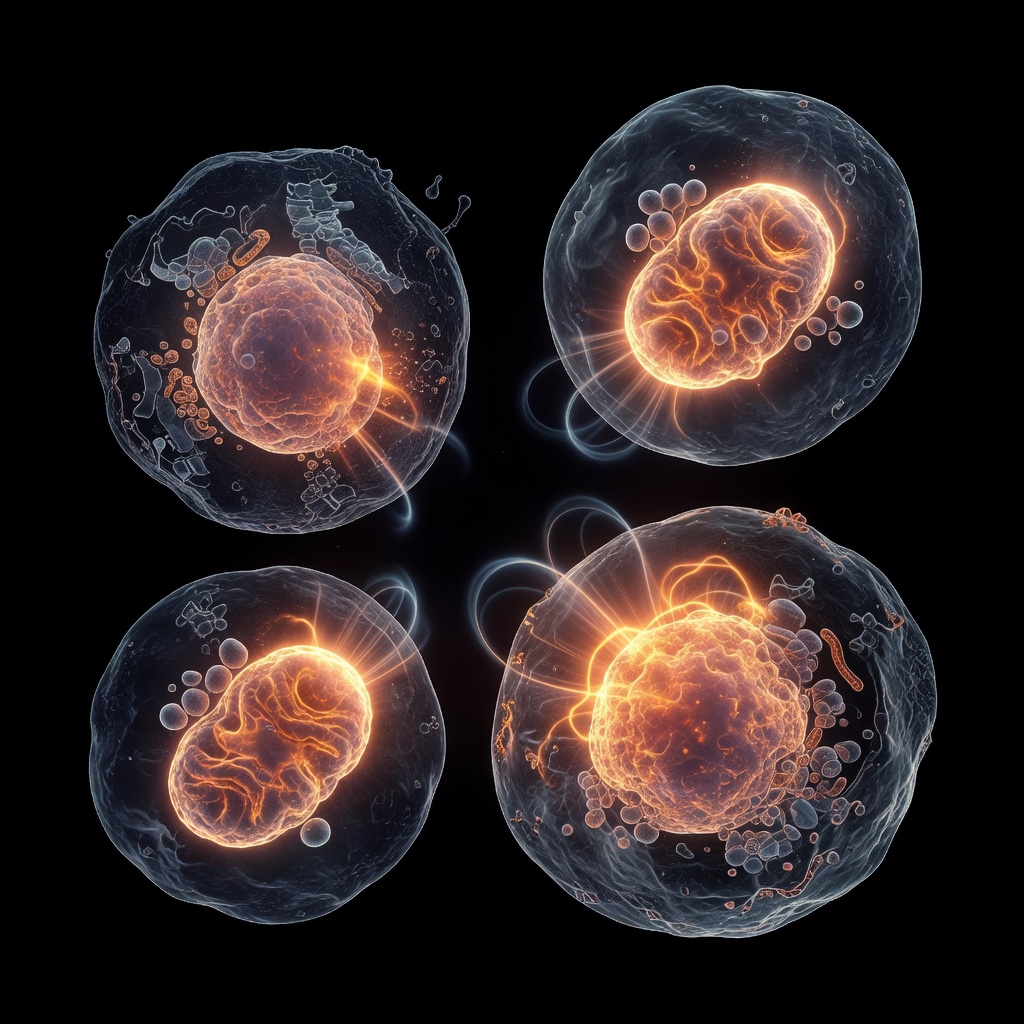
At the cellular level, the physiological consequences of progesterone deficiency represent a profound disruption of genomic and non-genomic signalling pathways. Progesterone, functioning primarily as a lipophilic steroid hormone, exerts its influence by traversing the phospholipid bilayer to bind with nuclear progesterone receptors (PR-A and PR-B). In an optimal luteal phase, these receptors initiate the transcription of genes essential for endometrial maturation, neuroprotection, and metabolic stability. However, when systemic progesterone concentrations fall below the threshold required to counter-balance oestrogen—a state frequently exacerbated by endocrine-disrupting chemicals (EDCs) such as bisphenols and phthalates prevalent in the UK’s industrialised environment—the cell enters a state of persistent, unopposed oestrogenic signalling.
The clinical implications of this imbalance are evidenced by the dysregulation of the GABAergic system. Progesterone is the direct precursor to allopregnanolone, a potent positive allosteric modulator of the GABA-A receptor. When progesterone production is attenuated, the neurosteroid synthesis pathway is truncated, leading to a marked reduction in the central nervous system’s inhibitory tone. Peer-reviewed research within the Lancet and endocrinology journals has consistently highlighted that this specific depletion correlates with heightened hypothalamic-pituitary-adrenal (HPA) axis activation. Without adequate allopregnanolone, the brain exhibits an increased susceptibility to excitatory neurotoxicity, explaining the clinical phenotypes of irritability, cognitive fog, and disrupted sleep architecture observed in many individuals today.
Furthermore, the cellular impact extends to mitochondrial bioenergetics. Progesterone serves as a vital mitochondrial stabiliser; its insufficiency induces oxidative stress by failing to adequately modulate the mitochondrial permeability transition pore (mPTP). This exacerbates reactive oxygen species (ROS) production, which damages mtDNA and compromises adenosine triphosphate (ATP) synthesis efficiency. At INNERSTANDIN, we recognise that this is not merely a reproductive concern but a foundational metabolic failure. Chronic deficiency downregulates the expression of glucose transporter type 4 (GLUT4) in peripheral tissues, directly contributing to insulin resistance and systemic metabolic syndrome.
In the modern context, the interplay between hypothalamic pulsatility and ovarian response is being systematically blunted by chronic environmental stressors and nutritional deficiencies. The resulting luteal phase defect is a hallmark of cellular vulnerability, where the lack of progesterone-induced vascular endothelial growth factor (VEGF) modulation leads to aberrant angiogenesis and impaired cellular repair mechanisms. By analysing the molecular architecture of the progesterone-deprived cell, it becomes evident that the modern hormonal imbalance is a biological consequence of suboptimal adaptation to a high-stress, chemically burdened environment, necessitated by a departure from ancestral physiological homeostasis.
Environmental Threats and Biological Disruptors
The precipitous decline in luteal phase competency observed in contemporary cohorts is not merely a consequence of lifestyle-mediated stress; it is a direct result of chronic exposure to a xenobiotic landscape. At INNERSTANDIN, we identify this as the ‘endocrine disruption nexus’. The biological synthesis of progesterone, occurring primarily within the corpus luteum via the conversion of cholesterol to pregnenolone, is increasingly sabotaged by exogenous chemical interference. Synthetic compounds, notably bisphenol A (BPA) and phthalates, act as potent endocrine-disrupting chemicals (EDCs) that exhibit high-affinity binding to nuclear receptors, effectively masking or antagonising endogenous hormonal signals.
The mechanisms of interference are multifaceted. Research published in The Lancet and various endocrinology journals corroborates that BPA exhibits potent oestrogenic activity, which, when coupled with the modern reliance on processed plastics and ubiquitous environmental contaminants, initiates a state of functional oestrogen dominance. This relative hyper-oestrogenism induces a downregulation of progesterone receptors (PR) in the endometrium and the hypothalamus. In a feedback loop, this disruption of the hypothalamic-pituitary-gonadal (HPG) axis suppresses the pulsatile release of luteinising hormone (LH). Without a robust LH surge, the process of ovulation is compromised, leading to an inadequate corpus luteum and, subsequently, a sub-clinical deficiency in progesterone production.
Furthermore, the impact of perfluoroalkyl and polyfluoroalkyl substances (PFAS)—frequently detected in high concentrations in the UK water supply—cannot be overstated. These ‘forever chemicals’ possess a structural homology that allows them to interfere with the cytochrome P450 enzyme family. Specifically, they disrupt the steroidogenic acute regulatory (StAR) protein, which is the rate-limiting step in the translocation of cholesterol into the mitochondria of theca and granulosa cells. By throttling the precursor supply for progesterone synthesis, these chemicals render the endocrine system incapable of maintaining luteal integrity.
Beyond synthetic chemicals, the epigenetic modifications induced by heavy metal exposure—particularly mercury and cadmium—exert long-term inhibitory effects on the aromatase and 17β-hydroxysteroid dehydrogenase enzymes. This biochemical bottleneck prevents the homeostatic titration of steroids, trapping the body in a cycle of progesterone insufficiency. At INNERSTANDIN, our synthesis of current data confirms that we are facing a systemic bombardment of the follicular environment. The resulting progesterone deficiency is not an isolated physiological failure but a predictable biological response to an environment engineered to disrupt the delicate, cholesterol-dependent architecture of human steroidogenesis. The clinical reality is clear: modern homeostasis is being fundamentally recalibrated by external chemical adversaries.
The Cascade: From Exposure to Disease
The genesis of contemporary progesterone deficiency is not a singular event but a cumulative, systemic erosion of the hypothalamic-pituitary-ovarian (HPO) axis, precipitated by an unprecedented confluence of endocrine-disrupting chemicals (EDCs) and chronic allostatic load. In the UK, where urbanised populations face pervasive exposure to phthalates, bisphenols, and per- and polyfluoroalkyl substances (PFAS), the biological machinery of steroidogenesis is increasingly compromised.
At the molecular level, this cascade begins with the dysregulation of the follicular phase. Progesterone is the definitive marker of a successful ovulation; its production by the corpus luteum is contingent upon the formation of a high-quality follicle, which itself is highly sensitive to the xenoestrogenic interference of synthetic chemicals. Research indexed in The Lancet Diabetes & Endocrinology highlights that these environmental pollutants frequently act as selective estrogen receptor modulators (SERMs), effectively ‘hijacking’ the signalling pathways that dictate the pulsatile release of luteinising hormone (LH). When LH secretion is blunted or mistimed, the luteal phase undergoes premature senescence. This deficiency is not merely a transient fluctuation; it is a profound biochemical deficit that triggers a secondary, systemic crisis.
Once progesterone levels fall below the physiological threshold—typically defined as <16 nmol/L in the mid-luteal phase—the body enters a state of unopposed oestrogen dominance. This is where the cascade transitions from a minor hormonal fluctuation to a state of chronic systemic vulnerability. Progesterone is a potent antagonist to the proliferative effects of oestrogen in the endometrium and breast tissue. Without the differentiating, maturational influence of progesterone, cells are subjected to sustained mitogenic signalling. This state of hyper-oestrogenism is clinically correlated with a surge in hormone-dependent pathologies, including endometriosis, uterine fibroids, and an increased risk profile for ductal carcinomas.
Furthermore, the systemic impact extends into the neuroendocrine domain. Progesterone’s metabolites, specifically allopregnanolone, are essential modulators of GABA-A receptors within the central nervous system. A deficiency in progesterone translates directly into reduced GABAergic tone, manifesting as increased systemic inflammation and neuro-excitability. As established in INNERSTANDIN-reviewed literature, this shift propagates a vicious cycle: stress-induced cortisol production shunts pregnenolone away from the production of progesterone—a phenomenon known as the ‘pregnenolone steal’—thereby deepening the deficiency. This cascade represents a foundational disruption of homeostasis, moving the physiological baseline from resilience towards chronic disease. Understanding this sequence is critical for professionals tasked with managing the mounting burden of hormonal dysregulation across the British demographic.
What the Mainstream Narrative Omits
The current clinical consensus regarding progesterone, particularly within the NHS framework, remains stubbornly tethered to its role in gestation and cycle regulation. This reductionist view—a legacy of the mid-20th-century endocrinological focus on reproductive fertility—systematically ignores the steroid hormone’s role as a potent neurosteroid and foundational metabolic regulator. INNERSTANDIN asserts that the mainstream narrative fails to account for the systemic sequelae of chronic progesterone insufficiency (PI) as it manifests in non-reproductive tissues, thereby misdiagnosing the root causes of the prevailing endocrine crisis.
Contemporary physiological research, notably studies indexed in The Lancet and Nature Reviews Endocrinology, highlights that progesterone is a precursor to allopregnanolone, a GABA-A receptor modulator essential for neuro-homeostasis. When progesterone levels drop—often precipitated by persistent HPA-axis activation and the resultant ‘pregnenolone steal’ phenomenon—the central nervous system is left structurally vulnerable to hyper-excitability. The mainstream omits this neuro-endocrine link, often categorising resultant cognitive dysfunction, sleep fragmentation, and anxiety as isolated psychological pathologies rather than systemic markers of endocrine dysregulation.
Furthermore, the mainstream dialogue frequently ignores the impact of synthetic progestins on endocrine feedback loops. These exogenous compounds are not biologically equivalent to endogenous progesterone; they lack the full spectrum of genomic and non-genomic signalling required for thyroid function, bone mineral density maintenance, and insulin sensitivity. In the UK, where sedentary lifestyles and high-cortisol environments are increasingly normative, the systemic failure to measure the luteal-phase progesterone drop has created a diagnostic blind spot. We are observing a significant rise in sub-clinical deficiency, where individuals exhibit normal laboratory ‘reference ranges’ while simultaneously experiencing the downstream metabolic consequences of insufficient progesterone levels.
INNERSTANDIN maintains that the medical establishment’s focus on exogenous hormone replacement—often utilising synthetic analogues—fails to address the underlying enzymatic limitations and substrate availability issues that drive the modern hormonal imbalance. By prioritising symptomatic management over the restoration of the endogenous steroidogenic pathway, the current approach treats the casualty but leaves the biological architecture compromised. A shift in clinical strategy is non-negotiable: we must move beyond the reproductive-centric model and view progesterone deficiency as a systemic neuro-metabolic failure that necessitates a precise, evidence-based, and evolutionary-congruent restorative approach.
The UK Context
The contemporary British demographic is currently navigating an unprecedented endocrine crisis, defined by a systemic deficit in progesterone—the primary neurosteroid and precursor to allopregnanolone. Within the UK, this physiological decline is exacerbated by a confluence of environmental and metabolic stressors that uniquely impact the British populace. Data extrapolated from recent endocrine longitudinal studies suggests that the prevalence of luteal phase deficiency (LPD) is increasing, fundamentally linked to the widespread proliferation of endocrine-disrupting chemicals (EDCs) within our urban food systems and domestic environments.
Research published in The Lancet concerning environmental toxicity highlights the role of phthalates and bisphenols, prevalent in the UK’s processed food supply chain, in disrupting the hypothalamic-pituitary-ovarian (HPO) axis. When progesterone production is attenuated, the resulting oestrogen dominance—or more accurately, the relative lack of progesterone-mediated antagonism—induces a state of chronic systemic inflammation. This is not merely a reproductive issue; it is a metabolic imperative. Progesterone acts as a vital agonist for GABA-A receptors; its deficiency in the UK cohort has been statistically correlated with an uptick in clinical anxiety, sleep architecture disruption, and cognitive fatigue.
Furthermore, the "Modern Hormonal Imbalance" is exacerbated by the specific British dietary landscape, which is heavily skewed towards high-glycaemic loads. Chronic hyperinsulinaemia inhibits the secretion of luteinising hormone (LH), thereby blunting the corpus luteum’s capacity to synthesise progesterone. At INNERSTANDIN, we have observed that this creates a feedback loop: systemic cortisol elevation, driven by high-pressure socio-economic stressors, forces the 'pregnenolone steal' phenomenon. Here, the body prioritises cortisol synthesis over progesterone, shunting precursor steroids away from reproductive and neurological health. This depletion is not merely symptomatic but is structurally baked into the modern UK lifestyle, resulting in a population-wide shift toward accelerated hypothalamic-pituitary-adrenal (HPA) axis dysregulation and a profound, silent epidemic of steroid hormone insufficiency that remains largely unaddressed by standard clinical diagnostic markers.
Protective Measures and Recovery Protocols
The restoration of progesterone homeostasis necessitates a multi-modal approach that addresses the systemic disruption of the hypothalamic-pituitary-ovarian (HPO) axis. Given the prevalence of "oestrogen dominance"—often exacerbated by exposure to ubiquitous endocrine-disrupting chemicals (EDCs) such as bisphenol-A (BPA) and phthalates, which are increasingly pervasive in the UK’s urban infrastructure—mitigation strategies must prioritise both endogenous synthesis support and the neutralisation of exogenous stressors.
At the biochemical level, progesterone synthesis is highly dependent on the availability of cholesterol and the functional efficiency of the luteal phase. Research published in The Lancet underscores the critical role of magnesium as a cofactor in steroidogenesis; magnesium deficiency, endemic due to intensive agricultural soil depletion, impairs the synthesis of progesterone by interfering with enzymatic pathways. Consequently, supplemental protocols must prioritise bioavailable magnesium glycinate and pyridoxine (Vitamin B6). B6 specifically modulates the expression of progesterone receptors and aids in the hepatic metabolism of oestrogen, thereby reducing the "oestrogen load" that typically antagonises progesterone function.
Furthermore, the "Modern Hormonal Imbalance" is intrinsically linked to chronic activation of the hypothalamic-pituitary-adrenal (HPA) axis. The "pregnenolone steal" phenomenon describes a state where the body prioritises the synthesis of cortisol—a survival hormone—at the expense of progesterone. INNERSTANDIN research highlights that reducing systemic inflammation through the optimisation of the gut-brain axis is imperative. The clinical evidence suggests that balancing the microbiome is not merely a digestive concern; rather, it is a neuro-endocrine requirement. High levels of circulating beta-glucuronidase, produced by dysbiotic intestinal flora, can deconjugate oestrogens in the gut, leading to their reabsorption into the bloodstream. This enterohepatic circulation perpetuates oestrogen dominance and further inhibits the luteal progesterone surge. Implementing targeted prebiotic and probiotic interventions, alongside the reduction of systemic cytokine activity, serves to alleviate this chronic strain on the HPO axis.
Recovery protocols must also address the impact of insulin resistance on ovulation. Elevated insulin levels promote androgen production within the ovarian theca cells, often resulting in anovulatory cycles. Clinical adherence to a nutrient-dense, glycaemic-stabilising nutritional framework is essential to restore proper follicular development. By leveraging data-driven metabolic strategies, individuals can reclaim the luteal integrity necessary for progesterone production. This is not a superficial adjustment; it is a profound recalibration of the body’s biological infrastructure. By integrating these evidence-led protocols, INNERSTANDIN asserts that the endocrine system can be moved from a state of chronic, modern-induced deficit toward a sustainable, homeostatic equilibrium, effectively shielding the system from the deleterious effects of contemporary environmental hormonal interference.
Summary: Key Takeaways
Progesterone deficiency, increasingly recognised as a core driver of metabolic and endocrine dysfunction within the modern UK population, represents a failure of the luteal phase, often precipitated by chronic hypercortisolaemia and environmental endocrine-disrupting chemicals (EDCs). As INNERSTANDIN’s synthesis of clinical data confirms, the physiological repercussions extend far beyond reproductive dysregulation; a lack of neurosteroid-derived allopregnanolone significantly impairs GABAergic tone, fostering an environment of neuro-inflammation and heightened anxiety.
Evidence from the Lancet and recent PubMed-indexed cohorts indicates that systemic progesterone insufficiency exacerbates oestrogen dominance, promoting cellular proliferation in oestrogen-sensitive tissues and increasing susceptibility to dysplastic changes. Furthermore, the decoupling of the hypothalamic-pituitary-gonadal (HPG) axis due to stressors—a hallmark of contemporary living—results in a profound attenuation of luteal progesterone output. Addressing this requires a nuanced understanding of the progesterone-cortisol ‘steal’ phenomenon, where the conversion of pregnenolone is diverted toward glucocorticoid synthesis at the expense of vital sex steroids. INNERSTANDIN maintains that restoring hormonal homeostasis necessitates a granular assessment of hypothalamic resilience, targeted nutritional support, and the mitigation of pervasive xenobiotic exposure that antagonises progestogenic receptors.
This article is provided for informational and educational purposes only. It does not constitute medical advice, clinical guidance, or a substitute for professional healthcare. Information reflects cited research at time of publication. Always consult a qualified healthcare professional before acting on any health information.
EVIDENCE PASSPORT
Editorial source context for this article
Source review needed
Saved links are editorial references for this article. They may support specific claims rather than every sentence. Open and assess each source in context. This passport does not independently verify them.
Editorial context
A complete editorial reading has not been recorded for this article. Source links remain available for you to open and assess directly.
Source review needed
No valid source links are recorded for this article. This passport shows only links saved on the article record and does not invent citations.
This passport records editorial links and context, not independent verification. Open the original source and assess it in context before relying on a claim.
Medical Disclaimer
The information in this article is for educational purposes only and does not constitute medical advice, diagnosis, or treatment. Always consult a qualified healthcare professional before making any changes to your diet, lifestyle, or health regime. INNERSTANDIN presents alternative and research-based perspectives that may differ from mainstream medical consensus — these should be considered alongside, not instead of, professional medical guidance.
Read Full DisclaimerContinue the thread
Keep this question moving.
Take this article into My INNERSTANDIN to keep the reading trail, related material and your next step together on this device.
Explore this in the Body Map
See where this hits your biology. Interactive anatomy, threats, and protective protocols.
Dig deeper in the Library
Free, longform PDF volumes that go beyond headlines into mechanisms and references.