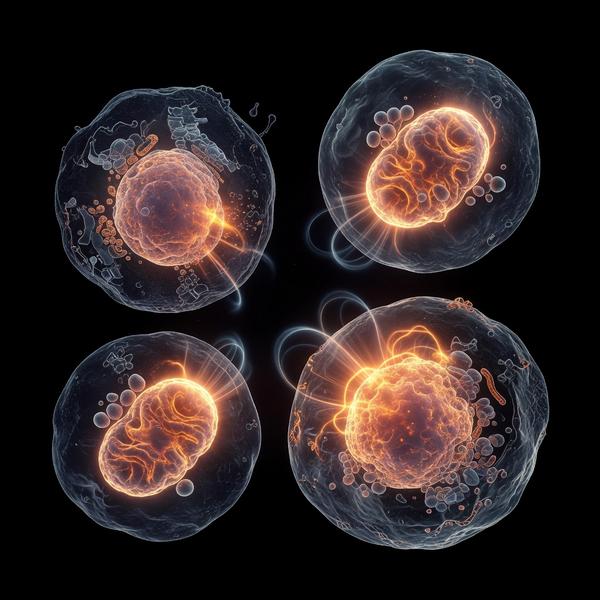
Progesterone Receptor Expression and Its Role in Cervical Epithelial Integrity
Discuss this resourceUpdated August 2026
An in-depth exploration of how progesterone receptors influence the structural and immune health of the cervical epithelium, highlighting the connection between hormonal balance and tissue resilience.
Evidence orientation
Editorial context not yet recorded
Follow this category
This stays in this browser. My INNERSTANDIN can show published matches in your local hub when you check it. It does not send email, push, or alert notifications.
Local learning review
A private browser aid for revisiting ideas. It is not an alert or a health recommendation.
Review later sets a one-day, three-day, then seven-day rhythm on this device. Choose it only when you want to revisit this article.

Introduction: The Gatekeeper of Reproductive Health. The cervix is more than a simple anatomical bridge; it is a dynamic, hormonally responsive barrier that maintains the delicate ecosystem of the reproductive tract. At the heart of this function lies the cervical epithelium, a tissue layer that serves as the first line of defense against pathogens. Central to its integrity is the expression of progesterone receptors (PR), which regulate cellular differentiation, mucus production, and immune surveillance. Understanding the relationship between progesterone signaling and structural integrity is vital for a root-cause approach to cervical health. ### The Anatomy of Integrity: Understanding Progesterone Receptors.
Progesterone receptors are ligand-activated transcription factors that mediate the effects of progesterone. In the cervix, PR expression is not static; it fluctuates in response to the menstrual cycle and external hormonal influences. During the luteal phase, the presence of progesterone binds to these receptors, signaling the epithelial cells to transition from a proliferative state to a differentiated, protective state. When these receptors are expressed optimally, the epithelium maintains a thick, resilient barrier capable of resisting oxidative stress and microbial infiltration. ### Hormonal Imbalance and the Erosion of Barriers. A common root cause of cervical epithelial instability is progesterone resistance or relative estrogen dominance.
When the signaling pathway between progesterone and its receptors is impaired—whether through chronic inflammation, stress-induced cortisol dysregulation, or endocrine-disrupting chemicals—the epithelium undergoes structural changes. We often see a thinning of the mucosal layer and a shift in the local pH, creating a microenvironment susceptible to persistent human papillomavirus (HPV) infection and cervicitis. By focusing on the hormonal signaling axis, we can address the underlying reasons for recurrent epithelial vulnerability rather than merely treating the symptoms of tissue disruption. ### Immune Surveillance and the Microbiome. Progesterone receptors in the cervix influence more than just cell growth; they also modulate the local immune response. Proper PR signaling supports the production of antimicrobial peptides that maintain a healthy cervicovaginal microbiome, particularly supporting the dominance of Lactobacillus species.
When PR expression is compromised, this delicate balance shifts. The resulting dysbiosis often triggers a systemic inflammatory response, further downregulating PR expression in a vicious feedback loop. Restoring this integrity requires a multidimensional approach that balances hormonal signals, reduces chronic systemic inflammation, and supports the microbiome through targeted nutritional and lifestyle interventions. ### Towards a Root-Cause Perspective. Achieving long-term cervical health necessitates shifting our focus from reactionary screening to proactive hormonal stewardship. This involves evaluating the integrity of the HPA (hypothalamic-pituitary-adrenal) axis, as chronic stress can deplete progesterone levels, thereby starving the cervical epithelium of the signals it needs to maintain its protective barrier.
By assessing hormone panels, identifying dietary triggers of inflammation, and supporting natural progesterone production through lifestyle optimization, we can empower the body to maintain its own defensive architecture. The goal is to nurture the hormonal environment that allows the cervical epithelium to remain robust, resilient, and effective.
This article is provided for informational and educational purposes only. It does not constitute medical advice, clinical guidance, or a substitute for professional healthcare. Information reflects cited research at time of publication. Always consult a qualified healthcare professional before acting on any health information.
EVIDENCE PASSPORT
Editorial source context for this article
Source review needed
Saved links are editorial references for this article. They may support specific claims rather than every sentence. Open and assess each source in context. This passport does not independently verify them.
Editorial context
A complete editorial reading has not been recorded for this article, and no source links are saved on its record.
Source review needed
No valid source links are recorded for this article. Supplementary research, where available, is listed separately below.
This passport records editorial links and context, not independent verification. Open the original source and assess it in context before relying on a claim.
Medical Disclaimer
The information in this article is for educational purposes only and does not constitute medical advice, diagnosis, or treatment. Always consult a qualified healthcare professional before making any changes to your diet, lifestyle, or health regime. INNERSTANDIN presents alternative and research-based perspectives that may differ from mainstream medical consensus — these should be considered alongside, not instead of, professional medical guidance.
Read Full DisclaimerContinue the thread
Keep this question moving.
Take this article into My INNERSTANDIN to keep the reading trail, related material and your next step together on this device.
Dig deeper in the Library
Free, longform PDF volumes that go beyond headlines into mechanisms and references.
RABBIT HOLE
Follow the biological thread deeper