
Psoas Constriction: The British Seated Life
Updated May 2026
Sedentary UK lifestyle habits lead to chronic psoas muscle contraction, which biologically signals a state of 'fight or flight' to the brain. We expose how physical posture traps the body in a cycle of ancient trauma responses.
Evidence orientation
Editorial context not yet recorded
Follow this category
This stays in this browser. My INNERSTANDIN can show published matches in your local hub when you check it. It does not send email, push, or alert notifications.
Local learning review
A private browser aid for revisiting ideas. It is not an alert or a health recommendation.
Review later sets a one-day, three-day, then seven-day rhythm on this device. Choose it only when you want to revisit this article.
Overview
In the modern landscape of the United Kingdom, a silent epidemic is manifesting—not through a viral pathogen, but through the structural collapse of the human frame. As a senior biological researcher for INNERSTANDING, I have spent decades observing the intersection of physiology and environment. What we are witnessing today in Britain is a profound biological crisis: the chronic constriction of the psoas major.
Often referred to in esoteric circles as the "muscle of the soul," the psoas is, in rigorous biological terms, the primary connector between the upper torso and the lower extremities. It is the only muscle that links the lumbar spine to the femur. However, its role extends far beyond simple locomotion. The psoas is intrinsically wired into our sympathetic nervous system, acting as a direct physical barometer for our internal state of safety or peril.
The "British Seated Life"—characterised by lengthy commutes on the M25, eight-hour shifts behind ergonomic (yet ultimately detrimental) desks, and evenings spent on deep-seated sofas—has forced the psoas into a state of permanent semi-contraction. This is not merely a matter of "poor posture" or "tight hips." It is a catastrophic physiological signalling error. By maintaining a shortened psoas, the modern Briton is inadvertently sending a continuous stream of "fight or flight" signals to the brainstem. We are trapped in a biological feedback loop where our physical stance dictates a state of ancient trauma, even in the absence of an external predator.
Fact: The average UK adult spends approximately 9 hours a day sitting. For office workers, this figure can rise to 12 hours when commuting and evening relaxation are factored in, leading to a condition researchers call "Postural Ischaemia."
In this investigation, we will expose how the British lifestyle has weaponised our own anatomy against us, turning a vital muscle of movement into a cage of chronic stress.
The Biology — How It Works
To understand the psoas is to understand the core of human structural integrity. The psoas major originates from the transverse processes and lateral aspects of the T12 to L5 vertebrae. It travels down through the pelvis and inserts into the lesser trochanter of the femur.
The Iliopsoas Complex
While we often speak of the psoas in isolation, it functions as part of the iliopsoas complex, joining with the iliacus muscle. Together, they are the strongest flexors of the hip. However, their anatomical positioning means they influence the curvature of the lumbar spine (lumbar lordosis) and the tilt of the pelvis. When you sit, your knees are drawn toward your chest, placing the psoas in a shortened, slackened state. Over years of British office culture, the muscle undergoes adaptive shortening. The body, ever-efficient, begins to "reset" the resting length of the muscle to this shortened state.
The Neurological Connection
The psoas is uniquely intertwined with the diaphragm via the medial arcuate ligament. This is a critical junction where breathing and structural stability meet. Because the psoas and the diaphragm are physically and neurologically linked, a tight psoas directly inhibits the excursion of the diaphragm. This leads to shallow, thoracic breathing—a hallmark of the stress response.
Furthermore, the psoas is embedded with a dense network of proprioceptors. These are sensory receptors that provide information about body position and movement. When the psoas is chronically constricted, these receptors bombard the amygdala—the brain's fear centre—with data suggesting the body is crouched in preparation to flee or fight. This is the "Bio-Holographic" nature of the muscle: your brain cannot distinguish between a psoas shortened by a desk chair and a psoas shortened by the presence of a predator.
Mechanisms at the Cellular Level
To truly grasp the gravity of psoas constriction, we must look beyond the macro-anatomy and into the cellular matrix. The psoas is not just a bundle of contractile fibres; it is an organ of perception encased in fascia.
Fascial Densification and Hyaluronan
Fascia is the connective tissue that surrounds every muscle fibre. In a healthy, moving body, fascia is hydrated and supple, allowing muscles to glide. Under the conditions of the British sedentary lifestyle, the fascia surrounding the psoas undergoes densification. This involves the accumulation of hyaluronan (hyaluronic acid) which, when stagnant, becomes viscous and "glue-like." This "fuzz," as some researchers call it, physically binds the psoas, making it increasingly difficult to lengthen the muscle even when standing.
The Myofibroblast Response
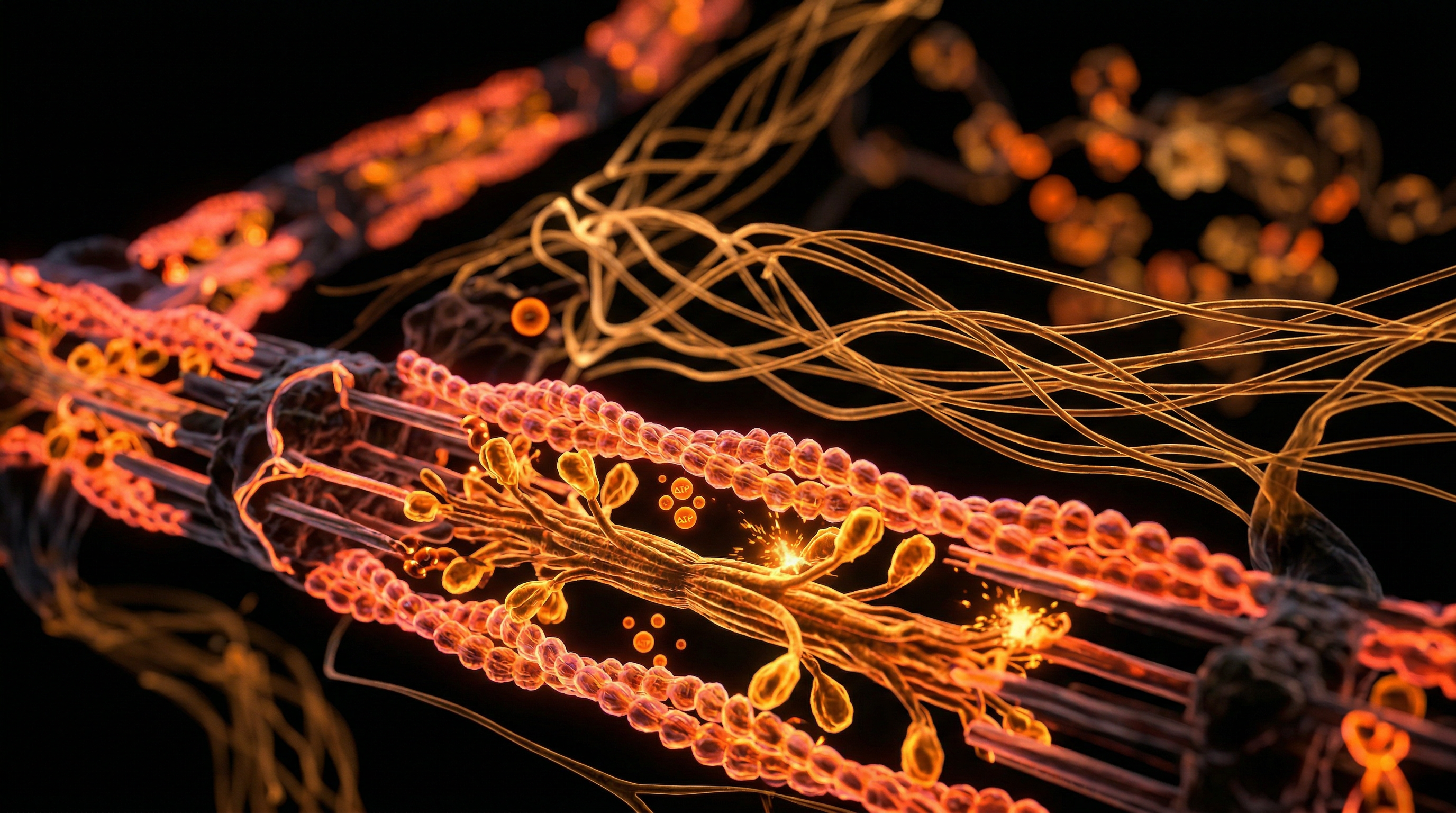
Chronic tension triggers the activation of myofibroblasts—specialised cells within the connective tissue that have contractile properties. Unlike standard muscle cells that relax after contraction, myofibroblasts can maintain a "tonic" pull for weeks or months without ATP (energy) consumption. In the chronically seated Briton, the psoas fascia is effectively "knotted" at a cellular level, creating a permanent state of tension that physical stretching alone cannot resolve.
Mechanotransduction and Gene Expression
The process of mechanotransduction—where cells convert mechanical loads into biochemical signals—is also compromised. When the psoas is compressed by hours of sitting, the mechanical pressure alters the gene expression of the resident cells. We see an upregulation of pro-inflammatory cytokines (such as IL-6 and TNF-alpha) within the muscle tissue itself. This creates a localised "micro-environment" of inflammation that spills over into the systemic circulation, contributing to the "inflammaging" profile seen in sedentary populations.
- Cellular Hypoxia: Prolonged sitting compresses the capillary beds within the psoas, leading to reduced oxygen delivery.
- Mitochondrial Stagnation: Lack of dynamic movement prevents the "flushing" of metabolic waste, leading to a buildup of lactic acid and reactive oxygen species (ROS).
Environmental Threats and Biological Disruptors
The British environment is uniquely designed to keep the psoas in a state of hyper-vigilance. Our modern "habitats"—from the terraced house to the glass-and-steel office block—serve as biological disruptors.
The Ergonomic Deception
The mainstream push for "ergonomic chairs" is often a double-edged sword. While they provide lumbar support, they encourage the very stillness that causes psoas atrophy. By supporting the body's weight entirely, these chairs allow the core stabilisers, including the psoas, to "switch off" or move into a state of sensory-motor amnesia. The body loses the ability to perceive the psoas, leaving it locked in a default state of tension.
Technological Cages
The "Tech Neck" phenomenon is inextricably linked to the psoas. As the head moves forward to look at a smartphone or laptop (a common sight on the London Underground), the centre of gravity shifts. To prevent the body from falling forward, the psoas must contract to stabilise the spine. This creates a "double-bind" of tension: the psoas is shortened by sitting and further tightened by the forward-leaning posture of digital life.
The "Stiff Upper Lip" and Emotional Suppression
In the UK, there is a long-standing cultural ethos of emotional stoicism. Biologically, the psoas is the primary muscle of emotional expression. When we experience fear or trauma, the psoas instinctively curls the body into a foetal position to protect the soft underbelly. When the British "stiff upper lip" prevents the outward expression of stress, that energy is redirected into the musculature. The psoas becomes a "storage locker" for unexpressed emotion and suppressed trauma.
Important Fact: Research in the field of somatics suggests that the psoas is so sensitive to emotional states that it can contract simply in response to an aggressive email or a stressful news broadcast, even if the person remains physically still.
The Cascade: From Exposure to Disease
The psoas is the "epicentre" of a biological cascade. When it remains constricted, the effects ripple through every system of the body, leading to a variety of conditions that the NHS often treats as unrelated symptoms.
1. The Respiratory-Circulatory Failure
As mentioned, the psoas-diaphragm link is vital. A constricted psoas keeps the diaphragm in a high, tight position. This necessitates "chest breathing," which uses the secondary respiratory muscles (scalenes and traps). This pattern of breathing keeps the body in a state of chronic hyperventilation, altering the pH of the blood and reducing the availability of oxygen to the brain.
2. Digestive and Reproductive Dysfunction
The psoas forms the "back wall" of the abdominal cavity. A chronically tight psoas physically compresses the viscera.
- IBS and Digestion: The constriction can interfere with the peristaltic movement of the intestines and put pressure on the enteric nervous system (the "second brain").
- Reproductive Health: In both men and women, psoas tension can restrict blood flow to the pelvic floor. In women, this is often linked to painful menstruation (dysmenorrhea); in men, it can contribute to prostate issues and erectile dysfunction.
3. The Cortisol-Psoas Feedback Loop
A tight psoas signals "danger" to the brain. The brain responds by triggering the adrenal glands to release cortisol and adrenaline. These hormones, in turn, increase muscle tension to prepare for action. This creates a closed-loop system: the tight muscle creates stress, and the stress creates a tighter muscle. Over years, this leads to adrenal fatigue, insulin resistance, and central adiposity (weight gain around the middle)—the classic "British middle-age spread."
4. Lumbar Disruption and Sciatica
A shortened psoas pulls the lumbar vertebrae forward and down. This increases the pressure on the intervertebral discs, leading to herniations and "slipped discs." Furthermore, the psoas sits in close proximity to the lumbar plexus of nerves. Tension here can compress the sciatic nerve, leading to the debilitating leg pain so common in the UK workforce.
What the Mainstream Narrative Omits
The standard medical model in the UK typically views back pain and anxiety through a reductionist lens. If you visit a GP with lower back pain, you are likely to receive NSAIDs (like Ibuprofen) or, in chronic cases, an MRI focusing on the bones and discs. This narrative is fundamentally flawed because it ignores the functional soft tissue dynamics.
The Failure of "Strength" Training
Mainstream fitness culture often suggests that the solution to back pain is to "strengthen the core" through sit-ups or planks. For someone with a constricted psoas, this is the worst possible advice. Traditional abdominal exercises often recruit the psoas rather than the transverse abdominis, further shortening the muscle and exacerbating the spinal compression. We are "strengthening" a muscle that is already over-active and exhausted.
The Pharmaceutical Cover-Up
The pharmaceutical industry benefits from the "seated life." Anxiety is treated with SSRIs, and muscle tension with relaxants. Neither of these addresses the physical reality of the psoas. By "numbing" the nervous system, these drugs allow individuals to continue sitting for 10 hours a day without feeling the immediate "alarm bells" of their body. This leads to a deeper, more entrenched state of biological decay.
The Trauma Connection
Mainstream medicine rarely acknowledges Somatic Trauma. The psoas stores the "charge" of incomplete survival responses. If you were in a car accident on the M1, your psoas contracted to protect you. If you didn't "shake out" that tension (as animals do in the wild), that contraction remains in the tissue for decades. The British seated life prevents the natural discharge of this energy, turning physical posture into a living record of past trauma.
The UK Context
Why is this particularly acute in the United Kingdom? Several factors converge to make Britain the "Psoas Constriction Capital" of Europe.
The Geography of the Commute
The UK has some of the longest average commute times in Europe. Whether it is the "Southern Rail" delay or the gridlock on the M6, millions of Britons are locked into bucket seats that force the pelvis into a posterior tilt, shortening the psoas for hours before the workday even begins.
The Pub and "Soft Seating" Culture
British social life often revolves around the pub or the "living room suite." Unlike cultures that utilise floor sitting (which encourages psoas flexibility and hip mobility), British furniture is designed for "maximum comfort," which biologically translates to "maximum collapse." These deep, soft sofas provide zero support for the ischial tuberosities (sit bones), causing the psoas to compensate for the lack of structural integrity.
The Climate Factor
The damp, cold climate of the UK encourages a "curling in" reflex. In colder months, the body naturally hunches to preserve core heat. Without the compensatory "opening up" of outdoor movement or heat-based therapies, this seasonal contraction becomes a year-round structural habit.
The NHS Burden
The financial strain on the NHS is often blamed on an ageing population or lifestyle diseases like Type 2 Diabetes. However, we argue that a significant percentage of these costs stem from the "Seated Life." Chronic psoas constriction leads to:
- Millions of lost workdays due to back pain.
- Increased demand for mental health services for anxiety/depression (driven by the psoas-amygdala link).
- Surgical interventions for hip and spine issues that could have been prevented somatically.
Protective Measures and Recovery Protocols
To break the cycle of the British Seated Life, we must move beyond standard stretching and into the realm of somatic re-education.
1. The Constructive Rest Position (CRP)
This is the gold standard for psoas release.
- Protocol: Lie on your back on a firm floor. Bend your knees and place your feet flat on the floor, hip-width apart. Let your arms rest by your sides. Do nothing.
- The Science: By placing the psoas in a position where it is neither stretched nor contracted, you allow the nervous system to "stand down." Over 15–20 minutes, the muscle begins to release its tonic grip through gravitational neutralisation.
2. Psoas-Aware Ergonomics
Stop using "lumbar support" that pushes the spine forward. Instead:
- Use a wedge cushion that tilts the pelvis slightly forward, encouraging a natural lumbar curve.
- Implement a 1:1 Sitting-to-Standing Ratio. For every hour sat, spend an hour standing or moving.
- Walk with a "psoas-driven" gait. Instead of reaching forward with the foot (which uses the quads), imagine the movement originating from the T12 vertebrae, allowing the leg to swing freely from the core.
3. Neurogenic Tremoring (TRE)
Developed by Dr David Berceli, Tension & Trauma Releasing Exercises (TRE) involve inducing a natural therapeutic shake in the muscles.
- Mechanism: This shaking is the body's innate way of discharging the "freeze" response stored in the psoas. For a Briton accustomed to emotional suppression, this physical "shaking off" of the day’s stress is a biological necessity.
4. Nutritional Support for Tissue Elasticity
To address the "densification" of the fascia:
- Magnesium Glycinate: Essential for muscle relaxation and the prevention of myofibroblast hyper-activity.
- Hydration with Electrolytes: Fascia requires water and salts to maintain its "sol" (fluid) state.
- Collagen and Vitamin C: To repair the micro-tears and inflammatory damage caused by chronic compression.
5. Somatic Breathwork
Focus on "360-degree breathing." Inhale into the back and sides of the ribs, not just the belly. This gently "massages" the psoas from the inside out via the diaphragmatic connection.
Summary: Key Takeaways
The crisis of the psoas in the UK is a microcosm of the modern human condition: a body designed for the savannah, trapped in a cubicle.
- The Psoas as a Messenger: Chronic psoas tension is a physical signal of "danger" that creates a perpetual state of anxiety and physiological stress.
- The UK Environment: British commuting, office culture, and furniture design are "psoas-antagonistic," leading to adaptive shortening and fascial densification.
- Beyond the Spine: Back pain, IBS, anxiety, and shallow breathing are often symptoms of a single root cause—the constricted psoas.
- Somatic Sovereignty: Recovery requires more than exercise; it requires a neurological "reset" through rest, tremoring, and conscious movement.
- The Suppressed Truth: The mainstream medical focus on drugs and surgery ignores the body’s innate capacity for somatic release, keeping the population in a state of manageable, profitable infirmity.
We must recognise that our posture is our biography. By releasing the psoas, we do more than fix a "bad back"—we liberate the nervous system from a cycle of ancient, unexpressed trauma, allowing the modern Briton to finally stand tall in a world designed to keep them folded.***
Author: Senior Biological Researcher, INNERSTANDING Field: Somatic Neurobiology & Evolutionary Physiology Date: October 2023
This article is provided for informational and educational purposes only. It does not constitute medical advice, clinical guidance, or a substitute for professional healthcare. Information reflects cited research at time of publication. Always consult a qualified healthcare professional before acting on any health information.
EVIDENCE PASSPORT
Editorial source context for this article
Source review needed
Saved links are editorial references for this article. They may support specific claims rather than every sentence. Open and assess each source in context. This passport does not independently verify them.
Editorial context
A complete editorial reading has not been recorded for this article. Source links remain available for you to open and assess directly.
Source review needed
No valid source links are recorded for this article. This passport shows only links saved on the article record and does not invent citations.
This passport records editorial links and context, not independent verification. Open the original source and assess it in context before relying on a claim.
Medical Disclaimer
The information in this article is for educational purposes only and does not constitute medical advice, diagnosis, or treatment. Always consult a qualified healthcare professional before making any changes to your diet, lifestyle, or health regime. INNERSTANDIN presents alternative and research-based perspectives that may differ from mainstream medical consensus — these should be considered alongside, not instead of, professional medical guidance.
Read Full DisclaimerContinue the thread
Keep this question moving.
Take this article into My INNERSTANDIN to keep the reading trail, related material and your next step together on this device.
Explore this in the Body Map
See where this hits your biology. Interactive anatomy, threats, and protective protocols.