
Reversing Metabolic Dysfunction-Associated Steatotic Liver Disease (MASLD)
Updated May 2026
Exploring the latest clinical insights into fatty liver disease, focusing on the impact of diet, insulin resistance, and bile acid signaling on liver fat accumulation.
Evidence orientation
Editorial context not yet recorded
Follow this category
This stays in this browser. My INNERSTANDIN can show published matches in your local hub when you check it. It does not send email, push, or alert notifications.
Local learning review
A private browser aid for revisiting ideas. It is not an alert or a health recommendation.
Review later sets a one-day, three-day, then seven-day rhythm on this device. Choose it only when you want to revisit this article.
The Silent Epidemic: Beyond the Nomenclature
For decades, the medical establishment categorised the accumulation of fat in the liver under the umbrella of Non-Alcoholic Fatty Liver Disease (NAFLD). However, this term was a misnomer, a diagnosis of exclusion that failed to capture the underlying aetiology of the condition. In 2023, global hepatology societies officially transitioned to the term Metabolic Dysfunction-Associated Steatotic Liver Disease (MASLD).
This shift is not merely semantic; it represents a fundamental acknowledgement that liver fat is a symptomatic manifestation of systemic metabolic collapse. MASLD is the hepatic component of metabolic syndrome, inextricably linked to insulin resistance, dyslipidaemia, and chronic systemic inflammation. It is a condition where the liver—the body’s premier metabolic laboratory—becomes a graveyard for surplus energy and environmental toxins.
According to the British Liver Trust, approximately 1 in 5 people in the UK are in the early stages of MASLD. Furthermore, liver disease is the only major cause of death still increasing in the UK, while mortality rates for other conditions like heart disease and cancer are falling.
To 'innerstand' MASLD is to recognise that the liver is not failing in isolation. It is reacting to an evolutionary mismatch: a biological system designed for scarcity and intermittent movement, now submerged in a sea of synthetic hyper-palatability and sedentary stagnation.
The Biological Mechanism: The Pathogenesis of Steatosis
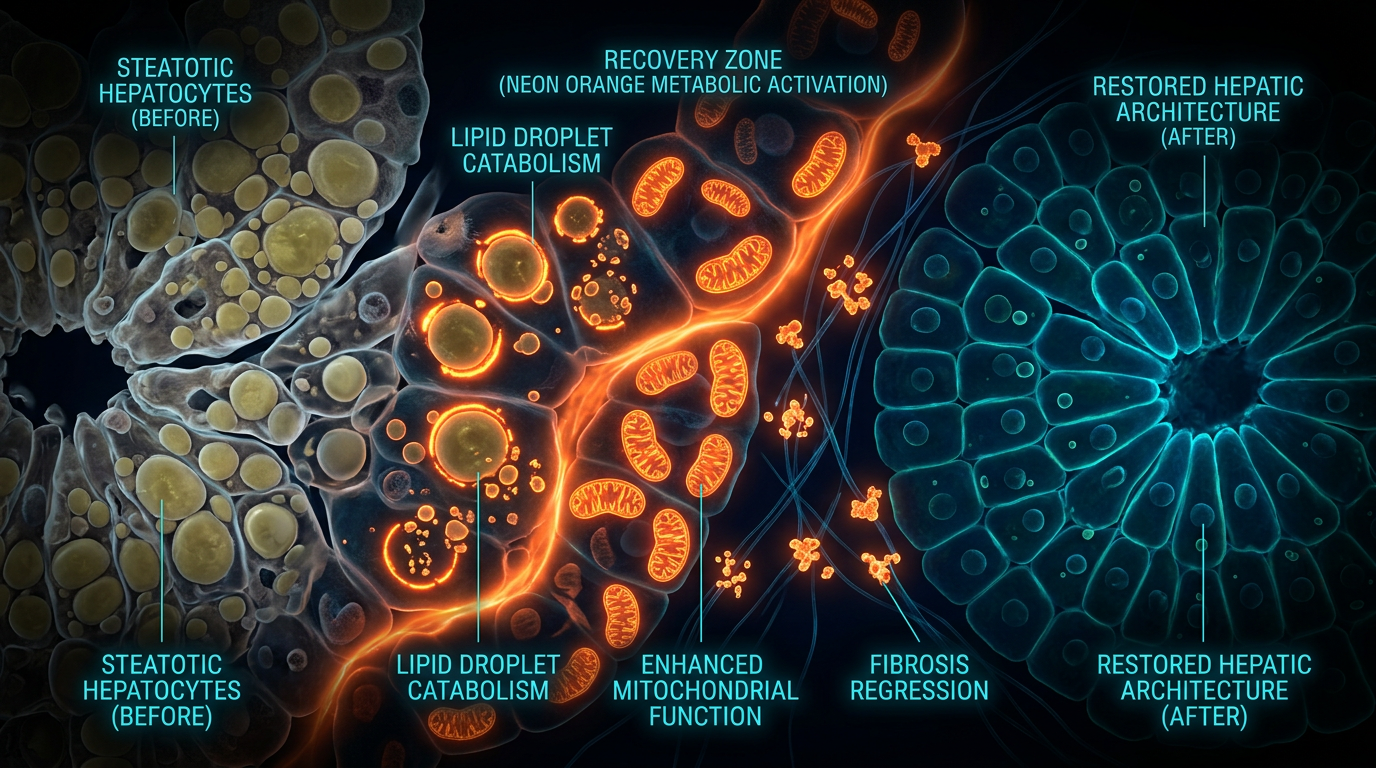
The transition from a healthy liver to a steatotic one is driven by an imbalance between lipid acquisition and lipid disposal. When the influx of fatty acids from the diet and adipose tissue exceeds the liver's capacity to oxidise them or export them as Very Low-Density Lipoproteins (VLDL), triglycerides begin to coalesce within hepatocytes.
De Novo Lipogenesis (DNL) and the Fructose Trap
While dietary fats are often blamed, the primary driver of MASLD in the modern Western diet is De Novo Lipogenesis (DNL)—the process of converting excess carbohydrates, particularly fructose, into fat. Unlike glucose, which can be utilised by every cell in the body, fructose is metabolised almost exclusively in the liver.
When the liver is bombarded with high-fructose corn syrup (HFCS) or concentrated fruit juices, it bypasses the normal rate-limiting steps of glycolysis. This triggers a massive surge in DNL, essentially forcing the liver to manufacture fat at an industrial rate. This process does not just create fat; it generates toxic by-products such as methylglyoxal, which induces oxidative stress and mitochondrial dysfunction.
Insulin Resistance: The Broken Valve
In a healthy state, insulin suppresses lipolysis (the breakdown of fat) in adipose tissue. However, in the insulin-resistant state characteristic of MASLD, the "valve" on our fat cells becomes leaky. Free fatty acids (FFAs) pour into the bloodstream and are shuttled directly to the liver via the portal vein. The liver, already struggling with its own internal fat production, becomes overwhelmed by this external deluge.
The Role of Mitochondrial Exhaustion
The mitochondria are the engines of the cell. In MASLD, these engines are "redlining." To cope with the excess fat, the liver attempts to increase beta-oxidation (fat burning). This creates an enormous amount of Reactive Oxygen Species (ROS). When the liver’s antioxidant defences—chiefly glutathione—are exhausted, the resulting oxidative stress damages the mitochondrial DNA, leading to a vicious cycle of energy failure and cellular death (apoptosis).
The Bile Connection: The Forgotten Detergent
A critical, yet often overlooked, component of MASLD reversal is the health of the biliary system. Bile is not just a digestive fluid for fat absorption; it is the liver’s primary waste disposal route.
Cholestasis and Toxic Backflow
Metabolic dysfunction often leads to "sluggish" bile, or subclinical cholestasis. When bile flow is impaired, the toxins that the liver has worked so hard to neutralise—heavy metals, pesticide residues, and metabolic end-products—cannot be excreted. Instead, they are reabsorbed or remain in the liver, where they exacerbate inflammation and fibrogenesis.
Bile Acids as Signalling Molecules
Modern research has revealed that bile acids act as potent hormones. They activate the Farnesoid X Receptor (FXR) and the TGR5 receptor, which regulate glucose metabolism and energy expenditure.
- FXR Activation: Suppresses DNL and improves insulin sensitivity.
- TGR5 Activation: Increases the conversion of inactive T4 thyroid hormone to active T3, boosting the metabolic rate.
In MASLD, the bile acid pool becomes deranged, losing its ability to signal the body to burn fat and maintain metabolic equilibrium.
Environmental Disruptors: The Truth-Exposing Reality
We cannot discuss MASLD without addressing the environmental "saboteurs" that have accelerated this crisis. The rise in liver disease correlates perfectly with the introduction of specific industrial chemicals into our food chain and living environments.
The Glyphosate Factor
Glyphosate, the world’s most widely used herbicide, is a significant contributor to hepatic dysfunction. It interferes with the shikimate pathway in our gut microbiome, leading to dysbiosis. A damaged gut lining (leaky gut) allows Lipopolysaccharides (LPS)—endotoxins from bacterial cell walls—to enter the portal circulation. When these endotoxins reach the liver, they activate Kupffer cells (the liver’s resident immune cells), triggering the inflammatory cascade that turns simple steatosis into Non-Alcoholic Steatohepatitis (NASH).
Endocrine Disrupting Chemicals (EDCs)
Phthalates, Bisphenol A (BPA), and "forever chemicals" (PFAS) are ubiquitous in the UK environment. These chemicals are "obesogens"—they interfere with hormonal signalling, particularly PPAR-gamma, which controls fat storage. These disruptors essentially "programme" the liver to store fat, even in the absence of caloric excess.
Data from the UK National Health Service (NHS) indicates that hospital admissions for liver disease have risen by almost 50% in the last decade, disproportionately affecting younger demographics who are more exposed to these environmental and dietary disruptors.
The Recovery Protocol: Restoring Hepatic Sovereignty
Reversing MASLD requires a multi-faceted approach that goes beyond the "eat less, move more" dogma. We must address the root causes: insulin resistance, oxidative stress, and impaired bile flow.
1. Metabolic Flexibility and Fasting
The liver needs time to clear the "backlog" of stored triglycerides. Intermittent fasting (16:8 or 20:4) and occasional prolonged fasts (24–48 hours) are the most potent tools for reversing MASLD.
- Autophagy: Fasting triggers cellular "housecleaning," allowing the liver to break down damaged proteins and organelles.
- Glycogen Depletion: Until the liver’s glycogen stores are depleted, it will not prioritise the burning of stored fat (lipolysis).
2. Nutritional Optimisation: The Anti-Steatotic Diet
The goal is to eliminate DNL triggers and provide the substrates for repair.
- Elimination of Fructose and Seed Oils: Remove HFCS and processed vegetable oils (linoleic acid), which promote lipid peroxidation and mitochondrial damage.
- Choline Sufficiency: Choline is essential for the production of Phosphatidylcholine, which is required to export fat out of the liver via VLDL. Excellent sources include organic eggs and beef liver.
- Cruciferous Vegetables: Broccoli, kale, and Brussels sprouts contain sulforaphane, which upregulates Phase II detoxification and boosts glutathione production.
3. Restoring Bile Flow and Gut Integrity
To reverse MASLD, we must "flush the pipes."
- TUDCA (Tauroursodeoxycholic Acid): A bile acid derivative that has been shown in clinical trials to reduce liver enzymes and protect hepatocytes from ER stress.
- Bitters: Herbs like dandelion root, artichoke leaf, and gentian stimulate natural bile production and gallbladder contraction.
- Targeted Probiotics: Strains like Lactobacillus rhamnosus GG can help strengthen the intestinal barrier, reducing the influx of LPS into the liver.
4. Micronutrient Catalysts
Certain compounds act as "metabolic keys" to unlock the liver’s regenerative potential:
- Alpha-Lipoic Acid (ALA): A "universal antioxidant" that improves insulin sensitivity and mitochondrial function.
- Milk Thistle (Silybin): Protects liver cell membranes and stimulates protein synthesis for regeneration.
- N-Acetyl Cysteine (NAC): The precursor to glutathione, the liver's master antioxidant.
The Myth of "Moderate" Alcohol and Sugar
The truth that the industry avoids is that there is no "safe" level of processed sugar when the liver is already compromised. Furthermore, the combination of alcohol and high-fructose consumption is metabolically synergistic—they exacerbate one another’s toxicity. For an individual with MASLD, the liver treats sugar and alcohol almost identically, leading to the same end-stage cirrhosis if left unchecked.
The Role of Circadian Biology
The liver is a highly rhythmic organ. Hepatic metabolism is governed by "clock genes." Disruption of the circadian rhythm—through blue light exposure at night or late-night eating—desynchronises liver function from the rest of the body. To reverse MASLD, one must align their eating window with daylight hours, allowing the liver to transition into "repair mode" during the darkness.
Conclusion: Innerstanding the Liver
MASLD is not a life sentence; it is a loud, biological protest against an incompatible environment. The liver possesses an extraordinary capacity for regeneration—it is the only organ that can regrow from a mere 25% of its original mass.
However, regeneration requires more than the absence of disease; it requires the presence of health. By removing the industrial disruptors (glyphosate, fructose, EDCs), restoring the flow of bile, and respecting the metabolic rhythms of our biology, we can shift the liver from a state of storage to a state of flow.
The path to reversing MASLD is a journey of hepatic sovereignty. It is about reclaiming the liver's role as the body’s protector, rather than its victim. In the words of the ancient Greeks, the liver (hepar) was considered the seat of the soul and the source of vitality. To heal the liver is, in a very real sense, to reclaim one's life.
Key Takeaways for Restoration:
- Prioritise Choline: 450–550mg daily to ensure fat can be exported from the liver.
- Engage Hormesis: Use cold exposure and heat (sauna) to stimulate Heat Shock Proteins and metabolic resilience.
- Test, Don't Guess: Monitor GGT (Gamma-Glutamyl Transferase) and ALT (Alanine Aminotransferase) levels, but also request a FibroScan to assess the actual degree of stiffness (fibrosis).
- Embrace Bitters: Incorporate bitter foods (arugula, radicchio) to maintain bile fluidity.
- Limit Polyunsaturated Fats (PUFAs): Excess omega-6 fats from seed oils are highly prone to oxidation within the liver, fueling the transition to NASH.
This article is provided for informational and educational purposes only. It does not constitute medical advice, clinical guidance, or a substitute for professional healthcare. Information reflects cited research at time of publication. Always consult a qualified healthcare professional before acting on any health information.
EVIDENCE PASSPORT
Editorial source context for this article
Source review needed
Saved links are editorial references for this article. They may support specific claims rather than every sentence. Open and assess each source in context. This passport does not independently verify them.
Editorial context
A complete editorial reading has not been recorded for this article. Source links remain available for you to open and assess directly.
Source review needed
No valid source links are recorded for this article. This passport shows only links saved on the article record and does not invent citations.
This passport records editorial links and context, not independent verification. Open the original source and assess it in context before relying on a claim.
Medical Disclaimer
The information in this article is for educational purposes only and does not constitute medical advice, diagnosis, or treatment. Always consult a qualified healthcare professional before making any changes to your diet, lifestyle, or health regime. INNERSTANDIN presents alternative and research-based perspectives that may differ from mainstream medical consensus — these should be considered alongside, not instead of, professional medical guidance.
Read Full DisclaimerContinue the thread
Keep this question moving.
Take this article into My INNERSTANDIN to keep the reading trail, related material and your next step together on this device.
Explore this in the Body Map
See where this hits your biology. Interactive anatomy, threats, and protective protocols.