
Sauerkraut vs. Sepsis: Probiotic Anti-Pathogenic Mechanisms
Updated May 2026
Lactic acid bacteria produce bacteriocins that actively neutralise hospital-acquired infections. This article explores how fermented cabbage serves as a biological shield against antibiotic-resistant pathogens.
Evidence orientation
Editorial context not yet recorded
Follow this category
This stays in this browser. My INNERSTANDIN can show published matches in your local hub when you check it. It does not send email, push, or alert notifications.
Local learning review
A private browser aid for revisiting ideas. It is not an alert or a health recommendation.
Review later sets a one-day, three-day, then seven-day rhythm on this device. Choose it only when you want to revisit this article.
Overview
In the modern clinical landscape, the word Sepsis evokes a sense of terminal dread. It is the "silent killer," a systemic inflammatory response to infection that claims approximately 48,000 lives annually in the United Kingdom alone. For decades, the medical establishment has approached this crisis with a singular, increasingly blunt instrument: broad-spectrum antibiotics. However, as the era of antimicrobial resistance (AMR) reaches a boiling point, the limitations of this "scorched earth" policy are becoming lethally apparent.
We at INNERSTANDING propose a radical, yet ancient, alternative—or rather, a biological reinforcement. The humble fermented cabbage, known globally as Sauerkraut, is not merely a culinary relic; it is a sophisticated, self-assembling delivery system for Lactic Acid Bacteria (LAB) and their potent metabolic by-products. These microorganisms do not simply "aid digestion"; they engage in high-level biochemical warfare against the very pathogens—Staphylococcus aureus, Klebsiella pneumoniae, and Clostridioides difficile—that trigger the septic cascade.
This article serves as a deep-state biological briefing on the mechanisms by which fermented cruciferous vegetables act as a shield against hospital-acquired infections (HAIs). We will move beyond the superficial "gut health" narrative to examine the bacteriocins, biosurfactants, and immunomodulatory signals that allow sauerkraut to neutralise pathogens that are currently mocking our most advanced pharmaceutical interventions.
Fact: Sepsis is responsible for 1 in 5 deaths globally. In the UK, it kills more people every year than bowel, breast, and prostate cancer combined, yet the role of the microbiome in preventing systemic translocation remains largely ignored by NHS standard-of-care protocols.
The Biology — How It Works
To understand why sauerkraut is a potent anti-septic agent, one must first understand the process of Lactic Acid Fermentation (Lacto-fermentation). Unlike industrial vinegar-based pickling, which kills all microbial life, wild fermentation is a selective evolutionary pressure cooker.
The Microbial Succession
When raw cabbage is shredded and salted, a specific ecological succession begins. Initially, Leuconostoc mesenteroides begins the work, lowering the pH and creating an anaerobic environment. As the acidity rises, the more robust Lactobacillus plantarum and Lactobacillus brevis take over. These species are the "heavy hitters" of the probiotic world.
The Cabbage Substrate
Cabbage (Brassica oleracea) provides more than just a home for bacteria. It contains high concentrations of Glucosinolates, which, when broken down by the enzyme myrosinase (activated during shredding), produce Isothiocyanates. These compounds have documented anti-microbial and anti-carcinogenic properties. When LAB ferment cabbage, they enhance the bioavailability of these compounds, creating a "synbiotic" effect where the prebiotic fibre and the probiotic bacteria work in a recursive loop of fortification.
Survival in the Gastric Gauntlet
A critical failure of many commercial "probiotic" supplements is their inability to survive the highly acidic environment of the human stomach (pH 1.5 to 3.5). Sauerkraut-derived LAB, however, are naturally selected for acid tolerance. Having thrived in a fermented environment of pH 3.5, they are metabolically primed to survive the transit into the small intestine and colon, where they can begin the work of pathogen exclusion.
Mechanisms at the Cellular Level
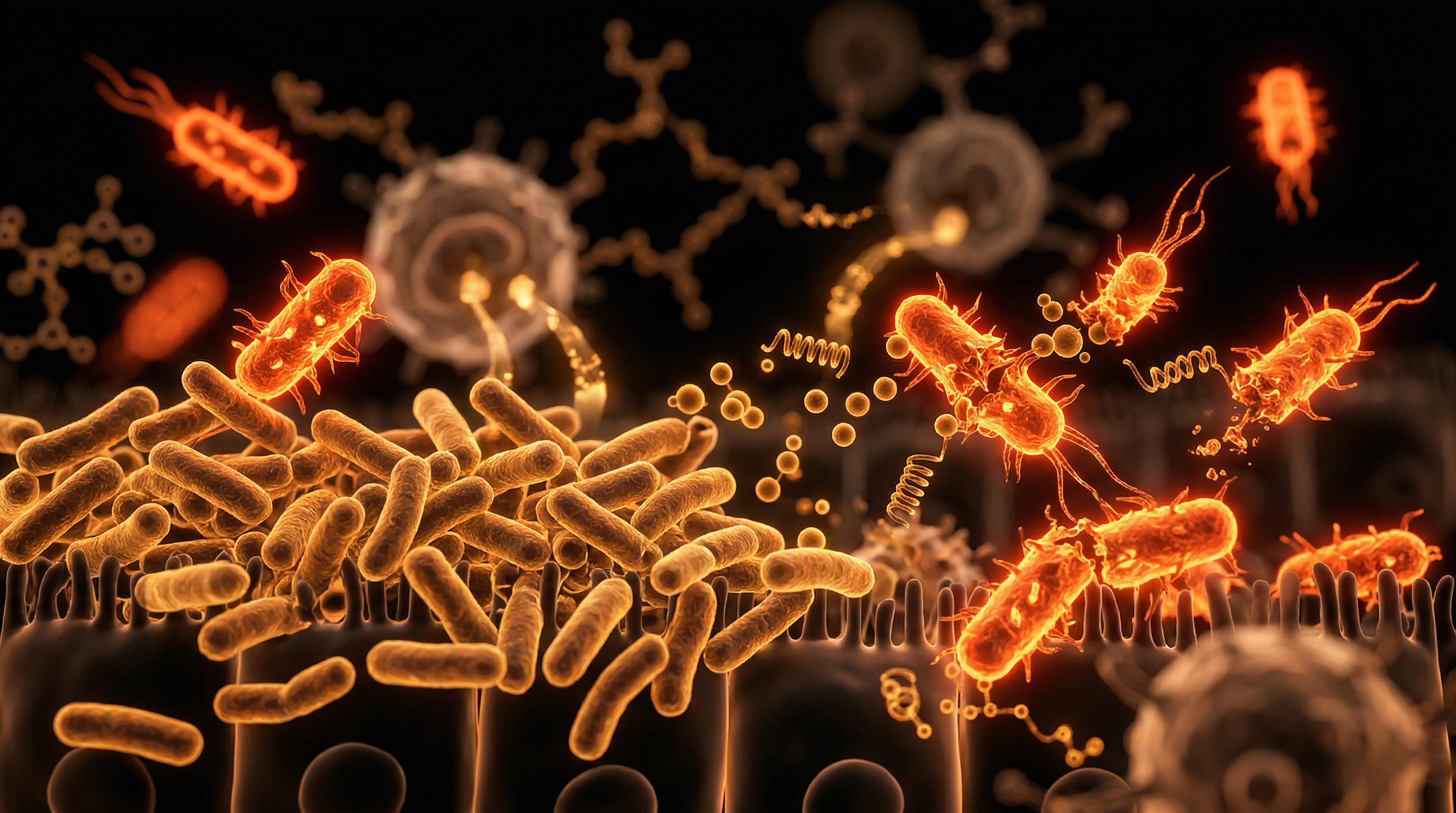
The "magic" of sauerkraut is actually a series of precise biochemical engagements at the cellular level. When we consume raw, unpasteurised sauerkraut, we are deploying a microscopic army equipped with several classes of "molecular weaponry."
1. Bacteriocins: The Precision Harpoons
Bacteriocins are ribosomally synthesised antibacterial peptides produced by Lactic Acid Bacteria. Unlike broad-spectrum antibiotics, which kill indiscriminately, bacteriocins are targeted.
- Class I (Lantibiotics): Such as Nisin, these create pores in the cytoplasmic membrane of Gram-positive pathogens like Staphylococcus aureus (the primary driver of sepsis).
- Class II (Non-lantibiotics): These small, heat-stable peptides destabilise the membrane integrity of competitors, effectively "bleeding out" the pathogen’s cellular contents.
2. Competitive Inhibition and Adhesion
Pathogens cause sepsis by adhering to the intestinal epithelium and "leaking" into the bloodstream (translocation). Lactobacillus plantarum possesses specialised Adhesins (surface proteins) that allow it to bind to the mucus layer of the gut more tightly than pathogens. By occupying the "docking ports" on our cells, LAB physically block pathogens from gaining a foothold.
3. Quorum Sensing Interference
Bacteria talk to each other through a process called Quorum Sensing (QS). This is how a colony of Pseudomonas "decides" to turn on its virulence factors once it reaches a certain population density. Research indicates that LAB produce molecules that interfere with these signals—essentially "jamming" the communication lines of the enemy. If the pathogens cannot coordinate, they cannot launch the systemic attack required to trigger sepsis.
4. Organic Acid Production
The primary metabolite of fermentation is Lactic Acid, but LAB also produce Acetic Acid and Propionic Acid. These Short-Chain Fatty Acids (SCFAs) do two things:
- They lower the local pH to a level that denatures the enzymes of pathogenic bacteria.
- They serve as the primary fuel source for Enterocytes (gut lining cells), strengthening the physical barrier of the gut (the "Tight Junctions").
Key Term: Competitive Exclusion — The process where beneficial microbes outcompete pathogens for nutrients and space, effectively starving the harmful bacteria out of the ecosystem.
Environmental Threats and Biological Disruptors
The rise in sepsis cases is not an accident of nature; it is a direct result of the systematic degradation of our internal and external microbial environments. As a biological researcher, I must highlight the "unseen" disruptors that make the modern human a "sitting duck" for septic shock.
The Antibiotic Paradox
The very drugs used to treat sepsis—antibiotics—often pave the way for it. By wiping out the commensal LAB population, antibiotics leave behind a "biological vacuum." This vacuum is rapidly filled by resistant strains like MRSA or Vancomycin-resistant Enterococci (VRE). Without the "police force" of bacteriocin-producing LAB, these pathogens overgrow unchecked.
Glyphosate and the Shikimate Pathway
A major "suppressed truth" in modern immunology is the impact of Glyphosate (the active ingredient in many herbicides) on the gut. Glyphosate is chemically classified as an antibiotic. It targets the Shikimate pathway, which humans do not have, but our beneficial gut bacteria do. When we consume glyphosate-sprayed grains or vegetables, we are essentially taking a slow-release antibiotic that selectively kills our protective LAB while leaving many pathogens intact.
The Sterility Delusion
Our obsession with antibacterial soaps, chlorinated water, and ultra-pasteurised food has created an "evolutionary mismatch." We have evolved for millennia in the presence of soil-based organisms and fermented foods. By removing these, we have "atrophied" our immune system’s ability to recognise and neutralise low-level threats before they escalate into systemic sepsis.
The Cascade: From Exposure to Disease
How does a minor infection in a finger or a routine hospital procedure turn into a life-threatening septic event? It follows a predictable, yet preventable, cascade.
Stage 1: Dysbiosis and Barrier Failure
It begins in the gut. Due to poor diet (high sugar, low fibre) and environmental toxins, the population of Lactobacillus and Bifidobacterium collapses. The Tight Junctions—the protein "staples" that keep our gut wall waterproof—begin to fail. This is Leaky Gut Syndrome (Intestinal Permeability).
Stage 2: Translocation of Pathogens and LPS
Gram-negative bacteria in the gut shed a toxin called Lipopolysaccharide (LPS). In a healthy person with a "sauerkraut-fortified" gut, LPS is contained. In the dysbiotic patient, LPS leaks into the portal vein and the systemic circulation.
Stage 3: The Cytokine Storm
The immune system detects LPS in the blood and enters a state of high alert. It releases a flood of pro-inflammatory cytokines (TNF-alpha, IL-1, IL-6). This is intended to kill the invader, but in high volumes, it begins to damage the host's own organs.
Stage 4: Multi-Organ Failure
The systemic inflammation causes small blood clots to form, cutting off oxygen to the kidneys, liver, and heart. This is the definition of sepsis. By the time a patient reaches this stage, the survival rate drops by nearly 8% for every hour that treatment is delayed.
Research Insight: Studies have shown that the administration of Lactobacillus plantarum can significantly reduce the levels of circulating LPS and "re-seal" the tight junctions within 48 to 72 hours of intervention.
What the Mainstream Narrative Omits
The reason you do not see sauerkraut being served in NHS recovery wards is not due to a lack of science; it is due to a lack of patentability.
The Patent Problem
A pharmaceutical company cannot patent a 2,000-year-old process of fermenting cabbage with salt. Consequently, there is no "medical representative" walking into a GP’s office to promote the anti-septic properties of Lactobacillus. The medical-industrial complex is incentivised to wait for the "crisis point"—where expensive ICU beds, ventilators, and patented fourth-generation antibiotics are required.
The "War on Bacteria" Myth
Mainstream medicine still largely operates under a 19th-century "Germ Theory" model that views all bacteria as enemies to be eradicated. This "War on Bacteria" fails to recognise that human beings are holobionts—composite organisms that are 90% microbial by cell count. By attempting to "sterilise" the patient to save them from sepsis, doctors often destroy the very biological shield (the microbiome) that could have prevented the systemic collapse in the first place.
The Suppression of "Bacteriocin" Research
While there is a mountain of peer-reviewed data on the efficacy of bacteriocins against MRSA, these natural compounds are rarely discussed in clinical settings. Why? Because the production of purified bacteriocins as drugs is complex, whereas the production of "living" bacteriocins via sauerkraut is free. The system prioritises the "product" over the "process."
The UK Context
The United Kingdom is currently facing a "perfect storm" regarding sepsis and gut health.
The Crisis of the British Gut
The UK has one of the highest consumptions of ultra-processed foods (UPF) in Europe, with over 50% of the average diet consisting of "food-like substances." These foods are devoid of the fibres (prebiotics) required to sustain the LAB that produce anti-septic bacteriocins. We are, as a nation, "microbiologically malnourished."
The NHS Burden
The NHS is currently crippled by "delayed discharge" cases, many of which are caused by hospital-acquired infections (HAIs). A patient enters for a routine hip replacement and leaves with a C. difficile infection that leads to sepsis. The standard UK hospital diet—often consisting of white bread, sugary yoghurts, and overcooked vegetables—actually feeds the pathogens while starving the beneficial microbes.
The Loss of Tradition
Historically, Britain had a rich tradition of fermented foods (from real ales to fermented "pottage"). The industrial revolution and the rise of the supermarket "fast-food" culture have erased these protective dietary habits. Reintroducing sauerkraut into the British diet is not a "wellness trend"; it is a vital public health necessity to reduce the burden on our failing healthcare infrastructure.
Protective Measures and Recovery Protocols
If we are to move from a state of vulnerability to one of biological resilience, we must implement specific, science-based protocols. This is the "inner standing" of probiotic medicine.
1. The "Daily Ritual" of Fermentation
To maintain a protective bacteriocin "shield," one should consume 1-2 tablespoons of raw, unpasteurised sauerkraut with at least two meals a day.
- Criteria: Look for sauerkraut in the refrigerated section, not on the shelf. If it is shelf-stable, it has been pasteurised (heated), which kills the beneficial LAB and destroys the anti-septic enzymes.
- Diversity: Use "Wild Ferments." These contain a broader spectrum of strains (up to 30 different species) compared to laboratory-grown probiotic pills which may only contain 2 or 3.
2. The Post-Antibiotic Rescue
If you are forced to take a course of antibiotics, the "Sauerkraut Protocol" is essential.
- Do not wait until the course is finished. Start consuming fermented vegetables 2 hours after each antibiotic dose.
- Focus on L. plantarum dominant ferments, as these are the most resistant to antibiotic interference and the most aggressive in re-colonising the mucosal lining.
3. Avoiding the "Microbiome Killers"
- Chlorinated Water: Use a high-quality filter. Chlorine is added to tap water specifically to kill bacteria. It does not distinguish between the "bad" bacteria in the pipes and the "good" bacteria in your gut.
- Artificial Sweeteners: Aspartame and sucralose have been shown to turn healthy gut bacteria into "pathogenic" variants that can more easily cross the gut barrier.
4. Making Your Own: The Biological Shield
The most potent sauerkraut is the one you make in your own kitchen. The bacteria on your hands and in your home environment co-evolve with you.
- Recipe: Cabbage + 2% high-quality sea salt (celtic or himalayan).
- Technique: Massage until a brine forms. Pack tightly into a jar, ensuring the cabbage is submerged (anaerobic).
- Time: Ferment for at least 21 days. This is crucial—the most complex bacteriocins are produced in the later stages of fermentation (the "acidic plateau").
Pro-Tip: Drink the "Sauerkraut Brine." This liquid contains the highest concentration of exopolysaccharides and dissolved bacteriocins, providing an immediate "rinse" of the GI tract.
Summary: Key Takeaways
- Sepsis is a Failure of the Barrier: Systemic infection is only possible when the gut barrier and the commensal microbiome have been compromised.
- Lactic Acid Bacteria (LAB) are Bio-Warriors: Strains found in sauerkraut, such as L. plantarum, produce bacteriocins that specifically target and kill sepsis-inducing pathogens like MRSA.
- The "Synbiotic" Advantage: Cabbage provides the "ammunition" (glucosinolates), while fermentation provides the "soldiers" (LAB).
- Industrial Sabotage: Modern environmental factors like glyphosate and over-reliance on antibiotics are "disarming" the human population, leading to the current sepsis crisis.
- The UK Sepsis Crisis is Preventable: By shifting from an "eradication" model of medicine to a "fortification" model using fermented foods, we can drastically reduce the incidence of hospital-acquired infections.
- Raw is Required: Pasteurisation destroys the anti-pathogenic potential of sauerkraut. It must be "living" to be effective.
We are currently in a biological arms race. The pathogens are evolving faster than our labs can produce new drugs. Our only hope lies in returning to the primary alliance: the symbiotic relationship between humans and the lactic acid-producing microbes that have defended us for millennia. The jar of sauerkraut on your counter is not just food—it is a sophisticated, self-replicating biological defence system. Use it.
"References for Further Study (Innerstanding Database):"
- Mechanism of Nisin-mediated membrane pore formation.
- Lactobacillus plantarum and the restoration of intestinal tight junctions.
- The impact of Glyphosate on the Shikimate Pathway of the Human Microbiome.
- Bacteriocin production as a probiotic trait: survival in the mammalian GI tract.
This article is provided for informational and educational purposes only. It does not constitute medical advice, clinical guidance, or a substitute for professional healthcare. Information reflects cited research at time of publication. Always consult a qualified healthcare professional before acting on any health information.
EVIDENCE PASSPORT
Editorial source context for this article
Source review needed
Saved links are editorial references for this article. They may support specific claims rather than every sentence. Open and assess each source in context. This passport does not independently verify them.
Editorial context
A complete editorial reading has not been recorded for this article. Source links remain available for you to open and assess directly.
Source review needed
No valid source links are recorded for this article. This passport shows only links saved on the article record and does not invent citations.
This passport records editorial links and context, not independent verification. Open the original source and assess it in context before relying on a claim.
Medical Disclaimer
The information in this article is for educational purposes only and does not constitute medical advice, diagnosis, or treatment. Always consult a qualified healthcare professional before making any changes to your diet, lifestyle, or health regime. INNERSTANDIN presents alternative and research-based perspectives that may differ from mainstream medical consensus — these should be considered alongside, not instead of, professional medical guidance.
Read Full DisclaimerContinue the thread
Keep this question moving.
Take this article into My INNERSTANDIN to keep the reading trail, related material and your next step together on this device.
Explore this in the Body Map
See where this hits your biology. Interactive anatomy, threats, and protective protocols.
Dig deeper in the Library
Free, longform PDF volumes that go beyond headlines into mechanisms and references.