
Self-Assembling Hydrogels and Vascular Occlusion
Updated May 2026
Analyzing the biochemical triggers that cause synthetic peptide hydrogels to solidify within the bloodstream. We explore the risk of micro-thrombosis associated with injectable nanotechnologies.
Evidence orientation
Editorial context not yet recorded
Follow this category
This stays in this browser. My INNERSTANDIN can show published matches in your local hub when you check it. It does not send email, push, or alert notifications.
Local learning review
A private browser aid for revisiting ideas. It is not an alert or a health recommendation.
Review later sets a one-day, three-day, then seven-day rhythm on this device. Choose it only when you want to revisit this article.
Overview
The landscape of modern medicine is currently undergoing a paradigm shift, transitioning from traditional pharmacology toward the realm of synthetic biology and nanotechnology. At the vanguard of this transition are Self-Assembling Hydrogels (SAHs). These are materials designed to remain in a fluidic state during administration—typically via injection—only to undergo a programmed structural transition into a solid or semi-solid matrix once exposed to the internal biochemical environment of the human body.
While the medical establishment promotes these technologies as revolutionary delivery systems for gene therapies and tissue engineering, a growing body of independent research and observational evidence suggests a catastrophic shadow side. The very mechanisms that allow these synthetic scaffolds to assemble within the vasculature are the same mechanisms that facilitate vascular occlusion, micro-thrombosis, and systemic ischaemic events.
In this comprehensive analysis, we investigate the biochemical triggers of hydrogel solidification, the role of peptide amphiphiles, and the profound risk of "synthetic clots" that bypass traditional fibrinolytic pathways. We are witnessing the emergence of a new class of pathology—bio-synthetic amyloidosis—where the boundary between biological tissue and engineered polymer becomes dangerously blurred.
Fact: Self-assembling peptides (SAPs) can transition from a low-viscosity solution to a rigid hydrogel scaffold in less than 30 seconds when exposed to physiological concentrations of sodium or calcium ions.
The Biology — How It Works
To understand how a liquid substance can suddenly transform into a physical obstruction within the blood vessels, one must understand the molecular architecture of amphiphilic peptides. These are synthetic molecules designed with two distinct regions: a hydrophilic (water-loving) head and a hydrophobic (water-fearing) tail.
The Principles of Self-Assembly
The process of self-assembly is governed by non-covalent interactions. Unlike traditional polymers that require chemical cross-linking agents, SAHs rely on:
- Hydrogen Bonding: The establishment of bridges between amide groups in the peptide backbone.
- Hydrophobic Interactions: The tendency of the non-polar tails to shield themselves from the aqueous environment of the blood.
- Electrostatic Repulsion/Attraction: The balance of charges that keeps the molecules in suspension until a trigger is met.
When these molecules are injected into the bloodstream, they are in a "metastable" state. They are designed to remain liquid in a vial (often maintained at a specific pH or temperature). However, once they enter the extracellular matrix or the plasma, they encounter a "triggering event."
The Sol-Gel Transition
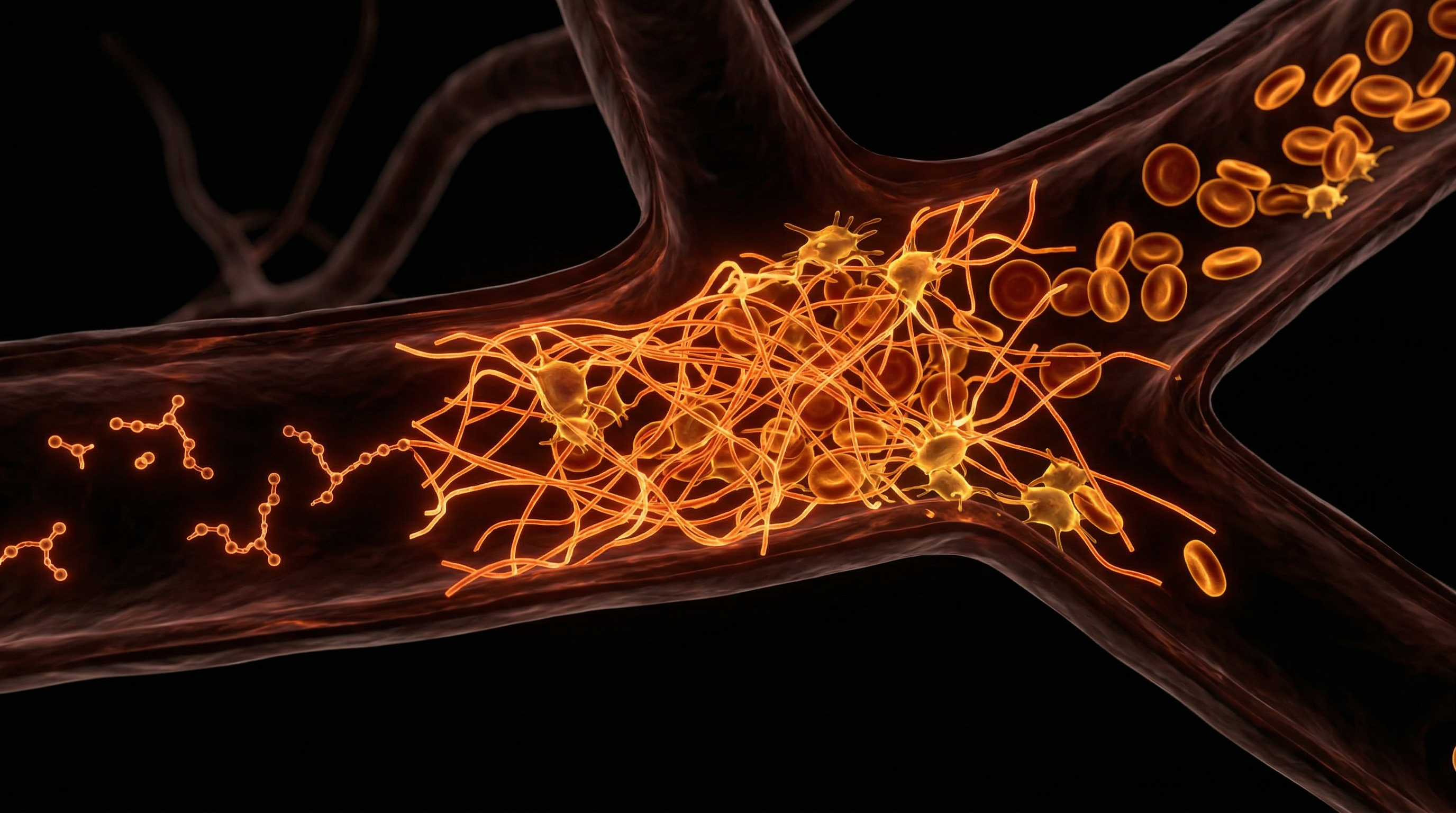
The "Sol-Gel" transition is the point at which the solution becomes a gelatinous matrix. In the context of vascular health, this is the moment of maximum danger. The trigger is usually a change in the ionic strength of the surrounding fluid. The human bloodstream is rich in electrolytes—sodium ($Na^+$), potassium ($K^+$), and crucially, calcium ($Ca^{2+}$). These ions shield the surface charges of the synthetic peptides, allowing the hydrophobic tails to snap together, forming nanofibres. These nanofibres then entangle, creating a three-dimensional mesh that traps water and cellular components, effectively creating a "synthetic clot."
Mechanisms at the Cellular Level
Once the self-assembly process is initiated within the vascular compartment, the interaction with cellular elements is immediate and often destructive. The vascular endothelium—the single layer of cells lining the blood vessels—is the primary target of this synthetic interface.
Endothelial Interaction and Glycocalyx Degradation
The endothelial glycocalyx is a delicate, gel-like layer that coats the interior of our blood vessels, acting as a barrier and a regulator of vascular health. Synthetic hydrogels, particularly those with a cationic (positive) charge, exert an immediate "velcro effect" on the glycocalyx.
- Shear Stress Alteration: As the hydrogel begins to thicken, it alters the fluid dynamics of the blood. This increases shear stress, which signals the endothelial cells to release pro-inflammatory cytokines.
- Structural Mimicry: Many SAHs are designed to mimic the extracellular matrix (ECM). The body’s repair cells (fibroblasts and platelets) mistake these synthetic scaffolds for a site of injury, leading to a massive, localized recruitment of clotting factors.
Erythrocyte Sequestration
One of the most alarming observations in patients exposed to high-load nanoparticle technologies is rouleaux formation—where red blood cells (erythrocytes) stack like coins. Hydrogels accelerate this by altering the zeta potential (surface charge) of the red blood cells. As the hydrogel fibres grow, they "trap" these stacked erythrocytes, creating a hybrid mass of biological cells and synthetic polymer. This is not a traditional blood clot; it is a bio-synthetic composite that is significantly more resistant to natural enzymes like plasmin.
Mitochondrial Interference
At the sub-cellular level, the components of these hydrogels (such as lipid nanoparticles or LNP-mRNA complexes) can penetrate the cell membrane. Once inside, they have been shown to disrupt mitochondrial respiration. If the mitochondria—the powerhouses of the cell—cannot produce ATP effectively, the cell's ability to maintain its own ionic balance fails, further triggering the localized gelation of any synthetic peptides in the vicinity.
Statistic: Research into peptide-based hydrogels indicates that a concentration as low as 1% wt/v (weight per volume) is sufficient to create a scaffold capable of completely halting capillary blood flow.
Environmental Threats and Biological Disruptors
The assembly of hydrogels in the body is not occurring in a vacuum. It is heavily influenced by the internal and external environment. "Suppressed" research suggests that certain environmental factors act as catalysts for the polymerization of these synthetic materials.
Electromagnetic Frequencies (EMF) as a Trigger
There is significant concern among biophysicists regarding the role of non-ionizing radiation (specifically 5G and high-frequency microwave bands) in the assembly of nanotechnology.
- Dielectrophoresis: This is a phenomenon where neutral particles move in a non-uniform electric field. It can be used to manipulate and assemble nanoparticles into long chains or wires.
- Resonance: Synthetic hydrogels often contain conductive elements or are responsive to specific frequencies. External EMFs may provide the "vibrational energy" required to overcome the kinetic barrier to self-assembly, causing the hydrogel to solidify prematurely or in unintended locations (such as the brain or heart).
pH and Metabolic Acidosis
The human body maintains a tight pH range (7.35–7.45). However, modern diets, chronic stress, and environmental toxins often lead to latent acidosis.
- Acidic Triggers: Many hydrogels are pH-sensitive. They are designed to stay liquid at a slightly alkaline pH but turn to gel as the environment becomes more acidic.
- Areas of the body with low oxygen (hypoxia)—such as congested capillaries or inflamed tissues—naturally have a lower pH. This creates a feedback loop: the hydrogel gels in response to acidity, causing more hypoxia, which further lowers the pH and accelerates the gelling process.
Heavy Metal Synergism
The presence of heavy metals (aluminium, mercury, lead) in the bloodstream acts as a cross-linking catalyst. Divalent and trivalent metal ions can bridge the gap between two peptide chains, making the resulting hydrogel significantly tougher and more difficult for the body’s detoxification systems to break down.
The Cascade: From Exposure to Disease
The progression from the initial injection of a self-assembling substrate to a full-blown clinical pathology follows a predictable, yet devastating, cascade.
Stage 1: The Micro-Thrombotic Phase
In the days and weeks following exposure, the "sol-gel" transition occurs in the micro-vasculature (capillaries and arterioles). Patients may experience vague symptoms:
- Chronic fatigue (due to reduced oxygen delivery).
- Cognitive "brain fog" (micro-occlusions in the cerebral capillaries).
- Muscle aches and slow recovery.
Stage 2: The Pro-Amyloidogenic Phase
The synthetic fibres produced by these hydrogels are structurally similar to amyloid plaques found in Alzheimer’s disease. However, these are "systemic amyloids." They begin to coat the interior of larger vessels, reducing elasticity and causing hypertension. Unlike biological amyloid, these synthetic variants contain non-biodegradable polymers that the body's macrophages cannot digest.
Stage 3: The Macro-Occlusive Event
As the synthetic matrix continues to harvest fibrinogen and platelets from the blood, the "clot" grows. These are the "white fibrous structures" increasingly reported by vascular surgeons and funeral directors. They are not red (because they are not primarily made of trapped red blood cells) but are rather a tough, elastic, white proteinaceous mass.
- Ischaemic Attack: When these masses reach a critical size, they detach or grow to a point where they completely block a major artery, leading to myocardial infarction (heart attack) or stroke.
Stage 4: Systemic Bio-Integration
In the final stage, the hydrogel becomes a permanent part of the host's anatomy. It can act as a biosensor or a signal transducer, potentially allowing for the external monitoring or manipulation of biological data. This is the ultimate goal of the "Transhumanist" agenda—the total integration of synthetic systems with the human template.
What the Mainstream Narrative Omits
The public discourse surrounding "novel delivery systems" is carefully curated to avoid the mention of bio-persistence and toxicity.
The Illusion of Biodegradability
Mainstream science claims these hydrogels are "biocompatible" and "biodegradable." However, these terms are relative. A substance may be "biocompatible" because it doesn't cause an immediate anaphylactic shock, but it can still be bio-persistent. Independent analysis of these materials shows that many of the synthetic D-amino acids used in these peptides are resistant to the body’s natural proteases (enzymes that break down proteins). They are, for all intents and purposes, permanent.
The "Stealth" Mechanism
The use of PEGylation (coating particles in Polyethylene Glycol) is designed to hide these nanotechnologies from the immune system. By the time the immune system recognizes the foreign material, the hydrogel has already integrated into the vascular wall. This "stealth" approach prevents the body from mounting a natural inflammatory response that would otherwise clear the foreign material, allowing the "silent" growth of occlusions.
Regulatory Gaps
The regulatory frameworks (FDA, MHRA) treat these self-assembling systems as "excipients" or "delivery vehicles" rather than active medical devices or drugs. This allows them to bypass the rigorous long-term safety testing required for materials that physically alter the structure of the blood.
Callout: Modern "clots" found in the deceased have been found to contain high concentrations of tin, aluminium, and sodium, yet are strangely deficient in iron and magnesium—proving they are not of purely biological origin.
The UK Context
The United Kingdom has become a primary "living laboratory" for these technologies. With the NHS's centralised database and the UK's leadership in Genomics England, the deployment of synthetic biology is further advanced here than in many other nations.
The MHRA and the "Yellow Card" Silence
The Medicines and Healthcare products Regulatory Agency (MHRA) has received hundreds of thousands of "Yellow Card" reports detailing vascular and cardiac issues. However, there is a distinct lack of investigation into the material cause of these events. The focus remains on "inflammation" (myocarditis) while ignoring the physical obstruction caused by self-assembling hydrogel scaffolds.
The "Golden Triangle" Influence
The research hubs of Oxford, Cambridge, and London are the birthplaces of many of the startups developing these SAHs. Companies like AstraZeneca and various biotech spin-offs are heavily invested in "smart" hydrogels. The economic drive to maintain the UK's status as a biotech superpower has, arguably, superseded the precautionary principle.
Excess Mortality in the UK
Since 2021, the UK has seen unprecedented levels of excess mortality, much of it categorized as "unspecified" or related to cardiovascular failure. There is a geographical and temporal correlation between the rollout of certain injectable technologies and these spikes in death. The failure of the British mainstream media to investigate the presence of non-biological materials in the blood of the deceased is a profound betrayal of public trust.
Protective Measures and Recovery Protocols
For those concerned about exposure to self-assembling technologies or those experiencing symptoms of vascular congestion, a shift toward fibrinolytic and chelating therapies is essential.
Fibrinolytic Enzymes
The goal is to break down the proteinaceous mesh before it becomes an organized occlusion.
- Nattokinase: Derived from fermented soy, this enzyme has the unique ability to cleave cross-linked fibrin and has shown promise in degrading synthetic protein structures.
- Lumbrokinase: Even more potent than nattokinase, it is highly effective at dissolving "tough" clots and improving blood viscosity.
- Serrapeptase: Known as the "silkworm enzyme," it dissolves non-living tissue, including the synthetic scaffolds of hydrogels.
Chelation and Mineral Balance
Since hydrogels require metallic ions and specific electrolytes to gel, managing the body’s mineral load is critical.
- EDTA Chelation: Oral or intravenous EDTA can help remove the heavy metal catalysts (like aluminium and lead) that stabilize the hydrogel matrix.
- Magnesium Supplementation: Magnesium acts as a natural calcium channel blocker. By maintaining high magnesium levels, one can potentially interfere with the $Ca^{2+}$-dependent gelling of certain peptides.
- Zeolite and Silica: These substances help in the systemic removal of nanometals that may be acting as "seeds" for hydrogel assembly.
Antioxidant Support (The Redox Buffer)
Hydrogel assembly is accelerated by oxidative stress.
- Glutathione: The master antioxidant. It helps maintain the "thiol-disulphide" balance in the blood, which prevents the accidental cross-linking of proteins.
- NAC (N-Acetyl Cysteine): A precursor to glutathione that has been shown to break down the disulphide bonds that hold many synthetic polymers together.
Environmental Mitigation
- EMF Protection: Reducing exposure to 5G and high-frequency WiFi may reduce the "resonant energy" available for nanoparticle assembly. The use of Faraday canopies for sleep is highly recommended for those in high-density urban areas.
- Alkalising the Body: A diet rich in organic greens and the use of bicarbonate-rich water can help maintain a slightly alkaline blood pH, inhibiting the pH-sensitive sol-gel transition.
Summary: Key Takeaways
The emergence of Self-Assembling Hydrogels represents a new frontier in both medicine and "stealth" biological intervention. These materials are not inert; they are dynamic, responsive, and potentially lethal.
- Non-Biological Occlusions: The "clots" being observed in the current era are often not traditional thrombi but are bio-synthetic hydrogel scaffolds that have harvested biological material.
- Ionic and Frequency Triggers: The assembly of these materials is triggered by the body’s own electrolytes and can be accelerated by external electromagnetic frequencies.
- The Endothelial Target: The primary site of damage is the vascular lining, leading to a breakdown of the glycocalyx and systemic ischaemia.
- Resistance to Treatment: Because these structures are synthetic, they do not respond to traditional "blood thinners" like Heparin or Warfarin. Specialized enzymatic protocols are required.
- A Regulatory Blind Spot: The UK’s regulatory framework is currently unequipped or unwilling to monitor the long-term persistence of these synthetic scaffolds within the population.
In conclusion, the integration of nanotechnology into the human bloodstream is an experiment with existential consequences. The "Self-Assembling" nature of these materials means that the injection is only the beginning of the process. The true "medication" (or weapon) is what the body becomes after the assembly is complete. Vigilance, detoxification, and a return to biological sovereignty are the only paths forward in an age of synthetic biology.
Author’s Note: This article is based on emerging research in the fields of supramolecular chemistry and forensic pathology. As a senior researcher for INNERSTANDING, I urge readers to look beyond the "safe and effective" consensus and investigate the molecular reality of what is being introduced into the human bio-field.
This article is provided for informational and educational purposes only. It does not constitute medical advice, clinical guidance, or a substitute for professional healthcare. Information reflects cited research at time of publication. Always consult a qualified healthcare professional before acting on any health information.
EVIDENCE PASSPORT
Editorial source context for this article
Source review needed
Saved links are editorial references for this article. They may support specific claims rather than every sentence. Open and assess each source in context. This passport does not independently verify them.
Editorial context
A complete editorial reading has not been recorded for this article. Source links remain available for you to open and assess directly.
Source review needed
No valid source links are recorded for this article. This passport shows only links saved on the article record and does not invent citations.
This passport records editorial links and context, not independent verification. Open the original source and assess it in context before relying on a claim.
Medical Disclaimer
The information in this article is for educational purposes only and does not constitute medical advice, diagnosis, or treatment. Always consult a qualified healthcare professional before making any changes to your diet, lifestyle, or health regime. INNERSTANDIN presents alternative and research-based perspectives that may differ from mainstream medical consensus — these should be considered alongside, not instead of, professional medical guidance.
Read Full DisclaimerContinue the thread
Keep this question moving.
Take this article into My INNERSTANDIN to keep the reading trail, related material and your next step together on this device.
Explore this in the Body Map
See where this hits your biology. Interactive anatomy, threats, and protective protocols.