Silica-Mediated Osteoblast Differentiation: Exploring the Mineralisation of Tendon and Ligament Tissues
This comprehensive guide explores the pivotal role of orthosilicic acid in osteoblast differentiation, examining how silica serves as a biochemical architect for the mineralisation of tendons and ligaments at the enthesis point, addressing the root causes of connective tissue fragility.
# Silica-Mediated Osteoblast Differentiation: Exploring the Mineralisation of Tendon and Ligament Tissues ## Introduction In the realm of musculoskeletal health, focus is frequently directed toward calcium and vitamin D. However, at INNERSTANDING, we delve deeper into the trace elements that orchestrate the complex architecture of our bodies. Silicon, primarily in its bioavailable form as orthosilicic acid (OSA), has emerged as a fundamental regulator of bone and connective tissue health. This article explores the sophisticated mechanisms by which silica mediates osteoblast differentiation—the process by which precursor cells become bone-forming cells—and how this process is vital for the structural integrity and mineralisation of tendons and ligaments. ## The Biochemistry of Silica and Bone Formation Silica is not merely a passive component of the extracellular matrix; it is a bioactive catalyst. Research indicates that silicon is highest in areas of active calcification during bone development.
At the cellular level, silica interacts with osteoblasts, the cells responsible for bone synthesis. It acts as a signalling molecule that triggers the expression of genes associated with bone formation, such as Type I collagen, alkaline phosphatase, and osteocalcin. The presence of silica within the osteoblast environment facilitates the transition of mesenchymal stem cells into mature, functional osteoblasts. This process, known as differentiation, is the foundation of skeletal strength. Without adequate silica, the rate of bone formation slows, and the quality of the mineralised matrix is compromised. ## Osteoblast Differentiation: The Molecular Pathway The pathway through which silica influences osteoblast differentiation involves several intracellular signalling cascades.
One of the primary mechanisms is the activation of the Mitogen-Activated Protein Kinase (MAPK) and Bone Morphogenetic Protein (BMP) pathways. These pathways are essential for the transcription of Runx2, the 'master switch' gene for bone development. Silica-induced activation of these pathways ensures that the body can efficiently build new bone tissue and repair micro-damage in the connective tissues. Furthermore, silica enhances the synthesis of prolyl hydroxylase, an enzyme critical for the post-translational modification of collagen. By ensuring collagen fibres are correctly formed and cross-linked, silica provides a robust scaffolding upon which mineralisation can occur.
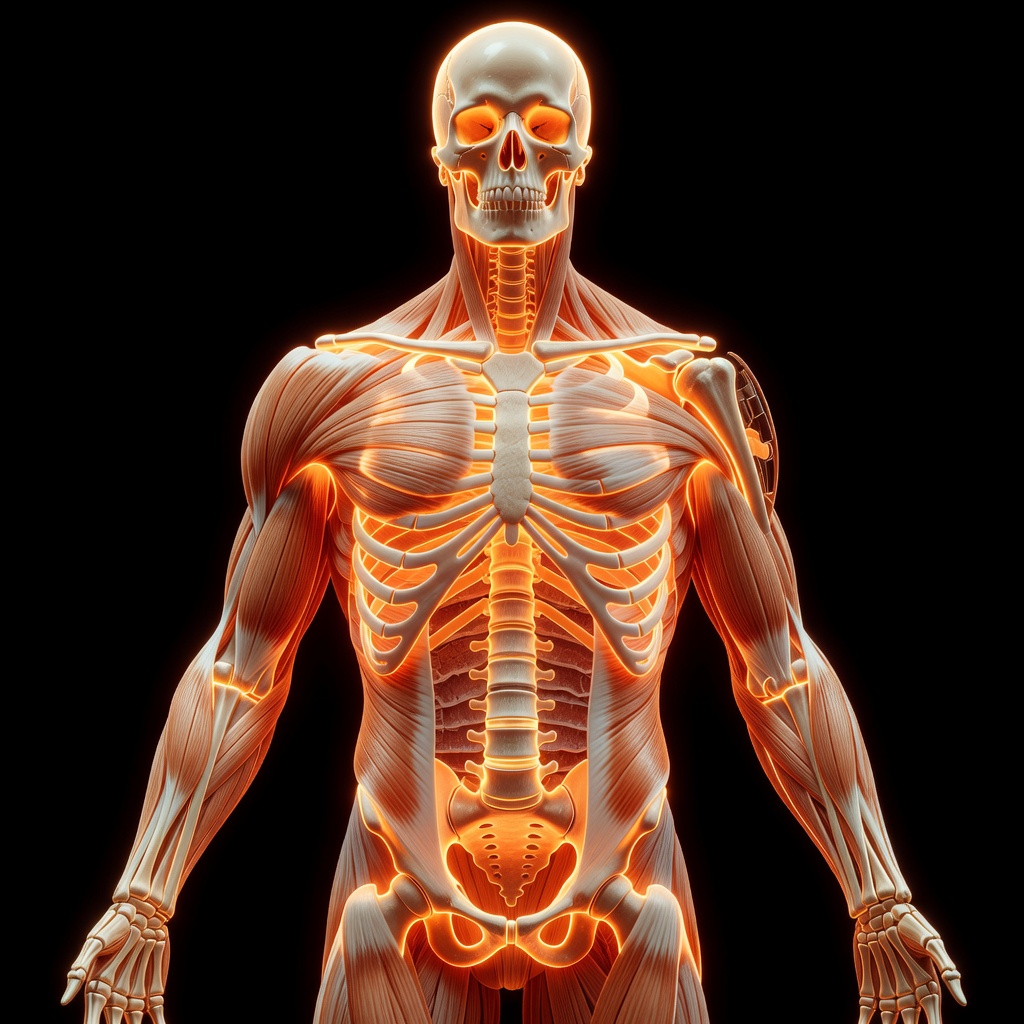
This is particularly relevant in the 'enthesis'—the specialised site where a tendon or ligament attaches to the bone. ## The Enthesis: The Bridge Between Soft and Hard Tissue The enthesis is a masterpiece of biological engineering. It must manage the transition from the flexible, elastic nature of a tendon or ligament to the rigid, dense structure of bone. This transition zone is divided into four distinct layers: the pure tendon/ligament, fibrocartilage, mineralised fibrocartilage, and finally, bone. Silica plays a disproportionate role in the mineralised fibrocartilage layer. Here, osteoblast activity must be finely tuned to ensure that the mineralisation is dense enough to provide a secure anchor, yet flexible enough to absorb mechanical stress without fracturing.
Silica-mediated osteoblast differentiation ensures that the cells in this region produce a matrix that is rich in both silicon and calcium, creating a 'gradient' of hardness that prevents injury. ## Pathological Mineralisation vs. Healthy Remodelling A common point of confusion in health education is the difference between healthy mineralisation and pathological calcification, such as calcific tendonitis. Pathological calcification is often a 'root cause' issue stemming from chronic inflammation, magnesium deficiency, and poor silica availability. When silica levels are low, the body may struggle to maintain the solubility of calcium in the blood and tissues, leading to haphazard calcium deposits in soft tissues. Conversely, when silica is abundant, it promotes the healthy, targeted mineralisation of bone and the enthesis by stimulating the proper differentiation of osteoblasts.
MSM Sulphur – Nature’s Forgotten Mineral
MSM Sulphur provides a high-purity, bioavailable source of a mineral that has largely vanished from modern diets due to industrial farming. It supports essential biological processes and structural health, restoring a vital nutrient your body needs to function optimally.
Vetting Notes
Pending
This ensures that calcium is directed into the bone matrix rather than being deposited inappropriately in the tendons themselves. Silica essentially acts as a traffic controller for minerals, ensuring they are deposited where they provide structural benefit. ## Root Causes of Connective Tissue Fragility At INNERSTANDING, we focus on the root causes of dysfunction. The degradation of tendons and ligaments—often labelled as tendonitis or tendinosis—is frequently a symptom of a deeper mineral imbalance. As we age, the concentration of silica in our tissues naturally declines. This decline correlates with a reduction in the body's ability to cross-link collagen and a decrease in osteoblast efficiency.
This 'silica gap' leads to several issues: 1. Reduced Tensile Strength: Tendons become more prone to micro-tears because the collagen matrix is poorly supported. 2. Impaired Healing: The enthesis becomes a weak point, leading to 'avulsion' style injuries where the tendon pulls away from the bone. 3. Decreased Bone Density: Without silica to drive osteoblast differentiation, bone resorption by osteoclasts outpaces bone formation. Addressing these issues requires a systemic approach to mineral status, prioritising the bioavailable forms of silicon that can actually cross the intestinal barrier. ## Nutritional Strategies for Silica Optimisation To support silica-mediated differentiation, one must look at both dietary sources and targeted supplementation.
While silica is abundant in the earth's crust, it is often bound in forms that humans cannot absorb. 1. Dietary Sources: Whole grains (especially oats and barley), green beans, and silica-rich mineral waters are excellent sources. However, modern soil depletion has significantly reduced the silica content in many vegetables. 2. Horsetail and Bamboo: These botanical sources are naturally high in silica. When processed correctly to extract the aqueous silica, they provide a potent boost for connective tissue health. 3.
Orthosilicic Acid (OSA): This is the most bioavailable form of silica. Supplements containing stabilised OSA or choline-stabilised orthosilicic acid (ch-OSA) have been shown in clinical trials to improve bone mineral density and the elasticity of the skin and tendons. ## Conclusion: The INNERSTANDING Perspective Understanding the role of silica-mediated osteoblast differentiation shifts our perspective on musculoskeletal health from one of 'wear and tear' to one of 'supply and demand.' If we provide the body with the necessary trace minerals, specifically silica, we empower the osteoblasts to maintain the complex interfaces between our bones and connective tissues. By focusing on the mineralisation of the enthesis and the biochemical signals that drive cellular differentiation, we can move beyond treating symptoms and begin to address the structural root causes of physical longevity. Silica is the silent architect, and its presence is the difference between a body that brittlely breaks and one that resiliently bends.
This article is provided for informational and educational purposes only. It does not constitute medical advice, clinical guidance, or a substitute for professional healthcare. Information reflects cited research at time of publication. Always consult a qualified healthcare professional before acting on any health information.
RESEARCH FOUNDATIONS
Biological Credibility Archive
Citations provided for educational reference. Verify via PubMed or institutional databases.
Medical Disclaimer
The information in this article is for educational purposes only and does not constitute medical advice, diagnosis, or treatment. Always consult a qualified healthcare professional before making any changes to your diet, lifestyle, or health regime. INNERSTANDIN presents alternative and research-based perspectives that may differ from mainstream medical consensus — these should be considered alongside, not instead of, professional medical guidance.
Read Full DisclaimerReady to learn more?
Continue your journey through our classified biological research.
THE ARSENAL
Based on Silica & Connective Tissue Mineralisation — products curated by our research team for educational relevance and biological support.
MSM Sulphur – Nature’s Forgotten Mineral
INNERSTANDING may earn a commission on purchases made through these links. All products are selected based on rigorous educational relevance to our biological research.
RABBIT HOLE
Follow the biological thread deeper