
Silica’s Silent Siege: How Anti-Caking Agents Trigger Systemic Inflammation
Published April 2026
Exploring the transition of silica from a harmless anti-caking agent to a nano-scale immune provocateur that triggers the NLRP3 inflammasome.
Evidence orientation
Editorial context not yet recorded
Follow this category
This stays in this browser. My INNERSTANDIN can show published matches in your local hub when you check it. It does not send email, push, or alert notifications.
Local learning review
A private browser aid for revisiting ideas. It is not an alert or a health recommendation.
Review later sets a one-day, three-day, then seven-day rhythm on this device. Choose it only when you want to revisit this article.
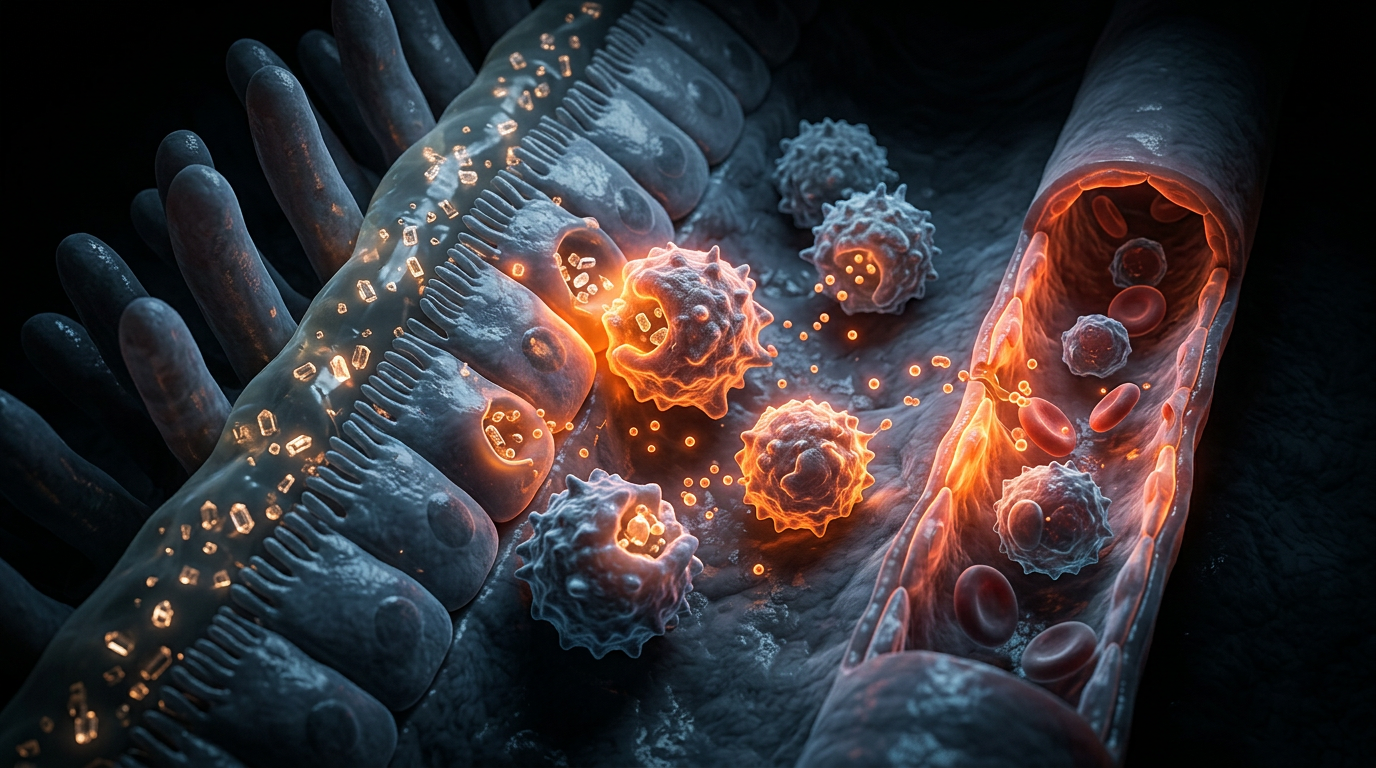
Silicon dioxide (E551) has been a staple of the food industry for decades, prized for its ability to prevent clumping in powders like instant coffee, dried spices, and infant formula. However, the 'Generally Recognized as Safe' (GRAS) status of silica is based on its macro-sized form. The modern food supply now frequently contains nano-silica, which behaves with a biological aggression that its larger counterparts lack. This article explores how these anti-caking agents may be driving the rise in sub-clinical systemic inflammation. From Sand to Serum: When silica is reduced to the nanoscale, its surface area-to-volume ratio increases exponentially.
This makes it highly reactive. In the stomach's acidic environment, these particles can adsorb proteins, forming what is known as a 'protein corona.' This corona essentially 'disguises' the nanoparticle, allowing it to be endocytosed by cells that would otherwise ignore it. Once inside the systemic circulation, nano-silica has been shown to interact with various immune cells, particularly macrophages and dendritic cells. Unlike organic particles, the body lacks the enzymatic machinery to break down inorganic silica, leading to cellular accumulation and persistent signaling. The NLRP3 Inflammasome Trigger: The most critical biological mechanism involved is the activation of the NLRP3 inflammasome.
This is a multi-protein complex that, when triggered, leads to the release of pro-inflammatory cytokines like Interleukin-1 beta (IL-1β). Nano-silica acts as a potent irritant within the lysosome of the cell. If the cell cannot digest the particle, the lysosome can rupture, releasing its contents into the cytoplasm and initiating the inflammasome response. This 'frustrated phagocytosis' is a hallmark of chronic inflammatory diseases and has been implicated in the development of autoimmune precursors. Mainstream medicine often overlooks these small-scale triggers, focusing instead on treating the resulting inflammation rather than identifying the dietary catalysts.
Hidden Sources in the Modern Diet: Identifying nano-silica is challenging because current UK labeling laws do not require manufacturers to specify whether an additive is in 'nano' form. It is often hidden under the broad term 'anti-caking agent.' To minimize exposure, consumers should prioritize whole, unprocessed spices and grains. When using powdered products, choosing organic options can sometimes reduce (though not always eliminate) the presence of synthetic nano-additives. Understanding that the 'flow' of your table salt may come at the cost of your cellular equilibrium is the first step in reclaiming metabolic health. The investigative focus must remain on how these inorganic intruders modulate our innate immune system, shifting the body from a state of homeostasis to one of perpetual defense.
This article is provided for informational and educational purposes only. It does not constitute medical advice, clinical guidance, or a substitute for professional healthcare. Information reflects cited research at time of publication. Always consult a qualified healthcare professional before acting on any health information.
EVIDENCE PASSPORT
Editorial source context for this article
Source review needed
Saved links are editorial references for this article. They may support specific claims rather than every sentence. Open and assess each source in context. This passport does not independently verify them.
Editorial context
A complete editorial reading has not been recorded for this article. Source links remain available for you to open and assess directly.
Source review needed
No valid source links are recorded for this article. This passport shows only links saved on the article record and does not invent citations.
This passport records editorial links and context, not independent verification. Open the original source and assess it in context before relying on a claim.
Medical Disclaimer
The information in this article is for educational purposes only and does not constitute medical advice, diagnosis, or treatment. Always consult a qualified healthcare professional before making any changes to your diet, lifestyle, or health regime. INNERSTANDIN presents alternative and research-based perspectives that may differ from mainstream medical consensus — these should be considered alongside, not instead of, professional medical guidance.
Read Full DisclaimerContinue the thread
Keep this question moving.
Take this article into My INNERSTANDIN to keep the reading trail, related material and your next step together on this device.
Explore this in the Body Map
See where this hits your biology. Interactive anatomy, threats, and protective protocols.
Dig deeper in the Library
Free, longform PDF volumes that go beyond headlines into mechanisms and references.