
Silica Scarcity and the Loss of Structural Integrity
Updated May 2026
Refining processes have removed silica from UK drinking water and grains, impacting collagen synthesis. We investigate silica's role in bone mineralization and the maintenance of healthy connective tissues.
Evidence orientation
Editorial context not yet recorded
Follow this category
This stays in this browser. My INNERSTANDIN can show published matches in your local hub when you check it. It does not send email, push, or alert notifications.
Local learning review
A private browser aid for revisiting ideas. It is not an alert or a health recommendation.
Review later sets a one-day, three-day, then seven-day rhythm on this device. Choose it only when you want to revisit this article.
Overview
In the hierarchy of human nutrition, specific elements are lauded as the "building blocks" of life—protein, calcium, and Vitamin D dominate the conversation of skeletal health and structural longevity. Yet, a silent crisis is unfolding beneath the surface of modern physiology. We are witnessing the systemic depletion of the most abundant element in the Earth’s crust from the human biological system: Silicon (specifically in its bioavailable form, Orthosilicic Acid).
For decades, the nutritional establishment has relegated silica to the status of a "trace element" with no officially established Recommended Dietary Allowance (RDA). This oversight is not merely a scientific gap; it is a profound failure of public health policy that ignores the fundamental mechanics of the extracellular matrix (ECM). As we move further from our ancestral diets and traditional water sources, the structural integrity of the modern population is quite literally crumbling. From the skyrocketing rates of osteoporosis to the loss of arterial elasticity and the premature ageing of connective tissues, the hallmark of the 21st-century human is a state of structural fragility.
In the United Kingdom, this scarcity is particularly acute. The convergence of intensive agricultural practices, the industrial refining of grains, and the chemical "purification" of our municipal water supplies has effectively stripped the primary vectors of silica from the British diet. We are currently living through a biological experiment where the "glue" that holds the human frame together is being dissolved, replaced by a narrative that pushes more calcium into a system that lacks the silica required to manage it.
This article serves as a deep-dive investigation into the molecular necessity of silica, the environmental forces orchestrating its disappearance, and the biological consequences of living in a state of chronic structural "unravelling."
Fact: Silicon is the second most abundant element in the Earth’s crust (28%), yet it is increasingly bio-unavailable to humans due to industrial processing and chemical interference.
The Biology — How It Works
To understand why silica is indispensable, one must look beyond the bones and into the very fabric of our tissues. Silica is the primary architect of connective tissue. It does not merely occupy space; it serves as a cross-linking agent that provides strength, flexibility, and resilience to the entire human architecture.
The Architect of Collagen
While the mainstream health industry focuses heavily on collagen supplementation, it often ignores the catalyst required to make that collagen functional. Collagen is the most abundant protein in the body, providing the structural scaffold for skin, tendons, ligaments, and bones. However, collagen fibres are not naturally rigid or strong in isolation. They require a mechanism to link together. Silica is essential for the activation of prolyl hydroxylase, an enzyme involved in the synthesis of collagen. Without sufficient silica, collagen production slows, and the fibres that are produced are weak, disordered, and prone to degradation.
Elastin and Glycosaminoglycans (GAGs)
Beyond collagen, silica is intrinsically linked to the health of elastin and glycosaminoglycans (such as hyaluronic acid). Elastin allows our arteries, lungs, and skin to "snap back" after being stretched. As silica levels decline with age and environmental depletion, elastin loses its recoil properties. This is a primary driver of arterial stiffness and the formation of wrinkles. Furthermore, silica is a key component of GAGs, which are the moisture-retaining molecules that lubricate our joints and keep our tissues hydrated.
The Mineralisation Matrix
In the skeletal system, silica performs a role that is arguably more important than calcium. Research has shown that in the early stages of bone formation, silica levels are exceptionally high, while calcium levels are low. As the bone matures, silica levels decrease and calcium levels increase. This suggests that silica acts as a "template" or a biological primer. It creates the framework into which calcium and other minerals are deposited. Without the silica "web," calcium cannot be properly sequestered into the bone matrix, leading to "wandering calcium" that ends up in the soft tissues (arteries, kidneys, and heart valves).
Mechanisms at the Cellular Level
The magic of silica happens at the microscopic interface between the cell and its environment. It is here that orthosilicic acid (OSA)—the only form of silica the human body can readily absorb—performs its duties.
Cross-Linking and Hydroxyl Groups
At the molecular level, silica facilitates the formation of bonds between proteoglycans and collagen. It acts as a bridge, using its hydroxyl (-OH) groups to create silanol bonds that stabilise the triple-helix structure of collagen. This cross-linking is what gives a tendon its tensile strength and a bone its ability to withstand impact without shattering.
Osteoblast Stimulation
Silica is a potent stimulator of osteoblasts (bone-building cells) while simultaneously inhibiting osteoclasts (bone-resorbing cells).
- Osteoblast Activity: Silica induces the synthesis of Type I collagen in osteoblasts and promotes their differentiation.
- DNA Synthesis: Studies have indicated that silicon can stimulate DNA synthesis in these cells, essentially "turning on" the machinery of bone growth.
The Aluminum Antagonism
Perhaps the most critical cellular mechanism of silica is its role as a natural antagonist to aluminum. Aluminum is a pervasive neurotoxin that has no biological role in the human body. It competes with magnesium and calcium and interferes with the cross-linking of collagen. Silica binds with aluminum to form hydroxyaluminosilicates, which are non-toxic and easily excreted by the kidneys. In an environment saturated with aluminum (from cookware, deodorants, vaccines, and water treatment), silica acts as a primary detoxification agent, protecting the brain and the structural matrix from heavy metal-induced degradation.
Key Term: Orthosilicic Acid (OSA) — The bioavailable, water-soluble form of silicon (H4SiO4) that is the primary source of silica for human metabolism.
Environmental Threats and Biological Disruptors
The "Silica Scarcity" we observe today is not an accident of nature; it is a direct consequence of the industrialisation of our environment.
The Destruction of the Soil Food Web
In a natural ecosystem, plants take up silicates from the soil and transform them into phytoliths—microscopic pieces of silica. When we eat these plants, we absorb that silica. However, modern agriculture relies heavily on NPK (Nitrogen, Phosphorus, Potassium) fertilisers. These synthetic inputs alter the pH and the microbial life of the soil, making silica less soluble and harder for plants to absorb. Furthermore, the push for high-yield, fast-growing crops has led to varieties that are structurally "thinner" and contain significantly less mineral content than their ancestral counterparts.
Water "Purification" as a Depletion Event
In its natural state, spring water and ground water are often rich in dissolved silica, leached from rocks over centuries. However, municipal water treatment in the UK and globally uses aluminum sulphate (alum) as a flocculant to remove turbidity.
- The alum binds to the natural silica in the water, causing it to precipitate out.
- Consequently, the "clean" tap water delivered to homes is not only devoid of silica but often contains residual aluminum—a "double whammy" for structural health.
The Refining of Grains
Historically, humans obtained significant amounts of silica from the husks and outer layers of cereal grains (oats, barley, millet). The modern preference for "white" and "refined" grains involves the total removal of the aleurone layer and the husk, where the majority of the silica is stored. In the UK, the transition to highly processed wheat has effectively removed one of the last reliable dietary sources of this mineral.
Glyphosate and Chelation
The herbicide glyphosate, used extensively in UK agriculture, is a potent mineral chelator. While much of the focus has been on its ability to bind manganese and zinc, glyphosate also disrupts the pathways that allow plants to process and store minerals. This chemical interference ensures that even if silica is present in the soil, it is "locked away" from the food chain.
The Cascade: From Exposure to Disease
When the body is deprived of silica, it does not fail all at once. Instead, it undergoes a gradual "loss of tension," a biological sagging that manifests as a cascade of chronic degenerative conditions.
1. The Osteoporosis Myth: The Calcium-Silica Imbalance
The mainstream medical approach to bone health is to prescribe high doses of calcium. However, without silica to direct that calcium into the bone, the body experiences "The Calcium Paradox." Calcium builds up in the blood, leading to the calcification of the arteries (atherosclerosis) while the bones remain porous and brittle. Silica is the "gatekeeper" that ensures bone density is synonymous with bone strength. High bone density with low silica results in bones that are hard but brittle, like glass.
2. Cardiovascular Decay
The aorta and the heart valves are among the most silica-rich tissues in the human body. As silica levels drop, the tunica intima (the inner lining of the blood vessels) loses its elasticity and becomes damaged. The body attempts to repair this damage with plaque and calcium deposits.
Statistic: Research has shown that the silica content in the human aorta decreases dramatically with age and is significantly lower in individuals with atherosclerosis.
3. The Neurodegenerative Link
The relationship between silica deficiency and Alzheimer’s disease is one of the most suppressed truths in modern medicine. If silica is not present to buffer and excrete aluminum, the aluminum crosses the blood-brain barrier and accumulates in the brain, contributing to the formation of amyloid plaques.
4. Connective Tissue Disorders
From Joint Hypermobility Syndrome to chronic tendonitis, the loss of structural integrity is visible in the rising number of musculoskeletal complaints. Without the "silica glue," the ligaments become lax, the cartilage wears thin (osteoarthritis), and the body’s ability to repair itself after injury is severely compromised.
What the Mainstream Narrative Omits
The refusal to recognise silica as an essential nutrient is one of the great "omissions" of modern dietetics. There are several reasons why this truth remains on the fringes:
The RDA Stagnation
The UK's Department of Health and other global bodies rely on outdated metrics for defining "essentiality." Because a silica deficiency does not result in an immediate, acute death (like Vitamin C and Scurvy), it is deemed "non-essential." This ignores the long-term, chronic degradation that characterises modern disease.
The Pharmaceutical Agenda
There is no "Big Silica." You cannot patent a basic mineral. However, the pharmaceutical industry generates billions from:
- Bisphosphonates for osteoporosis.
- Statins for cardiovascular disease.
- Anti-inflammatories for joint pain.
All of these treat the symptoms of structural failure without addressing the underlying mineral deficiency. If the population were structurally sound through proper silica mineralisation, the market for these "maintenance" drugs would collapse.
The Silicon-Aluminum Cover-up
Acknowledging the role of silica as a protective agent against aluminum toxicity would require the scientific establishment to admit the dangers of aluminum exposure in modern life—ranging from food packaging to medical interventions. It is far easier to label Alzheimer’s as a "genetic mystery" than to point to the mineral-depleted water supply and the presence of neurotoxic metals.
The UK Context
The United Kingdom presents a unique and troubling landscape for silica scarcity. The geological and industrial history of the British Isles has created a "perfect storm" for structural decline.
The "Hard Water" Fallacy
Many areas of the UK, particularly in the South and East, are classified as having "hard water." While this water is high in calcium and magnesium carbonates, it is often remarkably low in bioavailable silica. Furthermore, the heavy processing required to make London’s recycled water "potable" involves extensive filtration that removes the very trace minerals needed for health.
The British Diet: From Oats to Ultra-Processed
Historically, the British Isles (particularly Scotland and the North) relied on Oats and Barley—two of the highest silica-containing grains. The shift toward a diet dominated by ultra-processed "white" bread and wheat-based products has effectively cut the silica intake of the average Briton by over 70% in the last century.
Soil Depletion in the "Breadbasket"
Intensive farming in East Anglia and the Midlands has led to some of the most mineral-depleted soils in Europe. The use of heavy machinery and synthetic inputs has compacted the soil, destroying the mycorrhizal networks that help plants absorb minerals like silicon.
UK Fact: Surveys of UK drinking water have shown that while some northern "soft water" sources have naturally low silica, the "hard water" of the south is frequently stripped of its silica content during the coagulation and filtration stages of treatment.
Protective Measures and Recovery Protocols
Restoring structural integrity is not as simple as taking a "silica pill." It requires a strategic approach to restore the body’s mineral balance and eliminate disruptors.
1. High-Silica Botanicals
The most effective way to reintroduce silica is through plants that naturally hyper-accumulate the mineral:
- Horsetail (Equisetum arvense): One of the oldest plants on Earth, it contains high levels of organic silica. It must be prepared as a long-decoction tea to extract the minerals.
- Bamboo Extract: Bamboo shoots are the richest known source of natural silica (up to 70% by weight).
- Nettle Leaf: A gentler source that also provides the synergistic minerals calcium and magnesium.
2. Strategic Supplementation
When choosing a supplement, the form is everything. Most cheap "silica" supplements use Silicon Dioxide, which is essentially powdered sand and has near-zero bioavailability.
- Monometylsilanetriol (MMST): A highly stable, organic form of silica that has been shown to be exceptionally well-absorbed.
- Choline-Stabilised Orthosilicic Acid (ch-OSA): Clinically proven to stimulate collagen synthesis and improve bone mineral density.
3. Mineral-Rich Water
Drinking water with high silica content (above 30mg/L) is one of the most effective ways to lower the body burden of aluminum and support the ECM. In the UK, certain volcanic-sourced mineral waters are superior to tap water for this purpose.
4. Diatomaceous Earth (DE)
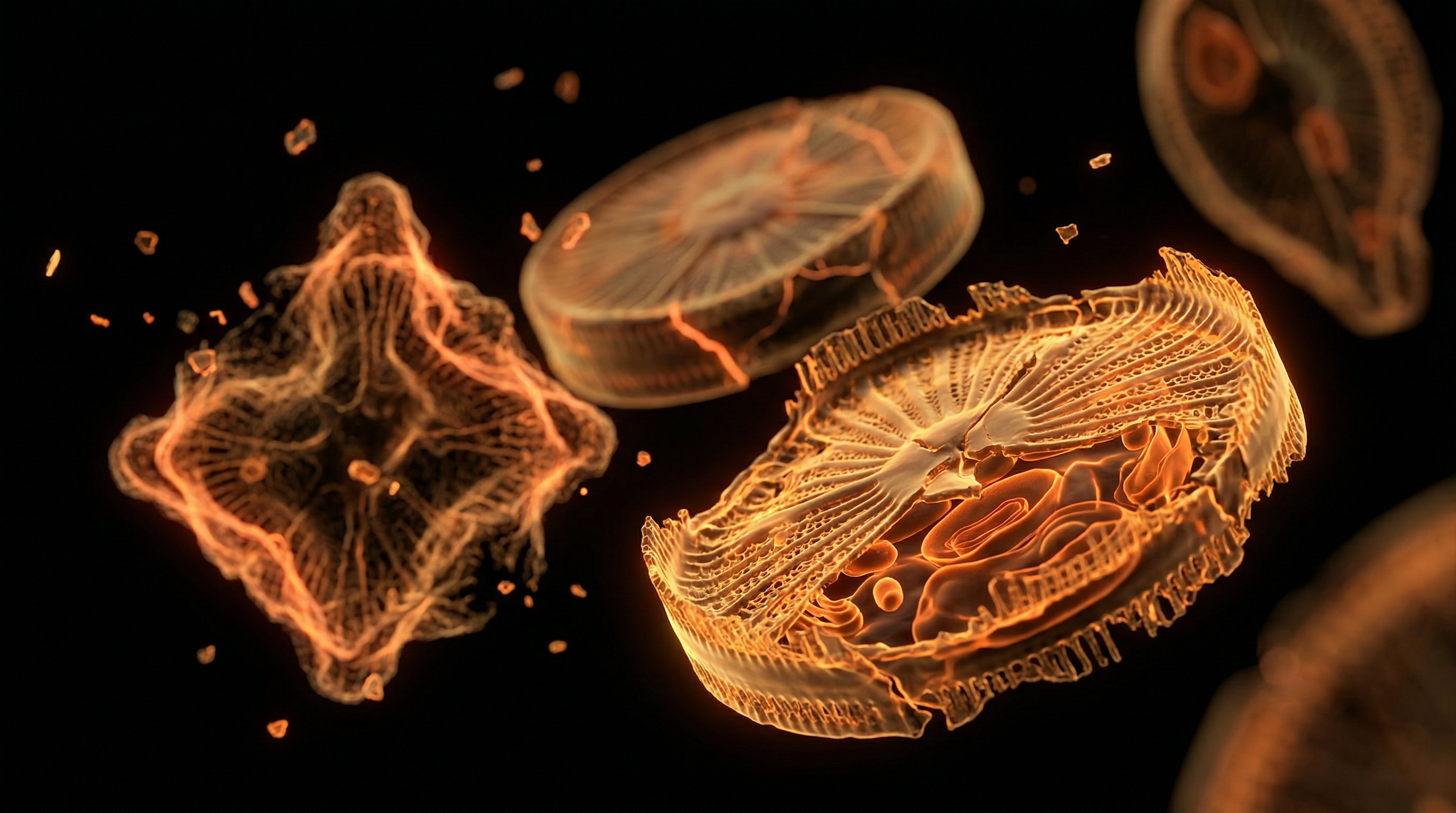
Food-grade Diatomaceous Earth consists of the fossilised remains of diatoms (hard-shelled algae). While it is mostly silica, its primary benefit is often perceived as its ability to mechanically "scrub" the digestive tract. However, a small portion of the silica in DE is converted to orthosilicic acid in the stomach, providing a low-cost, long-term mineral source.
5. Synergistic Cofactors
Silica does not work in a vacuum. To rebuild the structural matrix, ensure the following are present:
- Vitamin C: Essential for the hydroxylation of collagen.
- Copper: Necessary for the enzyme lysyl oxidase, which works with silica to cross-link collagen and elastin.
- Magnesium: To balance the calcium "directed" by the silica.
Summary: Key Takeaways
The loss of structural integrity in the modern human is a multifaceted crisis rooted in Silica Scarcity. We have been systematically disconnected from the Earth’s primary structural element through industrial agriculture, chemical water treatment, and a dietary narrative that over-emphasises calcium at the expense of its mineral "architect."
- Silica is the true "glue" of the human body, essential for the cross-linking of collagen, elastin, and the formation of the bone matrix.
- The "Calcium Fallacy"—high calcium intake without silica—leads to brittle bones and calcified arteries.
- Environmental depletion via NPK fertilisers and aluminum-based water treatment has made bioavailable silica a rarity in the UK diet.
- Neuroprotection: Silica is the primary antagonist to aluminum, making it a critical nutrient for preventing neurodegenerative decline.
- Action is required: To reclaim structural health, one must move beyond the mainstream nutritional advice and actively seek out orthosilicic acid through mineral-rich waters, high-silica botanicals, and bioavailable supplementation.
The crumbling of the modern frame is not an inevitable consequence of ageing; it is a symptom of a mineral-starved biology. By restoring the silica foundations, we can begin the process of biological "re-structuring," moving from a state of fragility back to the resilience intended by nature.
This article is provided for informational and educational purposes only. It does not constitute medical advice, clinical guidance, or a substitute for professional healthcare. Information reflects cited research at time of publication. Always consult a qualified healthcare professional before acting on any health information.
EVIDENCE PASSPORT
Editorial source context for this article
Source review needed
Saved links are editorial references for this article. They may support specific claims rather than every sentence. Open and assess each source in context. This passport does not independently verify them.
Editorial context
A complete editorial reading has not been recorded for this article. Source links remain available for you to open and assess directly.
Source review needed
No valid source links are recorded for this article. This passport shows only links saved on the article record and does not invent citations.
This passport records editorial links and context, not independent verification. Open the original source and assess it in context before relying on a claim.
Medical Disclaimer
The information in this article is for educational purposes only and does not constitute medical advice, diagnosis, or treatment. Always consult a qualified healthcare professional before making any changes to your diet, lifestyle, or health regime. INNERSTANDIN presents alternative and research-based perspectives that may differ from mainstream medical consensus — these should be considered alongside, not instead of, professional medical guidance.
Read Full DisclaimerContinue the thread
Keep this question moving.
Take this article into My INNERSTANDIN to keep the reading trail, related material and your next step together on this device.
Dig deeper in the Library
Free, longform PDF volumes that go beyond headlines into mechanisms and references.