
Sulfur Deficiency and the Decay of Connective Tissue
Updated May 2026
Modern refining processes have removed essential sulfur from the UK diet, impacting the structural integrity of joints and skin. This piece looks at the role of MSM and amino acids in maintaining the extracellular matrix.
Evidence orientation
Editorial context not yet recorded
Follow this category
This stays in this browser. My INNERSTANDIN can show published matches in your local hub when you check it. It does not send email, push, or alert notifications.
Local learning review
A private browser aid for revisiting ideas. It is not an alert or a health recommendation.
Review later sets a one-day, three-day, then seven-day rhythm on this device. Choose it only when you want to revisit this article.
Overview
In the hierarchy of nutritional priorities established by modern dietetics, sulphur remains a glaring omission. While the mainstream medical establishment fixates on macronutrient ratios and a select handful of vitamins, a silent structural collapse is occurring within the British population. Sulphur, the fourth most abundant mineral in the human body, is the invisible "glue" that holds the biological architecture together. From the tensile strength of our tendons to the resilience of our skin and the integrity of our cellular membranes, sulphur is the foundational element that facilitates structural coherence.
However, we are currently witnessing a "Sulphur Gap"—a catastrophic decline in bioavailable sulphur within the modern food chain. This is not a random occurrence but the direct result of industrialised agricultural practices, the chemical bombardment of our soils, and the aggressive refining of our food supply. In the United Kingdom, where traditional diets rich in offal and diverse brassicas have been replaced by ultra-processed "convenience" foods, the impact on the connective tissue is profound.
This article serves as a technical exposé on how the systemic removal of sulphur is driving the epidemic of degenerative joint disease, premature skin aging, and the literal disintegration of the extracellular matrix. We will examine the biochemical pathways that rely on sulphur-bearing amino acids and the specific role of Methylsulfonylmethane (MSM) in restoring what has been lost. The decay of our connective tissue is not merely a symptom of "aging"; it is a symptom of a starved biological system.
##
The Biology — How It Works
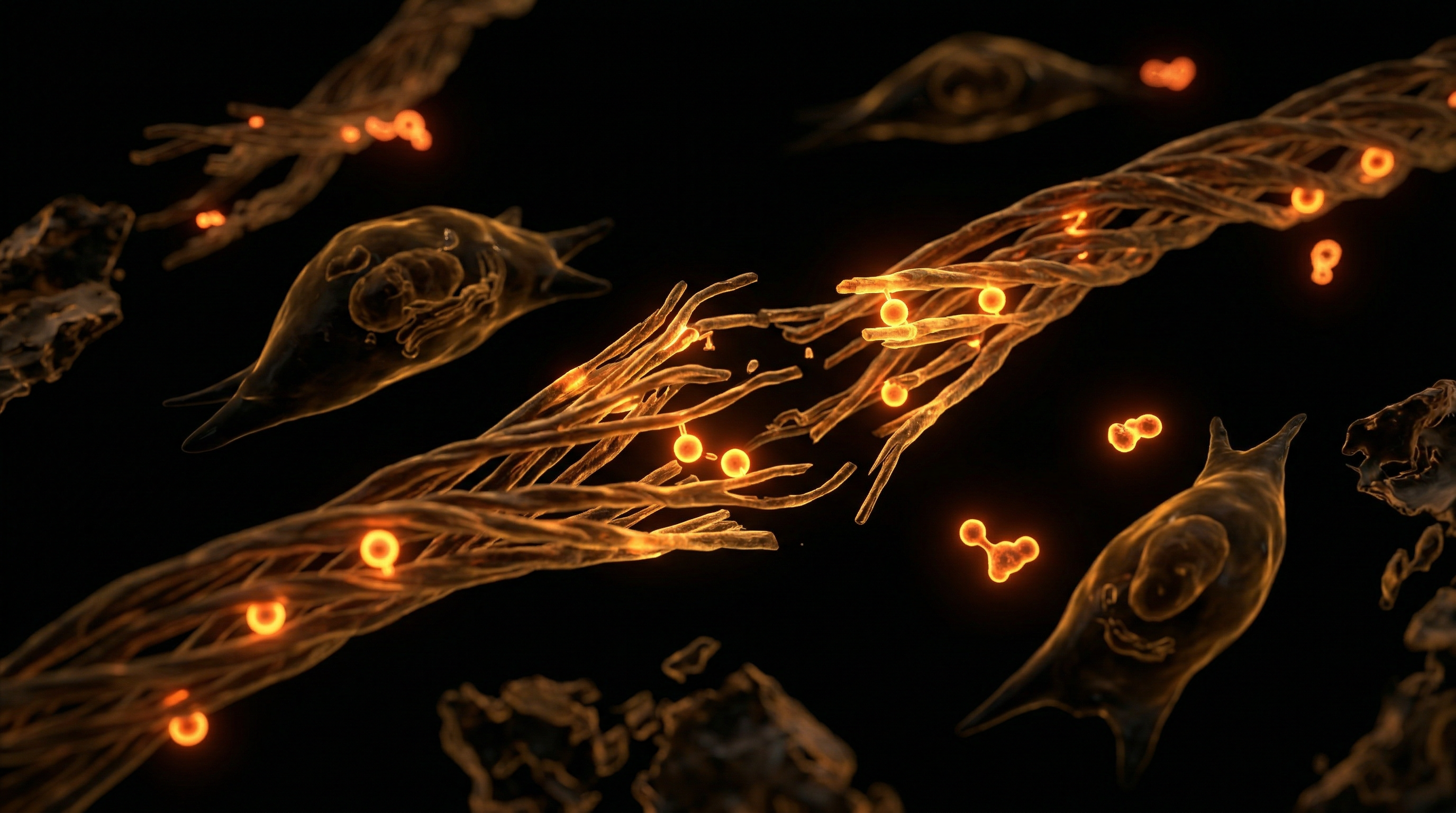
To understand the decay of connective tissue, one must first understand the chemistry of the Extracellular Matrix (ECM). The ECM is the non-cellular component present within all tissues and organs, providing not only essential physical scaffolding for the cellular constituents but also initiating crucial biochemical and biomechanical cues.
Sulphur's primary biological role is structural. It is essential for the formation of disulphide bridges—the cross-links that give proteins their three-dimensional shape and stability. Without these bridges, proteins like collagen, elastin, and keratin become fragile, misfolded, and prone to degradation.
The Trinity of Sulphur-Bearing Compounds
- Methionine: An essential amino acid that serves as the precursor for all other sulphur-containing molecules in the body. It must be obtained through diet.
- Cysteine: A non-essential amino acid (synthesised from methionine) that is a critical component of skin, hair, and nails. It is the primary building block of Glutathione, the body’s master antioxidant.
- Glycosaminoglycans (GAGs): These are long chains of sugar molecules found in the ECM. The most famous of these are Chondroitin Sulphate and Glucosamine Sulphate. Note the suffix: without the sulphate group, these molecules cannot hold onto water, leading to the dehydration and "thinning" of joint cartilage.
Fact: Collagen makes up approximately 30% of the total protein in the human body. Its structural integrity is entirely dependent on the presence of sulphur-rich cross-links that prevent the fibres from unravelling under mechanical stress.
The human body does not store sulphur in the way it stores fat or certain vitamins. It is a "flow-through" mineral, meaning it must be constantly replenished. When the intake of organic sulphur drops below a critical threshold, the body prioritises vital organ function over "non-essential" structures like the joints, skin, and hair. This is the biological origin of what we perceive as aging.
##
Mechanisms at the Cellular Level
At the microscopic scale, sulphur deficiency manifests as a failure in cellular communication and detoxification. The Methylation Cycle and the Transsulphuration Pathway are the two primary engines of cellular health, and both are fuelled by sulphur.
Mitochondrial Function and Sulphur
The mitochondria, the powerhouses of our cells, require sulphur-containing enzymes for the electron transport chain. Specifically, Iron-Sulphur (Fe-S) clusters are essential for energy production. When sulphur is deficient, mitochondrial efficiency drops, leading to "cellular fatigue." In connective tissue, this means the fibroblasts (the cells responsible for producing collagen) lack the energy to repair the matrix after daily wear and tear.
The Role of MSM (Methylsulfonylmethane)
MSM is a naturally occurring organic sulphur compound. In the cellular environment, MSM acts as a "sulphur donor." It provides the necessary raw material for the synthesis of methionine and cysteine. Beyond its structural role, MSM has been shown to modulate the NF-kB signalling pathway, which is the master switch for inflammation. By suppressing this pathway, sulphur helps prevent the enzymatic breakdown of collagen that occurs during chronic inflammatory states.
Sulfation and Detoxification
The liver utilises sulphur in its Phase II detoxification pathway, specifically through a process called sulfation. This process involves attaching a sulphate group to toxins, heavy metals, and spent hormones (like oestrogen), making them water-soluble so they can be excreted via the kidneys.
- If sulphur levels are low, sulfation fails.
- Toxins accumulate in the fatty tissues and the connective tissue.
- This accumulation triggers "oxidative stress," which physically shears the collagen fibres in the ECM.
Key Term: Thiol groups (-SH) are the functional parts of sulphur-containing molecules. They act as "magnets" for heavy metals like mercury and lead, allowing the body to sequester and remove these disruptors before they can damage the connective tissue.
##
Environmental Threats and Biological Disruptors
The degradation of the British connective tissue is not happening in a vacuum. Several environmental factors have converged to create a "perfect storm" of sulphur depletion and biological interference.
The NPK Revolution
The most significant disruptor is the shift in agricultural fertilisation. Since the mid-20th century, modern farming has relied almost exclusively on NPK fertilisers (Nitrogen, Phosphorus, and Potassium). While this trio produces high-yield, "bushy" crops, it ignores the essential micronutrients, particularly sulphur. In a natural ecosystem, sulphur is cycled from the oceans to the land via rain (as dimethyl sulphide produced by algae). However, intensive tilling and chemical farming have broken this cycle. Our soils are "sulphur-starved," meaning the vegetables grown in them—even organic ones—contain a fraction of the sulphur they did a century ago.
The Glyphosate Interference
The herbicide glyphosate (the active ingredient in Roundup) is perhaps the most insidious threat to sulphur metabolism. Glyphosate interferes with the Shikimate pathway in the gut microbiome. While humans do not have this pathway, our beneficial bacteria do. These bacteria are responsible for synthesising several sulphur-containing compounds and assisting in the transport of sulphate. Furthermore, glyphosate has been shown to disrupt the Cytochrome P450 enzymes in the liver, which are necessary for converting dietary sulphur into usable sulphate. Effectively, glyphosate creates a "functional deficiency" where sulphur may be present in the diet but cannot be utilised by the body.
Heavy Metal Burden
The modern environment is saturated with aluminium, cadmium, and mercury (from dental amalgams, industrial pollution, and geoengineering). These metals have a high affinity for sulphur. When they enter the body, they "gobble up" available thiol groups, leaving nothing for collagen synthesis. This is why individuals with high heavy metal burdens often suffer from chronic joint pain and "creaky" movements—their sulphur is being diverted to deal with toxicity rather than structural maintenance.
##
The Cascade: From Exposure to Disease
When the body is deprived of sulphur, the decay of connective tissue follows a predictable, devastating cascade. This is not a sudden collapse but a progressive erosion of structural integrity.
Stage 1: The Loss of Lubrication
The first sign of deficiency is often found in the joints. As sulphate levels drop, the synovial fluid (the lubricant of the joints) loses its viscosity. The GAGs in the cartilage lose their ability to hold water, leading to "dry" joints. This is the "creaking" phase.
Stage 2: The Softening of the Scaffolding
Without disulphide bridges, the collagen matrix becomes disorganized. In the skin, this manifests as a loss of elasticity and the formation of deep wrinkles. Internally, the "fascia"—the connective tissue that wraps around every muscle and organ—becomes stiff and brittle. This leads to chronic "unexplained" pain and a loss of range of motion.
Stage 3: Systemic Breakdown (Osteoarthritis and Beyond)
As the mechanical integrity of the joint fails, the body attempts to compensate by initiating an inflammatory response. However, because sulphur (the precursor to glutathione) is missing, the body cannot switch off the inflammation. This leads to the enzymatic destruction of the remaining cartilage—Osteoarthritis.
- Leaky Gut Syndrome: The lining of the gastrointestinal tract is made of a thin layer of connective tissue protected by sulfated mucins. When sulphur is absent, this barrier breaks down, allowing undigested food and toxins into the bloodstream, further fueling systemic inflammation.
- Cardiovascular Decay: The arterial walls are highly dependent on elastin and collagen. Sulphur deficiency leads to "stiffening" of the arteries, which the body tries to "patch up" with calcium and cholesterol, contributing to atherosclerosis.
Statistic: According to Arthritis Research UK, over 10 million people in the UK have arthritis or other, similar conditions that affect the joints. A significant percentage of these cases are degenerative, correlating directly with the decline in dietary sulphur intake over the last 50 years.
##
What the Mainstream Narrative Omits
The mainstream medical narrative regarding joint health and aging is fundamentally flawed and, some would argue, intentionally incomplete. The focus is almost exclusively on "management" through pharmaceuticals rather than "restoration" through biochemistry.
The Glucosamine Deception
While glucosamine supplements are widely recommended, the mainstream often fails to mention that Glucosamine Hydrochloride (HCl)—the cheaper, more common form—is significantly less effective than Glucosamine Sulphate. The "sulphate" part of the molecule is not just a carrier; it is the active therapeutic agent. By omitting the importance of the sulphate group, the industry ensures a high rate of "non-responders," who then turn to more expensive NSAIDs or biological drugs.
The Myth of "Wear and Tear"
The idea that joints simply "wear out" like car tyres is a biological fallacy. Living tissue is designed to regenerate. The reason joints fail is not "wear" but the failure of the repair mechanism. The mainstream narrative ignores the fact that the body cannot repair collagen without sulphur. By framing it as an inevitable consequence of age, they absolve the industrial food complex of its role in creating this deficiency.
The Suppression of MSM and DMSO
DMSO (Dimethyl Sulfoxide) and its derivative MSM have been the subject of thousands of studies proving their efficacy in treating connective tissue disorders. However, because these are natural substances that cannot be patented, they have been sidelined by the pharmaceutical industry. In the 1960s and 70s, DMSO was on the verge of becoming a standard treatment for inflammation before it was suppressed by the FDA and subsequently ignored by the UK's MHRA in favour of more profitable, patentable anti-inflammatories.
##
The UK Context
The United Kingdom faces a unique set of challenges regarding sulphur deficiency. The geological and cultural landscape of the British Isles has shifted in a way that disproportionately impacts sulphur status.
The Depleted Soils of Britain
British soil, particularly in the agricultural heartlands of East Anglia and the Midlands, has been heavily farmed for centuries. The intensive use of ammonium nitrate fertilisers since the "Green Revolution" has led to significant acidification and sulphur leaching. Unlike volcanic regions (like Iceland or parts of Japan) where sulphur is naturally abundant in the soil and water, the UK is increasingly "sulphur-poor."
The Death of "Nose-to-Tail" Eating
Traditional British cuisine was naturally rich in sulphur. Consuming "the whole beast"—including the skin, gristle, and organ meats (especially the liver and heart)—provided a massive influx of sulphur-bearing amino acids and pre-formed collagen. The modern British diet has moved toward "muscle meat only" (steaks, chicken breasts), which are high in the amino acid Tryptophan but relatively lower in the sulphur-rich Cysteine compared to the connective tissues of the animal. Furthermore, the decline in the consumption of "strong" vegetables like turnips, swedes, and cabbage in favour of bland, greenhouse-grown hydroponic salads has further widened the Sulphur Gap.
The Hard Water Paradox
While some areas of the UK have "hard water" containing minerals, the process of water softening and the widespread use of fluoride in certain municipal supplies further complicates mineral absorption. Fluoride, in particular, can interfere with the enzymes involved in the formation of the collagen matrix.
##
Protective Measures and Recovery Protocols
To reverse the decay of connective tissue, one must move beyond the "Recommended Daily Allowance" (RDA)—which doesn't even exist for sulphur—and adopt a protocol of Biological Restoration.
1. Therapeutic Supplementation: The MSM Protocol
Because our food supply is compromised, supplementation is often necessary to "catch up" on years of deficiency.
- MSM (Methylsulfonylmethane): Aim for high-quality, distilled MSM (look for the "Bergstrom" or "OptiMSM" branding to ensure purity). Start with 1,000mg and gradually increase to 3,000-5,000mg per day.
- The Vitamin C Synergy: Collagen synthesis requires Vitamin C to act as a cofactor for the enzymes that work with sulphur. Always take MSM with a whole-food source of Vitamin C (like acerola cherry or camu camu).
2. Dietary Shifts: Reclaiming the Alliums and Brassicas
The "stinky" vegetables are stinky because of their sulphur content.
- Allium family: Garlic, onions, leeks, and shallots. These should be consumed daily, ideally raw or lightly cooked.
- Brassica family: Broccoli, Brussels sprouts, kale, and cauliflower. These contain sulforaphane, which activates the Nrf2 pathway, protecting the connective tissue from oxidative damage.
- Pasture-Raised Eggs: The yolks of eggs are one of the most bioavailable sources of sulphur. However, they must be from "pastured" hens to ensure the sulphur cycle is intact.
3. Transdermal Therapy: Epsom Salts
Epsom salts (Magnesium Sulphate) are an excellent way to bypass a compromised gut. A 20-minute soak in a warm bath with 500g of Epsom salts allows sulphate ions to be absorbed directly through the skin into the bloodstream. This is particularly effective for immediate relief of joint stiffness.
4. Eliminating the Disruptors
Recovery is impossible if the "theft" of sulphur continues.
- Filter your water: Use a high-quality filter to remove fluoride and heavy metals.
- Go Organic: To avoid glyphosate, which actively blocks sulphur pathways, choose organic produce, particularly for grains and legumes which are often "dessicated" with glyphosate before harvest.
- Avoid Refined Sugars: High blood sugar leads to Glycation, a process where sugar molecules attach to collagen fibres, making them brittle and yellow. This process is accelerated in the absence of protective sulphur.
##
Summary: Key Takeaways
- Sulphur is the "Forgotten Mineral": It is essential for the disulphide bridges that maintain the structure of collagen, elastin, and keratin.
- The Modern Deficiency: Industrial NPK fertilisers and glyphosate have stripped sulphur from the food chain, creating a systemic deficiency in the UK population.
- The Connective Tissue Decay: Deficiency leads to a predictable collapse: dehydrated joints, brittle fascia, "leaky" gut, and premature aging of the skin.
- The Mainstream Omission: Medical narratives focus on symptom management while ignoring the fundamental biochemical requirement for sulphur in tissue repair.
- The Solution is Structural: Restoration requires high-dose MSM, a return to sulphur-rich traditional foods (alliums, brassicas, organic eggs), and the avoidance of chemical disruptors like glyphosate and fluoride.
The decay of our connective tissue is not an inevitable march toward decrepitude. It is a manageable biochemical state. By reclaiming our sulphur status, we reclaim the very integrity of our physical being—moving from a state of disintegration back to a state of structural resilience. We must stop asking why we are falling apart and start providing the body with the "glue" it needs to stay together.
This article is provided for informational and educational purposes only. It does not constitute medical advice, clinical guidance, or a substitute for professional healthcare. Information reflects cited research at time of publication. Always consult a qualified healthcare professional before acting on any health information.
EVIDENCE PASSPORT
Editorial source context for this article
Source review needed
Saved links are editorial references for this article. They may support specific claims rather than every sentence. Open and assess each source in context. This passport does not independently verify them.
Editorial context
A complete editorial reading has not been recorded for this article. Source links remain available for you to open and assess directly.
Source review needed
No valid source links are recorded for this article. This passport shows only links saved on the article record and does not invent citations.
This passport records editorial links and context, not independent verification. Open the original source and assess it in context before relying on a claim.
Medical Disclaimer
The information in this article is for educational purposes only and does not constitute medical advice, diagnosis, or treatment. Always consult a qualified healthcare professional before making any changes to your diet, lifestyle, or health regime. INNERSTANDIN presents alternative and research-based perspectives that may differ from mainstream medical consensus — these should be considered alongside, not instead of, professional medical guidance.
Read Full DisclaimerContinue the thread
Keep this question moving.
Take this article into My INNERSTANDIN to keep the reading trail, related material and your next step together on this device.
Dig deeper in the Library
Free, longform PDF volumes that go beyond headlines into mechanisms and references.