
Silver-Plated Soils: The Impact of Nano-Silver on the Human Microbiome
Published April 2026
Investigating how antimicrobial silver nanoparticles in food packaging can leach into our diet and disrupt the delicate balance of the gut microbiome.
Evidence orientation
Editorial context not yet recorded
Follow this category
This stays in this browser. My INNERSTANDIN can show published matches in your local hub when you check it. It does not send email, push, or alert notifications.
Local learning review
A private browser aid for revisiting ideas. It is not an alert or a health recommendation.
Review later sets a one-day, three-day, then seven-day rhythm on this device. Choose it only when you want to revisit this article.
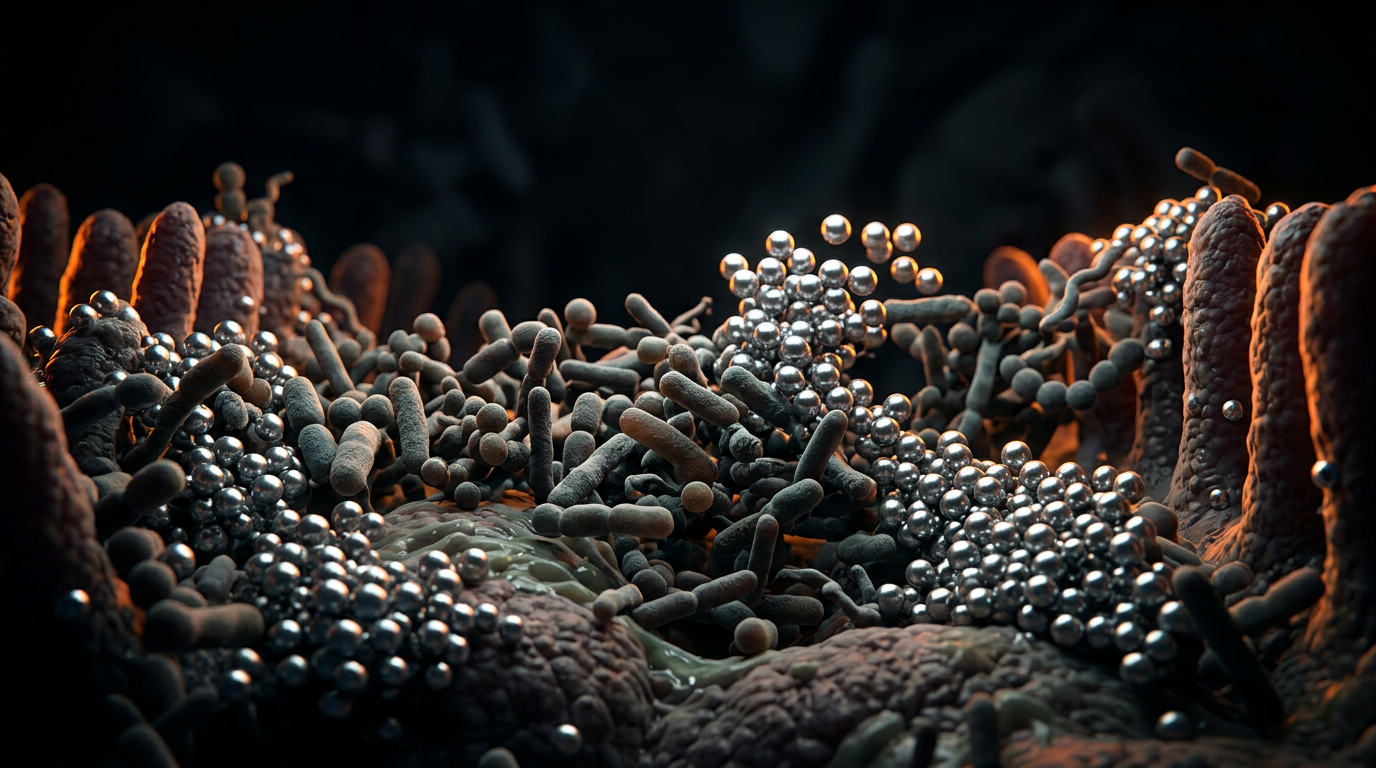
Silver nanoparticles (AgNPs) are increasingly utilized in 'smart' food packaging and as antimicrobial coatings for kitchenware, touted for their ability to extend shelf life by killing bacteria. While this sounds like a victory for food safety, the evidence suggests a 'scorched earth' policy where the silver does not distinguish between spoilage bacteria and the vital commensal flora of the human microbiome. Antimicrobial Action in the Wrong Places: The very property that makes silver nanoparticles effective—the slow release of silver ions (Ag+)—is what makes them a threat to the gut ecosystem. These ions disrupt bacterial cell membranes and interfere with DNA replication. When silver leaches from packaging into acidic foods (like orange juice or tomato sauce) and is subsequently ingested, it reaches the colon.
Clinical studies have shown that even low-level, chronic exposure to AgNPs can significantly shift the composition of the gut microbiota. Specifically, there is often a reduction in beneficial Firmicutes and an increase in Gram-negative Proteobacteria. This dysbiosis is not a minor inconvenience; it is a fundamental shift in the body's internal chemistry. Disruption of Short-Chain Fatty Acids: One of the most critical roles of a healthy microbiome is the production of Short-Chain Fatty Acids (SCFAs) like butyrate, which fuels the cells of the colon and regulates systemic inflammation. By suppressing the populations of bacteria responsible for fermenting dietary fiber, silver nanoparticles indirectly lower SCFA production.
This has a ripple effect on the gut-brain axis, potentially affecting mood and cognitive function, as SCFAs are known to influence neurotransmitter signaling and the integrity of the blood-brain barrier. Mainstream safety assessments frequently miss this indirect toxicity because they focus on direct cell death rather than the loss of symbiotic function. The Bioaccumulation Trap: Unlike many organic toxins that the liver can conjugate and excrete, silver nanoparticles have a tendency to accumulate in tissues over time. Research has identified silver deposits in the liver, spleen, and kidneys of subjects exposed to dietary silver. The long-term implications of this 'bio-burden' are still being mapped, but for the health-conscious adult, the precautionary principle should apply.
Reducing reliance on plastic containers with 'antibacterial' claims and opting for glass or high-quality stainless steel for food storage are practical steps to limit silver ingestion. The narrative that we must sterilize our food environment at all costs is a fallacy that ignores the foundational importance of our microbial allies.
This article is provided for informational and educational purposes only. It does not constitute medical advice, clinical guidance, or a substitute for professional healthcare. Information reflects cited research at time of publication. Always consult a qualified healthcare professional before acting on any health information.
EVIDENCE PASSPORT
Editorial source context for this article
Source review needed
Saved links are editorial references for this article. They may support specific claims rather than every sentence. Open and assess each source in context. This passport does not independently verify them.
Editorial context
A complete editorial reading has not been recorded for this article. Source links remain available for you to open and assess directly.
Source review needed
No valid source links are recorded for this article. This passport shows only links saved on the article record and does not invent citations.
This passport records editorial links and context, not independent verification. Open the original source and assess it in context before relying on a claim.
Medical Disclaimer
The information in this article is for educational purposes only and does not constitute medical advice, diagnosis, or treatment. Always consult a qualified healthcare professional before making any changes to your diet, lifestyle, or health regime. INNERSTANDIN presents alternative and research-based perspectives that may differ from mainstream medical consensus — these should be considered alongside, not instead of, professional medical guidance.
Read Full DisclaimerContinue the thread
Keep this question moving.
Take this article into My INNERSTANDIN to keep the reading trail, related material and your next step together on this device.
Explore this in the Body Map
See where this hits your biology. Interactive anatomy, threats, and protective protocols.
Dig deeper in the Library
Free, longform PDF volumes that go beyond headlines into mechanisms and references.