
Skeletal Fluorosis: When Water Strengthening Weakens the Bone
Updated May 2026
While often marketed for dental health, fluoride’s long-term systemic accumulation can lead to bone brittleness and joint pain. This piece investigates the threshold between therapeutic use and skeletal pathology.
Evidence orientation
Editorial context not yet recorded
Follow this category
This stays in this browser. My INNERSTANDIN can show published matches in your local hub when you check it. It does not send email, push, or alert notifications.
Local learning review
A private browser aid for revisiting ideas. It is not an alert or a health recommendation.
Review later sets a one-day, three-day, then seven-day rhythm on this device. Choose it only when you want to revisit this article.
Overview
For nearly eight decades, the narrative surrounding fluoride has been one of public health triumph. Etched into the collective consciousness of the Western world is the belief that fluoride is a mandatory mineral for dental integrity—an essential nutrient for the prevention of caries. However, a deeper biological examination reveals a more complex, and far more sinister, reality. Fluoride is not an essential nutrient; it is a cumulative systemic toxin. While the focus has remained stubbornly fixed on the surfaces of the teeth, a silent epidemic has been manifesting within the deeper architecture of the human frame: the skeletal system.
Skeletal Fluorosis is a chronic metabolic bone disease caused by the long-term ingestion—and subsequent accumulation—of fluoride. Unlike dental fluorosis, which is visible as mottling or staining of the enamel in children, skeletal fluorosis is an internalised pathology that can remain latent for decades. It is a progressive condition that transforms the skeleton from a flexible, living support structure into a brittle, hyper-mineralised, and eventually crippling mass of stone-like tissue.
The threshold between the purported "therapeutic" dose for dental health and the "pathological" dose for skeletal degradation is alarmingly narrow. As a senior biological researcher at INNERSTANDING, my objective in this piece is to dismantle the superficial dental arguments and investigate the profound biochemical disruptions caused by fluoride accumulation. We shall explore how a chemical hailed for "strengthening" can ultimately lead to the total failure of the human skeletal apparatus.
Key Statistic: According to the World Health Organisation (WHO), tens of millions of people worldwide are affected by skeletal fluorosis, with the highest prevalence in regions where groundwater fluoride levels exceed 1.5 parts per million (ppm). However, recent data suggests skeletal changes can begin at much lower concentrations when cumulative intake is factored in.
The Biology — How It Works
To understand skeletal fluorosis, one must first understand the unique chemical nature of the fluoride ion ($F^-$). Fluoride is the most electronegative element in the periodic table. This extreme reactivity means it rarely exists in isolation in nature; it is almost always bound to other elements. Once ingested, fluoride is rapidly absorbed through the gastrointestinal tract and enters the bloodstream.
The Affinity for Calcified Tissue
Fluoride is a "bone seeker." Approximately 99% of the fluoride retained in the human body is sequestered in the bones and teeth. This occurs because of fluoride’s intense affinity for calcium. The primary mineral component of bone is hydroxyapatite, a crystalline structure composed of calcium and phosphate.
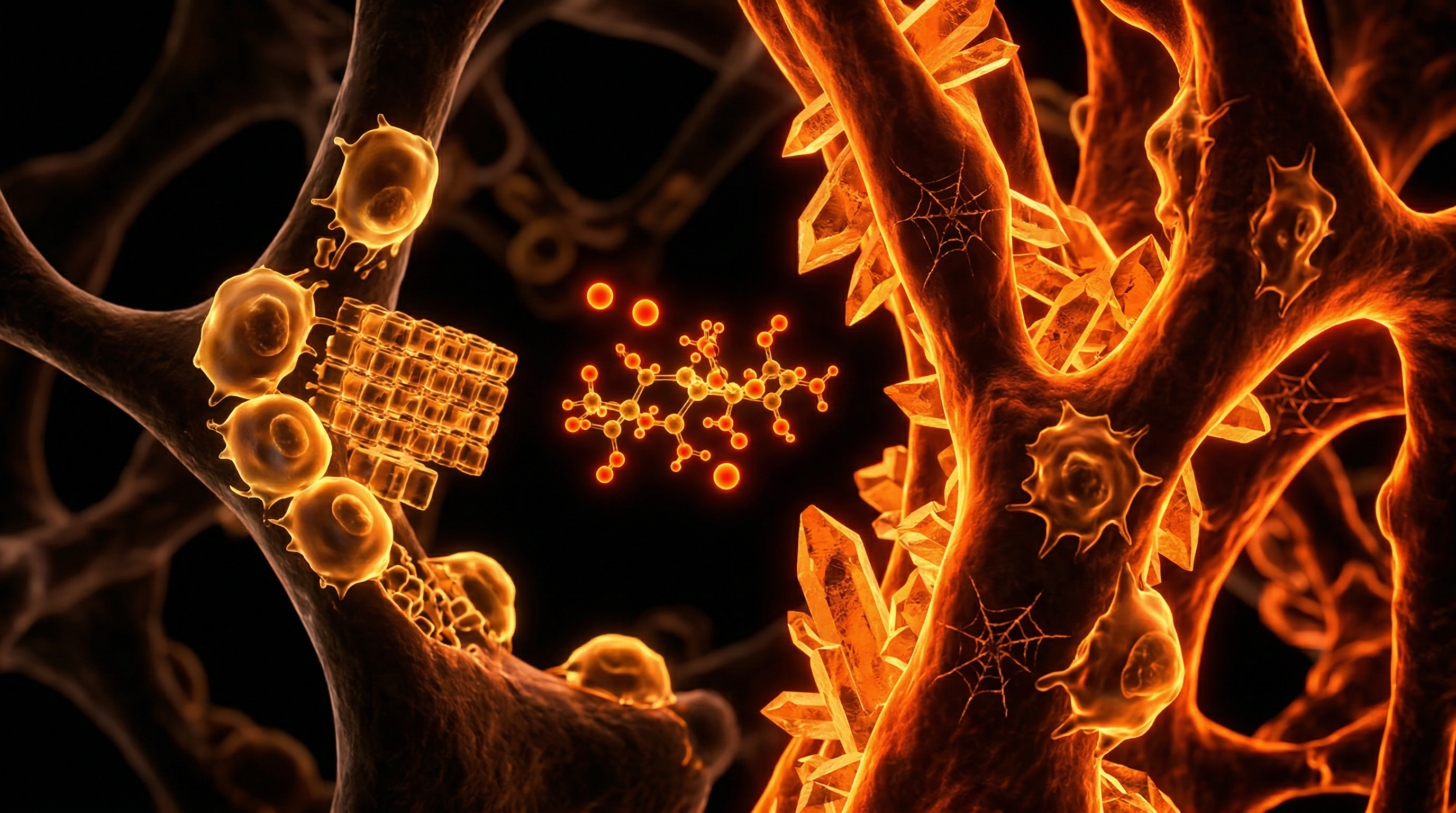
When fluoride enters the bone matrix, it undergoes an ionic exchange with the hydroxyl ($OH^-$) group in the hydroxyapatite crystal. This process creates a new compound: Fluorapatite.
Hydroxyapatite vs. Fluorapatite
- Hydroxyapatite: The natural mineral form of bone. It is strong yet possesses a degree of flexibility and "give," allowing the skeleton to absorb impact without fracturing.
- Fluorapatite: The fluoridated version of bone mineral. It is chemically more stable and "harder" than hydroxyapatite, but this hardness comes at a catastrophic cost. Fluorapatite is more brittle. It lacks the elastic modulus of natural bone, making the structure prone to micro-fractures and eventual breakage under stress.
The Cumulative Nature
The human body has a limited capacity to excrete fluoride through the kidneys. In a healthy adult, roughly 50% of ingested fluoride is excreted. The remaining 50% is taken up by the bone. In children, whose bones are rapidly growing and more metabolically active, the retention rate can be as high as 80–90%. Over a lifetime of exposure—through drinking water, processed foods, dental products, and environmental pollutants—the skeletal burden of fluoride increases linearly. There is no known "steady state" where the body stops absorbing fluoride into the bone; it is a one-way path toward hyper-mineralisation.
Mechanisms at the Cellular Level
The damage caused by fluoride is not merely a matter of mineral substitution; it is an active disruption of bone cellular biology. Bone is not a static substance; it is a living tissue constantly being "remodelled" by two primary cell types: Osteoblasts (which build bone) and Osteoclasts (which break down old bone).
Osteoblastic Stimulation and Disorganised Bone
Fluoride is a potent mitogen for osteoblasts. It stimulates these cells to proliferate and increase the production of the bone matrix. On the surface, this sounds beneficial—more bone-building should lead to stronger bones. However, fluoride-induced bone formation is pathological.
The bone created under the influence of fluoride is woven bone rather than high-quality lamellar bone. It is structurally disorganised, with collagen fibres laid down in a haphazard fashion. This results in a dense but structurally inferior architecture. This is why skeletal fluorosis is often characterised by osteosclerosis (an abnormal increase in bone density) that paradoxically increases the risk of fracture.
Enzymatic Inhibition and G-Protein Activation
At the molecular level, fluoride interferes with a vast array of enzymatic processes. It is a known inhibitor of phosphatases, enzymes critical for the mineralisation process and cellular signalling.
- G-Protein Signalling: Fluoride (specifically in the form of aluminium fluoride complexes) mimics phosphate and can "turn on" G-proteins, which are master switches for intracellular communication. This leads to a state of chronic cellular overstimulation, exhausting the metabolic capacity of the bone cells and leading to oxidative stress.
- Mitochondrial Dysfunction: Fluoride has been shown to penetrate the mitochondria of bone cells, disrupting the electron transport chain and reducing ATP production. When the cells responsible for maintaining bone integrity are starved of energy, the entire skeletal system begins to decay from the inside out.
The Displacement of Magnesium
Perhaps most critically, fluoride acts as an antagonist to Magnesium. Magnesium is essential for over 300 enzymatic reactions and plays a vital role in regulating the quality of the bone crystal. By displacing magnesium in the bone matrix and inhibiting magnesium-dependent enzymes, fluoride ensures that the bone produced is of the poorest possible quality.
Environmental Threats and Biological Disruptors
While the primary focus of the fluoridation debate is municipal water, it is essential to recognise that we are living in a "fluoridated environment." The total body burden of fluoride is the result of multiple, often hidden, sources.
Industrial Waste: Hexafluorosilicic Acid
Most water fluoridation programmes do not use pharmaceutical-grade sodium fluoride. Instead, they utilise hexafluorosilicic acid ($H2SiF6$). This is a byproduct of the phosphate fertiliser industry. When the phosphate ore is processed, highly toxic gases (hydrogen fluoride and silicon tetrafluoride) are released. These are captured in "scrubbers" to prevent environmental devastation, and the resulting liquid—contaminated with lead, arsenic, and mercury—is what is shipped to water treatment plants. This industrial grade of fluoride has different kinetic properties and potentially higher toxicity than naturally occurring fluoride.
The Tea Plant (Camellia sinensis)
The tea plant is a hyper-accumulator of fluoride from the soil. Older leaves contain the highest concentrations. In the UK, a nation of heavy tea drinkers, the combined intake of fluoride from tea and fluoridated water can easily exceed the levels known to cause the early stages of skeletal fluorosis. Some "value" brand black teas have been found to contain up to 6 or 7 mg/L of fluoride.
Pesticides and Fumigants
Cryolite and Sulfuryl fluoride are commonly used in industrial agriculture and as structural fumigants for stored grains and dried fruits. These residues add to the daily fluoride "cocktail," making the calculation of a "safe" level in water a scientific impossibility.
Pharmaceutical Fluorination
A significant percentage of modern pharmaceuticals—including certain antibiotics (Ciprofloxacin), antidepressants (Prozac), and cholesterol-lowering statins—are fluorinated. These compounds can release inorganic fluoride through metabolism, further taxing the skeletal system's storage capacity.
Callout: In some industrial regions, "industrial fluorosis" occurs through the inhalation of fluoride dust and gases, bypassing the gut and entering the bloodstream with near-100% bioavailability.
The Cascade: From Exposure to Disease
Skeletal fluorosis does not appear overnight. It is a slow, creeping transformation that is frequently misdiagnosed as other conditions until it reaches an advanced stage.
Stage 0: Pre-clinical
In this phase, the patient may be asymptomatic. However, biochemical markers would show increased fluoride in the urine and increased bone density on a DXA scan. The individual may feel "stiff" in the morning, a symptom often attributed to "getting older."
Stage I: Early Symptomatic
This stage is characterised by persistent pain in the joints and the spine. It is almost indistinguishable from osteoarthritis. The fluoride has begun to irritate the periosteum (the outer layer of the bone) and cause minor calcification of the ligaments.
Stage II: Clinical Phase
The pain becomes chronic and debilitating. Radiological evidence shows clear osteosclerosis (thickening of the bone) and the beginning of "spurs" on the vertebrae. The ligaments, particularly the sacrotuberous ligament, begin to calcify and turn into bone. This is often misdiagnosed as Ankylosing Spondylitis or Diffuse Idiopathic Skeletal Hyperostosis (DISH).
Stage III: Crippling Fluorosis
This is the end-stage of the disease. The spine becomes a solid, fused column of bone, often referred to as "poker back." The joints become immobile. The chest wall may calcify, making breathing difficult. Neurological complications arise as the overgrown bone begins to compress the spinal cord and peripheral nerves (radiculopathy).
The Pineal Gland Connection
While not part of the skeleton, the pineal gland is a calcifying tissue located outside the blood-brain barrier. Research by Dr. Jennifer Luke in the 1990s demonstrated that the pineal gland accumulates fluoride at higher levels than bone. This calcification reduces the production of melatonin, disrupting the circadian rhythm and potentially accelerating the ageing process of the entire skeletal system through oxidative stress.
What the Mainstream Narrative Omits
The most egregious failure of the mainstream health narrative is the refusal to acknowledge the lack of diagnostic monitoring for skeletal fluorosis in fluoridated countries.
The Misdiagnosis Trap
Because the symptoms of early skeletal fluorosis (joint pain, stiffness, backache) perfectly mimic those of arthritis, most GP’s in the UK and US will never even consider fluoride as a causal factor. There is no routine screening of bone fluoride content, and urinary fluoride tests are rarely administered. Consequently, thousands—perhaps millions—of cases of "arthritis" may, in fact, be fluoride poisoning.
The "Optimal Level" Myth
The current "optimal" level of water fluoridation (0.7 mg/L in the US, up to 1.5 mg/L in some UK regions) was established based on the prevention of dental caries, not on the prevention of skeletal accumulation. These levels were set decades ago, before the proliferation of fluoride in our food chain, beverages, and medicines.
Fact: There has never been a comprehensive, long-term clinical trial to determine the "safe" level of fluoride ingestion for skeletal health over a 70-year lifespan.
Individual Variability
Mainstream policy treats the entire population as a single biological unit. It ignores:
- Renal Impairment: People with kidney disease cannot excrete fluoride efficiently, leading to rapid skeletal accumulation.
- Genetic Susceptibility: Variations in the VDR (Vitamin D Receptor) gene can make certain individuals far more prone to fluoride-induced bone damage.
- Nutritional Deficiencies: Iodine, Calcium, and Magnesium deficiencies exacerbate fluoride toxicity.
The UK Context
In the United Kingdom, the fluoride debate is reaching a boiling point. The government’s Health and Care Act 2022 granted the Secretary of State the power to mandate water fluoridation across the entire country, bypassing local authorities.
The Geography of Risk
Currently, approximately 6 million people in the UK (largely in the West Midlands and North East) receive fluoridated water. Areas like Birmingham and Newcastle have been fluoridated for decades. Data from these regions often show higher rates of hip fractures and joint replacement surgeries, yet these correlations are rarely investigated through the lens of fluorosis.
The British Fluoridation Society (BFS)
The BFS and other pro-fluoridation bodies continue to rely on the York Review (2000) and subsequent meta-analyses which claim fluoride is "safe and effective." However, critics point out that these reviews often exclude high-quality studies from outside the UK/US that demonstrate clear neurotoxic and osteotoxic effects.
The Silent Burden on the NHS
With the NHS under unprecedented strain, the failure to identify environmental drivers of chronic disease is a fiscal and humanitarian disaster. If even 5% of "unexplained" chronic joint pain cases in fluoridated areas are actually Stage I or II skeletal fluorosis, the cost of misdiagnosis and ineffective treatment (painkillers and surgeries) is astronomical.
Protective Measures and Recovery Protocols
If you live in a fluoridated area or have high exposure, you are not helpless. Biology provides pathways to mitigate and even slowly reverse the accumulation of fluoride in the bones.
1. Water Filtration: The First Line of Defence
Standard "jug" filters (like Brita) do not remove fluoride. The fluoride ion is too small and too tightly bound.
- Reverse Osmosis (RO): The most effective home solution, removing 90–95% of fluoride.
- Activated Alumina: Specific filter media designed to attract fluoride ions.
- Distillation: Removes all minerals, including fluoride, but requires remineralisation of the water for health.
2. Antagonistic Mineral Supplementation
The goal is to provide the body with minerals that compete with fluoride for absorption or help displace it from the bone.
- Magnesium: Magnesium is the primary antagonist. It binds to fluoride in the gut to form magnesium fluoride, which is poorly absorbed and excreted.
- Boron: This trace mineral is a potent fluoride mobiliser. It helps pull fluoride out of the bone and into the urine for excretion. (Borax or ionic boron supplements).
- Selenium: Protects the liver and kidneys from the oxidative stress caused by fluoride.
3. Iodine and Thyroid Support
Fluoride is a halide, meaning it competes with Iodine for receptors in the thyroid gland. A fluoridated skeletal system often coexists with a sluggish thyroid. Supplementing with nascent iodine or kelp can help protect the thyroid and prevent the metabolic slowdown that hinders bone repair.
4. Natural Chelators and Antioxidants
- Curcumin (Turmeric): Research has shown that curcumin can mitigate the neurotoxic and osteotoxic effects of fluoride by reducing lipid peroxidation and boosting glutathione levels.
- Tamarind: In parts of India where skeletal fluorosis is endemic, tamarind paste is used in cooking to help the body excrete fluoride through the urine.
5. Saunas and Sweat
While most fluoride is excreted via the kidneys, a small percentage can be eliminated through sweat. Regular infrared sauna use can assist the body’s detoxification pathways, though this must be accompanied by aggressive remineralisation with sea salt and trace minerals.
Summary: Key Takeaways
The transition from "water strengthening" to "skeletal weakening" is a reality that the medical establishment has yet to fully confront. Here are the essential points to remember:
- Fluoride is Cumulative: It is not processed and eliminated like a normal nutrient. It builds up in the skeleton every day you are exposed.
- Strength vs. Brittleness: Fluoride increases bone density but decreases bone quality. This results in hard, stone-like bones that shatter easily.
- The Great Imitator: Skeletal fluorosis is almost always misdiagnosed as arthritis or other degenerative joint diseases in its early and middle stages.
- No Individual Dose Control: Adding fluoride to the water supply is a form of mass medication that ignores the total dose, age, and health status of the individual.
- The UK Mandate: New legislation in the UK is pushing for nationwide fluoridation, making personal filtration and nutritional protection more important than ever.
- Recovery is Possible: Through the use of Reverse Osmosis filtration and targeted minerals like Magnesium and Boron, it is possible to reduce the skeletal burden over time.
As researchers for INNERSTANDING, we must look beyond the enamel. The teeth are merely the visible tip of the iceberg; beneath the surface lies the framework of our mobility and health. It is time we stopped sacrificing the integrity of the human skeleton for the sake of a misguided and outdated dental experiment.
"References & Further Reading:"
- National Research Council (NRC). (2006). Fluoride in Drinking Water: A Scientific Review of EPA's Standards.
- Luke, J. (1997). The Effect of Fluoride on the Physiology of the Pineal Gland.
- Connett, P., Beck, J., & Micklem, H. S. (2010). The Case Against Fluoride.
- World Health Organization (WHO) Guidelines for Drinking-water Quality.
This article is provided for informational and educational purposes only. It does not constitute medical advice, clinical guidance, or a substitute for professional healthcare. Information reflects cited research at time of publication. Always consult a qualified healthcare professional before acting on any health information.
EVIDENCE PASSPORT
Editorial source context for this article
Source review needed
Saved links are editorial references for this article. They may support specific claims rather than every sentence. Open and assess each source in context. This passport does not independently verify them.
Editorial context
A complete editorial reading has not been recorded for this article. Source links remain available for you to open and assess directly.
Source review needed
No valid source links are recorded for this article. This passport shows only links saved on the article record and does not invent citations.
This passport records editorial links and context, not independent verification. Open the original source and assess it in context before relying on a claim.
Medical Disclaimer
The information in this article is for educational purposes only and does not constitute medical advice, diagnosis, or treatment. Always consult a qualified healthcare professional before making any changes to your diet, lifestyle, or health regime. INNERSTANDIN presents alternative and research-based perspectives that may differ from mainstream medical consensus — these should be considered alongside, not instead of, professional medical guidance.
Read Full DisclaimerContinue the thread
Keep this question moving.
Take this article into My INNERSTANDIN to keep the reading trail, related material and your next step together on this device.
Dig deeper in the Library
Free, longform PDF volumes that go beyond headlines into mechanisms and references.