
Soil Demineralization: How Industrial Monoculture Compromises the Phytopathway of Magnesium Accumulation
An in-depth exploration of the systemic decline of magnesium in the modern food supply, examining how industrial farming practices, chemical fertilizers, and soil microbiome degradation disrupt the biological pathways of mineral uptake.

# The Hidden Hunger: Magnesium and the Modern Soil Crisis In the landscape of modern nutritional science, magnesium has emerged as a central protagonist. As a cofactor in over 300 enzymatic reactions, it is fundamental to ATP production, muscular function, and neurological health. Yet, despite its importance, global populations—particularly in the UK and North America—are facing a quiet crisis of deficiency. While lifestyle factors and dietary choices play a role, the root cause lies deeper, literally in the earth itself. At INNERSTANDING, we believe that to address the magnesium epidemic, we must investigate the systemic failure of the phytopathway: the biological sequence that moves magnesium from the soil into the human cell.
The alarming reality is that the produce on our plates today is nutritionally distinct from that of our grandparents, primarily due to the industrialisation of our agricultural soils. ## The Phytopathway: A Biological Trade Agreement Magnesium uptake in plants is not a passive event; it is the result of a complex biological negotiation known as the phytopathway. In a healthy soil ecosystem, plants do not simply absorb minerals through their roots in a vacuum. Instead, they engage in a symbiotic exchange with the soil microbiome. Plants produce carbon-rich sugars through photosynthesis, which they pump out through their roots as exudates. These sugars feed a diverse community of microbes, specifically arbuscular mycorrhizal fungi (AMF) and specialized bacteria.
In return, these microorganisms act as a microscopic mining network, breaking down inorganic mineral complexes and delivering bioavailable magnesium ions (Mg2+) directly to the plant’s root system. This symbiotic relationship is the primary mechanism for nutrient density. Magnesium is particularly vital because it serves as the central atom of the chlorophyll molecule; it is literally the engine of photosynthesis. When this pathway is healthy, the plant is mineral-rich. When this pathway is disrupted, the plant—and the humans who eat it—become mineral-deficient. ## The Green Revolution and the NPK Antagonism The disruption of the phytopathway began in earnest with the Green Revolution of the mid-20th century.
The transition to industrial monoculture shifted the focus of agriculture from nutrient density to caloric yield. This was achieved through the intensive use of synthetic fertilizers, primarily Nitrogen (N), Phosphorus (P), and Potassium (K). While NPK fertilizers successfully increased crop volume and speed of growth, they created a physiological blockade for magnesium. Potassium is a chemical antagonist to magnesium. When soil is saturated with high-solubility potassium fertilizers, plant roots preferentially absorb potassium, a phenomenon known in agronomy as 'luxury consumption.' This competitive inhibition prevents the plant from taking up sufficient magnesium, even if the mineral is present in the soil.
The result is a 'dilution effect' where crops grow larger and faster but contain significantly lower concentrations of essential divalent cations like magnesium and calcium. ## Glyphosate and the Chelation Crisis The rise of industrial monoculture also introduced broad-spectrum herbicides, most notably glyphosate. Beyond its role as a weedkiller, glyphosate was originally patented as a potent mineral chelator. In the soil, glyphosate binds to magnesium, manganese, and iron, forming stable, insoluble complexes that the plant cannot break apart. This effectively 'locks' the minerals in the soil, rendering them invisible to the plant's biological sensors. Furthermore, glyphosate acts as an antimicrobial agent that decimates the very mycorrhizal fungi required for the phytopathway to function.
By killing the fungal networks and chelating the available ions, industrial chemistry has effectively severed the mineral link between the earth and the food supply. We are essentially growing plants in a sterile medium that lacks the biological 'machinery' to process and transport magnesium. ## The Impact of Tilling and Soil Structure Mechanical tilling, a hallmark of industrial monoculture, further degrades the magnesium pathway. Tilling destroys the physical structure of the soil and the delicate hyphal networks of fungi. When the soil structure is compromised, its Cation Exchange Capacity (CEC)—the ability of soil particles to hold onto positively charged ions like Mg2+—diminishes. Without a robust soil structure and biological activity, magnesium is easily leached away by rainfall and irrigation, ending up in waterways rather than in our food.
In the UK, soil degradation has reached such critical levels that the Environment Agency has warned of the 'fundamental eradication of soil fertility' in some regions within a few decades. This loss of CEC means that even if we add magnesium back to the soil via lime or salts, it often fails to reach the plant in a meaningful way. ## Atmospheric Changes and the Dilution Effect The problem is exacerbated by rising atmospheric CO2 levels. Research indicates that higher concentrations of carbon dioxide stimulate plants to produce more carbohydrates (sugars and starches) at the expense of minerals and proteins. This secondary dilution effect means that even under 'ideal' organic growing conditions, modern crops are environmentally pressured to be less nutrient-dense than their ancestors. Studies comparing mineral content in historical food databases show a consistent downward trend in magnesium levels across almost all fruit and vegetable categories since the 1940s, with some staples showing a decline of up to 40%. ## Root Cause Solutions: Beyond Supplementation At INNERSTANDING, we recognize that while magnesium supplementation (using bioavailable forms like bisglycinate, malate, or taurate) is a necessary intervention for many, it remains a reactive measure.
The long-term solution to magnesium deficiency is the restoration of the phytopathway through regenerative agriculture. This includes: 1. Minimizing soil disturbance to protect mycorrhizal networks. 2. Eliminating synthetic chelators and NPK-heavy fertilization. 3. Implementing cover cropping to build organic matter and increase Cation Exchange Capacity. 4.
Prioritizing heirloom varieties that have not been bred solely for sugar content and growth speed. By choosing produce from regenerative sources, consumers can vote for a food system that prioritizes mineral integrity over mere volume. ## Conclusion Soil demineralization is not just an agricultural issue; it is a fundamental public health crisis. The collapse of the magnesium phytopathway through industrial monoculture has created a world of 'hidden hunger,' where we are overfed in terms of calories but undernourished in terms of essential minerals. Magnesium is the spark of life in our cells, participating in the very creation of energy that allows us to think, move, and heal. However, that spark must first be nurtured in the ground beneath our feet.
By understanding that our internal health is a direct reflection of the soil's health, we can begin to make more informed choices about how we nourish our bodies and how we advocate for the restoration of our planet's fertility.
This article is provided for informational and educational purposes only. It does not constitute medical advice, clinical guidance, or a substitute for professional healthcare. Information reflects cited research at time of publication. Always consult a qualified healthcare professional before acting on any health information.
RESEARCH FOUNDATIONS
Biological Credibility Archive
Citations provided for educational reference. Verify via PubMed or institutional databases.
Medical Disclaimer
The information in this article is for educational purposes only and does not constitute medical advice, diagnosis, or treatment. Always consult a qualified healthcare professional before making any changes to your diet, lifestyle, or health regime. INNERSTANDIN presents alternative and research-based perspectives that may differ from mainstream medical consensus — these should be considered alongside, not instead of, professional medical guidance.
Read Full DisclaimerReady to learn more?
Continue your journey through our classified biological research.
DISCUSSION ROOM
Members of THE COLLECTIVE discussing "Soil Demineralization: How Industrial Monoculture Compromises the Phytopathway of Magnesium Accumulation"
SILENT CHANNEL
Be the first to discuss this article. Your insight could help others understand these biological concepts deeper.
THE ARSENAL
Based on Magnesium Forms, Functions & Deficiency — products curated by our research team for educational relevance and biological support.
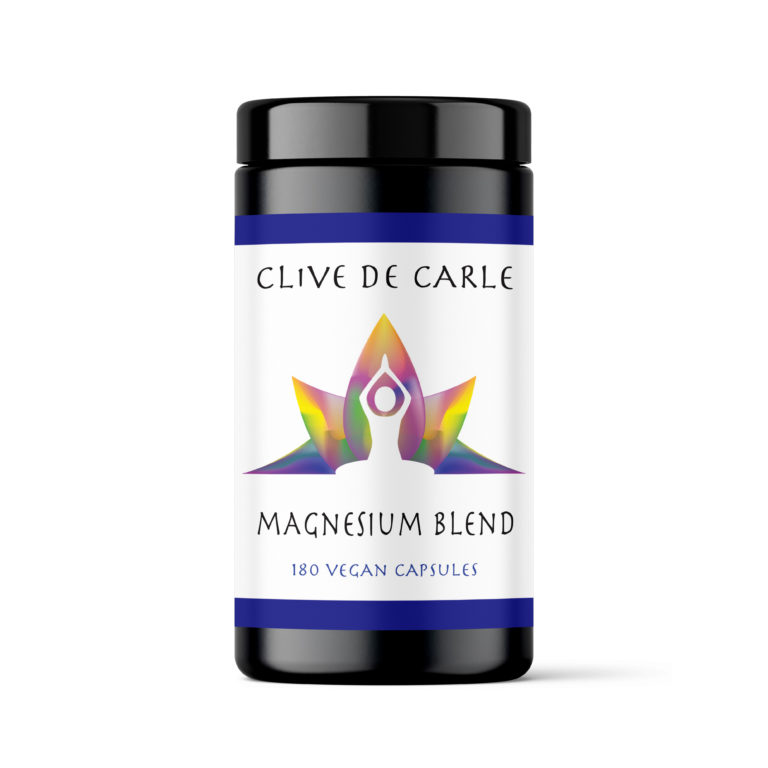
Magnesium Blend – The Most Important Mineral
INNERSTANDING may earn a commission on purchases made through these links. All products are selected based on rigorous educational relevance to our biological research.
RABBIT HOLE
Follow the biological thread deeper

