
Synthetic Meat Realities: The Metabolic Cost of Lab-Grown Protein in the UK
Updated May 2026
Critiques the nutritional profile and industrial processing of laboratory-grown meats. It assesses the environmental impact of bioreactor-based protein production in Britain.
Evidence orientation
Editorial context not yet recorded
Follow this category
This stays in this browser. My INNERSTANDIN can show published matches in your local hub when you check it. It does not send email, push, or alert notifications.
Local learning review
A private browser aid for revisiting ideas. It is not an alert or a health recommendation.
Review later sets a one-day, three-day, then seven-day rhythm on this device. Choose it only when you want to revisit this article.
Overview
The global food system is currently undergoing a radical, technocratic transformation. Under the guise of environmental stewardship and ethical evolution, a new industry has emerged: Cellular Agriculture. Specifically, the production of synthetic, laboratory-grown "meat"—often referred to as "cultivated" or "clean" meat—is being positioned as the ultimate solution to the perceived problems of traditional animal husbandry. However, beneath the polished marketing veneers of Silicon Valley-funded startups and UK-based biotech firms lies a complex, high-stakes biological gamble.
As a senior researcher at INNERSTANDING, my objective is to peel back the industrial curtain. While the mainstream narrative focuses on the reduction of greenhouse gases and the elimination of animal slaughter, it systematically ignores the metabolic cost to the human consumer and the biological integrity of the product itself. Laboratory-grown protein is not "meat" in the biological sense; it is a highly processed, cellular biomass grown in a pharmaceutical-grade environment.
In the United Kingdom, where the Food Standards Agency (FSA) is currently navigating the regulatory hurdles of these "novel foods," the push for synthetic protein is accelerating. Yet, the transition from Nose-to-Tail ancestral nutrition to bioreactor-derived slurry represents perhaps the greatest dietary deviation in human history. This article explores the mechanisms, the risks, and the hidden biological disruptions inherent in the synthetic meat industry, specifically through the lens of British metabolic health and environmental reality.
Key Statistic: The production of synthetic meat in its current form requires highly refined growth media, with some estimates suggesting the carbon footprint of lab-grown beef could be 4 to 25 times higher than traditional retail beef if pharmaceutical-grade processes are maintained at scale.
The Biology — How It Works
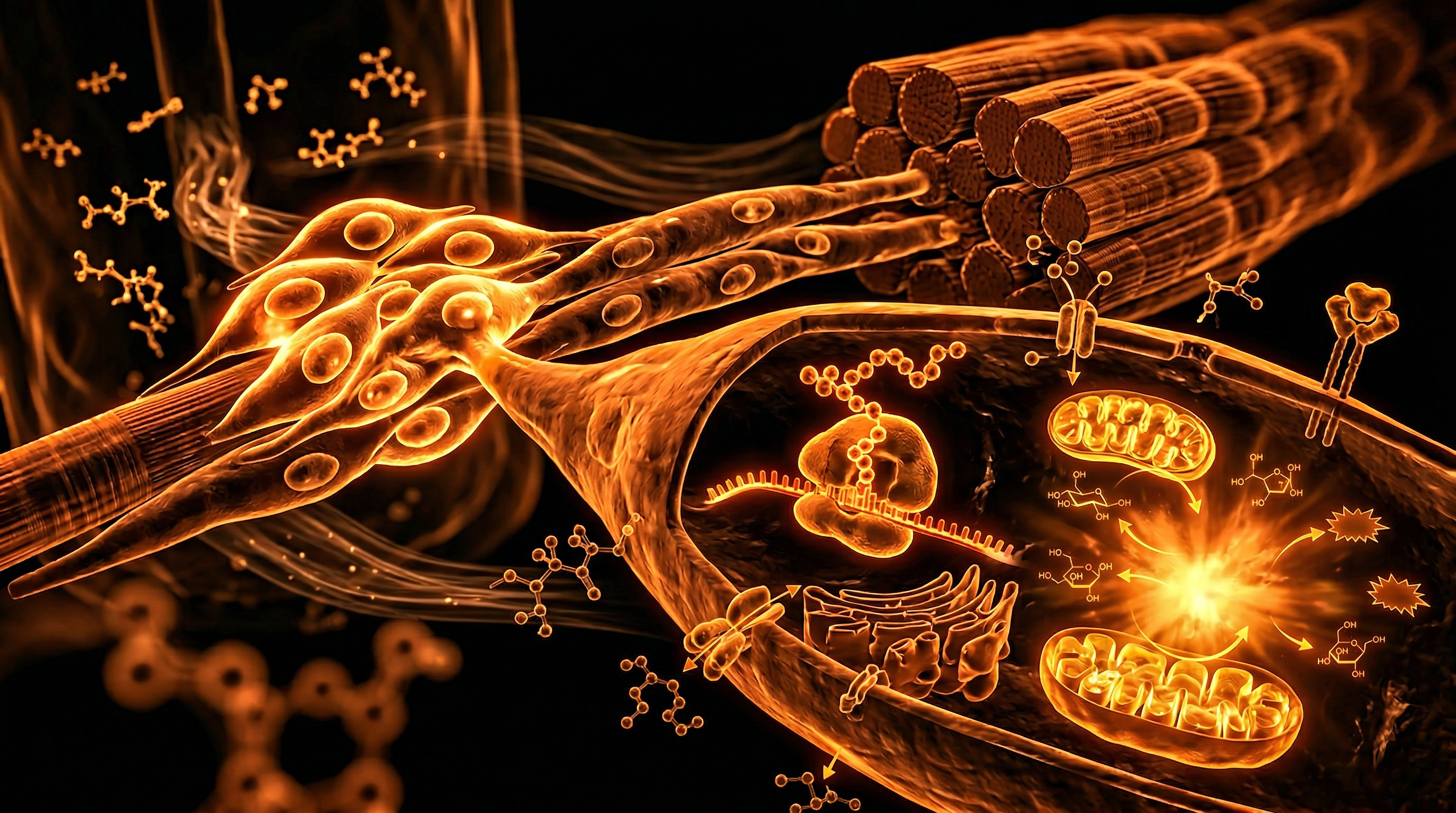
To understand the metabolic cost of synthetic meat, one must first grasp the unnatural process of its creation. Unlike a ruminant animal, which converts sunlight, water, and forage into complex nutrient-dense tissues through a sophisticated digestive system, synthetic meat is an exercise in myogenesis (muscle formation) isolated from an organism.
The Source: Stem Cell Acquisition
The process begins with a biopsy. A small sample of tissue is taken from a living animal—usually a calf or a cow. From this sample, scientists isolate satellite cells, which are multi-potent stem cells responsible for muscle repair and growth. In a living animal, these cells are regulated by a complex hormonal milieu and neurological feedback loops. In a laboratory, they are forced into a state of perpetual replication.
The Immortalisation of Cells
To achieve the scale necessary for commercial viability, companies often utilise immortalised cell lines. These are cells that have been genetically modified or chemically induced to bypass senescence—the natural point at which a cell stops dividing. In medical terms, cells that divide indefinitely without regulation are a hallmark of oncogenic (cancerous) processes. While the industry claims these cells are safe for consumption, the long-term epigenetic implications of consuming high concentrations of immortalised cellular material remain entirely unstudied in humans.
The Bioreactor Environment
The cells are placed into bioreactors—large stainless steel vats that mimic the internal temperature and conditions of an animal's body. However, the bioreactor lacks an immune system, a liver, and kidneys. To prevent the culture from dying due to its own metabolic waste or being overrun by bacteria, the environment must be kept in a state of "pharmaceutical sterility," often requiring significant chemical intervention.
Mechanisms at the Cellular Level
In a natural Nose-to-Tail framework, meat is a matrix of muscle fibres, intramuscular fats, connective tissues (collagen), and a vast array of micronutrients (B12, heme iron, creatine, carnosine). Lab-grown protein, conversely, is an attempt to isolate the proteinaceous component without the supporting biological architecture.
Proliferation vs. Differentiation
The growth process is divided into two phases: proliferation (making more cells) and differentiation (turning those cells into muscle fibres). To force proliferation, the cells are bathed in a "growth medium." Historically, this medium has relied on Fetal Bovine Serum (FBS), a byproduct harvested from the blood of unborn calves. While "animal-free" media are being developed using recombinant proteins and yeast fermentation, these synthetic alternatives introduce their own set of biological "noise."
The Absence of Metabolic Circuitry
A living animal possesses a circulatory system that delivers nutrients and removes toxins. In a bioreactor, nutrients are pumped in, but the metabolic byproducts—such as lactic acid and ammonia—can accumulate, potentially altering the pH and the structural integrity of the cells. To counter this, the growth media must be constantly cycled and filtered, a process that is energy-intensive and chemically demanding.
Scaffolding and Texture
Muscle cells grown in a liquid medium naturally form a disorganised "slurry." To give this slurry the texture of meat, companies use scaffolds. These scaffolds are often made from synthetic polymers, cellulose, or fungal mycelium.
- The Problem: These scaffolding materials are frequently integrated into the final product. The human gut is then required to process these novel, non-meat structural components alongside the lab-grown cells, potentially triggering inflammatory responses in the intestinal lining.
Environmental Threats and Biological Disruptors
The narrative that synthetic meat is "green" is one of the most successful marketing deceptions of the 21st century. When we examine the biological disruptors inherent in the production cycle, the environmental and health costs become staggering.
Pharmaceutical-Grade Pollution
Because bioreactors lack a natural immune system, the production of synthetic meat requires a level of sterility comparable to vaccine manufacturing. This involves the intensive use of:
- Antibiotics and Antimycotics: Even in "antibiotic-free" claims, these are often used in the initial stages of cell line development.
- Sterilising Agents: The heavy-duty chemicals required to clean stainless steel vats between batches create toxic runoff that traditional farming simply does not produce.
The Energy Burden
Traditional regenerative grazing in the UK sequester carbon in the soil and requires zero industrial energy to grow the "product" (the cow). In contrast, a synthetic meat facility requires 24/7 climate control, mechanical agitation, and high-pressure filtration.
Important Callout: A study from the University of California, Davis, suggested that the global warming potential of cultivated meat—when using highly refined growth media—could be significantly higher than conventional beef production, primarily due to the carbon-intensive nature of purifying the growth components.
Microplastics and Leaching
The extensive use of plastic tubing, sensors, and polymer scaffolds in the "cultivated" process increases the risk of microplastic contamination and the leaching of endocrine-disrupting chemicals (EDCs) like bisphenols and phthalates into the "meat" slurry. These compounds are known to interfere with human hormonal signalling, particularly oestrogen and testosterone pathways.
The Cascade: From Exposure to Disease
What happens when the human body is subjected to a diet of bioreactor-derived protein? We must look at the metabolic cascade—the sequence of biological events that occurs when we consume "food" that the body does not recognise as such.
Hyper-Insulinaemia and Growth Factors
Synthetic growth media are rich in insulin and Insulin-like Growth Factor 1 (IGF-1) to stimulate rapid cell division. Residual amounts of these growth factors in the final product may survive the digestive process. Chronic exposure to exogenous IGF-1 is linked to:
- Abnormal Cell Proliferation: Increasing the risk of certain cancers.
- Metabolic Syndrome: Disrupting the body's natural insulin sensitivity.
- Systemic Inflammation: Triggering a state of "low-grade" immune activation.
The "Naked Protein" Problem
Real meat provides protein alongside essential fats and minerals that modulate the rate of absorption and the metabolic response. Synthetic meat is often a "naked" protein, lacking the fat-soluble vitamins (A, D, E, K2) found in pasture-raised animal fats.
- The Result: Consuming isolated lab-protein without the accompanying micronutrient matrix can lead to "rabbit starvation" symptoms or metabolic inefficiency, as the body requires specific minerals (like zinc and magnesium) to process and utilise amino acids.
Gut Microbiome Disruption
The human microbiome has evolved over millions of years to break down natural animal tissues. The introduction of synthetic scaffolds, residual recombinant proteins, and chemical additives from the bioreactor can cause dysbiosis—an imbalance in gut bacteria. This can lead to increased intestinal permeability (Leaky Gut), allowing undigested proteins and bacterial endotoxins into the bloodstream.
What the Mainstream Narrative Omits
The UK media and government white papers often champion "Agri-Tech" without addressing the fundamental biological deficits. There are three major "omissions" in the current pro-synthetic meat discourse.
1. The Nutrient Density Gap
Mainstream reports focus on "macro-nutrients" (protein/fat/carbs). They omit the "micro-nutrient" profile. Lab-grown meat does not contain the complex array of bioactive compounds found in grass-fed British beef, such as:
- Conjugated Linoleic Acid (CLA): A potent anti-inflammatory fat.
- Glutathione: The "master antioxidant."
- Heme Iron: The most bioavailable form of iron, which is difficult to replicate in a vat.
2. The Glycation End-Product Risk
To make the grey, lab-grown slurry palatable, it must undergo significant processing, including the addition of flavourings, colourants (like leghemoglobin), and often "extrusion" under high heat. This creates Advanced Glycation End-products (AGEs) and Lipid Oxidation Products, which are known to accelerate ageing and contribute to arterial stiffness.
3. The Ethical Mirage
While marketed as "cruelty-free," the industry is built on the foundation of industrial extraction. The reliance on Fetal Bovine Serum (FBS) in R&D and the energy-intensive nature of the process simply shift the "cruelty" from the slaughterhouse to the environment and the future health of the population.
The UK Context
The United Kingdom is at a crossroads. Post-Brexit, the UK has the autonomy to set its own food standards, and there is a significant push from the Department for Science, Innovation and Technology to make Britain a global hub for "Cultivated Meat."
The Rise of British Agri-Tech
Companies like Ivy Farm Technologies (Oxford) and Hoxton Farms (London) are leading the charge. They argue that the UK's high population density and limited grazing land make synthetic protein a necessity for "food security." However, this overlooks the UK’s unique geography—vast areas of the British Isles (such as the Highlands and the Welsh Valleys) are unsuitable for crops but perfect for regenerative ruminant grazing.
Regulatory Shortcuts
The Food Standards Agency (FSA) is under pressure to fast-track "Novel Food" applications to foster economic growth. There is a risk that long-term metabolic safety studies will be bypassed in favour of short-term economic gains. Unlike traditional meat, which has a History of Safe Use (HoSU) spanning the entirety of human existence, synthetic meat has a history of safe use of zero years.
The Threat to British Farming
The industrialisation of meat threatens the "Nose-to-Tail" economy of local UK butchers and regenerative farmers. By centralising "meat" production in a few urban bioreactor facilities, we destroy the rural landscape and the knowledge base of traditional animal husbandry that has sustained the British Isles for millennia.
Protective Measures and Recovery Protocols
For the health-conscious individual in the UK, the rise of synthetic meat necessitates a proactive approach to food sourcing and metabolic protection.
1. Reclaim the Nose-to-Tail Ethos
The most effective protection against the "metabolic cost" of synthetic food is to double down on ancestral nutrition. This means:
- Prioritising Organ Meats: Liver, heart, and kidney provide the micronutrients that lab-grown "muscle slurry" lacks.
- Sourcing Locally: Purchase meat from British farms that utilise regenerative grazing practices. Look for certifications like "Pasture for Life."
2. Metabolic Detoxification
If you have been exposed to highly processed "meat alternatives," focus on restoring gut integrity:
- Bone Broth: Rich in glycine and collagen to repair the gut lining.
- Fermented Foods: Traditional British ferments or high-quality probiotics to counter dysbiosis.
- Avoid "Plant-Based" Fillers: Many lab-grown products are blended with soy or pea protein isolates, which contain high levels of anti-nutrients (phytates and lectins).
3. Advocacy and Transparency
- Demand Labelling: In the UK, push for clear labelling that distinguishes "Cultivated Biomass" from "Natural Meat."
- Support the FSA's Rigour: Write to your MP to demand that "Novel Foods" undergo 20-year longitudinal safety studies before being integrated into school meals or hospital menus.
Summary: Key Takeaways
The transition toward synthetic meat is not an evolution of food; it is an industrial bypass of the natural biological order. As we have seen, the "Metabolic Cost" is far too high for a society already struggling with chronic disease.
- Biological Mismatch: Human physiology is not designed to process immortalised cell lines or synthetic growth scaffolds.
- The Nutrient Void: Lab-grown protein lacks the essential fat-soluble vitamins and bioactive compounds found in whole-animal, Nose-to-Tail nutrition.
- Environmental Deception: The energy requirements and chemical waste of bioreactors may exceed those of regenerative farming.
- UK Risk: The drive to make Britain an "Agri-Tech Hub" threatens to displace superior-quality British beef and lamb with inferior, pharmaceutical-grade substitutes.
- Health First: True food security lies in the restoration of our soil and the support of local, regenerative ecosystems—not in the stainless steel vats of a laboratory.
As we look toward the future of nutrition in the UK, we must ask ourselves: do we want a food system that is "efficient" for corporations, or one that is "compatible" with human biology? The answer lies in the fields, not the laboratories. The choice to remain human starts with the choice to eat real.
This article is provided for informational and educational purposes only. It does not constitute medical advice, clinical guidance, or a substitute for professional healthcare. Information reflects cited research at time of publication. Always consult a qualified healthcare professional before acting on any health information.
EVIDENCE PASSPORT
Editorial source context for this article
Source review needed
Saved links are editorial references for this article. They may support specific claims rather than every sentence. Open and assess each source in context. This passport does not independently verify them.
Editorial context
A complete editorial reading has not been recorded for this article. Source links remain available for you to open and assess directly.
Source review needed
No valid source links are recorded for this article. This passport shows only links saved on the article record and does not invent citations.
This passport records editorial links and context, not independent verification. Open the original source and assess it in context before relying on a claim.
Medical Disclaimer
The information in this article is for educational purposes only and does not constitute medical advice, diagnosis, or treatment. Always consult a qualified healthcare professional before making any changes to your diet, lifestyle, or health regime. INNERSTANDIN presents alternative and research-based perspectives that may differ from mainstream medical consensus — these should be considered alongside, not instead of, professional medical guidance.
Read Full DisclaimerContinue the thread
Keep this question moving.
Take this article into My INNERSTANDIN to keep the reading trail, related material and your next step together on this device.
Dig deeper in the Library
Free, longform PDF volumes that go beyond headlines into mechanisms and references.