
Synthetic Probiotics: The Threat of Laboratory-Grown Strains
Updated May 2026
Large corporations are patenting genetically modified probiotic strains that lack natural synergy. This article warns against the move away from traditional, wild-fermented foods.
Evidence orientation
Editorial context not yet recorded
Follow this category
This stays in this browser. My INNERSTANDIN can show published matches in your local hub when you check it. It does not send email, push, or alert notifications.
Local learning review
A private browser aid for revisiting ideas. It is not an alert or a health recommendation.
Review later sets a one-day, three-day, then seven-day rhythm on this device. Choose it only when you want to revisit this article.
Overview
The human microbiome is the final frontier of biological sovereignty. For millennia, the symbiotic relationship between Homo sapiens and the microbial world was forged in the crucibles of the natural environment and traditional fermentation. From the salt-cured vegetables of the Orient to the soured dairy of the Caucasus, our ancestors co-evolved with "wild" microbial consortia—complex, self-regulating ecosystems of bacteria, yeasts, and phages. However, we are currently witnessing a quiet but radical shift in the paradigm of gastrointestinal health: the transition from evolutionary microbiology to synthetic biology.
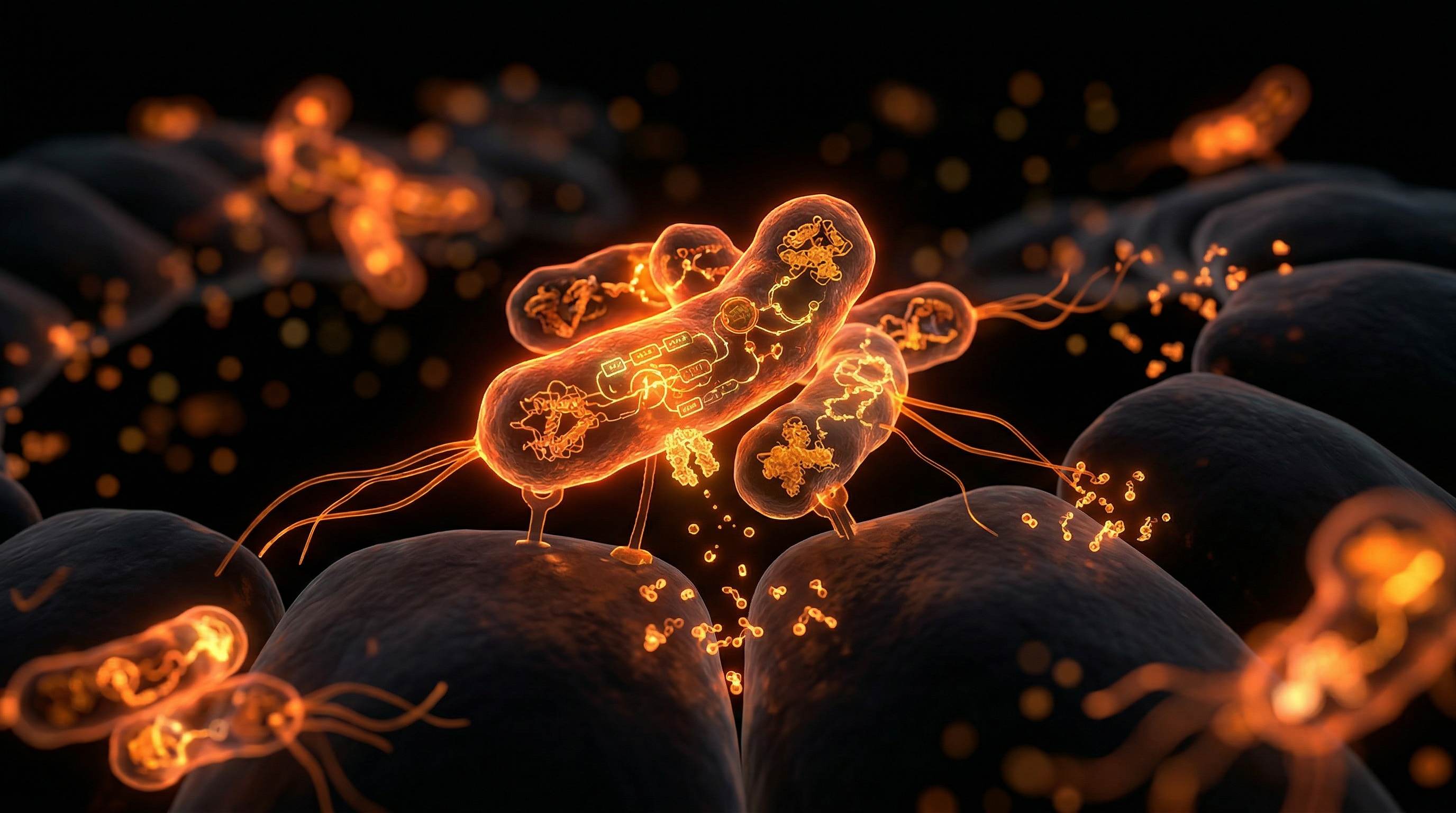
As a senior biological researcher for INNERSTANDING, I have observed the escalating industrialisation of the gut. Large-scale biotechnology corporations are no longer content with simply selling naturally occurring bacteria. They are moving toward the patenting and distribution of Synthetic Probiotics—laboratory-grown, genetically modified (GM), or "precision-bred" microbial strains. These organisms are designed in sterile environments, often stripped of the epigenetic memory required to survive and harmonise within the chaotic, competitive landscape of the human alimentary canal.
The threat is twofold. First, there is the biological risk: these strains lack the natural synergy of wild-fermented foods, potentially leading to monocultural dominance and the suppression of indigenous microflora. Second, there is the socio-economic risk: the corporate enclosure of the "biological commons." By patenting specific genetic sequences, corporations are turning a fundamental human right—the right to a diverse, resilient microbiome—into a subscription-based commodity. This article serves as a technical warning against the move away from the ancestral wisdom of fermented foods and toward a precarious, laboratory-defined future of health.
The Biology — How It Works
To understand the threat, we must first examine the shift from bioprospecting to bio-engineering. Traditional probiotics were typically "wild" isolates—strains found in healthy human populations or traditional fermented substrates. Synthetic probiotics, however, are products of recombinant DNA technology and CRISPR-Cas9 gene editing.
The process begins with "In Silico" design. Researchers use computational models to identify metabolic pathways they wish to enhance or suppress. For instance, a corporation might want a strain of Lactobacillus acidophilus to produce supra-physiological levels of a specific short-chain fatty acid (SCFA) like butyrate, or perhaps a neutralising enzyme for a specific toxin.
The Engineering of "Designer" Strains
Once the target sequence is identified, the microbial genome is "edited." This is fundamentally different from traditional selective breeding.
- Gene Knock-ins: Inserting foreign genes (transgenes) from different species to introduce new functions.
- Gene Knock-outs: Deactivating specific genes that might interfere with industrial shelf-life or patentable uniqueness.
- Plasmid Insertion: Using extrachromosomal DNA loops to carry "payloads" into the bacteria.
Fact: Unlike wild strains, which possess a "pan-genome" that allows for immense adaptability, synthetic strains are often engineered for functional narrowness, focusing on a single metabolic output at the expense of ecological fitness.
The result is a "standardised" biological product. While wild-fermented foods like sauerkraut or kefir contain hundreds of fluctuating strains that respond to the environment, a synthetic probiotic is a rigid, invariant clone. These lab-grown strains are then cultivated in massive vats using high-input growth media that bear no resemblance to the nutrients found in a human diet. This lack of "environmental priming" means that upon ingestion, these bacteria are often ill-equipped for the complex chemical warfare that occurs in the human gut.
Mechanisms at the Cellular Level
The danger of synthetic probiotics is not merely that they might fail to work; it is that they might work in ways we cannot predict once they enter the complex environment of the host. At the cellular level, the primary concern is Horizontal Gene Transfer (HGT).
Horizontal Gene Transfer and Genetic Contamination
Bacteria do not reproduce sexually; they swap genetic material through transformation, transduction, and conjugation. When a synthetic, genetically modified probiotic is introduced into the gut, it does not remain an isolated island. It interacts with the trillions of resident microbes.
- Conjugation: The synthetic strain can "plug into" a native bacterium and transfer its modified DNA.
- Antibiotic Resistance Markers: In the lab, researchers often use antibiotic resistance genes as "selectable markers" to ensure only the modified bacteria survive during the engineering phase. While regulators claim these markers are removed or inactivated, the risk of "leakage" into the native population remains a significant concern in molecular biology circles.
Metabolic Hijacking
Synthetic strains are often engineered for metabolic overdrive. For example, a strain designed to overproduce a certain vitamin or neurotransmitter may deplete the surrounding environment of essential precursors required by native, beneficial species. This creates a "metabolic sink," effectively starving the indigenous flora to fuel the engineered monoculture.
The Disruption of Quorum Sensing
Wild microbial communities communicate via Quorum Sensing (QS)—a chemical signalling system that regulates biofilm formation, virulence, and nutrient acquisition. Synthetic strains often possess "broken" or "muted" QS systems to make them more compliant in industrial fermenters. When introduced into a wild ecosystem (the human gut), these "socially deaf" bacteria can disrupt the delicate balance of signals, potentially leading to the collapse of local microbial "guilds" that protect the intestinal lining.
Environmental Threats and Biological Disruptors
The narrative of "probiotic health" often ignores the broader ecological impact. These synthetic organisms do not stay within the human body; they are excreted into the environment, entering sewage systems and, eventually, soil and water tables.
The Bio-Containment Failure
There is no such thing as a "closed system" in human biology. Every person taking a synthetic probiotic becomes a potential vector for environmental genetic modification.
- Effluent Contamination: Sewage treatment plants are not designed to filter out genetically modified bacterial DNA.
- Soil Microbiome Displacement: As synthetic strains enter the soil, they may outcompete indigenous soil-based organisms (SBOs), which are essential for nutrient cycling and plant health.
Synergy with Chemical Stressors
Our modern environment is saturated with biological disruptors, most notably Glyphosate and other organophosphate pesticides. Glyphosate targets the Shikimate pathway, which is present in almost all bacteria.
Scientific Warning: Emerging research suggests that synthetic probiotics may be engineered with resistance to common pesticides. While this allows the probiotic to survive in a "toxic" host, it further encourages the use of these chemicals, creating a feedback loop of biological degradation where only the "patented" and "chemically-resistant" survive.
This synergy between synthetic biology and chemical agriculture represents a move toward a "monocultured life," where both our fields and our guts are dominated by a handful of corporate-controlled, laboratory-optimised species.
The Cascade: From Exposure to Disease
The shift from diverse, wild-fermented microbial exposure to synthetic, narrow-spectrum supplementation triggers a physiological cascade that often leads to the very chronic diseases these products claim to prevent.
Stage 1: The Loss of Colonisation Resistance
A healthy, wild microbiome provides "colonisation resistance"—it is so densely packed and well-integrated that pathogens cannot find a foothold. Synthetic strains, being ecologically weak, often fail to colonise effectively, leaving "gaps" in the microbial carpet. These gaps are then exploited by opportunistic pathogens like Candida albicans or Clostridioides difficile.
Stage 2: The "Trojan Horse" Effect and Immune Priming
The immune system's GALT (Gut-Associated Lymphoid Tissue) is trained by exposure to diverse, wild microbes. Synthetic strains, presenting "novel" or "alien" surface proteins due to genetic engineering, can cause the immune system to overreact.
- Neo-antigens: Engineered proteins may be recognised as "non-self" in an aggressive way, leading to chronic low-grade inflammation.
- Molecular Mimicry: If a synthetic strain's engineered protein resembles a human protein (e.g., in the thyroid or joints), it can trigger autoimmune conditions through a process of cross-reactivity.
Stage 3: Systemic Dysregulation
The gut is the primary site of neurotransmitter production (the "Second Brain"). Synthetic strains engineered to pump out high levels of GABA or Serotonin may disrupt the body's natural feedback loops.
- Down-regulation of Receptors: Chronic over-exposure to a single neurotransmitter from a synthetic source can lead to the down-regulation of host receptors, potentially exacerbating anxiety, depression, or sleep disorders once the supplement is discontinued.
What the Mainstream Narrative Omits
The mainstream health media and corporate "wellness" brands present synthetic probiotics as a triumph of precision medicine. However, their narrative carefully omits several critical facts.
The Patent Trap
You cannot patent a wild-type Lactobacillus rhamnosus found in a traditional yogurt. You can, however, patent a version that has been genetically modified to express a specific fluorescent protein or a modified metabolic pathway. Patenting is the primary driver of the synthetic probiotic movement. Corporations are incentivised to move away from wild strains because they cannot "own" them. This leads to a marketplace where the "best" products are not those that are most biologically compatible, but those that are most legally defensible and profitable.
The "GRAS" Loophole
In many jurisdictions, including the US (FDA) and to a lesser extent the EU/UK, new probiotic strains often seek Generally Recognized as Safe (GRAS) status. This is a self-affirmation process where the company provides its own safety data.
Callout: Long-term, multi-generational studies on the impact of synthetic, gene-edited microbes on the human germline and the environmental microbiome are virtually non-existent.
The Deceptive "CFU" War
Mainstream marketing focuses on "Colony Forming Units" (CFUs)—the idea that more is better. However, 100 billion CFUs of a single, laboratory-cloned, "lazy" strain are far less effective than 1 million CFUs from a diverse, wild-fermented kraut containing 50 different species and their associated postbiotic metabolites. The "CFU war" is a distraction from the fundamental issue of biological quality and ecological diversity.
The UK Context
In the United Kingdom, the landscape of synthetic biology is shifting rapidly following Brexit. The UK government has signaled a strong desire to become a "global hub" for life sciences and biotechnology, leading to significant legislative changes.
The Genetic Technology (Precision Breeding) Act 2023
The passing of the Genetic Technology (Precision Breeding) Act 2023 is a landmark moment. This legislation effectively removes "precision-bred" organisms (those created using gene editing like CRISPR, provided the change could have occurred naturally) from the strict regulations governing traditional GMOs.
- This means that in the UK, "precision-bred" synthetic probiotics may soon enter the market without being labelled as "Genetically Modified."
- For the British consumer, this creates a transparency vacuum. You may be consuming a laboratory-engineered strain while believing it to be a natural health product.
The Rise of the "Microbiome Industry" in the Golden Triangle
The concentration of biotech firms in the London-Oxford-Cambridge "Golden Triangle" has led to a surge in start-ups focusing on "live biotherapeutics." While this sounds sophisticated, it often involves the isolation of strains from the UK population, their "optimisation" in a lab, and their subsequent re-sale as expensive, patented prescriptions. This is a form of biological enclosure occurring right on British soil.
The Food Standards Agency (FSA) is under increasing pressure to streamline approvals for these "novel foods," raising concerns about whether safety assessments are keeping pace with the speed of innovation.
Protective Measures and Recovery Protocols
Faced with the industrialisation of our internal ecology, how do we protect our biological sovereignty? The solution lies in returning to evolutionary biology and low-tech, high-wisdom interventions.
1. Prioritise Wild Fermentation
The gold standard for microbial health remains wild-fermented foods. Unlike synthetic probiotics, these are "open-source" biology.
- Diversity: A single jar of wild-fermented kimchi contains a fluctuating ecosystem that evolves over time.
- Synergy: The bacteria, yeasts, and phages in wild ferments have "co-evolved" to support one another's survival.
- Prebiotics and Postbiotics: Fermented foods provide not just the "seed" (the bacteria) but also the "fertilizer" (prebiotic fibre) and the "fruit" (metabolites like lactic acid, acetate, and vitamins).
2. Sourcing Soil-Based Organisms (SBOs)
Modern hygiene has disconnected us from the "old friends"—the bacteria found in healthy soil.
- Seek out organic, "dirty" vegetables from local regenerative farms (e.g., UK-based organic box schemes).
- Gardening without chemical pesticides allows for natural exposure to Bacillus species and other resilient, non-modified organisms that have survived in the wild for eons.
3. Avoid "Monoculture" Supplementation
Be wary of "high-potency" probiotics that list only one or two patented strains (usually followed by a series of letters and numbers like L. rhamnosus GG or B. animalis DN-173 010). These are the hallmarks of laboratory-grown, patented isolates. If you must supplement, choose brands that use "ancestral" strains and avoid those marketed by mega-conglomerates.
4. The "Microbiome Sanctuary" Protocol
To recover from exposure to synthetic strains or antibiotic use:
- Fast and Reset: Periodic fasting can help "prune" overgrown lab strains and encourage the resurgence of deep-seated indigenous flora.
- Diverse Fiber Intake: Consume a "rainbow" of plant fibres. Diversity of input equals diversity of output.
- Filtered Water: In the UK, tap water contains chlorine and fluoride, both of which are designed to kill bacteria. Use high-quality filtration to prevent the daily "culling" of your delicate gut garden.
Summary: Key Takeaways
The move toward synthetic probiotics represents a fundamental misunderstanding of human biology. We are not machines to be "reprogrammed" with patented code; we are ecosystems that must be tended with respect for evolutionary history.
- The Illusion of Control: Synthetic biology attempts to simplify the infinitely complex gut ecosystem into a few "profitable" pathways. This reductionism is the root of biological instability.
- Corporate Enclosure: The transition from wild-fermented foods to patented pills is an attempt to privatise the human microbiome.
- Biological Risks: Horizontal gene transfer, metabolic hijacking, and the loss of colonisation resistance are real and under-studied threats posed by lab-grown strains.
- The UK Frontier: New legislation like the Precision Breeding Act is making the UK a testing ground for these "invisible" GMOs.
- The Solution is Ancestral: True health is found in the complexity of nature—in the "wild" ferments, the "living" soil, and the rejection of the laboratory-grown monoculture.
As we move forward, the choice is clear: do we entrust our internal ecology to the profit-driven motives of synthetic biology, or do we reclaim our health through the timeless, resilient wisdom of the natural world? The future of our species may well depend on our ability to distinguish between the "living" and the "engineered."
This article is provided for informational and educational purposes only. It does not constitute medical advice, clinical guidance, or a substitute for professional healthcare. Information reflects cited research at time of publication. Always consult a qualified healthcare professional before acting on any health information.
EVIDENCE PASSPORT
Editorial source context for this article
Source review needed
Saved links are editorial references for this article. They may support specific claims rather than every sentence. Open and assess each source in context. This passport does not independently verify them.
Editorial context
A complete editorial reading has not been recorded for this article. Source links remain available for you to open and assess directly.
Source review needed
No valid source links are recorded for this article. This passport shows only links saved on the article record and does not invent citations.
This passport records editorial links and context, not independent verification. Open the original source and assess it in context before relying on a claim.
Medical Disclaimer
The information in this article is for educational purposes only and does not constitute medical advice, diagnosis, or treatment. Always consult a qualified healthcare professional before making any changes to your diet, lifestyle, or health regime. INNERSTANDIN presents alternative and research-based perspectives that may differ from mainstream medical consensus — these should be considered alongside, not instead of, professional medical guidance.
Read Full DisclaimerContinue the thread
Keep this question moving.
Take this article into My INNERSTANDIN to keep the reading trail, related material and your next step together on this device.
Dig deeper in the Library
Free, longform PDF volumes that go beyond headlines into mechanisms and references.