
The Cascade of Intervention: Physiological Consequences of Induction
Updated May 2026
Elective inductions often trigger a cascade of interventions that move labor away from biological norms. Each intervention alters the biochemical environment, increasing the risk of emergency surgical birth.
Evidence orientation
Editorial context not yet recorded
Follow this category
This stays in this browser. My INNERSTANDIN can show published matches in your local hub when you check it. It does not send email, push, or alert notifications.
Local learning review
A private browser aid for revisiting ideas. It is not an alert or a health recommendation.
Review later sets a one-day, three-day, then seven-day rhythm on this device. Choose it only when you want to revisit this article.
Overview
In the modern obstetric landscape, the transition from pregnancy to motherhood has shifted from a spontaneous biological rite of passage to a highly managed medical event. At the heart of this shift lies the "Cascade of Intervention"—a phenomenon where a single medical interference in the natural process of parturition necessitates a series of subsequent interventions to manage the side effects of the first.
The most frequent trigger for this cascade is elective or non-emergency induction of labour. While medical induction is a life-saving tool in cases of genuine pathology (such as pre-eclampsia or placental abruption), its application as a routine management tool for "post-dates," suspected macrosomia (large baby), or provider convenience has reached unprecedented levels.
From a biological perspective, labour is not merely a mechanical process of "opening the exit." It is a sophisticated, neuro-hormonal symphony involving the mother’s brain, the placenta, and the developing foetal endocrine system. When we bypass the natural onset of labour, we are not simply "starting the clock" early; we are overriding a delicate evolutionary blueprint. This article explores the deep physiological repercussions of induction, detailing how synthetic analogues of birth hormones fail to replicate the complex feedback loops of natural labour, ultimately increasing the risk of maternal trauma, foetal distress, and emergency surgical intervention.
Fact: In the UK and other Western nations, induction rates have soared, with some NHS trusts reporting induction rates exceeding 35-40% of all births, despite the WHO suggesting that medical necessity for induction should ideally sit between 10-15%.
The Biology — How It Works
To understand why induction is so disruptive, one must first understand the Endogenous Hormonal Blueprint of physiological labour. Spontaneous labour is the result of a "Fetal-Maternal Dialogue"—a biochemical conversation that has evolved over millions of years.
The Initiation of Labour
Labour does not begin in the uterus; it begins in the lungs and brain of the foetus. When the foetal lungs reach maturity, they secrete Surfactant Protein A (SP-A). This protein acts as a signalling molecule that triggers an inflammatory response in the membranes, leading to an increase in Prostaglandins. Simultaneously, the foetal hypothalamus signals the adrenal glands to produce Cortisol, which shifts the mother’s hormonal balance from Progesterone (the pregnancy-maintaining hormone) to Oestrogen (the labour-priming hormone).
The Oxytocin Pulse
Oxytocin, often called the "hormone of love," is the primary driver of uterine contractions. However, in natural labour, oxytocin is released from the maternal posterior pituitary gland in distinct, rhythmic pulses.
- These pulses allow for "rest periods" between contractions, ensuring the placenta can re-oxygenate.
- Endogenous oxytocin crosses into the maternal brain, where it acts as a powerful neuromodulator, reducing pain perception, fostering maternal bonding, and inducing a state of "labour encephalopathy"—the dream-like state that helps women cope with the intensity of birth.
Beta-Endorphins: The Natural Opioids
In response to the stress and pain of uterine contractions, the body releases Beta-endorphins. These are endogenous opioids that provide natural analgesia. There is a precise feedback loop: as oxytocin levels rise, endorphin levels rise to match them. This synergy ensures that the mother’s pain remains within her threshold of "manageable intensity."
The Catecholamine Shift
Toward the end of labour (the transition phase), there is a natural surge in Adrenaline and Noradrenaline. This "fight or flight" surge is not a sign of distress but a biological trigger that provides the mother with a final burst of energy to push the baby out and ensures the baby is alert and ready for its first breath.
Mechanisms at the Cellular Level
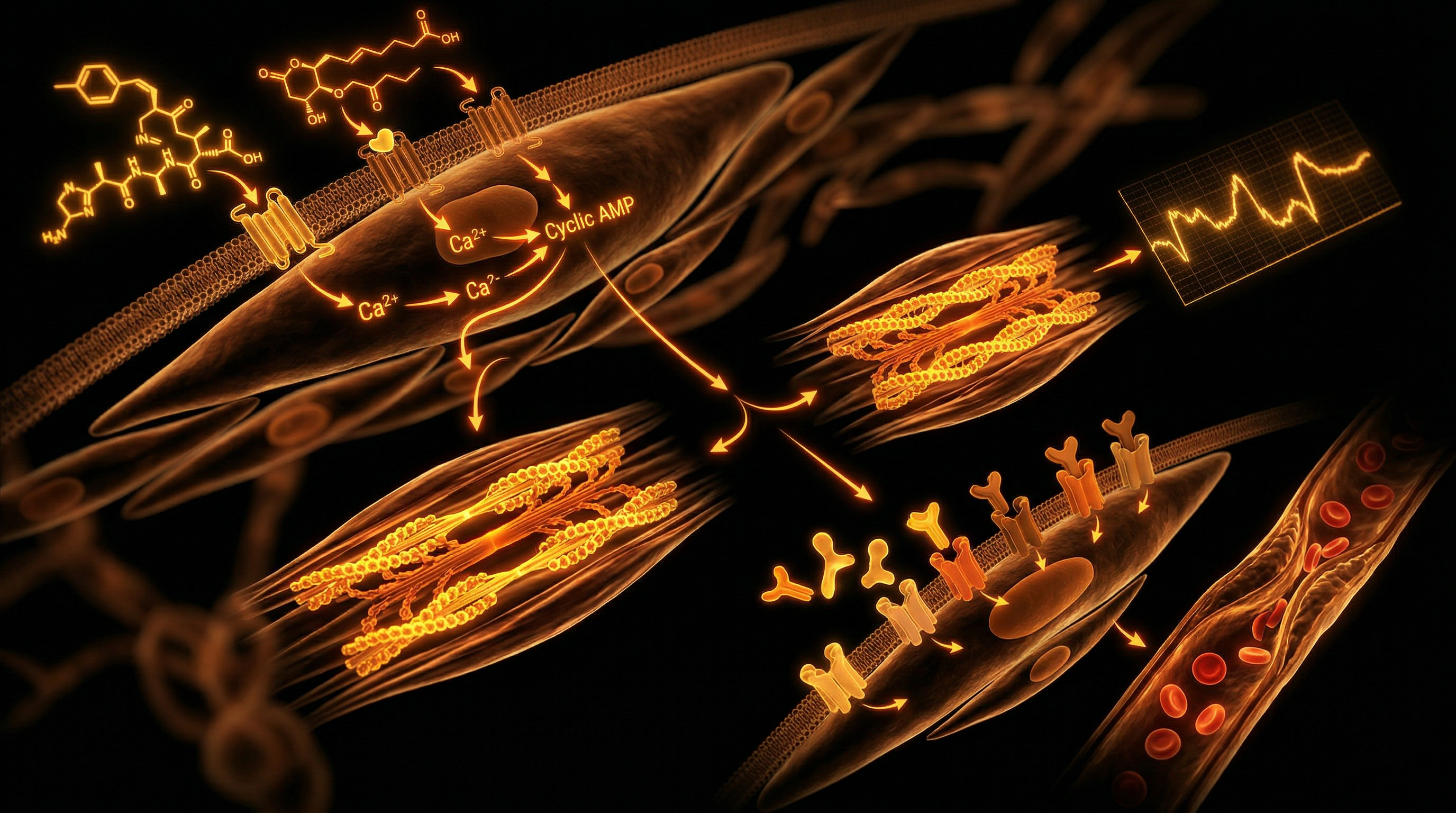
When we introduce Synthetic Oxytocin (Syntocinon or Pitocin) or exogenous prostaglandins, we disrupt these pathways at a cellular and molecular level.
Receptor Down-regulation
The uterus contains Oxytocin Receptors (OXTR). In a physiological birth, these receptors are primed by oestrogen to be highly sensitive. However, when a continuous high-dose infusion of synthetic oxytocin is administered via IV, the receptors can become "saturated."
- In a process known as Internalisation or Down-regulation, the uterine cells actually pull the receptors inside the cell membrane to protect themselves from over-stimulation.
- This explains why induced labours often "stall" or require ever-increasing doses of the drug.
- Postpartum, this lack of functional receptors can lead to Uterine Atony—the leading cause of postpartum haemorrhage—because the uterus "forgets" how to contract effectively once the synthetic supply is cut.
The Blood-Brain Barrier (The Great Barrier)
Perhaps the most significant difference between natural and synthetic oxytocin is the Blood-Brain Barrier.
- Endogenous oxytocin is produced in the brain and circulates through both the central nervous system and the body.
- Synthetic oxytocin, administered intravenously, cannot cross the blood-brain barrier in significant amounts.
This creates a "biological mismatch." The uterus is contracting with extreme force (the "body" knows it is in labour), but the brain has not received the signal to release the corresponding Beta-endorphins or to enter the protective state of labour encephalopathy. The result is a labour that is physiologically more painful and psychologically more traumatic than a spontaneous one.
Mitochondrial Stress
The uterine muscle (myometrium) is an incredibly energy-demanding organ. During induction, the frequency and duration of contractions are often higher than in natural labour (hyperstimulation). This places immense stress on the Mitochondria within the uterine cells. When the uterus is denied adequate rest between contractions, cellular respiration shifts from aerobic to anaerobic, leading to a buildup of lactic acid and "muscle failure," which often manifests as a "failure to progress."
Statistical Callout: Women who undergo induction are significantly more likely to require an epidural (up to 70% in some cohorts) compared to those who go into labour spontaneously, largely due to the mechanical intensity of synthetic-driven contractions.
Environmental Threats and Biological Disruptors
The cascade of intervention is not merely a metaphor; it is a documented sequence of events where each medical action creates an environmental threat to the biological norm.
1. Chemical Ripening (The Prostaglandin Stage)
The first step in many inductions is the application of PGE2 (Dinoprostone) or PGE1 (Misoprostol) to the cervix. While these drugs soften the cervix, they can cause "tachysystole"—contractions that are too frequent (more than five in ten minutes). This can cause immediate foetal heart rate decelerations as the baby’s oxygen supply is compromised.
2. Artificial Rupture of Membranes (ARM)
Commonly known as "breaking the waters," ARM is often used to accelerate labour. However, the amniotic fluid provides a vital cushion for the umbilical cord. Once the waters are broken:
- The risk of Cord Compression increases.
- The baby’s head is pressed directly against the cervix without the "forewaters" cushion, which can lead to early-onset foetal head oedema and further distress.
- The "clock" starts ticking; most hospitals have strict policies requiring birth within 24 hours of ROM due to infection risk, putting the mother under immense psychological pressure.
3. Synthetic Oxytocin (The Pitocin/Syntocinon Drip)
Because the body did not initiate labour itself, the cervix often fails to dilate despite the waters being broken. The IV drip is then started. Synthetic oxytocin creates contractions that are:
- Longer in duration.
- Higher in peak pressure.
- Closer together.
This prevents the intervillous space of the placenta from filling with fresh, oxygenated blood between contractions, leading to Chronic Foetal Hypoxia.
4. The Epidural
Due to the "unnatural" pain profile of an induced labour, the majority of women eventually request an Epidural. While a blessing for pain relief, the epidural introduces further disruptors:
- It causes maternal hypotension (drop in blood pressure), further reducing placental perfusion.
- It numbs the pelvic floor muscles, which are crucial for the "passive rotation" of the baby into the optimal birth position.
- It often inhibits the release of endogenous oxytocin even further, requiring even higher doses of the IV drip to keep labour moving.
The Cascade: From Exposure to Disease
The cumulative effect of these interventions is a move away from "Health" toward "Pathology." The final stage of the cascade is often Instrumental Delivery (Forceps/Venteuse) or Emergency Caesarean Section.
The Mechanical Failure
When the baby is unable to rotate due to the epidural, and the mother is unable to move (confined to bed by IV lines, monitors, and the epidural), the baby frequently becomes "stuck" in an Occiput Posterior (OP) or asynclitic position. This is not a failure of the woman’s body, but a failure of the medicalised environment to allow for the movement required for the "Cardinal Movements" of birth.
Foetal Distress and the "Emergency"
The constant pounding of synthetic contractions often leads to Non-Reassuring Foetal Heart Rate (NRFHR) patterns. The medical team, observing these decelerations on the monitor, then declares an "emergency." In many cases, this emergency is iatrogenic—it was caused by the very drugs used to start the labour.
Long-term Pathophysiological Consequences
The impact of the cascade does not end in the delivery room.
- Microbiome Disruption: Induction often leads to C-sections or the use of prophylactic antibiotics. This prevents the baby from being colonised by the mother’s vaginal and faecal flora, which is the "priming" event for the infant’s immune system.
- Epigenetic Alterations: Emerging research suggests that exposure to high levels of synthetic oxytocin during labour may alter the expression of oxytocin receptors in the infant’s brain, potentially impacting long-term social and emotional development.
- Breastfeeding Challenges: The fluid overload from IV drips (common in induction/epidural) can cause breast engorgement that makes latching difficult. Furthermore, the lack of a natural "oxytocin peak" at birth can delay the Lactogenesis II (the milk coming in).
Key Fact: A study published in the Journal of Perinatal Education found that infants born via induced labour had lower scores on breastfeeding assessments at 48 hours postpartum compared to those born after spontaneous labour.
What the Mainstream Narrative Omits
The mainstream medical narrative often frames induction as a way to "reduce risk," particularly the risk of stillbirth in post-dates pregnancies. However, this narrative often relies on a selective interpretation of data, such as the ARRIVE Trial.
The Fallacy of the "Expired" Placenta
A common justification for induction is that the placenta "ages" or "fails" after 40 or 41 weeks. Biologically, the placenta is an organ designed to last as long as the pregnancy requires. While placental insufficiency is a real condition, it is a pathology, not a standard feature of a healthy 42-week pregnancy. Framing 41 weeks as an "expiry date" ignores the natural bell curve of human gestation, which naturally spans from 37 to 43 weeks.
Financial and Logistical Drivers
The modern hospital system operates on a "conveyor belt" model. Spontaneous labour is unpredictable; it often starts at 3:00 AM and can last for days. Induction allows for:
- Scheduled staffing.
- Higher turnover of birth rooms.
- Predictable billing cycles.
The narrative of "safety" often masks the reality of institutional convenience.
The "Big Baby" Myth
Induction for suspected macrosomia (large baby) is one of the most common "soft" indications. Yet, ultrasound at term has an error margin of up to 15-20%. Multiple studies have shown that the suspicion of a big baby is more dangerous than the big baby itself, as the suspicion leads to a cascade of interventions (including induction) that the mother might not have otherwise needed.
The UK Context
In the United Kingdom, the NHS is currently grappling with a "Safety Crisis" in maternity services. Reports such as the Ockenden Report and the Kirkup Report have highlighted systemic failures. However, the response has often been an even greater push toward "standardisation" and "risk management," which translates to more inductions.
The NICE Guidelines
The National Institute for Health and Care Excellence (NICE) updated its guidelines in 2021 to suggest that induction should be offered from 41 weeks. While the language emphasises "informed choice," the reality on the ground is often one of "informed compliance." Women are frequently told their baby is at "increased risk of death" if they don't induce, without being given the absolute risk statistics (which remain very low).
The "Saving Babies' Lives" Care Bundle
This initiative by NHS England has pushed for increased monitoring and lower thresholds for intervention. While well-intentioned, it has contributed to a culture of fear where any deviation from the "average" is treated as a medical emergency, further fueling the cascade of intervention.
Midwifery under Pressure
UK midwives, traditionally the guardians of physiological birth, are increasingly working in "medically dominated" environments. Short-staffing means that "watchful waiting"—the hallmark of good midwifery—is often replaced by the efficiency of the induction drip.
Protective Measures and Recovery Protocols
For those navigating the current system, or for those recovering from an induced birth, there are strategies to mitigate the effects of the cascade and restore biological equilibrium.
1. Wait-and-See (Bio-Physical Profile)
Instead of an elective induction for being "post-dates," parents can request a Biophysical Profile (BPP) or a Non-Stress Test (NST). These tests assess the actual health of the baby and the placenta (fluid levels, movement, heart rate) rather than relying solely on the calendar. If the BPP is perfect, there is no physiological reason to induce.
2. Biomechanics and Positioning
If an induction is medically necessary, focus on Optimal Foetal Positioning. Techniques from Spinning Babies or the use of a peanut ball (especially with an epidural) can help the baby navigate the pelvis despite the lack of natural movement, reducing the risk of instrumental delivery.
3. "Gentle" Induction Options
- Membrane Sweeps: A less invasive way to encourage endogenous prostaglandin release.
- Outpatient Induction: Some trusts now allow the initial cervical ripening to happen at home, keeping the mother in a familiar environment where her own oxytocin is more likely to flow.
- Low-Dose Syntocinon: Requesting the "lowest effective dose" rather than following a standard "ramping up" protocol every 30 minutes.
4. Post-Induction Recovery (The Biological Reset)
If the cascade of intervention occurred, the goal postpartum is to re-regulate the nervous system.
- The Golden Hour: Intensive skin-to-skin contact immediately after birth (even after a C-section) helps jump-start the mother’s endogenous oxytocin and the baby’s instinctual feeding behaviours.
- Vaginal Seeding: If a C-section was necessary, some parents choose vaginal seeding (swabbing the baby with maternal fluids) to restore the microbiome, though this should be discussed with a provider.
- Oxytocin Repair: Engaging in "low-stress" bonding—dim lights, no visitors, skin-to-skin, and gentle massage—can help the mother's brain re-sensitise to its own oxytocin after being flooded with the synthetic version.
Summary: Key Takeaways
The decision to induce labour is often presented as a simple choice to "get things moving," but the physiological reality is far more complex.
- Induction overrides a precise neuro-hormonal dialogue between mother and baby, replacing a pulsatile, synergistic system with a continuous, blunt-force chemical stimulus.
- The Blood-Brain Barrier prevents synthetic oxytocin from providing the natural pain relief and emotional grounding of endogenous oxytocin, leading to a higher demand for epidurals.
- The Cascade is Cumulative: Each intervention (Prostaglandins -> ARM -> Syntocinon -> Epidural) increases the physiological "allostatic load" on both mother and baby, often culminating in surgical birth.
- Iatrogenic Risk: Many "emergencies" in the delivery room are the direct physiological result of the induction process itself, particularly foetal distress caused by uterine hyperstimulation.
- Informed Choice is Essential: True informed consent requires an understanding not just of the risks of "going over," but the profound, multi-systemic risks of interrupting the biological blueprint of birth.
By reclaiming the understanding of birth as a sophisticated biological process rather than a medical problem to be solved, we can begin to reverse the trend of unnecessary intervention and return to a model of maternity care that respects the physiological integrity of the mother-infant dyad.
This article is provided for informational and educational purposes only. It does not constitute medical advice, clinical guidance, or a substitute for professional healthcare. Information reflects cited research at time of publication. Always consult a qualified healthcare professional before acting on any health information.
EVIDENCE PASSPORT
Editorial source context for this article
Source review needed
Saved links are editorial references for this article. They may support specific claims rather than every sentence. Open and assess each source in context. This passport does not independently verify them.
Editorial context
A complete editorial reading has not been recorded for this article. Source links remain available for you to open and assess directly.
Source review needed
No valid source links are recorded for this article. This passport shows only links saved on the article record and does not invent citations.
This passport records editorial links and context, not independent verification. Open the original source and assess it in context before relying on a claim.
Medical Disclaimer
The information in this article is for educational purposes only and does not constitute medical advice, diagnosis, or treatment. Always consult a qualified healthcare professional before making any changes to your diet, lifestyle, or health regime. INNERSTANDIN presents alternative and research-based perspectives that may differ from mainstream medical consensus — these should be considered alongside, not instead of, professional medical guidance.
Read Full DisclaimerContinue the thread
Keep this question moving.
Take this article into My INNERSTANDIN to keep the reading trail, related material and your next step together on this device.
Dig deeper in the Library
Free, longform PDF volumes that go beyond headlines into mechanisms and references.