
The Death of Soil: Why UK Produce Lacks Probiotic Diversity
Updated May 2026
Industrial farming has sterilised British topsoil, removing the ancestral microbes once found on raw vegetables. Understanding this depletion is the first step in using fermentation to reclaim lost biodiversity.
Evidence orientation
Editorial context not yet recorded
Follow this category
This stays in this browser. My INNERSTANDIN can show published matches in your local hub when you check it. It does not send email, push, or alert notifications.
Local learning review
A private browser aid for revisiting ideas. It is not an alert or a health recommendation.
Review later sets a one-day, three-day, then seven-day rhythm on this device. Choose it only when you want to revisit this article.
Overview
The British landscape, once a verdant tapestry of complex ecosystems, is currently undergoing a silent, microscopic extinction. While the public’s attention is frequently directed toward the loss of charismatic megafauna—birds, bees, and hedgehogs—a far more foundational catastrophe is unfolding beneath our feet. We are witnessing the biological desertification of British topsoil.
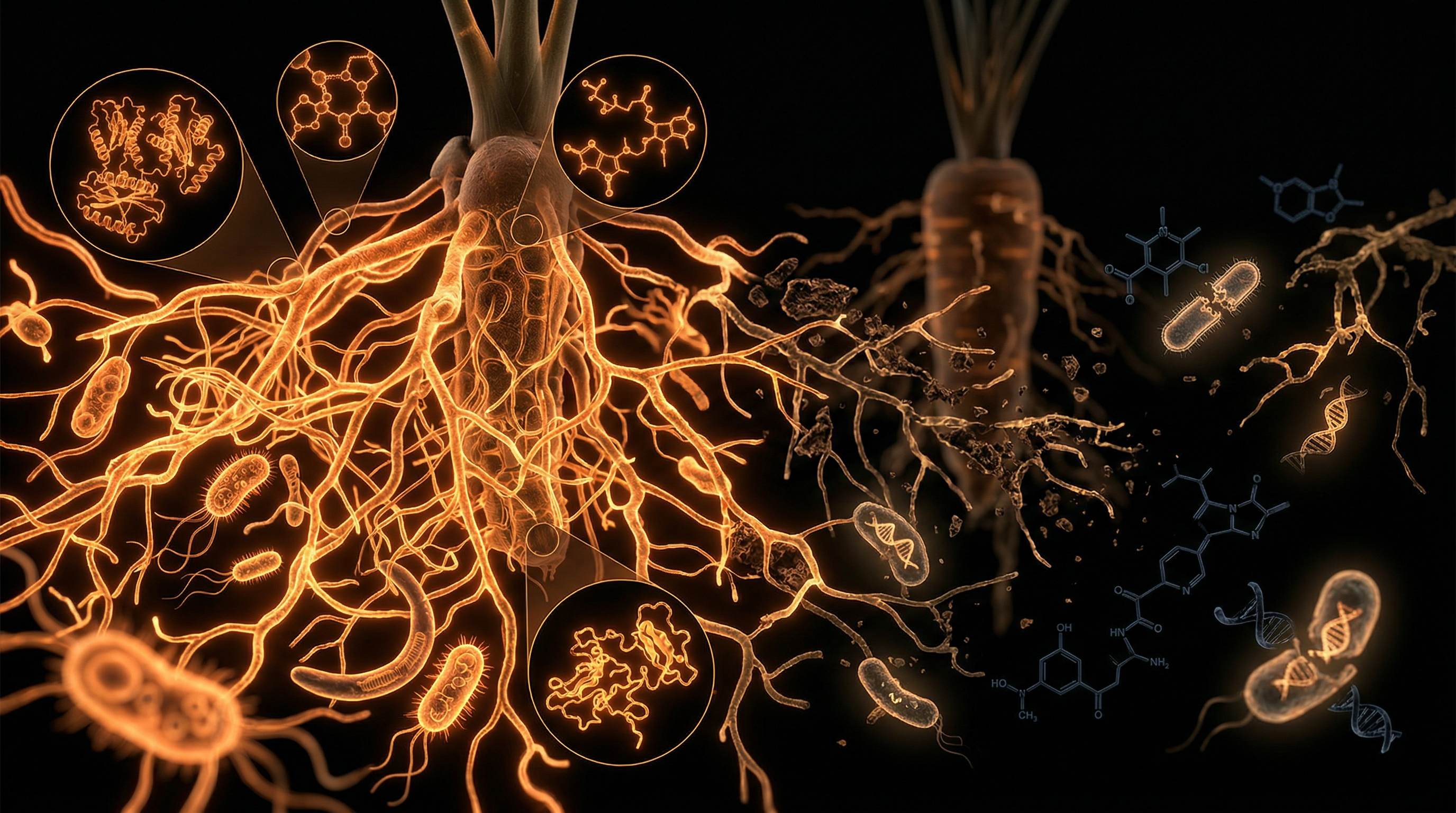
For millennia, the relationship between humans and the earth was mediated by the consumption of "dirty" produce. This was not dirt in the sense of filth, but rather a rich, living matrix of ancestral microbes, humic substances, and mycorrhizal networks. Every carrot pulled from the ground was an inoculation—a natural probiotic supplement that reinforced the human gut microbiome, our primary interface with the external environment.
Today, however, the United Kingdom’s agricultural sector has transitioned into a system of industrial sterilisation. Through the intensive use of synthetic inputs, mechanical trauma, and a reductionist understanding of plant nutrition, we have effectively severed the "umbilical cord" between the soil microbiome and the human gut. The result is a population that is increasingly "microbiomally impoverished," living on produce that is calorically sufficient but biologically bankrupt.
This article explores the mechanisms of this decline, the specific environmental threats currently ravaging UK soil, and why the ancient art of wild fermentation is no longer a culinary hobby, but a critical survival strategy for reclaiming the lost biodiversity of our ancestors.
The Biology — How It Works
To understand why modern UK produce is deficient, one must first understand the Rhizosphere—the thin layer of soil directly surrounding a plant’s roots. This is the most biologically active site on Earth. In a healthy ecosystem, a single teaspoon of topsoil contains more microorganisms than there are people on the planet.
The Plant-Microbe Symbiosis
Plants are not discrete biological units; they are holobionts. They rely on a vast array of bacteria and fungi to perform functions they cannot achieve alone.
- Endophytes: These are microbes that live inside the plant tissues. They are often acquired from the soil and passed through generations via seeds. Modern industrial seeds, treated with systemic fungicides, are often "born sterile," lacking the innate immunity provided by these ancestral partners.
- Mycorrhizal Fungi: These fungal networks act as an extension of the plant’s root system, increasing the surface area for nutrient absorption by up to 1,000 times. In exchange for plant sugars (exudates), these fungi provide phosphorus, nitrogen, and essential trace minerals.
- Rhizobacteria: These bacteria act as the plant’s external immune system, producing natural antibiotics to ward off pathogens and growth-stimulating hormones.
The Gut-Soil Axis
The human gastrointestinal tract is, evolutionarily speaking, an internalised version of the soil’s rhizosphere. There is a profound phylogenetic overlap between the bacteria found in healthy, organic soil and those required for human health. Actinobacteria, Proteobacteria, and Firmicutes are dominant phyla in both environments.
When we consume raw, traditionally grown produce, we are engaging in Horizontal Gene Transfer (HGT) with the soil. Soil microbes do not just pass through us; they exchange genetic information with our resident gut flora, updating our biological software to handle local environmental stressors. The sterilisation of our soil means this "software update" is no longer occurring.
Key Statistic: Research indicates that the microbial diversity of modern Western guts is approximately 40% lower than that of hunter-gatherer societies or populations living on traditional agrarian diets.
Mechanisms at the Cellular Level
The "Death of Soil" is not merely a metaphor; it is a biochemical reality driven by the disruption of specific cellular pathways.
The Shikimate Pathway Disruption
The most significant chemical intervention in modern UK agriculture is the use of Glyphosate, the active ingredient in most broad-spectrum herbicides. The mainstream narrative suggests glyphosate is safe for humans because it targets the Shikimate pathway—a metabolic route used by plants and bacteria to synthesise essential amino acids (phenylalanine, tyrosine, and tryptophan)—which humans do not possess.
However, this argument is fundamentally flawed. While human cells do not have the Shikimate pathway, our gut bacteria do. When we consume produce grown in glyphosate-treated soil, the residual chemical acts as a potent antibiotic, selectively killing the beneficial microbes in our gut while allowing pathogenic, glyphosate-resistant strains (like Clostridia) to proliferate. This creates a state of chronic dysbiosis at the cellular level.
Redox Signalling and Humic Substances
Healthy soil is rich in Humic and Fulvic acids. These are complex organic molecules formed through the long-term decomposition of organic matter. At a cellular level, these substances act as redox signalling molecules. They assist in the transport of minerals across cell membranes and facilitate the removal of cellular waste (autophagy).
In the absence of these substances—due to the use of synthetic NPK (Nitrogen, Phosphorus, Potassium) fertilisers which bypass the need for organic decomposition—plants become "water-bloated." They lack the secondary metabolites (polyphenols, flavonoids, and terpenes) that are produced when a plant must struggle and cooperate with soil microbes to survive. These metabolites are the very compounds that provide "probiotic" benefits to the human consumer, acting as hormetic stressors that upregulate our own cellular defence mechanisms.
Quorum Sensing and Microbial Communication
Microbes communicate via a process called Quorum Sensing, using signalling molecules to coordinate collective behaviour. In a healthy soil matrix, this "chatter" is constant, leading to the production of vitamins (like B12 and K2) and enzymes. Modern chemical farming "muffles" this communication. When we eat produce from "quiet" soil, our own gut bacteria lose the cues they need to maintain the integrity of the intestinal mucosal barrier.
Environmental Threats and Biological Disruptors
The sterilisation of British soil is not the result of a single factor, but a "synergistic toxicity" of several industrial practices.
The NPK Fallacy
Since the mid-20th century, UK agriculture has been dominated by the Liebig’s Law of the Minimum, which led to the NPK paradigm. This theory suggests that if you provide Nitrogen, Phosphorus, and Potassium, plants will grow. While this is true for biomass production, it is a disaster for biological complexity. High levels of synthetic Nitrogen suppress the activity of nitrogen-fixing bacteria and literally "burn" the carbon—the food source for microbes—out of the soil.
Mechanical Tillage: The Microbial Earthquake
The tradition of deep ploughing in the UK is akin to a catastrophic earthquake for the soil microbiome. It physically ruptures the delicate hyphal networks of mycorrhizal fungi. These fungi can take months or years to establish; tilling them every season ensures the soil remains in a state of permanent "pioneer" instability, where only the most aggressive, often pathogenic, bacteria survive.
The Neonics and Pesticide Cocktail
The UK’s reliance on Neonicotinoids and other systemic pesticides has been catastrophic for soil invertebrates like earthworms. Earthworms are the "gut" of the soil; they process organic matter and coat it in a microbial-rich biofilm. Without them, the soil loses its structure (porosity) and becomes anaerobic, killing off the beneficial aerobic bacteria that our guts require.
- Monocropping: Planting hundreds of hectares of a single crop (e.g., oilseed rape or wheat) leads to a "monocultural microbiome."
- Fungicide Runoff: Kills the very fungi responsible for nutrient cycling and carbon sequestration.
- Heavy Metal Accumulation: The use of low-grade phosphate fertilisers introduces cadmium and other heavy metals into the food chain.
Callout Fact: The UK has lost approximately 84% of its topsoil fertility since 1850, with some areas of East Anglia warned to have fewer than 60 harvests remaining.
The Cascade: From Exposure to Disease
When we consume produce that lacks microbial diversity, the biological consequences ripple through the human body in a predictable cascade.
Phase 1: Loss of "Old Friends"
The "Old Friends" Hypothesis (an evolution of the Hygiene Hypothesis) suggests that the human immune system requires constant "training" from non-pathogenic environmental microbes. Without this input from soil-associated bacteria, the immune system becomes hyper-reactive and poorly regulated.
Phase 2: Intestinal Permeability (Leaky Gut)
The lack of soil-based organisms (SBOs) and the presence of glyphosate residues lead to the degradation of Tight Junction proteins in the gut lining. This allows undigested food particles and bacterial endotoxins (LPS) to enter the bloodstream.
Phase 3: Systemic Inflammation and Autoimmunity
Once the gut barrier is breached, the body enters a state of chronic low-grade inflammation. This is the root cause of the modern epidemic of autoimmune conditions seen in the UK, including:
- Crohn’s Disease and Ulcerative Colitis
- Rheumatoid Arthritis
- Hashimoto’s Thyroiditis
Phase 4: The Gut-Brain-Soil Axis
The most insidious effect is on mental health. 90% of the body’s serotonin is produced in the gut, facilitated by specific microbial species like Lactobacillus and Bifidobacterium. Furthermore, soil bacteria such as *Mycobacterium vaccae* have been shown to stimulate the production of serotonin in the brain, acting as a natural antidepressant. The "death of soil" is, quite literally, making the nation more depressed and anxious.
What the Mainstream Narrative Omits
The conversation around food in the UK is often limited to "organic vs. non-organic," but this binary choice hides a deeper truth.
The "Clean" Food Myth
We have been conditioned to believe that "clean" food—washed, waxed, and plastic-wrapped—is safer. In reality, the hyper-sanitisation of produce removes the biogeographical signature of the food. By washing off every trace of soil and then treating produce with chlorine washes or irradiation (as is common in supermarket supply chains), we are consuming "dead" matter.
The Corporate Incentive for Sterile Produce
Sterile produce has a longer shelf life. Microbes cause spoilage; therefore, from a logistical and profit-maximisation perspective, a sterile tomato is superior to a living one. The mainstream agricultural narrative prioritises stability and shippability over nutrient density and microbial vitality.
The Genetic Erosion of Crops
Mainstream science rarely discusses how we have bred the "bitterness" out of vegetables. Those bitter compounds—alkaloids and polyphenols—are the signals the plant uses to talk to soil microbes. By selecting for sweetness and uniform appearance, we have genetically decoupled our crops from their microbial partners.
The UK Context
The United Kingdom faces a unique set of challenges regarding soil health.
Post-WWII Intensification
The "Dig for Victory" spirit morphed into a post-war obsession with food security through chemical intensification. The UK government’s subsidies historically favoured high-yield, high-input farming, which incentivised the destruction of hedgerows and the draining of wetlands—both vital reservoirs of microbial diversity.
The Clay and Peat Dilemma
Much of the UK’s most productive land, such as the Fens, consists of Peat. These are carbon-rich soils that are being "mined" by agriculture. When peat is drained and tilled, it oxidises, releasing massive amounts of CO2 and destroying the anaerobic-to-aerobic microbial balance. Meanwhile, the heavy clay soils of the Midlands and the South East are prone to compaction, which creates "dead zones" where no beneficial microbes can breathe.
Post-Brexit Regulations
As the UK diverges from EU pesticide regulations, there is a significant risk of re-introducing or maintaining the use of chemicals (like certain neonicotinoids) that are known to be "soil-killers." The push for "efficiency" in the new Environmental Land Management schemes (ELMs) must be scrutinised to ensure it doesn't just become "greenwashed" industrialism.
Protective Measures and Recovery Protocols
While the macro-scale death of soil is a systemic issue, individuals can take immediate steps to "re-wild" their internal ecosystem.
1. Fermentation as Biological Reclamation
Because our raw vegetables are now largely sterile, we must use Wild Fermentation to "pre-digest" our food and "amplify" whatever microbial remnants remain.
- Lacto-fermentation: Submerging vegetables in a brine encourages the growth of Lactobacillus species. This process neutralises pesticide residues and increases the bioavailability of minerals.
- Kefir and Kombucha: These provide a diverse array of yeasts and bacteria that act as "transient" probiotics, cleaning the gut and preparing it for colonisation by soil-based organisms.
2. Sourcing: Beyond "Organic"
Seek out produce from Regenerative Agriculture farms. These farms focus on "No-Till" methods, cover cropping, and integrated livestock management. This produce contains significantly higher levels of ergothioneine—a "longevity vitamin" produced only by soil fungi.
3. The "Soil Contact" Protocol
- Wild Foraging: Consuming wild greens (like nettles or dandelions) from unsprayed areas provides exposure to ancestral microbes that have never seen a laboratory.
- Gardening without Chemicals: Engaging in "no-dig" gardening and handling the soil with bare hands allows for the absorption of M. vaccae through the skin and respiratory tract.
4. Strategic Supplementation with SBOs
If access to regenerative produce is limited, use Soil-Based Organisms (SBOs) in supplement form. Look for strains like Bacillus coagulans and Bacillus subtilis. These are spore-forming bacteria that can survive the acidic environment of the stomach, mimicking the microbes our ancestors would have ingested daily.
Summary: Key Takeaways
- The Extinction Beneath: UK topsoil is losing its microbial diversity due to glyphosate, synthetic NPK fertilisers, and intensive tillage.
- Biological Bankruptcy: Modern produce is "microbiomally sterile," leading to a collapse of the human gut-soil axis and a rise in chronic inflammatory diseases.
- The Shikimate Trap: Chemicals like glyphosate disrupt the fundamental metabolic pathways of our gut flora, not just the weeds they are designed to kill.
- The Fermentation Solution: Fermenting vegetables is the most effective way to reclaim lost biodiversity and neutralise the "biological desert" effect of industrial farming.
- Regenerative Future: Restoring British health requires a transition from "extracting from the soil" to "partnering with the soil."
The "Death of Soil" is perhaps the greatest unrecognised threat to public health in the United Kingdom. We are not just what we eat; we are what the soil was able to provide. Reclaiming our health starts with a handful of living earth and the courage to stop sanitising our connection to the world.
This article is provided for informational and educational purposes only. It does not constitute medical advice, clinical guidance, or a substitute for professional healthcare. Information reflects cited research at time of publication. Always consult a qualified healthcare professional before acting on any health information.
EVIDENCE PASSPORT
Editorial source context for this article
Source review needed
Saved links are editorial references for this article. They may support specific claims rather than every sentence. Open and assess each source in context. This passport does not independently verify them.
Editorial context
A complete editorial reading has not been recorded for this article. Source links remain available for you to open and assess directly.
Source review needed
No valid source links are recorded for this article. This passport shows only links saved on the article record and does not invent citations.
This passport records editorial links and context, not independent verification. Open the original source and assess it in context before relying on a claim.
Medical Disclaimer
The information in this article is for educational purposes only and does not constitute medical advice, diagnosis, or treatment. Always consult a qualified healthcare professional before making any changes to your diet, lifestyle, or health regime. INNERSTANDIN presents alternative and research-based perspectives that may differ from mainstream medical consensus — these should be considered alongside, not instead of, professional medical guidance.
Read Full DisclaimerContinue the thread
Keep this question moving.
Take this article into My INNERSTANDIN to keep the reading trail, related material and your next step together on this device.
Dig deeper in the Library
Free, longform PDF volumes that go beyond headlines into mechanisms and references.