
The Endocannabinoid System: Ancient Hemp vs Modern Prohibition
Updated May 2026
Investigate the historical use of hemp in the UK and its role in maintaining endocannabinoid tone. This article exposes the biological consequences of removing phytocannabinoids from the modern diet.
Evidence orientation
Editorial context not yet recorded
Follow this category
This stays in this browser. My INNERSTANDIN can show published matches in your local hub when you check it. It does not send email, push, or alert notifications.
Local learning review
A private browser aid for revisiting ideas. It is not an alert or a health recommendation.
Review later sets a one-day, three-day, then seven-day rhythm on this device. Choose it only when you want to revisit this article.
Overview
For millennia, the relationship between Cannabis sativa L. and the human species was not merely one of utility, but of profound biological symbiosis. In the British Isles, hemp was once so fundamental to the national interest that it was mandated by royal decree. Yet, in the span of less than a century, a sophisticated campaign of prohibition and industrial displacement has severed this ancient connection. As a senior researcher at INNERSTANDING, I posit that this severance has resulted in more than just a loss of textile raw material; it has precipitated a systemic biological crisis.
The Endocannabinoid System (ECS) is perhaps the most significant physiological system involved in establishing and maintaining human health. It is the body’s primary homeostatic regulator, overseeing everything from neurotransmitter release to immune response and lipid metabolism. Historically, the human diet was rich in phytocannabinoids—not necessarily through direct ingestion for psychoactive effect, but via the consumption of livestock raised on hemp-rich pastures and the ubiquitous use of hemp seeds and oils in culinary traditions.
The modern era is defined by Clinical Endocannabinoid Deficiency (CECD), a term coined to describe the state of a population whose regulatory systems are starved of the very compounds they evolved to utilise. This article serves as an evidentiary exposé on how the removal of hemp from the modern environment has compromised the biological integrity of the British public and the global population at large. We are currently living through a biological "Dark Age" where the master key to cellular harmony has been discarded in favour of symptomatic pharmacological interventions.
The Biology — How It Works
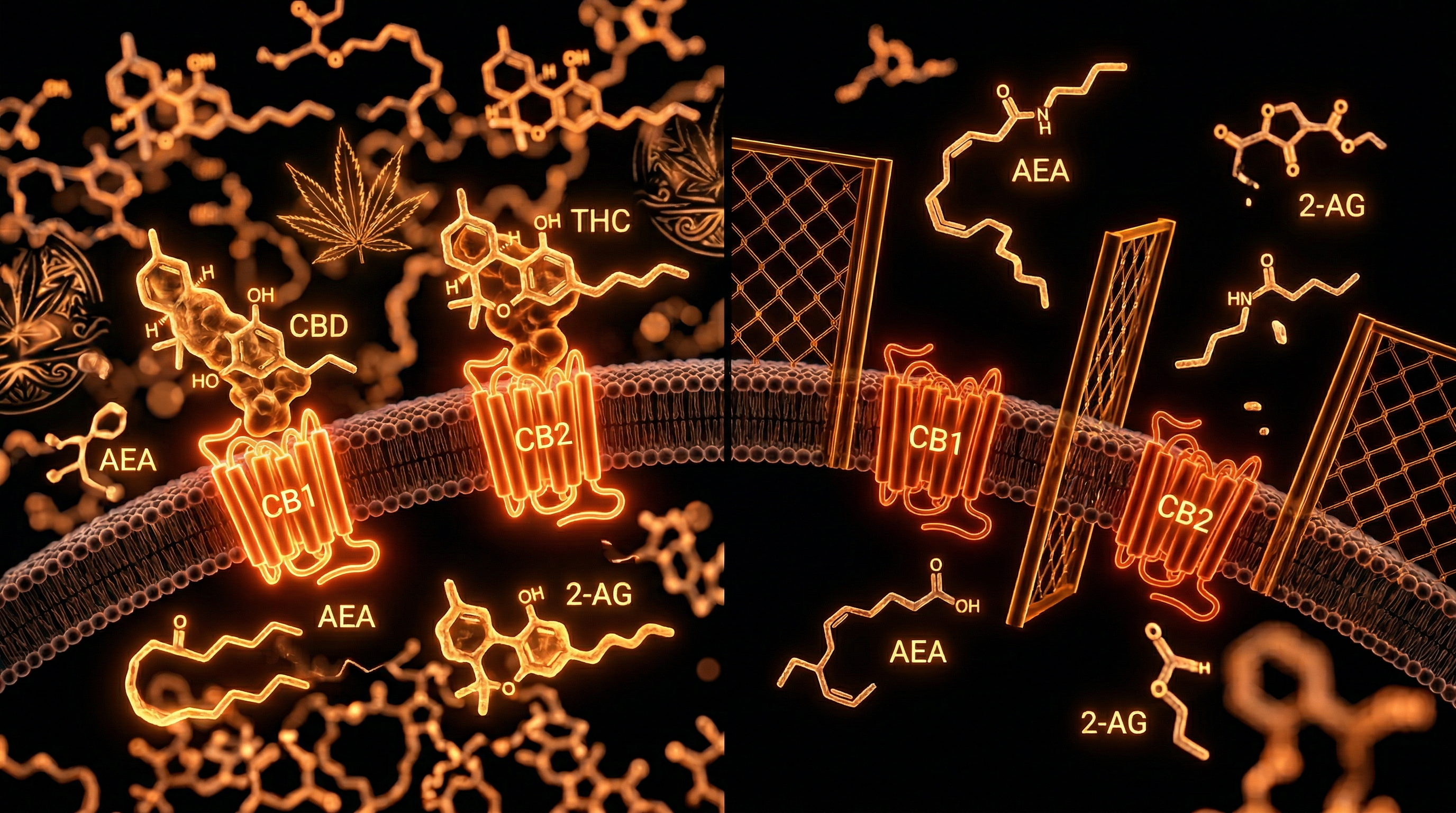
To understand the gravity of cannabinoid prohibition, one must first grasp the sheer scale of the ECS. It is not a secondary system; it is the "super-system" that modulates the activity of all others. The ECS is comprised of three primary components: Endocannabinoids (internal ligands), Receptors, and Metabolic Enzymes.
The Receptors: CB1 and CB2
The human body possesses a vast network of G protein-coupled receptors specifically tuned to cannabinoids.
- CB1 Receptors: Predominantly located in the Central Nervous System (CNS), particularly in the cortex, basal ganglia, hippocampus, and cerebellum. They regulate executive function, memory, and pain perception.
- CB2 Receptors: Primarily found in the peripheral nervous system and the immune system, particularly on white blood cells, the spleen, and the tonsils. They govern inflammatory responses and immune modulation.
The Endogenous Ligands
The body produces its own "internal hemp" in the form of Anandamide (AEA)—often called the "bliss molecule"—and 2-Arachidonoylglycerol (2-AG). These are lipid-based neurotransmitters derived from Omega-6 fatty acids.
Callout Fact: The ECS is the most widespread receptor system in the human body, with more receptors than any other neurotransmitter system combined.
The Concept of Endocannabinoid Tone
"Tone" refers to the basal level of endocannabinoids and the density/sensitivity of the receptors. A healthy individual possesses a high "Endocannabinoid Tone," meaning their body can efficiently dampen inflammation, regulate mood, and recover from stress. When this tone is low, the body loses its ability to return to homeostasis after a challenge, leading to a state of chronic physiological "leakiness."
Mechanisms at the Cellular Level
The ECS operates through a unique mechanism known as retrograde signalling. Unlike traditional neurotransmission, where signals travel from a "sender" neuron (pre-synaptic) to a "receiver" neuron (post-synaptic), endocannabinoids travel backwards.
Retrograde Inhibition
When a post-synaptic neuron is over-stimulated, it synthesises endocannabinoids on demand. These molecules travel back across the synaptic cleft and bind to CB1 receptors on the pre-synaptic neuron. This binding acts as a "dimmer switch," telling the sender neuron to slow down the release of neurotransmitters such as glutamate or GABA.
The Role of Phytocannabinoids
This is where the ancient relationship with hemp becomes critical. The phytocannabinoids found in hemp—such as Cannabidiol (CBD) and Cannabigerol (CBG)—do not always bind directly to the receptors in the same way as THC. Instead, they act as reuptake inhibitors and allosteric modulators.
For instance, CBD inhibits the enzyme FAAH (Fatty Acid Amide Hydrolase), which is responsible for breaking down Anandamide. By slowing the breakdown of our internal "bliss molecule," hemp effectively boosts the body’s own regulatory capacity. Without these external dietary inputs, the modern human relies solely on internal production, which is frequently compromised by poor nutrition and environmental stress.
Mitochondrial Regulation
Recent research suggests that the ECS also exists within the mitochondria—the powerhouses of our cells. Cannabinoid receptors on the mitochondrial membrane regulate cellular respiration and the production of Reactive Oxygen Species (ROS). This means the ECS is directly involved in managing oxidative stress and cellular longevity at the most fundamental level.
Environmental Threats and Biological Disruptors
The modern landscape is hostile to the Endocannabinoid System. We are currently witnessing a "perfect storm" of biological disruption that has hollowed out the ECS tone of the general population.
The Omega Ratio Imbalance
Endocannabinoids are synthesised from fatty acids. The ideal ratio of Omega-6 to Omega-3 is roughly 3:1 or 1:1. However, the modern Western diet, heavy in processed seed oils (sunflower, rapeseed, corn), has pushed this ratio to as high as 20:1.
- This creates an imbalance in the precursor pool for endocannabinoid synthesis.
- It leads to chronic pro-inflammatory states because the body cannot produce the "cooling" endocannabinoid ligands effectively.
Glyphosate and Pesticide Exposure
The ubiquitous use of glyphosate in modern agriculture acts as a profound disruptor of the gut microbiome. Since a significant portion of the body’s CB2 receptors are located in the gut-associated lymphoid tissue, a damaged microbiome directly translates to a dysfunctional ECS. Furthermore, pesticides have been shown to interfere with the enzymes that synthesise and degrade endocannabinoids, leading to a "jammed" regulatory system.
The Blue Light and Circadian Mismatch
The ECS is deeply circadian. CB1 receptor expression fluctuates according to the light-dark cycle. Modern exposure to artificial blue light at night suppresses the natural nocturnal rise in endocannabinoid levels, contributing to sleep disorders and metabolic syndrome.
Callout Fact: Chronic stress causes a sustained rise in cortisol, which eventually depletes Anandamide levels, leaving the brain vulnerable to anxiety and post-traumatic stress.
The Cascade: From Exposure to Disease
What happens when a biological system lose its master regulator? The result is not a single disease, but a cascade of systemic failures known as Clinical Endocannabinoid Deficiency (CECD).
The Triple Threat: Fibromyalgia, IBS, and Migraine
Dr. Ethan Russo, a pioneer in cannabinoid research, has proposed that these three conditions share a common origin: a deficient ECS.
- Migraine: When the ECS cannot modulate the trigeminal system, pain thresholds drop, and vascular inflammation in the brain goes unchecked.
- Irritable Bowel Syndrome (IBS): The gut is the "second brain," and it is densely packed with cannabinoid receptors. Without proper ECS tone, gut motility becomes erratic, and visceral hypersensitivity (pain) increases.
- Fibromyalgia: This represents a total failure of the central pain-processing system. The "volume" of pain is turned up because the ECS "dimmer switch" is broken.
Neuroinflammation and Mental Health
In the absence of phytocannabinoids and healthy endocannabinoid tone, the brain’s immune cells (microglia) become chronically activated. This state of low-grade neuroinflammation is now being linked to:
- Depression and treatment-resistant anxiety.
- Neurodegenerative diseases like Alzheimer's and Parkinson's.
- Autistic spectrum disorders (where ECS signalling is often found to be atypical).
The Metabolic Downward Spiral
The ECS regulates appetite and energy storage. In a natural environment, the ECS helps us store fat for winter. In a modern environment of constant caloric surplus and low ECS tone, this system becomes dysregulated, contributing to the obesity epidemic and insulin resistance. The lack of dietary hemp means we are missing the "modulating" compounds that naturally prevent CB1 over-activation in adipose tissue.
What the Mainstream Narrative Omits
The suppression of hemp is not merely a historical footnote; it is a calculated omission in modern medical education and public health policy.
The Educational Gap
Despite the ECS being discovered in the early 1990s, it is still absent from the majority of medical school curricula in the UK and the US. Doctors are trained in the "one ill, one pill" philosophy, which is fundamentally incompatible with the systemic, homeostatic nature of the ECS. By ignoring the ECS, the medical establishment can continue to treat symptoms of deficiency as if they were separate, unrelated diseases.
The Commercial Bias
Hemp is a bio-accumulator and a versatile "super-crop" that can replace thousands of synthetic products, from plastic to pharmaceuticals. A population that understands how to maintain its own endocannabinoid tone through whole-plant hemp is a population that is less dependent on:
- NSAIDs (Non-steroidal anti-inflammatory drugs): Which cause thousands of deaths annually due to gastrointestinal bleeding.
- Opioids: Which carry a high risk of addiction and respiratory depression.
- SSRIs: Which often fail to address the underlying neuroinflammatory causes of depression.
The "Drug" Stigma as a Biological Shield
The branding of Cannabis sativa primarily as a "dangerous drug" served as a perfect smokescreen for its removal from the industrial and nutritional sectors. By focusing public debate on the "high" of THC, the essential "health" of the non-psychoactive components (CBD, CBG, terpenes, and hemp seed proteins) was effectively erased from public consciousness.
Callout Fact: In 1937, the American Medical Association actually opposed the Marihuana Tax Act, arguing that the law would deprive the public of a vital medicinal resource. Their warnings were ignored.
The UK Context
The United Kingdom has a particularly storied—and tragic—relationship with hemp. The British Empire was, quite literally, built on hemp.
The King's Hemp
In 1533, King Henry VIII issued a royal decree mandating that for every 60 acres of land, farmers must grow at least one rood (a quarter-acre) of hemp. Failure to comply resulted in fines. The reason was strategic: the Royal Navy required thousands of tonnes of hemp for sails, ropes, and caulking.
However, the biological byproduct was that hemp was everywhere. It was in the animal feed, it was in the dust of the villages, and it was a staple of the "pottage" consumed by the peasantry. The British population was inadvertently "supplementing" their endocannabinoid systems for centuries.
The 1971 Misuse of Drugs Act
The implementation of the 1971 Misuse of Drugs Act marked the final nail in the coffin for the UK’s relationship with hemp. It categorised the entire Cannabis genus as a controlled substance, making no distinction between industrial hemp and high-THC varieties for many years. This legislation didn't just stop people from smoking "pot"; it effectively criminalised the biological heritage of the British people.
The Modern Paradox
Today, the UK is one of the world’s largest exporters of legal medical cannabis (largely through companies like GW Pharmaceuticals), yet until very recently, its own citizens faced immense barriers to accessing the plant. The "industrial hemp" grown in the UK today is still heavily regulated, with farmers forced to destroy the flowers—the most cannabinoid-rich part of the plant—leaving them with only the fibre and seeds. This is a biological travesty, as it prevents the "whole-plant" nutrients from entering the local food chain.
Protective Measures and Recovery Protocols
As we seek to reverse the damage of CECD and restore our biological heritage, we must adopt a multi-faceted approach to "re-wilding" our endocannabinoid systems.
1. Dietary Re-introduction of Hemp
The most direct way to support the ECS is to re-introduce hemp in its various forms:
- Hemp Seeds (Hearts): These are a complete protein source containing all 20 amino acids and the perfect 3:1 ratio of Omega-6 to Omega-3. They provide the raw building blocks for endocannabinoid synthesis.
- Full-Spectrum CBD Oil: Unlike "isolate," full-spectrum extracts contain a range of cannabinoids and terpenes that work together via the Entourage Effect. This provides a broader range of "keys" to unlock the body’s regulatory receptors.
- Raw Hemp Juice: Consuming the plant in its acidic form (containing CBDA and THCA) provides potent anti-inflammatory benefits without psychoactivity.
2. Correcting the Lipid Profile
To ensure your body can actually make its own endocannabinoids, you must address the fatty acid imbalance:
- Eliminate highly processed vegetable oils (soybean, sunflower, corn).
- Increase intake of wild-caught cold-water fish or high-quality algae oil to boost Omega-3 levels.
- Use extra-virgin olive oil and hemp seed oil as primary fat sources.
3. Lifestyle Interventions
The ECS responds to specific environmental cues:
- Exercise: The "runner's high" is not actually caused by endorphins, but by a spike in Anandamide. Moderate aerobic exercise is one of the most effective ways to upregulate CB1 receptors.
- Cold Exposure: Short bursts of cold (cold showers, ice baths) have been shown to increase endocannabinoid levels and improve metabolic health.
- Stress Management: Chronic stress is the "Anandamide killer." Practices like meditation and deep breathing help maintain the "tone" of the system by lowering the cortisol burden.
4. Avoiding "Cannabimimetic" Disruptors
Certain chemicals in our environment mimic cannabinoids in a harmful way or block receptors. These include certain plastics (BPA) and various pesticides. Switching to glass storage and organic produce isn't just a lifestyle choice; it’s a biological imperative for ECS health.
Summary: Key Takeaways
The history of hemp prohibition is not merely a tale of misguided legislation; it is a record of a massive, unconsented biological experiment. By removing Cannabis sativa from our fields and our plates, we have dismantled the primary regulatory system of the human body.
- The ECS is the Master Regulator: It maintains homeostasis across all physiological systems through retrograde signalling and "dimming" overactive responses.
- Hemp is a Biological Essential: Phytocannabinoids from hemp act as exogenous modulators that support and protect our internal endocannabinoid tone.
- Prohibition has caused CECD: The rise in chronic pain, autoimmune issues, and mental health crises correlates directly with the removal of cannabinoids from the environment.
- The UK History is Key: From Henry VIII's mandates to the 1971 prohibition, the UK has moved from a state of "hemp-sufficiency" to a state of "biological deficiency."
- Restoration is Possible: Through dietary changes, full-spectrum supplementation, and lifestyle shifts, individuals can reclaim their endocannabinoid health and return their bodies to a state of balance.
We at INNERSTANDING believe that the re-integration of hemp into the modern paradigm is not just an agricultural or economic necessity—it is the cornerstone of a biological revolution. The "Dark Age" of prohibition is ending, and in its place, we must build a future where the human body is once again allowed to function in harmony with the ancient chemistry of the plant kingdom.
"References & Further Reading:"
- Russo, E. B. (2016). Clinical Endocannabinoid Deficiency Reconsidered. Cannabis and Cannabinoid Research.
- Pertwee, R. G. (2006). The pharmacology of cannabinoid receptors and their ligands: an overview. International Journal of Obesity.
- Mechoulam, R., & Parker, L. A. (2013). The Endocannabinoid System and the Brain. Annual Review of Psychology.
- Herer, J. (1985). The Emperor Wears No Clothes. (For historical context on hemp prohibition).
- Pacher, P., & Kunos, G. (2013). Modulating the endocannabinoid system in human health and disease. FEBS Journal.
This article is provided for informational and educational purposes only. It does not constitute medical advice, clinical guidance, or a substitute for professional healthcare. Information reflects cited research at time of publication. Always consult a qualified healthcare professional before acting on any health information.
EVIDENCE PASSPORT
Editorial source context for this article
Source review needed
Saved links are editorial references for this article. They may support specific claims rather than every sentence. Open and assess each source in context. This passport does not independently verify them.
Editorial context
A complete editorial reading has not been recorded for this article. Source links remain available for you to open and assess directly.
Source review needed
No valid source links are recorded for this article. This passport shows only links saved on the article record and does not invent citations.
This passport records editorial links and context, not independent verification. Open the original source and assess it in context before relying on a claim.
Medical Disclaimer
The information in this article is for educational purposes only and does not constitute medical advice, diagnosis, or treatment. Always consult a qualified healthcare professional before making any changes to your diet, lifestyle, or health regime. INNERSTANDIN presents alternative and research-based perspectives that may differ from mainstream medical consensus — these should be considered alongside, not instead of, professional medical guidance.
Read Full DisclaimerContinue the thread
Keep this question moving.
Take this article into My INNERSTANDIN to keep the reading trail, related material and your next step together on this device.