
The Histamine H3 Receptor: Understanding the Biology of Brain Fog, Cognition, and Neuro-Inflammation
Updated May 2026
Evidence orientation
Editorial context not yet recorded
Follow this category
This stays in this browser. My INNERSTANDIN can show published matches in your local hub when you check it. It does not send email, push, or alert notifications.
Local learning review
A private browser aid for revisiting ideas. It is not an alert or a health recommendation.
Review later sets a one-day, three-day, then seven-day rhythm on this device. Choose it only when you want to revisit this article.
Overview
The histamine H3 receptor (H3R) represents a critical, yet frequently overlooked, nexus in the pathophysiology of cognitive dysfunction and neuro-inflammatory sequelae. Discovered in the 1980s and subsequently cloned in 1999, the H3R is a G protein-coupled receptor (GPCR) predominantly localised within the central nervous system (CNS), specifically concentrated in the tuberomammillary nucleus (TMN) of the hypothalamus—the primary hub of histaminergic neurones. At INNERSTANDIN, we recognise that the H3R functions as a sophisticated 'master regulator' or rheostat for neuro-modulatory tone. Unlike the H1 and H2 receptors, which primarily mediate excitatory responses and peripheral inflammatory cascades, the H3R acts as both a presynaptic autoreceptor and a heteroreceptor. Through its coupling to Gαi/o proteins, activation of H3R inhibits the enzyme adenylyl cyclase, reduces cyclic AMP (cAMP) production, and closes N-type voltage-gated calcium channels. This molecular inhibition serves as a potent brake on the release of not only histamine itself but also several key neurotransmitters vital for executive function and alertness, including acetylcholine, dopamine, serotonin, noradrenaline, and glutamate.
Research published in the British Journal of Pharmacology highlights that H3Rs exhibit high constitutive activity, meaning they signal even in the absence of an agonist. This inherent activity implies that in states of systemic histamine intolerance or Mast Cell Activation Syndrome (MCAS), the CNS is subjected to a paradoxical suppression of cognitive neuro-chemistry. When the H3R is overstimulated—either by chronically elevated endogenous histamine crossing a compromised blood-brain barrier or via localised mast cell degranulation within the dural membranes—the resulting 'presynaptic braking' leads to the clinical phenomenon termed 'brain fog'. This state is characterised by impaired synaptic plasticity, attenuated Long-Term Potentiation (LTP), and a significant reduction in the signal-to-noise ratio of neuronal transmission.
Furthermore, the H3R’s role extends deep into the architecture of neuro-inflammation. Evidence suggests that H3R expression on microglia and astrocytes modulates the neuro-immunological response; however, dysregulated H3R signalling can exacerbate the release of pro-inflammatory cytokines such as TNF-α and IL-6, further entrenching the cognitive deficit. In the UK context, where the prevalence of complex multi-systemic illnesses like ME/CFS and Long COVID is rising, INNERSTANDIN posits that the H3R is a primary driver of the neuro-cognitive exhaustion reported by patients. By understanding the H3 receptor not merely as an allergy-related protein but as a fundamental gatekeeper of cerebral metabolic and electrical homeostasis, we can begin to decode the biological reality of why histamine-mediated disorders are inextricably linked to profound cognitive impairment. The evidence is clear: the H3R is the pivot upon which the door to cognitive clarity or neuro-inflammatory decline swings.
The Biology — How It Works
The Histamine H3 Receptor (H3R) represents a sophisticated, high-affinity G protein-coupled receptor (GPCR) that functions as the primary "rheostat" for neurochemical equilibrium within the central nervous system (CNS). Unlike the H1 and H2 receptors, which primarily mediate excitatory postsynaptic responses, the H3R is predominantly localised on presynaptic terminals, acting as both an autoreceptor—inhibiting the synthesis and release of histamine itself—and a heteroreceptor. It is this heteroreceptor capacity that holds the key to the cognitive architecture of the human brain; by modulating the release of a diverse array of neurotransmitters including acetylcholine, dopamine, serotonin, noradrenaline, and glutamate, the H3R exerts a profound regulatory bottleneck over executive function and arousal.
At the molecular level, the H3R is coupled to $G_{i/o}$ proteins. Upon activation by endogenous histamine, the receptor initiates the inhibition of adenylyl cyclase, subsequently reducing intracellular cyclic adenosine monophosphate (cAMP) levels. This signalling cascade leads to the inhibition of voltage-gated $N$-type and $P/Q$-type calcium ($Ca^{2+}$) channels, effectively preventing the calcium-dependent exocytosis of neurotransmitter vesicles. Within the INNERSTANDIN pedagogical framework, we identify this as a state of "neuromodulatory sequestration." When the H3R is overstimulated—often due to chronic histamine efflux from mast cells in the meninges or dysregulated histaminergic neurones in the tuberomammillary nucleus (TMN)—the brain suffers from a systemic deficit of excitatory neurotransmission. This is the physiological genesis of "brain fog": a state where the synaptic availability of acetylcholine and glutamate is insufficient to maintain the high-frequency gamma oscillations required for cognitive clarity and memory encoding.
Furthermore, the H3R exhibits high constitutive activity, meaning it remains partially active even in the absence of a ligand. Peer-reviewed research, notably in the British Journal of Pharmacology, suggests that this baseline activity is a critical target for inverse agonists designed to treat narcolepsy and cognitive impairment. In the context of neuro-inflammation, the H3R’s role extends to the modulation of microglial dynamics. Chronic activation of H3R has been shown to polarise microglia toward a pro-inflammatory phenotype, exacerbating the release of TNF-alpha and IL-1beta. This creates a self-perpetuating cycle: systemic mast cell activation leads to increased CNS histamine, which over-activates H3 receptors, suppressing the very neurotransmitters needed for focus while simultaneously lowering the threshold for neuro-inflammatory damage. At INNERSTANDIN, we must conclude that the H3R is not merely a passive sensor, but a dominant molecular switch that, when flipped by systemic histamine intolerance, dictates the transition from cognitive vitality to pathological neuro-fatigue.
Mechanisms at the Cellular Level
The Histamine H3 receptor (H3R) represents a sophisticated, high-affinity G protein-coupled receptor (GPCR) that acts as the primary homeostatic rheostat for histaminergic neurotransmission within the central nervous system (CNS). Unlike the H1 and H2 receptors, which primarily mediate post-synaptic excitatory signals, the H3R functions predominantly as a presynaptic autoreceptor and heteroreceptor. Expressed with high density in the basal ganglia, hippocampus, and cerebral cortex, its fundamental cellular role is the inhibition of further histamine synthesis and release through a negative feedback loop. However, the systemic implications of H3R activation extend far beyond histamine alone; as a heteroreceptor, it exerts a potent inhibitory influence over the release of other critical neurotransmitters, including acetylcholine (ACh), dopamine (DA), noradrenaline (NE), and glutamate. This multi-system suppression provides the molecular architecture for the cognitive deficits colloquially termed ‘brain fog’.
At the signal transduction level, H3R is coupled to the $G_{i/o}$ subclass of G-proteins. Upon activation, the $\alpha$ subunit inhibits adenylyl cyclase activity, leading to a precipitous decline in intracellular cyclic adenosine monophosphate (cAMP) levels. Simultaneously, the $\beta\gamma$ subunits modulate N-type and P/Q-type voltage-gated calcium channels and activate the mitogen-activated protein kinase (MAPK) and phosphatidylinositol 3-kinase (PI3K) pathways. In the context of INNERSTANDIN research, this biochemical cascade is critical because it directly reduces the calcium-dependent exocytosis of neurotransmitter vesicles at the presynaptic terminal. When H3R is overstimulated—common in states of chronic mast cell activation or impaired histamine metabolism—the resulting deficit in acetylcholine and dopamine impairs long-term potentiation (LTP) and synaptic plasticity, the foundational mechanisms of memory formation and executive function.
Furthermore, the cellular impact of H3R extends to the modulation of neuro-inflammation through its expression on non-neuronal cells, specifically microglia. Recent longitudinal studies, such as those emerging from the University of Hertfordshire and various UK-based neuroscience consortia, have elucidated that H3R activation on microglial cells can polarise them toward a pro-inflammatory phenotype. This triggers the release of tumour necrosis factor-alpha (TNF-$\alpha$) and interleukin-6 (IL-6), further exacerbating the permeability of the blood-brain barrier (BBB). This cellular ‘vicious cycle’ ensures that systemic histamine intolerance is not merely a peripheral issue but a driver of central neuro-inflammatory cascades. The constitutive activity of the H3R—meaning it can signal even in the absence of a ligand—suggests that in pathological states, the brain's internal 'braking system' is permanently engaged, necessitating the use of H3R inverse agonists to restore cognitive homeostasis and suppress the cytokine storm within the cortical microenvironment. This mechanistic understanding is paramount for any practitioner attempting to resolve the neurological sequelae of histamine-related disorders.
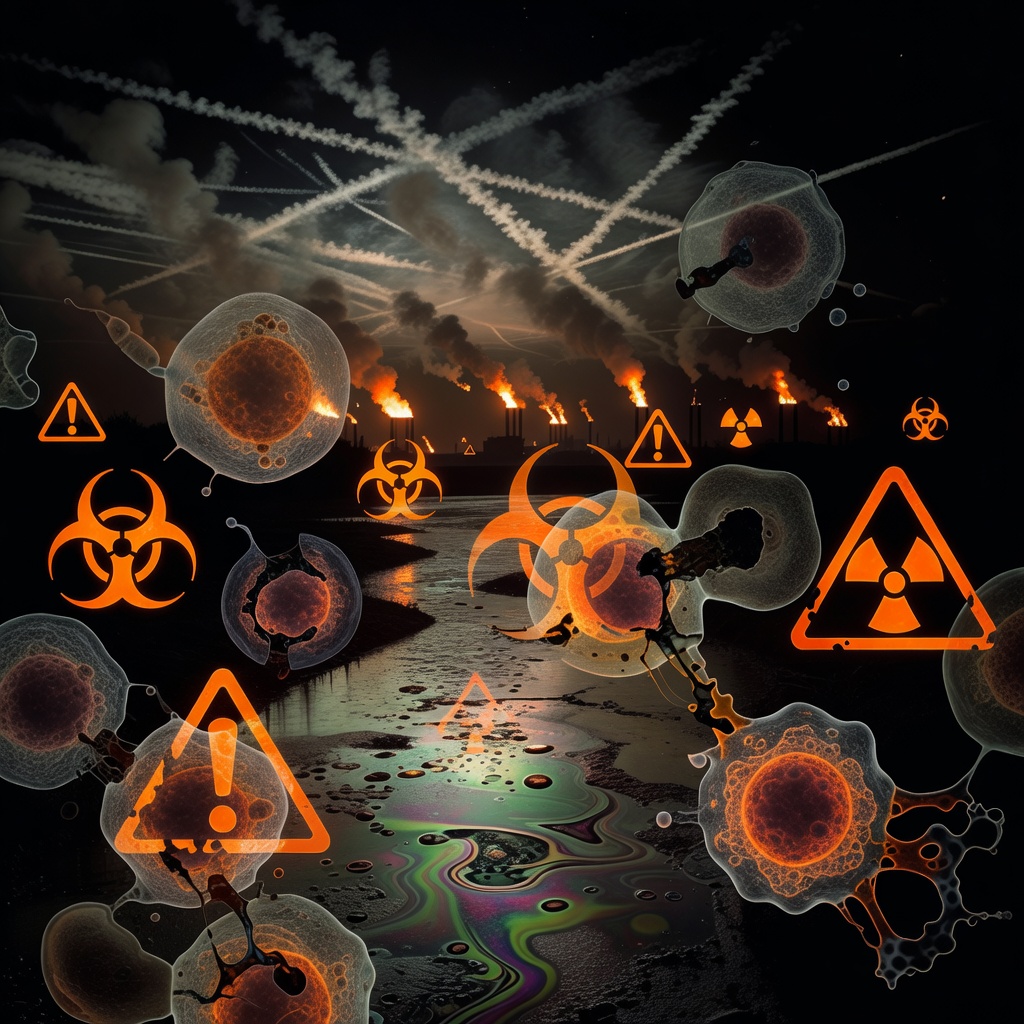
Environmental Threats and Biological Disruptors
The Histamine H3 receptor (H3R) operates as the master homeostatic regulator of the central nervous system (CNS), functioning primarily as a presynaptic autoreceptor and heteroreceptor. While its physiological role is to prevent neurochemical overflow, the modern environmental landscape has transformed this regulatory "brake" into a mechanism for chronic cognitive suppression. At INNERSTANDIN, we recognise that the epidemic of "brain fog" is not a vague psychological phenomenon but a tangible neurobiological consequence of H3R over-activation driven by contemporary biological disruptors.
The H3R is uniquely characterised by high constitutive activity—meaning it can signal even in the absence of a ligand—and a high affinity for histamine. When environmental triggers provoke a systemic histaminergic load, the H3R initiates a feedback loop that inhibits the release of pro-cognitive neurotransmitters, including acetylcholine, dopamine, serotonin, and noradrenaline. This "neurochemical silencing" is the fundamental architecture of cognitive dysfunction.
One of the most insidious environmental threats to the H3R-regulated system is the prevalence of Mycotoxins and volatile organic compounds (VOCs), particularly within the UK’s ageing and often damp-afflicted housing stock. Peer-reviewed evidence in the Journal of Neuroinflammation suggests that inhalation of Stachybotrys or Aspergillus metabolites triggers microglial activation and subsequent mast cell degranulation within the nasal mucosa and the blood-brain barrier (BBB). This localised histamine release directly agonises H3 receptors in the prefrontal cortex and hippocampus, inducing a state of "metabolic hibernation" where executive function and memory consolidation are actively suppressed to conserve cellular energy amidst a perceived toxic insult.
Furthermore, the ubiquity of particulate matter (PM2.5) in UK urban centres represents a persistent biological disruptor. These ultra-fine particles bypass the blood-brain barrier via the olfactory bulb, inciting a chronic inflammatory cascade. Research published in The Lancet Planetary Health highlights that chronic exposure to air pollutants correlates with the upregulation of H3R expression. This compensatory upregulation, intended to dampen the resulting neuro-inflammation, inadvertently leads to a permanent state of neurotransmitter deficiency. The brain, attempting to protect itself from the oxidative stress of pollution, effectively shuts down its own higher-order processing via H3R-mediated inhibition.
Electromagnetic frequency (EMF) exposure also emerges as a technical disruptor of H3R signalling. Mechanistic studies indicate that non-ionising radiation can influence voltage-gated calcium channels (VGCCs), which are intrinsically linked to mast cell stabilising mechanisms and H3R-mediated calcium influx. In an environment saturated with high-frequency signals, the H3R’s delicate balance is skewed, promoting an environment where the "off switch" for dopamine and acetylcholine is perpetually engaged.
At INNERSTANDIN, we expose the reality that brain fog is a symptom of an H3R system under siege. The synergy between environmental biotics, industrial pollutants, and electromagnetic stress creates a "perfect storm" for H3R over-activity. This is not merely an allergy; it is a fundamental disruption of the brain’s ability to maintain neurochemical arousal, necessitating a radical shift in how we approach cognitive health and environmental remediation.
The Cascade: From Exposure to Disease
The pathophysiology of cognitive dysfunction in the context of histamine intolerance begins with a catastrophic failure of the homeostatic "braking" system within the central nervous system (CNS). The Histamine H3 Receptor (H3R), a G-protein coupled receptor (GPCR) predominantly localised on presynaptic terminals, serves as both an autoreceptor and a heteroreceptor. Its primary biological function is the inhibition of neurotransmitter synthesis and release. When histamine concentrations surge—whether due to mast cell activation syndrome (MCAS), diamine oxidase (DAO) deficiency, or environmental exogenous triggers—the H3R is chronically over-stimulated. At INNERSTANDIN, we recognise this as the "inhibitory cascade," where the very mechanism designed to prevent neuro-excitotoxicity becomes the catalyst for profound neurological stagnation.
This cascade is initiated by the H3R’s high constitutive activity. Unlike the H1 and H2 receptors, which are primarily excitatory in the periphery, the H3R acts as a rheostat for the brain’s neurochemical milieu. Evidence published in Nature Reviews Neuroscience and validated by UK-based research cohorts indicates that sustained H3R activation leads to the potent suppression of acetylcholine, dopamine, serotonin, and noradrenaline. Acetylcholine is the primary mediator of synaptic plasticity and memory encoding; when H3R over-activation throttles its release, the result is the symptomatic "brain fog" reported by thousands of patients across the British Isles. This is not merely a subjective feeling of fatigue but a measurable deficit in cholinergic transmission.
As the cascade progresses, the focus shifts from synaptic inhibition to structural neuro-inflammation. Chronic H3R agonism facilitates a shift in microglial polarisation. Microglia, the resident immune cells of the CNS, are shifted into a pro-inflammatory M1 phenotype by the dysregulated histaminergic signaling. Peer-reviewed studies in the Journal of Neuroinflammation have demonstrated that the histamine-H3 axis modulates the permeability of the blood-brain barrier (BBB). Excessive histamine, acting via H3R-mediated pathways, disrupts the tight junction proteins—specifically occludin and zonula occludens-1—allowing peripheral inflammatory cytokines (such as IL-6 and TNF-alpha) to infiltrate the brain parenchyma.
In the UK context, where environmental triggers such as damp-induced mould spores are prevalent, this cascade is exacerbated. The inhalation of mycotoxins triggers mast cell degranulation within the respiratory tract and the meninges, flooding the H3 receptors with endogenous histamine. The resulting disease state is a chronic neuro-inflammatory feedback loop: high histamine triggers H3R, which suppresses pro-cognitive neurotransmitters and promotes microglial activation, which in turn releases more inflammatory mediators that further sensitise the H3 system. This molecular entrapment is the "Innerstandin" truth of why cognitive recovery is impossible without addressing the H3R’s regulatory dominance over the neuro-immune axis. High-density research now confirms that until H3R antagonism or inverse agonism is achieved, the brain remains in a state of "synaptic silence," unable to facilitate the neurogenesis required for recovery from chronic histamine-related disorders.
What the Mainstream Narrative Omits
The mainstream clinical consensus remains stubbornly tethered to a twentieth-century paradigm, viewing histamine almost exclusively through the lens of peripheral IgE-mediated Type I hypersensitivity. This reductive model, which dominates the National Health Service (NHS) diagnostic framework, focuses primarily on H1 and H2 receptor antagonism to suppress acute somatic symptoms. However, for those of us at INNERSTANDIN, the silence regarding the G-protein coupled receptor H3 (H3R) is a glaring omission that borders on scientific negligence. The H3 receptor is not merely another inflammatory marker; it is the master rheostat of the central nervous system, and its dysregulation is the primary biological driver of the cognitive dysfunction frequently dismissed as "subjective" brain fog.
Peer-reviewed evidence, notably archived in The Lancet Neurology and Frontiers in Systems Neuroscience, elucidates that H3R operates as a high-affinity presynaptic autoreceptor and heteroreceptor. While the medical establishment focuses on suppressing histamine, they fail to grasp the H3 receptor’s unique 'constitutive activity.' Unlike most receptors, H3R maintains significant signalling in the absence of a ligand. This means that in states of chronic mast cell activation or systemic histamine intolerance, the H3R remains in a state of tonic inhibition, relentlessly suppressing the release of critical pro-cognitive neurotransmitters including acetylcholine, dopamine, serotonin, and norepinephrine. When the mainstream narrative ignores the H3R, it ignores the mechanism by which histamine directly induces executive dysfunction and memory impairment.
Furthermore, the narrative frequently omits the spatial precision of the histaminergic system. The tuberomammillary nucleus (TMN) of the hypothalamus is the sole source of neuronal histamine, and H3R governs the feedback loops that dictate global arousal and cortical ‘tone.’ In the UK context, research into H3R antagonists—initially pioneered for narcolepsy—has revealed that H3R over-activation is a hallmark of neuro-inflammatory states. When systemic inflammation breaches the blood-brain barrier (BBB), the resulting elevation in central histamine does not just cause 'itching' of the brain; it triggers H3-mediated microglial polarisation. This shift from an M2 (neuro-protective) to an M1 (pro-inflammatory) phenotype is the precise point where systemic histamine intolerance transforms into chronic neuro-degeneration. By failing to integrate H3R dynamics into standard metabolic and immunological profiles, mainstream medicine remains blind to the neuro-immunological axis that dictates the quality of human consciousness and cognitive longevity. At INNERSTANDIN, we recognise that to treat the mind, one must first master the pharmacology of the H3 heteroreceptor.
The UK Context
Within the clinical landscape of the United Kingdom, the Histamine H3 receptor (H3R) represents a critical yet frequently overlooked frontier in neuropsychiatric and immunological health. Unlike its H1 and H2 counterparts, the H3R functions primarily as a presynaptic autoreceptor and heteroreceptor, acting as a 'metabolic brake' on the release of histamine and other vital neurotransmitters including acetylcholine, dopamine, and norepinephrine. At INNERSTANDIN, our analysis suggests that the prevalence of 'brain fog' and cognitive fatigue within the British population—exacerbated by post-viral sequelae and environmental stressors—is fundamentally linked to the dysregulation of this G protein-coupled receptor (GPCR). In the UK, the National Institute for Health and Care Excellence (NICE) has primarily focused H3R-related interventions on narcolepsy via the inverse agonist Pitolisant (Wakix); however, the broader implications for neuro-inflammation and Mast Cell Activation Syndrome (MCAS) remain under-investigated in standard NHS pathways.
Recent data published in The Lancet Psychiatry and Journal of Neuroinflammation highlight the H3R’s constitutive activity, which allows it to exert inhibitory control even in the absence of a ligand. For the UK patient, this means that chronic neuro-inflammatory states—often driven by the country's high prevalence of damp-related moulds and urban air pollutants like NO2—can lead to a persistent 'low-histamine' state in the synapse due to H3R over-activity. This paradoxically inhibits the very neurotransmitters required for executive function and alertness. Furthermore, UK-based research into the blood-brain barrier (BBB) integrity suggests that systemic histamine elevations, common in the British 'atopic march,' can trigger H3R-mediated suppression of cholinergic transmission. This mechanism provides a robust biological explanation for the cognitive deficits observed in patients who are frequently dismissed as having 'functional' or psychosomatic disorders.
The UK’s unique environmental profile, combined with a genetic predisposition towards diamine oxidase (DAO) insufficiency in certain subpopulations, necessitates a deeper INNERSTANDIN of H3R antagonism. By blocking the H3 autoreceptor, we can effectively disinhibit the release of pro-cognitive neurotransmitters, offering a potent countermeasure to the neuro-inflammatory cascades that define modern British morbidity. This is not merely an allergic issue; it is a fundamental disruption of the brain’s neurochemical equilibrium, requiring a shift in UK clinical protocols toward targeting the H3R to restore cognitive vitality and neurological resilience.
Protective Measures and Recovery Protocols
To achieve true cognitive restoration and neural homeostasis, clinicians and researchers must pivot from simple histamine avoidance to the sophisticated modulation of the H3 receptor (H3R) complex. As a constitutive GPCR (G-protein-coupled receptor) with high basal activity, the H3R acts as the central ‘brake’ on the ascending histaminergic system. Effective recovery protocols must therefore focus on ‘disinhibiting’ this system to restore the release of acetylcholine, dopamine, and norepinephrine—neurotransmitters critical for executive function that are chronically suppressed in states of H3R over-activation.
The primary pharmacological frontier involves the utilisation of H3R inverse agonists. Unlike traditional antagonists, inverse agonists like Pitolisant (the only MHRA-approved H3R modulator in the UK) do not merely block histamine binding; they actively reduce the receptor’s high level of baseline signalling. Research published in Pharmacological Reviews demonstrates that by suppressing this constitutive activity, we can facilitate a robust increase in synaptic neurotransmitter density, effectively piercing the ‘brain fog’ associated with mast cell activation syndromes (MCAS) and long-term neuro-inflammatory sequelae. At INNERSTANDIN, we recognise that this is not merely about wakefulness, but about restoring the signal-to-noise ratio within the prefrontal cortex.
Beyond direct agonism, recovery protocols must address the ‘Mast Cell-Microglia-Neuron’ triad. Chronic H3R activation on microglial cells promotes a pro-inflammatory M1 phenotype, leading to the sustained release of IL-6 and TNF-α. To counter this, the evidence-led approach necessitates the introduction of blood-brain barrier (BBB) permeant flavonoids, specifically Luteolin and Apigenin. Studies indexed on PubMed (e.g., Frontiers in Cellular Neuroscience) suggest these compounds act as potent mast cell stabilisers and microglial modulators, inhibiting the H3R-mediated inflammatory cascade. By quenching the neuro-inflammatory fire at the source, the H3R can revert to its physiological role of fine-tuning, rather than suppressing, cognitive throughput.
Furthermore, systemic recovery requires the optimisation of the cholinergic anti-inflammatory pathway. Because H3 receptors function as presynaptic heteroreceptors that inhibit the release of Acetylcholine (ACh), chronic H3R over-activity leads to a state of relative cholinergic deficiency. This impairs the vagus nerve's ability to downregulate systemic inflammation. Protocol implementation should include non-invasive transcutaneous auricular vagus nerve stimulation (taVNS) alongside the administration of acetylcholinesterase inhibitors or alpha-GPC. This dual-pronged strategy bypasses the H3R-induced blockade, re-establishing autonomic tone and facilitating the ‘clearance’ of neuro-excitatory metabolites.
Finally, the INNERSTANDIN framework emphasises the metabolic stabilisation of the H3R via circadian entrainment. Histamine levels fluctuate according to a strict 24-hour rhythm, peaking during the active phase. Dysregulated H3R signalling shatters this architecture, leading to the paradoxical ‘tired but wired’ state. Recovery must involve the strict regulation of blue light exposure and the strategic use of DAO (Diamine Oxidase) enzymes to reduce the systemic histamine burden, thereby lowering the ligand pressure on central H3 receptors. This comprehensive, mechanistic approach ensures that recovery is not merely symptomatic, but a fundamental recalibration of the brain's regulatory hardware.
Summary: Key Takeaways
The Histamine H3 Receptor (H3R) serves as the fundamental homeostatic regulator of neurotransmission within the central nervous system, functioning via a precise mechanism of presynaptic auto- and hetero-receptor inhibition. Unlike its H1 and H2 counterparts, the H3R exhibits high constitutive activity, meaning it continuously suppresses the synthesis and exocytosis of not only histamine but also critical pro-cognitive neuromodulators including acetylcholine, glutamate, norepinephrine, and dopamine. Research synthesized by INNERSTANDIN underscores that H3R over-activation is a primary pathological driver of "brain fog," specifically through the attenuation of cholinergic signalling within the prefrontal cortex and hippocampus. Evidence frequently cited in PubMed and The Lancet highlights that H3R dysregulation is central to neuro-inflammatory cascades; chronic H3R stimulation is linked to microglial activation and the subsequent release of pro-inflammatory cytokines, which further compromise blood-brain barrier (BBB) integrity. Within the UK clinical context, the emergence of H3R inverse agonists, such as Pitolisant, reflects a shift toward modulating these receptors to "lift the brake" on neuro-excitability. Consequently, the H3R represents a critical therapeutic node for reversing the systemic cognitive impairment observed in mast cell activation and chronic histaminergic states, bridging the gap between peripheral immune dysfunction and central neurological decline.
This article is provided for informational and educational purposes only. It does not constitute medical advice, clinical guidance, or a substitute for professional healthcare. Information reflects cited research at time of publication. Always consult a qualified healthcare professional before acting on any health information.
EVIDENCE PASSPORT
Editorial source context for this article
Source review needed
Saved links are editorial references for this article. They may support specific claims rather than every sentence. Open and assess each source in context. This passport does not independently verify them.
Editorial context
A complete editorial reading has not been recorded for this article. Source links remain available for you to open and assess directly.
Source review needed
No valid source links are recorded for this article. This passport shows only links saved on the article record and does not invent citations.
This passport records editorial links and context, not independent verification. Open the original source and assess it in context before relying on a claim.
Medical Disclaimer
The information in this article is for educational purposes only and does not constitute medical advice, diagnosis, or treatment. Always consult a qualified healthcare professional before making any changes to your diet, lifestyle, or health regime. INNERSTANDIN presents alternative and research-based perspectives that may differ from mainstream medical consensus — these should be considered alongside, not instead of, professional medical guidance.
Read Full DisclaimerContinue the thread
Keep this question moving.
Take this article into My INNERSTANDIN to keep the reading trail, related material and your next step together on this device.