
The Lymphatic-Glymphatic Interface: A Dual Detox Network
Updated May 2026
The meningeal lymphatic vessels serve as the drainage exit for the brain's glymphatic waste into the body's general lymphatic system. Ensuring both systems are functional is vital for total systemic detoxification.
Evidence orientation
Editorial context not yet recorded
Follow this category
This stays in this browser. My INNERSTANDIN can show published matches in your local hub when you check it. It does not send email, push, or alert notifications.
Local learning review
A private browser aid for revisiting ideas. It is not an alert or a health recommendation.
Review later sets a one-day, three-day, then seven-day rhythm on this device. Choose it only when you want to revisit this article.
Overview
For over a century, the hallowed halls of conventional anatomy and neurology functioned under a rigid, undisputed dogma: the mammalian brain was "immunologically privileged" and entirely devoid of a lymphatic drainage system. This academic consensus suggested that the most metabolically active organ in the human body—the brain—somehow existed in a vacuum of waste management, relying solely on slow diffusion to clear the toxic byproducts of neural activity.
This oversight was not merely a failure of observation; it was a fundamental misunderstanding of biological survival. In 2012, researchers at the University of Rochester Medical Center, led by Dr Maiken Nedergaard, unveiled the glymphatic system, a macroscopic waste clearance system in the central nervous system. This discovery was followed shortly by the re-identification of meningeal lymphatic vessels by Jonathan Kipnis and his team in 2015.
We now know that the brain does not simply "dump" its waste. It undergoes a sophisticated, highly orchestrated nightly "wash" through the glymphatic system, which then interfaces directly with the body’s systemic lymphatic network via the meninges—the protective layers surrounding the brain. This Lymphatic-Glymphatic Interface represents a dual detox network that is the primary determinant of neurological longevity and systemic health.
The implications are staggering. If the interface between the brain's internal cleaning and the body's external drainage is compromised, the brain becomes a "stagnant pond." This stagnation is the hidden driver behind the modern epidemic of neurodegenerative diseases, chronic fatigue, and cognitive decline. This article will dissect the mechanics of this dual network, expose the environmental factors causing its widespread failure, and provide the necessary protocols to restore this vital biological flow.
The Biology — How It Works
The detoxification of the brain is a two-stage process requiring the seamless cooperation of the glymphatic and lymphatic systems. To understand the interface, one must first understand the fluid dynamics of the Cerebrospinal Fluid (CSF) and the Interstitial Fluid (ISF).
The Glymphatic Flow (The Internal Wash)
The term "glymphatic" is a portmanteau of "glial" (the support cells of the brain) and "lymphatic." Unlike the rest of the body, where lymph vessels permeate the tissue, the brain uses its blood vessels as a scaffolding for fluid movement.
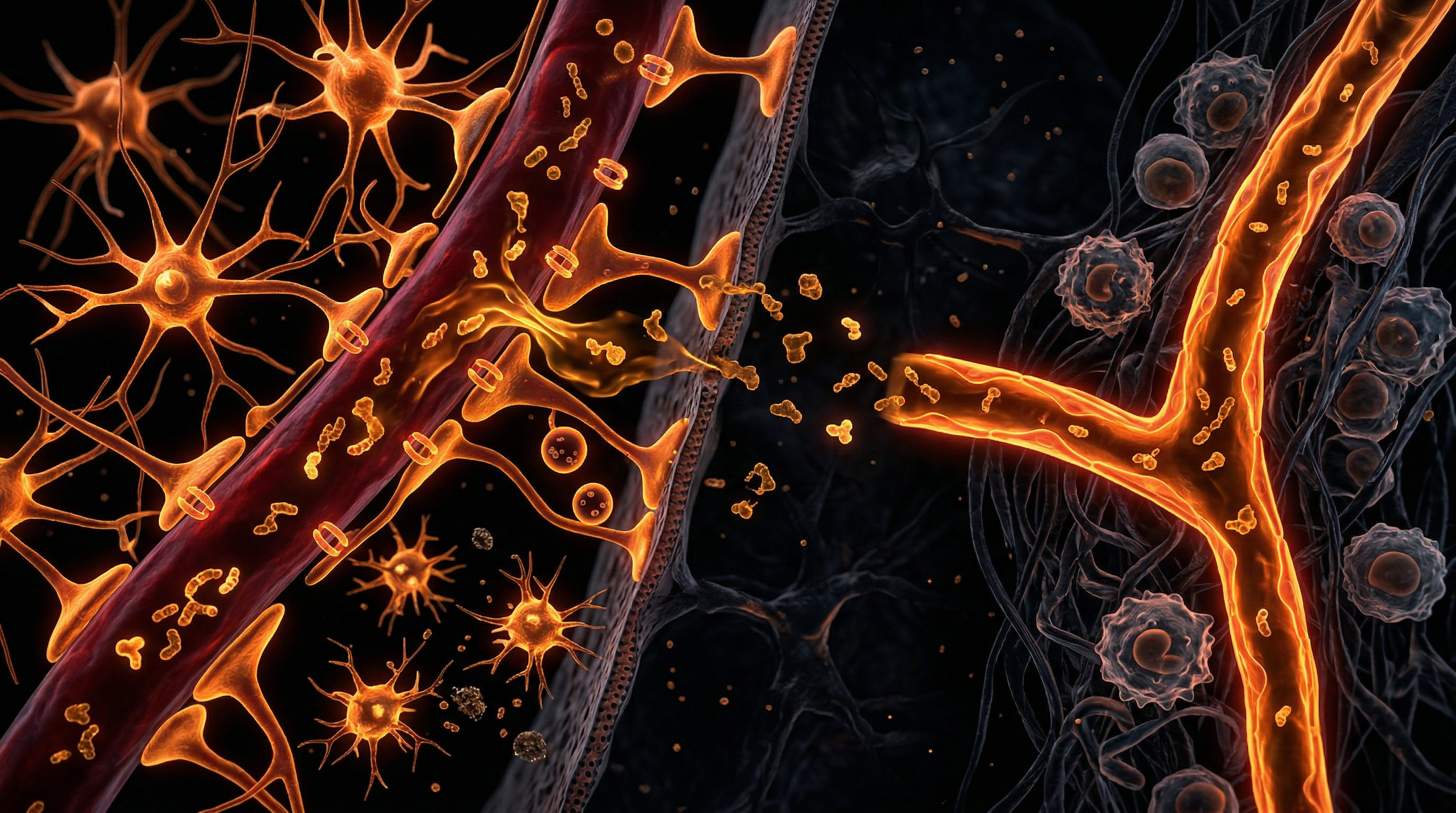
- Influx: CSF is produced in the choroid plexus and flows into the subarachnoid space. From there, it is driven into the brain tissue along the perivascular spaces (also known as Virchow-Robin spaces) that surround the arteries.
- Exchange: This CSF is then forced into the brain parenchyma, where it mixes with the ISF—the fluid surrounding the neurons. This mixing is facilitated by specific water channels on the astrocytes, which act as the "pumps" of the system.
- Efflux: The waste-laden fluid (containing metabolic debris like amyloid-beta and tau proteins) is then pushed out of the brain along the perivascular spaces of the veins.
The Lymphatic Exit (The External Drainage)
The glymphatic system is a closed-loop system within the skull, but the waste it collects must go somewhere. This is where the meningeal lymphatic vessels come into play. These vessels are located in the dura mater, the outermost layer of the meninges.
Fact: Recent imaging has confirmed that the meningeal lymphatics carry the majority of the brain’s waste-laden fluid through the cribriform plate and along cranial nerves, eventually draining into the Deep Cervical Lymph Nodes in the neck.
This interface is the critical "bridge" between the central nervous system and the peripheral immune system. It is the point where the brain’s "trash" is finally handed off to the body’s general "refuse collection" system. If the cervical lymph nodes are congested or the lymphatic vessels in the neck are constricted, the glymphatic flow in the brain grinds to a halt due to back-pressure.
Mechanisms at the Cellular Level
The efficiency of the Lymphatic-Glymphatic Interface is governed by molecular machinery that is sensitive to the smallest biochemical shifts.
Aquaporin-4 (AQP4): The Gatekeepers
The most critical component of the glymphatic system is the Aquaporin-4 (AQP4) water channel. These channels are located on the "endfeet" of astrocytes—star-shaped glial cells that wrap around the brain's blood vessels.
- Polarisation: In a healthy brain, AQP4 channels are highly concentrated (polarised) on the astrocyte endfeet directly facing the blood vessels. This allows for the rapid, efficient movement of water into and out of the brain tissue.
- Depolarisation: Under conditions of chronic inflammation or injury, these channels migrate away from the endfeet and spread across the entire body of the astrocyte. This "mislocalisation" destroys the pressure gradient required for fluid flow, essentially "clogging" the brain's pipes at a molecular level.
The Role of the Glycocalyx
The glycocalyx is a delicate, gel-like layer of glycoproteins and glycolipids that lines the interior of the perivascular spaces. It acts as a molecular sieve, regulating which particles can move through the glymphatic channels. Damage to the glycocalyx—often caused by high blood sugar (hyperglycaemia) or oxidative stress—increases the resistance to fluid flow, further stagnating the brain's detox process.
Sleep and the Noradrenergic System
The glymphatic system is almost exclusively active during deep, slow-wave sleep.
- Expansion of Interstitial Space: During sleep, the brain's interstitial space increases by up to 60%. This expansion reduces resistance to fluid flow, allowing the CSF to "flush" the brain.
- Norepinephrine: This neurotransmitter, associated with arousal and stress, must be low for the glymphatic system to activate. Chronic stress keeps norepinephrine levels high, effectively locking the "drainage gates" and preventing the nightly brain wash.
Environmental Threats and Biological Disruptors
We are currently living in an environment that is fundamentally hostile to the Lymphatic-Glymphatic Interface. The modern world presents a "perfect storm" of disruptors that sabotage our internal drainage.
Electromagnetic Fields (EMFs) and Voltage-Gated Calcium Channels
The proliferation of Pulsed Microwave Radiation (from 4G, 5G, and Wi-Fi) has been shown to activate Voltage-Gated Calcium Channels (VGCCs) in the cell membranes. This leads to an excessive influx of calcium into the cells, triggering the production of peroxynitrite—a potent oxidant. This oxidative stress directly damages the AQP4 channels on astrocytes, causing the "mislocalisation" mentioned earlier and halting glymphatic flow.
Heavy Metal Accumulation
The brain has a high affinity for certain metals, particularly Aluminium and Mercury.
- Aluminium: Often found in deodorants, cookware, and certain medical injections, aluminium has been shown to accumulate in the meningeal lymphatics and the astrocytes. It acts as a physical "plug" and a chemical irritant, triggering neuroinflammation that shuts down the interface.
- Mercury: This neurotoxin disrupts the tubulin structure within neurons and interferes with the astrocyte's ability to maintain the AQP4 gradients.
The Glyphosate Factor
The herbicide Glyphosate, used extensively in modern agriculture, is a glycine analogue. It can substitute for the amino acid glycine during protein synthesis, leading to the creation of misfolded proteins. These misfolded proteins are more difficult for the glymphatic system to clear, leading to faster accumulation and the eventual "bottlenecking" of the meningeal exit points.
Blue Light and Circadian Disruption
Since the glymphatic system is sleep-dependent, the disruption of the circadian rhythm by artificial blue light (from screens and LED lighting) is a primary driver of detox failure. Blue light suppresses melatonin production; melatonin is not just a sleep hormone, it is a powerful antioxidant that protects the AQP4 channels during the nightly flush.
The Cascade: From Exposure to Disease
When the Lymphatic-Glymphatic Interface fails, the result is not immediate death, but a slow, progressive "souring" of the brain’s internal environment. This is a predictable cascade of biological decay.
Phase 1: The Stagnant Brain
The first sign of interface failure is "brain fog." This is the subjective experience of interstitial fluid stagnation. Metabolic waste, including lactic acid and CO2, begins to build up, lowering the pH of the brain tissue and making it more acidic. This leads to subtle cognitive impairments, irritability, and headaches.
Phase 2: Neuroinflammation and Microglial Activation
As waste builds up, the microglia—the brain's resident immune cells—detect the debris and enter a "hyper-activated" state. Instead of cleaning, they begin to secrete pro-inflammatory cytokines like TNF-alpha and IL-1 beta. This chronic inflammation further damages the AQP4 channels, creating a vicious feedback loop of stagnation and inflammation.
Phase 3: Protein Misfolding (The Plaque Phase)
With the drainage system offline, proteins like Amyloid-beta and Tau (associated with Alzheimer's) and Alpha-synuclein (associated with Parkinson's) begin to aggregate. These are not the "cause" of the disease, but rather the "trash" that has piled up because the bin collectors stopped coming.
Phase 4: Systemic Feedback
Because the brain’s waste drains into the cervical lymph nodes, a "clogged brain" eventually leads to a "clogged body." The immune system in the neck becomes overwhelmed, leading to chronic lymphadenopathy (swollen glands), sinus issues, and a weakened systemic immune response. Conversely, if the body's lymphatic system is sluggish due to a sedentary lifestyle or poor diet, the back-pressure ensures the brain cannot drain. It is a dual-failure.
What the Mainstream Narrative Omits
The medical-industrial complex has a vested interest in ignoring the Lymphatic-Glymphatic Interface. To acknowledge that neurodegeneration is a drainage issue would be to admit that many "incurable" diseases are actually environmental and lifestyle-mediated.
The Suppression of "Mechanical" Medicine
Modern medicine is almost entirely "chemical" in its focus. It seeks to find a drug to "clear" Amyloid-beta (such as the controversial monoclonal antibody treatments) without ever asking why the amyloid accumulated in the first place. The idea that manual lymphatic drainage, postural correction, or EMF mitigation could treat neurological disease is dismissed as "alternative," despite being based on foundational fluid mechanics.
The Ignored Role of the Neck
The importance of the cervical spine and the Deep Cervical Lymph Nodes is rarely discussed in neurology. Structural issues like "tech neck" (forward head posture) physically compress the meningeal lymphatic exit points at the base of the skull. This mechanical obstruction is a primary driver of neurological decline that cannot be fixed with a pill.
The "Immunological Privilege" Myth
The mainstream narrative still clings to the idea that the brain is separate from the body's immune system. This allows for the justification of neurotoxic ingredients in pharmaceuticals, under the false assumption that the "Blood-Brain Barrier" (BBB) is an impenetrable wall. In reality, the meningeal lymphatics prove that the brain and the body’s immune systems are one and the same.
The UK Context
In the United Kingdom, certain geographic and systemic factors exacerbate the failure of the Lymphatic-Glymphatic Interface.
The "Stiff Upper Lip" and Sympathetic Dominance
The British culture of stoicism and high-stress professional environments leads to a population in a state of chronic sympathetic nervous system dominance (fight-or-flight). As we have seen, the glymphatic system requires a parasympathetic state (rest-and-digest) and low norepinephrine to function. The "always-on" culture in cities like London is literally preventing the population's brains from draining.
UK Water and Pineal Calcification
While fluoride levels in the UK vary by region (with higher concentrations in the West Midlands and parts of the North East), the presence of calcium carbonate (hard water) combined with fluoride in many areas contributes to the calcification of the pineal gland. The pineal gland is central to the circadian rhythm and melatonin production. A calcified pineal gland is a death knell for efficient glymphatic clearance.
The 5G Rollout in Major Cities
The UK has been a primary testing ground for dense, urban 5G networks. London, Manchester, and Birmingham have some of the highest concentrations of small-cell microwave transmitters in Europe. The constant oxidative stress from this radiation directly interferes with the AQP4 channel polarisation, contributing to the "stagnant brain" epidemic seen in these urban centres.
The "Grey Britain" Effect
The lack of sunlight in the UK, particularly during the winter months, leads to chronic Vitamin D3 and Infrared deficiency. Infrared light from the sun has been shown to penetrate the skull and stimulate the production of "subcellular" melatonin in the mitochondria. Without this, the brain's "cleaning crew" lacks the energy and the protection needed to perform the nightly flush.
Protective Measures and Recovery Protocols
To restore the Lymphatic-Glymphatic Interface, we must address both the internal "flush" and the external "drainage."
1. Optimising Sleep Architecture
- The Lateral Decubitus Position: Research indicates that sleeping on your side (specifically the right side) is the most efficient position for glymphatic drainage. This position minimises the compression of the jugular veins and maximises the pressure gradient for CSF flow.
- The "Digital Sunset": Eliminate all blue light at least two hours before bed. Use red-tinted glasses or incandescent lighting to allow the natural rise of melatonin.
- Incline Bed Therapy (IBT): Sleeping at a slight incline (5-degree head-up) can actually improve the venous return from the brain, preventing the back-pressure that halts glymphatic flow.
2. Manual Lymphatic Clearance
- Cervical Lymphatic Drainage: Using gentle, skin-stretching movements (Vodder Technique) on the neck can "clear the pipes" for the brain's waste. Focusing on the area behind the ear and down the sternocleidomastoid muscle is key.
- Gua Sha and Dry Brushing: Regular use of a Gua Sha tool on the neck and jawline helps move stagnant lymph and reduces the mechanical "clogging" of the meningeal vessels.
3. Nutritional and Supplemental Support
- Silica (Orthosilicic Acid): Silica is the natural antagonist to aluminium. Consuming silica-rich mineral water (like Volvic or Fiji) helps "pull" aluminium out of the brain tissue and the meningeal vessels.
- Iodine: Essential for the health of all glands, including the lymph nodes. Iodine also helps displace fluoride, protecting the pineal gland.
- Galium aparine (Cleavers): A traditional British herb, Cleavers is one of the most effective lymphatic tonics. It "thins" the lymph, making it easier for the fluid to move through the narrow meningeal channels.
4. Environmental Mitigation
- EMF Shielding: Using a "Faraday Cage" canopy over the bed or turning off the Wi-Fi router at night is non-negotiable for glymphatic health. This reduces the VGCC-mediated oxidative stress during the brain's most vulnerable period.
- Cold Exposure: Short bursts of cold (cold showers or "wild swimming") stimulate the glymphatic-sympathetic reflex, causing a "pumping" action in the lymphatic vessels and improving fluid turnover.
5. Postural Correction
- The "Atlas" Adjustment: Ensure the first cervical vertebra (the Atlas) is properly aligned. A misalignment here can physically pinch the lymphatic vessels and the vagus nerve, creating a "kink in the garden hose" of brain drainage.
Summary: Key Takeaways
The discovery of the Lymphatic-Glymphatic Interface has fundamentally rewritten our understanding of human biology. We are not static entities; we are fluid-driven systems.
- The Brain Must Drain: The glymphatic system is the brain’s internal "car wash," while the meningeal lymphatics are the "drainage pipes."
- Stagnation is Disease: Neurodegenerative conditions are not unavoidable "glitches" but the result of metabolic waste accumulation due to drainage failure.
- The Environment is the Enemy: EMFs, heavy metals, glyphosate, and blue light are the primary "cloggers" of this dual network.
- Neck Health is Brain Health: The cervical lymph nodes and the structural integrity of the neck are the gatekeepers of neurological detox.
- Restoration is Possible: Through postural correction, EMF mitigation, specific sleeping positions, and lymphatic support, we can "drain the swamp" and restore cognitive clarity.
The Lymphatic-Glymphatic Interface is the most important "frontier" in modern health. In an increasingly toxic world, the ability to clear waste from the most vital organ is the difference between thriving and a slow descent into neurological decay. It is time we stop focused solely on what we put into our brains and start paying attention to how we clear it out.
This article is provided for informational and educational purposes only. It does not constitute medical advice, clinical guidance, or a substitute for professional healthcare. Information reflects cited research at time of publication. Always consult a qualified healthcare professional before acting on any health information.
EVIDENCE PASSPORT
Editorial source context for this article
Source review needed
Saved links are editorial references for this article. They may support specific claims rather than every sentence. Open and assess each source in context. This passport does not independently verify them.
Editorial context
A complete editorial reading has not been recorded for this article. Source links remain available for you to open and assess directly.
Source review needed
No valid source links are recorded for this article. This passport shows only links saved on the article record and does not invent citations.
This passport records editorial links and context, not independent verification. Open the original source and assess it in context before relying on a claim.
Medical Disclaimer
The information in this article is for educational purposes only and does not constitute medical advice, diagnosis, or treatment. Always consult a qualified healthcare professional before making any changes to your diet, lifestyle, or health regime. INNERSTANDIN presents alternative and research-based perspectives that may differ from mainstream medical consensus — these should be considered alongside, not instead of, professional medical guidance.
Read Full DisclaimerContinue the thread
Keep this question moving.
Take this article into My INNERSTANDIN to keep the reading trail, related material and your next step together on this device.
Explore this in the Body Map
See where this hits your biology. Interactive anatomy, threats, and protective protocols.
Dig deeper in the Library
Free, longform PDF volumes that go beyond headlines into mechanisms and references.