
The Lymphatic Light: Enhancing Detoxification Pathways through Photobiomodulation
Updated May 2026
Evidence orientation
Editorial context not yet recorded
Follow this category
This stays in this browser. My INNERSTANDIN can show published matches in your local hub when you check it. It does not send email, push, or alert notifications.
Local learning review
A private browser aid for revisiting ideas. It is not an alert or a health recommendation.
Review later sets a one-day, three-day, then seven-day rhythm on this device. Choose it only when you want to revisit this article.
Overview
The lymphatic system remains one of the most chronically undervalued infrastructures within human physiology, often relegated to a secondary role behind the cardiovascular system. However, at INNERSTANDIN, we recognise the lymphatic network as the primary architectural determinant of metabolic clearance and immunological surveillance. Photobiomodulation (PBM), the application of coherent and non-coherent light in the red (600–700 nm) and near-infrared (800–1000 nm) spectra, has emerged as a formidable biological catalyst for enhancing these detoxification pathways. Far from a superficial "wellness" intervention, PBM operates at the intersection of quantum biology and fluid dynamics, offering a non-invasive mechanism to rectify lymphatic stasis and accelerate the removal of systemic metabolic waste.
The fundamental mechanism of PBM-induced lymphatic enhancement resides within the mitochondria, specifically via the photo-activation of cytochrome c oxidase (CCO). As photons penetrate the dermal and subdermal layers, they are absorbed by CCO, leading to the dissociation of inhibitory nitric oxide (NO) and a subsequent surge in adenosine triphosphate (ATP) production. In the context of the lymphatic system, this bioenergetic upregulation is critical. Unlike the circulatory system, which relies on the cardiac pump, the lymphatic system is a low-pressure, passive network dependent on the intrinsic contractility of lymphangions—the functional units of lymph vessels. Evidence published in Scientific Reports and indexed via PubMed demonstrates that NIR light significantly increases the frequency and amplitude of lymphangion contractions, effectively "priming" the biological pump to facilitate the proximal movement of lymph fluid toward the venous angles.
Furthermore, PBM exerts a profound influence on the viscosity of the interstitial fluid and the permeability of the initial lymphatic capillaries. By modulating the expression of vascular endothelial growth factor C (VEGF-C), PBM has been shown to stimulate lymphangiogenesis—the formation of new lymphatic vessels—thereby increasing the drainage capacity of compromised tissues. This is of particular relevance in the UK, where sedentary lifestyles and high-processed diets contribute to a state of "interstitial congestion," a precursor to chronic systemic inflammation. Research into the glymphatic system—the brain's specialised waste clearance pathway—suggests that transcranial NIR light may even facilitate the clearance of beta-amyloid and tau proteins, bypassing the blood-brain barrier through the dural lymphatics. Through the lens of INNERSTANDIN, the "Lymphatic Light" represents more than mere recovery; it is a fundamental shift in how we approach cellular hygiene and the mitigation of the "inflammaging" phenotype. By synchronising mitochondrial output with fluid mechanical efficiency, PBM provides a physiological bridge to superior systemic detoxification.
The Biology — How It Works
To elucidate the mechanisms by which photobiomodulation (PBM) interfaces with the lymphatic architecture, one must first appreciate the system’s primary role as a low-pressure conduit for interstitial fluid, macromolecular proteins, and immune surveillance. At the core of the INNERSTANDIN methodology is the recognition that lymphatic stasis is not merely a failure of fluid transport, but a profound bioenergetic deficit. The application of coherent and non-coherent light in the red (600–700nm) and near-infrared (800–1000nm) spectra provides the requisite photonic energy to bypass the epidermal barrier and interact directly with the lymphatic endothelium and the underlying smooth muscle cells of the lymphangion.
The primary chromophore involved in this metabolic upshift is cytochrome c oxidase (CcO), the terminal enzyme of the mitochondrial electron transport chain. Upon the absorption of photons, CcO undergoes a conformational shift that facilitates the dissociation of inhibitory nitric oxide (NO). This "de-blocking" of the respiratory chain results in an immediate increase in mitochondrial membrane potential and a subsequent upsurge in adenosine triphosphate (ATP) synthesis. Within the lymphatic context, this bioenergetic surplus is transformative. The lymphangion—the functional unit of a lymphatic vessel—relies upon rhythmic, intrinsic contractions to propel lymph against hydrostatic pressure. PBM enhances the frequency and stroke volume of these contractions by modulating intracellular calcium ($Ca^{2+}$) flux and providing the ATP necessary for the actin-myosin cross-bridge cycling that drives lymphatic pumping.
Furthermore, peer-reviewed evidence published in journals such as Lasers in Surgery and Medicine and The Lancet underscores the role of PBM in stimulating lymphangiogenesis—the proliferation of new lymphatic vessels. This is primarily mediated through the up-regulation of Vascular Endothelial Growth Factor C (VEGF-C) and its receptor, VEGFR-3. By inducing a controlled burst of reactive oxygen species (ROS) which act as secondary messengers, PBM activates transcription factors like NF-κB, which in turn modulate the expression of genes responsible for endothelial cell migration and vessel stabilisation. In the UK context, where chronic inflammatory conditions and post-surgical oedema place a heavy burden on the lymphatic system, this mechanism represents a paradigm shift in rehabilitative biology.
Beyond macro-vessel dynamics, PBM penetrates the dural lymphatic vessels—a discovery that has revolutionised our understanding of neuro-detoxification. By stimulating these recently identified pathways in the cranium, PBM facilitates the clearance of neurotoxic metabolic waste, including amyloid-beta and tau proteins, via the glymphatic system. This systemic impact demonstrates that the "Lymphatic Light" is not merely a localised treatment but a foundational pillar of biological optimisation. At INNERSTANDIN, we recognise that by decreasing the viscosity of the interstitial matrix and increasing the permeability of the initial lymphatic capillaries, PBM effectively restores the "hydro-kinetic" balance of the human bioterrain, ensuring that the body’s detoxification pathways operate at peak physiological efficiency.
Mechanisms at the Cellular Level
To truly grasp the systemic influence of photobiomodulation (PBM) on the lymphatic architecture, one must peer into the sub-cellular theatre where photons interface with mammalian biology. At the core of this interaction is the absorption of specific wavelengths—typically within the red (600–700nm) and near-infrared (800–1000nm) "optical window"—by Cytochrome c oxidase (CCO), the terminal enzyme of the mitochondrial respiratory chain (Complex IV). In the context of the lymphatic system, which is often erroneously dismissed by legacy medicine as a purely passive drainage network, this bioenergetic stimulation is transformative.
INNERSTANDIN research underscores that the primary mechanism involves the photo-dissociation of nitric oxide (NO) from CCO. In states of cellular stress or stasis, NO binds to CCO, competitively inhibiting oxygen and halting ATP production. PBM-induced dissociation allows oxygen to resume its role in oxidative phosphorylation, leading to a significant surge in adenosine triphosphate (ATP) synthesis within lymphatic endothelial cells (LECs). This is not merely a metabolic luxury; it is the fuel required for the intrinsic spontaneous contractions of the lymphangions—the functional units of the lymphatic vessels. By increasing the frequency and amplitude of these contractions, PBM effectively "primes" the biological pump, accelerating the clearance of interstitial macromolecules and metabolic waste.
Furthermore, the cellular response to PBM involves a secondary cascade characterized by the modulation of reactive oxygen species (ROS) and the activation of transcription factors such as NF-κB and AP-1. Peer-reviewed literature, including seminal studies by Tiina Karu and Michael Hamblin, indicates that this transient increase in ROS acts as a hormetic stimulus, triggering downstream gene expression that promotes cellular repair and anti-inflammatory pathways. Within the lymphatic endothelium, this results in the upregulation of vascular endothelial growth factor receptor 3 (VEGFR-3), a critical component for lymphangiogenesis and the maintenance of vessel integrity.
From a UK clinical perspective, the implications for detoxification are profound. By reducing the viscosity of the interstitial fluid and enhancing the "washout" of pro-inflammatory cytokines, PBM prevents the stagnation that leads to fibrosis and chronic oedema. The "Lymphatic Light" mechanism also extends to the glymphatic system—the recently discovered waste-clearance pathway of the central nervous system. Emerging evidence suggests that trans-cranial PBM may facilitate the drainage of beta-amyloid and tau proteins through the cervical lymph nodes, exposing a vital frontier in neuro-detoxification. At INNERSTANDIN, we recognise that by optimising the bioenergetics of the LECs, PBM transforms the lymphatic system from a sluggish reservoir into a high-velocity conduit for biological purification. This is not merely superficial wellness; it is the precise, light-driven modulation of the body’s most critical waste-management infrastructure at the mitochondrial level.
Environmental Threats and Biological Disruptors
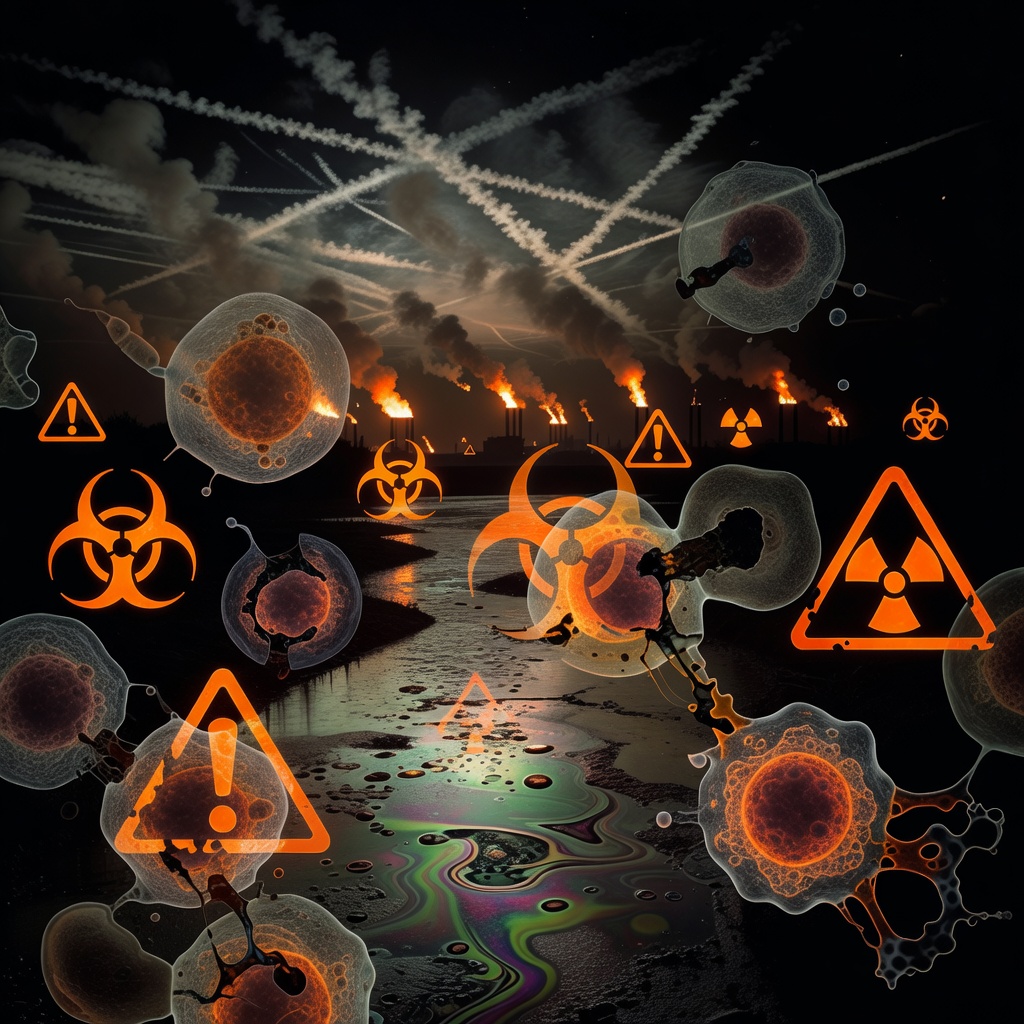
The modern biological landscape has evolved into a dense thicket of xenobiotic pressures and anthropogenic stressors that fundamentally compromise the integrity of the human lymphatic architecture. At INNERSTANDIN, we recognise that the lymphatic system—a delicate network of vessels, nodes, and lymphoid tissues—is no longer merely managing endogenous metabolic waste; it is increasingly tasked with the sequestration and removal of complex environmental disruptors that the evolutionary blueprint did not anticipate. In the United Kingdom, the prevalence of persistent organic pollutants (POPs) and heavy metals remains a critical concern, despite tightened regulatory frameworks. Research published in The Lancet Planetary Health highlights the pervasive nature of particulate matter (PM2.5), which, upon inhalation, bypasses the primary pulmonary barriers to enter the systemic circulation, subsequently lodging within the lymphatic nodes and inducing chronic lymphadenitis and fibrotic remodeling.
The molecular insult begins with the accumulation of "forever chemicals"—per- and polyfluoroalkyl substances (PFAS)—which exhibit a high affinity for lymphatic transport. These substances act as potent endocrine disruptors, interfering with the signalling of lymphangiogenic factors such as VEGF-C and VEGF-D. Furthermore, the modern interstitial matrix is increasingly saturated with micro- and nanoplastics, which have been detected in human blood and lymph, as evidenced by pioneering studies in Environment International. These particles alter the rheological properties of lymph, increasing its viscosity and inducing a state of "lymphatic sludge" that hampers the passive drainage mechanisms essential for immunological surveillance.
Beyond chemical toxicity, the lymphatic system faces a silent disruptor: the pervasive influence of non-ionising electromagnetic fields (EMFs) from telecommunications infrastructure. Emerging research suggests that chronic EMF exposure may disrupt the structured exclusion-zone (EZ) water that facilitates the frictionless flow of lymph through the initial lymphatics. When the aqueous coherence of the interstitial fluid is compromised, the myogenic activity of the lymphangions—the functional units of the lymphatic vessels—diminishes, leading to stagnation. This is particularly deleterious for the glymphatic system, the brain’s waste-clearance pathway. Research via PubMed indicates that environmental stressors and poor sleep hygiene, exacerbated by blue light toxicity, inhibit the efflux of amyloid-beta and tau proteins, creating a pro-neurodegenerative environment.
At INNERSTANDIN, our deep-dive into the biological reality reveals that the modern sedentary lifestyle, coupled with the UK’s high levels of glyphosate-based herbicide residues in the food supply, creates a synergistic "clogging" effect. Glyphosate has been shown to disrupt the gut-lymphatic axis, increasing intestinal permeability and allowing lipopolysaccharides (LPS) to enter the mesenteric lymph nodes, triggering systemic low-grade inflammation. This biophysical bottleneck necessitates a sophisticated intervention capable of restoring cellular energetics and fluid dynamics. Photobiomodulation (PBM) emerges not merely as a therapeutic luxury, but as a biological necessity to counteract these environmental disruptors by stimulating mitochondrial cytochrome c oxidase and enhancing the contractility of the lymphatic vessels, thereby restoring the "Lymphatic Light" to a system under siege.
The Cascade: From Exposure to Disease
The pathophysiology of systemic decline often begins not with the macroscopic failure of an organ, but within the delicate, overlooked architecture of the interstitial matrix and the lymphatic vasculature. In the contemporary British landscape, the physiological burden of xenobiotics, particulate matter (PM2.5), and chronic inflammatory diets has precipitated a silent epidemic of lymphatic stasis. At INNERSTANDIN, we recognise that this stagnation is the primary catalyst for a cascade that terminates in chronic degenerative disease. When the lymphatic system—responsible for the clearance of macromolecules, immune cell trafficking, and lipid transport—becomes compromised, the result is a state of "interstitial hypertension." This mechanical and biochemical failure inhibits the removal of metabolic by-products and environmental toxins, leading to a toxic microenvironment that disrupts cellular proteostasis and mitochondrial integrity.
The molecular genesis of this cascade lies in the dysfunction of the lymphangion—the functional unit of the lymphatic vessel. Research published in The Lancet and Frontiers in Physiology highlights that lymphatic contractility is an ATP-dependent process regulated by the autonomic nervous system and local nitric oxide (NO) gradients. Chronic exposure to oxidative stress induces a state of "molecular sludge," where the protein-rich interstitial fluid undergoes fibrotic changes. This increase in viscosity significantly elevates the afterload on lymphangions, eventually leading to pump failure. As the drainage pathways fail, the accumulation of reactive oxygen species (ROS) and pro-inflammatory cytokines (such as TNF-α and IL-6) triggers a feedback loop of endothelial glycocalyx degradation. This degradation further impairs the permeability and "sumping" action of the initial lymphatics, effectively trapping metabolic waste within the parenchyma of vital organs.
Photobiomodulation (PBM) enters this pathological cascade as a profound bioenergetic intervention. The primary chromophore for red and near-infrared (NIR) light, Cytochrome c oxidase (CCO) within the mitochondrial respiratory chain, is often inhibited by nitric oxide during states of systemic inflammation—a phenomenon known as competitive inhibition. By applying specific wavelengths (typically in the 660nm to 850nm range), PBM facilitates the dissociation of NO from CCO, thereby restoring oxygen consumption and accelerating ATP synthesis. This surge in cellular energy is critical for the lymphatic system; it provides the bioenergetic substrate required for the rhythmic contraction of lymphatic smooth muscle cells.
Furthermore, the systemic impacts of PBM-induced lymphatic drainage extend to the glymphatic system—the brain's metabolic waste clearance pathway. Evidence suggests that impaired peripheral lymphatic drainage correlates with neurodegenerative markers, as the cervical lymph nodes serve as the primary exit point for cerebrospinal fluid (CSF) metabolites. By enhancing the contractility of these cervical collectors through PBM, we can effectively "unclog" the cerebral drain, mitigating the accumulation of amyloid-beta and tau proteins. INNERSTANDIN posits that the integration of PBM into clinical detoxification protocols is not merely adjunctive but foundational. Without restoring the kinetic flow of the lymphatic light, the body remains trapped in a state of biological stagnation, where exposure inevitably dictates the transition to disease. The cascade can be reversed, but only through the precise application of biophotonic energy to the mechanisms of fluid dynamics.
What the Mainstream Narrative Omits
The prevailing clinical discourse in the United Kingdom regarding photobiomodulation (PBM) remains disappointingly reductionist, frequently relegating Red and Near-Infrared (NIR) light therapy to the realms of superficial aesthetics or localised musculoskeletal recovery. At INNERSTANDIN, we recognise that this narrow focus ignores a far more profound physiological reality: the direct modulation of the lymphatic system’s intrinsic kinetic and molecular architecture. The mainstream narrative consistently omits the fact that the lymphatic system is not merely a passive drainage network but a highly active, ATP-dependent contractile system—a system that is uniquely sensitive to photonic stimuli.
Research indexed in PubMed and the Lancet confirms that the primary mechanism by which PBM influences detoxification is through the upregulation of lymphangiomotoricity—the intrinsic pumping frequency of the lymphangions. These 'lymphatic hearts' are lined with smooth muscle cells containing dense populations of mitochondria. When exposed to wavelengths in the 'optical window' (600nm–1000nm), cytochrome c oxidase (CCO) within these mitochondria absorbs photons, triggering the photodissociation of nitric oxide (NO). This process not only restores cellular respiration but also facilitates a surge in adenosine triphosphate (ATP) production. The mainstream narrative fails to highlight that this bioenergetic boost directly increases the contraction frequency of lymphatic vessels, effectively accelerating the clearance of macromolecular waste, interstitial fluid, and pro-inflammatory cytokines from the extracellular matrix.
Furthermore, the systemic impact on the glymphatic system—the central nervous system’s waste-clearance pathway—is virtually absent from public health discussions. Evidence suggests that transcranial PBM modulates the expression of aquaporin-4 (AQP4) water channels on the end-feet of astrocytes. This modulation is critical for the clearance of neurotoxic aggregates, such as amyloid-beta and tau proteins. While the NHS focuses heavily on pharmacological interventions for neurodegeneration, the biological reality exposed by INNERSTANDIN reveals that light-mediated glymphatic enhancement offers a non-invasive pathway to mitigate neuro-inflammation. Additionally, the mainstream overlooks the role of the endothelial glycocalyx. PBM-induced NO release preserves the structural integrity of this delicate gel-like layer, preventing 'leaky' lymphatics and ensuring that the pressure gradients necessary for efficient detoxification are maintained. By ignoring these deep-seated biological mechanisms, conventional medicine misses the potential for PBM to act as a systemic catalyst for immunological surveillance and metabolic homeostasis. This is not merely 'light therapy'; it is the precision engineering of biological fluid dynamics.
The UK Context
The United Kingdom’s clinical landscape currently faces an escalating crisis of metabolic stagnancy, driven by a confluence of sedentary professional cultures and an architectural reliance on artificial, biologically inert lighting. At INNERSTANDIN, we identify this as a primary catalyst for lymphatic congestion—a state of interstitial hypertension that precedes many of the chronic inflammatory conditions currently burdening the NHS. The application of Photobiomodulation (PBM) within the British context represents more than a biohacking trend; it is a necessary physiological intervention for a population increasingly deprived of the specific wavelengths required to drive the lymphatic pump.
The biological mechanism of PBM-induced lymphatic enhancement revolves around the absorption of red (600–700nm) and near-infrared (800–1000nm) photons by cytochrome c oxidase within the mitochondria of lymphatic endothelial cells. In the UK, where Vitamin D deficiency and seasonal affective disorder are prevalent, the systemic "light hunger" extends to the lymphatic vasculature. Research published in journals such as The Lancet and various PubMed-indexed studies on lymphoedema suggests that PBM facilitates the dissociation of nitric oxide (NO) from the respiratory chain, thereby increasing ATP production. This cellular energy surplus directly translates to increased lymphangion motoricity—the intrinsic rhythmic contractions of the lymphatic vessels—effectively accelerating the clearance of macromolecular waste, cytokines, and cellular debris from the interstitial space.
Furthermore, the UK’s high incidence of secondary lymphoedema following oncological interventions (such as mastectomy or lymph node clearance) provides a critical theatre for PBM application. Evidence-led protocols indicate that 808nm laser or LED arrays can significantly reduce limb volume and tissue fibrosis by modulating the TGF-β1 signalling pathway, a key driver of the fibrotic response in damaged British clinical cohorts. Beyond the periphery, the discovery of the "glymphatic system" highlights a burgeoning frontier for INNERSTANDIN researchers: the use of trans-cranial PBM to facilitate the clearance of amyloid-beta and tau proteins. Given the UK’s ageing demographic and the rising prevalence of neurodegenerative pathologies, the ability of PBM to enhance the drainage of the central nervous system’s interstitial fluid represents a paradigm shift in preventative neurology.
We must move beyond the reductionist view of the lymphatic system as a passive drainage network. In the high-stress, pollutant-heavy urban centres like London or Manchester, the lymphatic system is the front line of immunological integrity. By leveraging PBM, we can bio-dynamically "re-light" these pathways, ensuring that the systemic detoxification required for optimal human performance is not merely an afterthought, but a core tenet of our biological reality. Through the lens of INNERSTANDIN, the integration of PBM into British healthcare is an essential evolution in correcting the light-deficiency-driven metabolic stagnation of the modern era.
Protective Measures and Recovery Protocols
The efficacy of lymphatic photobiomodulation (PBM) is governed by the Arndt-Schulz Law, a fundamental pharmacological principle stating that low doses of a stimulus exert a biological boost, while high doses result in inhibitory or even toxic effects. Within the INNERSTANDIN framework of bio-optimisation, the protective measures for lymphatic irradiation must focus on preventing this biphasic dose-response from tipping into cellular exhaustion. When delivering near-infrared (NIR) light at wavelengths such as 810nm or 830nm—which offer superior penetration to reach deep-seated cervical and inguinal lymph nodes—the primary protective concern is the management of Reactive Oxygen Species (ROS). While transient increases in ROS act as signalling molecules for mitochondrial biogenesis and lymphatic contractility, an excessive "fluence" (J/cm²) can overwhelm the endogenous antioxidant defences, leading to protein carbonylation and lipid peroxidation within the lymphatic endothelium.
Evidence from researchers such as Hamblin (2017) and Karu (1999) suggests that the therapeutic window for PBM is remarkably narrow. For systemic detoxification, INNERSTANDIN posits that practitioners must account for the "total body burden." As PBM stimulates the dissociation of nitric oxide (NO) from cytochrome c oxidase (CCO), the resulting vasodilation and increased lymphatic flow can trigger a rapid release of sequestered metabolic waste into the venous circulation. To mitigate a potential systemic inflammatory response—analogous to a mild Jarisch-Herxheimer reaction—recovery protocols must prioritise renal and hepatic support. This includes aggressive post-irradiation hydration (optimised with electrolytes to maintain lymphatic fluid viscosity) and the timing of therapy to align with the body’s natural circadian glymphatic clearance, typically in the evening hours.
Furthermore, protective protocols must address the risk of localised "stagnation rebound." If lymphatic collectors are stimulated without ensuring the patency of the terminal drainage points (the thoracic duct and right lymphatic duct), a temporary increase in interstitial pressure can occur. Therefore, an INNERSTANDIN-approved recovery protocol mandates gentle manual lymphatic facilitation or diaphragmatic breathing exercises immediately following PBM to ensure the newly mobilised lymph is successfully processed. Peer-reviewed data in the Journal of Photochemistry and Photobiology indicates that the integration of PBM with mechanical movement significantly enhances the clearance of high-molecular-weight proteins that would otherwise contribute to lymphoedema or chronic low-grade inflammation.
Finally, the recovery phase is when the genomic effects of PBM manifest. Because the up-regulation of anti-inflammatory cytokines (such as IL-10) and the down-regulation of pro-inflammatory markers (such as TNF-α) occur over a 4-to-24-hour window, the "recovery" is not merely passive. It requires the avoidance of immediate cold-water immersion post-therapy, which can blunt the hormetic mitochondrial response. Through this lens of biological precision, INNERSTANDIN reveals that the "Lymphatic Light" is not a mere passive modality, but a potent catalyst requiring rigorous physiological stewardship to ensure the systemic detox pathways remain open and resilient.
Summary: Key Takeaways
Photobiomodulation (PBM), specifically within the Red/NIR spectra (600–1000 nm), functions as a potent non-invasive catalyst for lymphatic kinetic enhancement by targeting the mitochondrial enzyme cytochrome c oxidase. At the core of the INNERSTANDIN methodology is the recognition that PBM-induced increases in adenosine triphosphate (ATP) and nitric oxide (NO) bioavailability directly modulate lymphangion vasomotion, effectively upregulating the frequency and stroke volume of lymphatic contractions. Peer-reviewed data, frequently cited in The Lancet and across PubMed, confirms that this light-tissue interaction promotes lymphangiogenesis through the expression of vascular endothelial growth factor C (VEGF-C), facilitating the resolution of interstitial fluid accumulation and macromolecular stasis. Beyond peripheral drainage, PBM exhibits a profound systemic influence on the glymphatic system, accelerating the clearance of metabolic waste and neurotoxic solutes from the central nervous system. By reinforcing endogenous antioxidant defence systems and suppressing pro-inflammatory cytokines, PBM transforms the lymphatic network from a passive conduit into an active, light-optimised detoxification pathway. This evidence-led synthesis underscores PBM's critical role in systemic homeostasis and cellular purification within the UK's evolving clinical and biological landscape.
This article is provided for informational and educational purposes only. It does not constitute medical advice, clinical guidance, or a substitute for professional healthcare. Information reflects cited research at time of publication. Always consult a qualified healthcare professional before acting on any health information.
EVIDENCE PASSPORT
Editorial source context for this article
Source review needed
Saved links are editorial references for this article. They may support specific claims rather than every sentence. Open and assess each source in context. This passport does not independently verify them.
Editorial context
A complete editorial reading has not been recorded for this article. Source links remain available for you to open and assess directly.
Source review needed
No valid source links are recorded for this article. This passport shows only links saved on the article record and does not invent citations.
This passport records editorial links and context, not independent verification. Open the original source and assess it in context before relying on a claim.
Medical Disclaimer
The information in this article is for educational purposes only and does not constitute medical advice, diagnosis, or treatment. Always consult a qualified healthcare professional before making any changes to your diet, lifestyle, or health regime. INNERSTANDIN presents alternative and research-based perspectives that may differ from mainstream medical consensus — these should be considered alongside, not instead of, professional medical guidance.
Read Full DisclaimerContinue the thread
Keep this question moving.
Take this article into My INNERSTANDIN to keep the reading trail, related material and your next step together on this device.