
The Mitochondrial Threshold: How Cellular Energy Failure Drives Peripheral Insulin Resistance
Updated April 2026
Evidence orientation
Editorial context not yet recorded
Follow this category
This stays in this browser. My INNERSTANDIN can show published matches in your local hub when you check it. It does not send email, push, or alert notifications.
Local learning review
A private browser aid for revisiting ideas. It is not an alert or a health recommendation.
Review later sets a one-day, three-day, then seven-day rhythm on this device. Choose it only when you want to revisit this article.
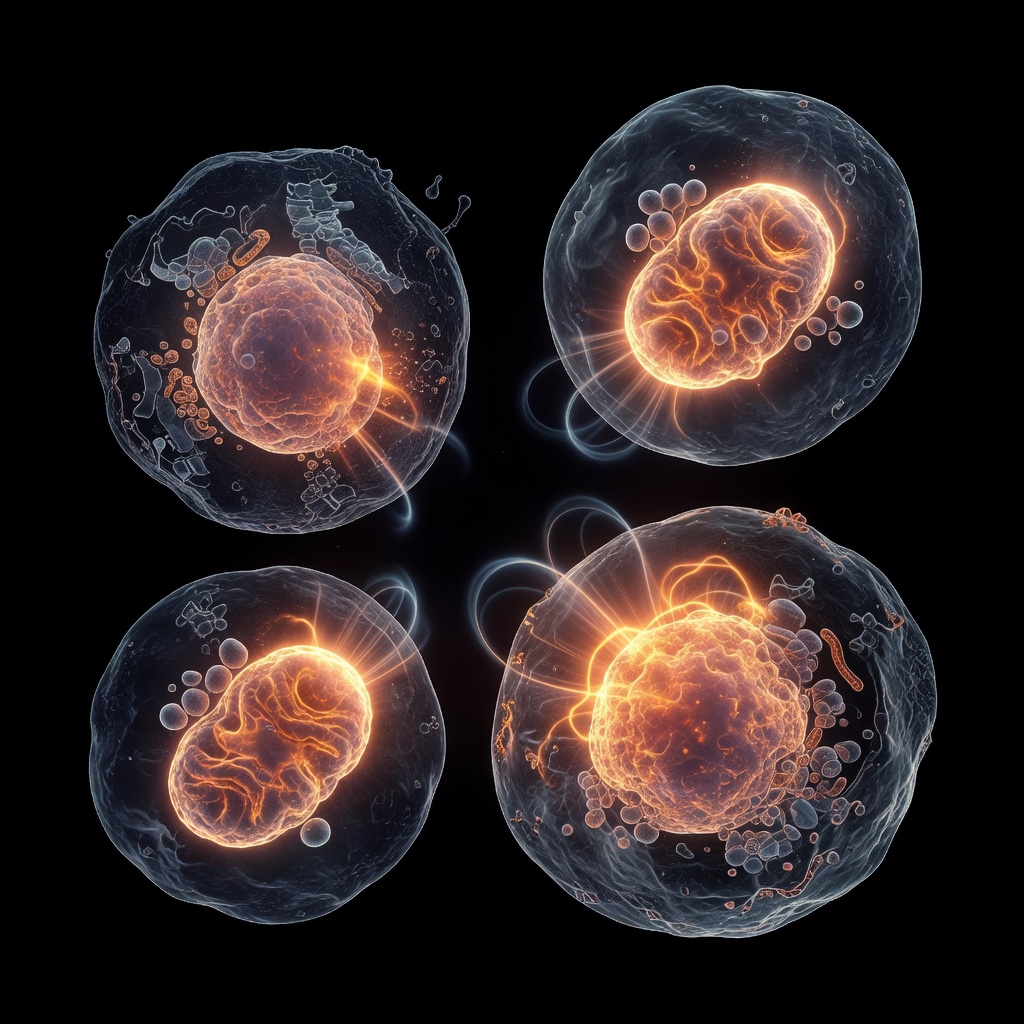
In the landscape of modern metabolic health, we have been conditioned to view insulin resistance through a narrow lens. The prevailing medical narrative suggests it is merely a hormonal mishap—a state where cells "stop listening" to insulin due to overexposure. However, at INNERSTANDING, we seek the deeper biological truth. To understand the current epidemic of Type 2 diabetes and metabolic dysfunction, we must look beyond the hormone and into the engine of the cell itself: the mitochondrion.
The reality is that peripheral insulin resistance is not a malfunction; it is a sophisticated, protective adaptation. It is the body’s attempt to prevent a catastrophic overload of cellular energy. When we cross the Mitochondrial Threshold, the cell effectively "blows the fuse" to prevent permanent structural damage. This article explores the biochemical reality of why our cells refuse fuel and how restoring mitochondrial integrity is the only true path to metabolic freedom.
The Energy Crisis: Redefining Insulin Resistance
For decades, the focus has been on the insulin receptor. We are told that "insulin resistance" occurs when receptors on the surface of muscle and liver cells become desensitised. While this is true on the surface, it fails to answer why.
The answer lies in bioenergetics. Your cells are not passive recipients of glucose; they are active processors of energy. Within every cell, hundreds or thousands of mitochondria convert the food we eat into Adenosine Triphosphate (ATP) via a process called Oxidative Phosphorylation.
When the supply of fuel (glucose and fatty acids) exceeds the mitochondria's capacity to process it, the system reaches a breaking point—the Mitochondrial Threshold. At this juncture, the cell must choose between allowing more fuel in (which would lead to massive oxidative damage) or shutting the gates. Insulin resistance is the closing of those gates.
Key Fact: Insulin resistance is an evolved survival mechanism. By rejecting glucose, the cell protects its mitochondria from an "over-volt" situation that would lead to programmed cell death (apoptosis).
The Biological Mechanism: The Electron Backlog
To understand how energy failure drives insulin resistance, we must look at the Electron Transport Chain (ETC). Think of the ETC as a microscopic conveyor belt where electrons from our food are passed along a series of proteins to eventually create ATP.
1. Substrate Overload
In a state of chronic over-nutrition—typical of the modern Western diet—the mitochondria are bombarded with a constant stream of electrons. If the cell does not require immediate energy (due to a sedentary lifestyle), the conveyor belt slows down. However, the fuel keeps arriving.
2. The Rise of Reactive Oxygen Species (ROS)
As the ETC becomes backed up, electrons begin to "leak" out of the chain prematurely. These stray electrons react with oxygen to create Reactive Oxygen Species (ROS), or free radicals. While a small amount of ROS acts as a healthy signalling molecule, an excess creates oxidative stress.
3. Retrograde Signalling
High levels of ROS serve as a "danger signal" to the rest of the cell. Through a process called retrograde signalling, the mitochondria communicate to the cell nucleus and the insulin receptors: "We are full, and we are breaking. Stop the inflow."
4. Downregulation of GLUT4
In response to this mitochondrial distress, the cell reduces the number of GLUT4 transporters (the "doors" for glucose) on its surface. Even if insulin is present and knocking on the door, the cell refuses to open it. The result? Glucose remains trapped in the bloodstream, leading to the high blood sugar levels we categorise as hyperglycaemia.
The UK Context: A National Metabolic Emergency
The relevance of the Mitochondrial Threshold cannot be overstated in the context of the United Kingdom’s current health landscape. According to Diabetes UK, more than 5 million people in Britain are living with diabetes, 90% of which are Type 2. Furthermore, it is estimated that millions more are in a "pre-diabetic" state, standing on the precipice of the threshold.
The British lifestyle has become a perfect storm for mitochondrial failure:
- The UPF Crisis: Ultra-Processed Foods (UPFs) make up over 50% of the average British diet. These foods are engineered to be hyper-palatable and are stripped of the mitochondrial co-factors (like magnesium and B vitamins) needed to process energy efficiently.
- Sedentary Environments: The shift toward office-based work and screen-centric leisure means that most Britons are in a constant state of "low energy demand" while maintaining "high energy intake."
- NHS Strain: The current NHS model focuses on managing blood glucose through medication (like Metformin) or exogenous insulin. While these save lives, they often address the symptom rather than the mitochondrial "engine failure" at the heart of the disease.
Environmental Factors: Beyond the Plate
While diet is a primary driver, the Mitochondrial Threshold is also influenced by our environment. Mitochondria are essentially environmental sensors; they respond to signals beyond just the calories we consume.
Circadian Disruption and Blue Light
Mitochondria have their own circadian rhythms. They are designed to process fuel during daylight hours and perform "maintenance" (autophagy) at night. In the UK, the prevalence of artificial blue light from screens and LED bulbs after sunset tricks the mitochondria into thinking it is still mid-day. This disrupts the production of melatonin—which is not just a sleep hormone, but a potent mitochondrial antioxidant.
Environmental Toxins
We are increasingly exposed to Endocrine Disrupting Chemicals (EDCs) found in plastics, pesticides, and household cleaners. Many of these chemicals are "mitotoxic"—they directly interfere with the Electron Transport Chain, lowering the threshold at which a cell becomes insulin resistant.
Temperature Regulation
Modern humans live in a "thermoneutral zone." We are rarely too hot or too cold. This lack of hormetic stress means our mitochondria never have to work to produce heat (thermogenesis), a process that naturally "burns off" the electron backlog and restores insulin sensitivity.
Protective Strategies: Raising the Threshold
The goal of achieving metabolic health is not to "force" blood sugar down, but to increase the mitochondrial capacity to handle energy. We must raise the threshold.
1. Micronutrient Co-factors
The ETC requires specific nutrients to function. Without them, the "conveyor belt" breaks regardless of how little sugar you eat.
- Magnesium: Essential for the creation and stability of ATP.
- B Vitamins (B1, B2, B3): The primary carriers of electrons in the metabolic pathway.
- CoQ10: A vital antioxidant that shuttles electrons between complexes in the mitochondria.
2. Strategic Fasting and Time-Restricted Eating
By implementing periods of fasting, we allow the mitochondria to clear the "backlog" of electrons. This reduces ROS production and signals to the cell that it is safe to once again respond to insulin. In the UK, moving away from the "three meals and snacks" culture toward a 16:8 or 14:10 window can be transformative.
3. High-Intensity Interval Training (HIIT) and Resistance Work
Exercise is the most potent way to increase mitochondrial biogenesis (the creation of new mitochondria). When we demand high amounts of energy quickly, the cell is forced to build more "engines" to keep up. More engines mean a higher threshold for energy before resistance sets in.
4. Cold Exposure
Utilising the British climate—or simply a cold shower—can activate Brown Adipose Tissue (BAT). Brown fat is densely packed with mitochondria that uncouple the energy production process, burning glucose and fat simply to generate heat. This acts as a "pressure release valve" for cellular energy.
Key Fact: Just thirty seconds of cold water exposure at the end of a shower can stimulate mitochondrial uncoupling proteins (UCP1), helping to clear systemic glucose without requiring high levels of insulin.
The Truth Exposed: A Paradigm Shift
The medical establishment often treats Type 2 Diabetes as a progressive, irreversible decline. From the perspective of INNERSTANDING, we see it differently. The body is not failing; it is reacting logically to an illogical environment.
When we view insulin resistance as a mitochondrial defence mechanism, the solution changes. We stop focusing solely on "managing" blood sugar with drugs and start focusing on cellular restoration.
Peripheral insulin resistance is the smoke, but mitochondrial dysfunction is the fire. You cannot stop the smoke until you address the fire in the engine room. By prioritising mitochondrial health—through nutrient-dense whole foods, ancestral movement, circadian alignment, and hormetic stress—we can move the threshold back.
Key Takeaways for INNERSTANDING
- Insulin Resistance is Protective: It is the cell's way of preventing oxidative damage caused by an overload of energy substrates.
- The Engine is the Issue: The root of metabolic disease lies in the mitochondria, not just the insulin receptor or the pancreas.
- The Backlog Effect: When electrons from food "leak" out of the Electron Transport Chain, they create ROS, which signals the cell to shut down glucose uptake.
- Environmental Impact: Artificial light, sedentary lifestyles, and nutrient-poor UPFs are the primary drivers of the UK's metabolic crisis.
- Biogenesis is the Goal: We must aim to create more and more efficient mitochondria through exercise, fasting, and cold exposure to restore insulin sensitivity naturally.
Metabolic health is not about restriction; it is about energy efficiency. To truly understand your health is to understand the microscopic power plants that sustain your life. When you heal the mitochondria, the hormones will follow.
This article is provided for informational and educational purposes only. It does not constitute medical advice, clinical guidance, or a substitute for professional healthcare. Information reflects cited research at time of publication. Always consult a qualified healthcare professional before acting on any health information.
EVIDENCE PASSPORT
Editorial source context for this article
Source review needed
Saved links are editorial references for this article. They may support specific claims rather than every sentence. Open and assess each source in context. This passport does not independently verify them.
Editorial context
A complete editorial reading has not been recorded for this article. Source links remain available for you to open and assess directly.
Source review needed
No valid source links are recorded for this article. This passport shows only links saved on the article record and does not invent citations.
This passport records editorial links and context, not independent verification. Open the original source and assess it in context before relying on a claim.
Medical Disclaimer
The information in this article is for educational purposes only and does not constitute medical advice, diagnosis, or treatment. Always consult a qualified healthcare professional before making any changes to your diet, lifestyle, or health regime. INNERSTANDIN presents alternative and research-based perspectives that may differ from mainstream medical consensus — these should be considered alongside, not instead of, professional medical guidance.
Read Full DisclaimerContinue the thread
Keep this question moving.
Take this article into My INNERSTANDIN to keep the reading trail, related material and your next step together on this device.
Explore this in the Body Map
See where this hits your biology. Interactive anatomy, threats, and protective protocols.