
The Paraquat Paradox: Contaminated Waterways and UK Crop Health
Updated May 2026
Though restricted, herbicide runoff into UK waterways leads to the re-absorption of toxic compounds in irrigated crops. This cycle introduces potent neurotoxins back into the human food supply.
Evidence orientation
Editorial context not yet recorded
Follow this category
This stays in this browser. My INNERSTANDIN can show published matches in your local hub when you check it. It does not send email, push, or alert notifications.
Local learning review
A private browser aid for revisiting ideas. It is not an alert or a health recommendation.
Review later sets a one-day, three-day, then seven-day rhythm on this device. Choose it only when you want to revisit this article.
Overview
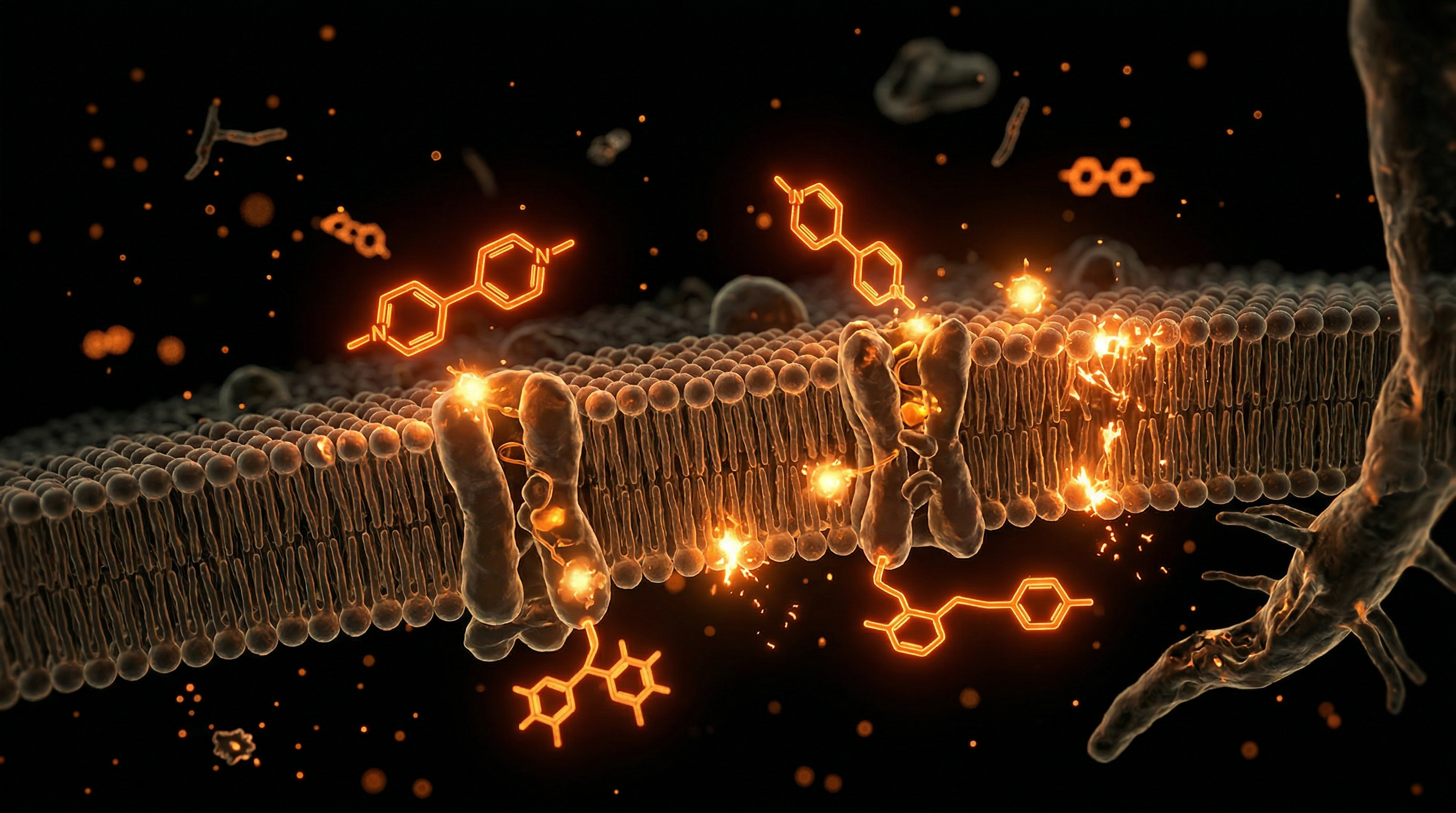
The story of modern agriculture is often framed as a triumph of chemistry over catastrophe. Yet, within the British landscape, a silent, molecular predator continues to circulate through our arteries of life: our waterways. This is the "Paraquat Paradox." Despite a comprehensive ban on its use within the United Kingdom and the European Union since 2007, the herbicide paraquat (N,N′-dimethyl-4,4′-bipyridinium dichloride) remains one of the most contentious biological disruptors in existence.
The paradox is twofold. First, the UK remains one of the world's largest producers of the substance, exporting thousands of tonnes from manufacturing hubs like Huddersfield to nations with laxer regulations. Second, and more insidiously, this "banned" substance is returning to the British dinner plate through a complex hydrological and biological feedback loop.
Paraquat is a quaternary ammonium compound, a non-selective contact herbicide known for its rapid "knock-down" effect on green plant tissue. However, its stability in the environment—particularly its affinity for clay-rich soils and river sediment—means that it does not simply vanish once the spraying stops. Through agricultural runoff, flooding, and the subsequent use of contaminated river water for irrigation, paraquat residues are being re-absorbed by UK crops.
As a senior researcher for INNERSTANDING, I have spent decades deconstructing the interface between xenobiotics and human physiology. What we are witnessing is the re-integration of a potent neurotoxin into the human food supply. This article exposes the mechanisms by which this restricted compound bypasses regulatory safeguards, the cellular devastation it wreaks upon ingestion, and the specific UK context that makes our current water quality a ticking biological time bomb.
Key Statistic: Though banned for domestic use in 2007, the UK exported over 32,000 tonnes of paraquat-based formulations between 2015 and 2020, primarily to developing nations where it eventually enters the global commodity chain.
The Biology — How It Works
To understand the Paraquat Paradox, one must first grasp the molecule’s unique chemical architecture. Paraquat is a bipyridinium herbicide. Its primary mechanism in plants is the disruption of photosynthesis, specifically by intercepting electrons from Photosystem I.
Molecular Mimicry and Persistence
Paraquat exists as a cation ($PQ^{2+}$). Its structural configuration allows it to mimic certain essential biological molecules. In the soil, its strong positive charge causes it to bind almost irreversibly to negatively charged clay minerals and organic matter. This was long thought to be a "safety feature," as bound paraquat was deemed biologically unavailable.
However, modern research indicates that this binding is a "slow-release" mechanism rather than a permanent sequestration. Changes in soil pH, the application of nitrogen-rich fertilisers, and the mechanical disturbance of riverbeds during the UK's increasingly frequent flash-flooding events can re-mobilise these cations into the aqueous phase.
The Cycle of Re-absorption
When contaminated water is used for irrigation—a common practice in the breadbaskets of East Anglia and the Midlands—crops do not merely sit in the water; they actively transport solutes. Paraquat mimics the structure of certain polyamines (like putrescine and spermidine), which are essential for plant growth and stress response.
- Root Uptake: The plant’s transport proteins mistakenly identify paraquat as a beneficial nutrient.
- Translocation: Once inside the xylem, the toxin is distributed to the leaves and fruits.
- Residue Accumulation: Unlike many organic pesticides that degrade in sunlight, paraquat within the plant tissue is shielded from UV-degradation, remaining intact until it reaches the consumer.
Mechanisms at the Cellular Level
The toxicity of paraquat in humans is not merely a matter of "poisoning" in the traditional sense; it is an orchestrated collapse of cellular energetics. Paraquat is a master of redox cycling, a process that generates a self-sustaining storm of oxidative stress.
The Redox Cycle: A Perpetual Motion Machine of Destruction
Once inside a human cell, paraquat ($PQ^{2+}$) is reduced by intracellular enzymes (such as NADPH-cytochrome P450 reductase or NADH:ubiquinone oxidoreductase) to form a paraquat monocation radical ($PQ^{\bullet+}$).
This radical then reacts almost instantaneously with molecular oxygen ($O2$) to reform the original paraquat cation, creating a superoxide radical ($O2^{\bullet-}$) in the process.
- This is a "catalytic" reaction. A single molecule of paraquat can generate thousands of superoxide radicals without being consumed itself.
- This leads to a rapid depletion of NADPH, a critical cofactor for cellular repair and the maintenance of the body's primary antioxidant, glutathione.
Mitochondrial Dysfunction
The most devastating impact occurs within the mitochondria. Paraquat interferes with the Electron Transport Chain (ETC), specifically at Complex I and Complex III. By diverting electrons away from the production of ATP (energy), it induces a state of "cellular starvation" while simultaneously punching holes in the mitochondrial membrane via lipid peroxidation.
Lipid Peroxidation and Membrane Rupture
The superoxide radicals generated by paraquat are converted into even more reactive species, such as hydroxyl radicals ($\bullet OH$). These radicals attack the polyunsaturated fatty acids (PUFAs) in cell membranes.
- The Domino Effect: Once a single lipid molecule is oxidised, it triggers a chain reaction that destroys the integrity of the cell wall.
- Organelle Collapse: This process lyses lysosomes and mitochondria, spilling digestive enzymes and pro-apoptotic factors into the cytoplasm, leading to programmed cell death (apoptosis) or uncontrolled necrosis.
Callout Fact: Paraquat is so effective at inducing oxidative stress that it is frequently used in laboratory settings to create animal models of Parkinson’s Disease by selectively destroying dopaminergic neurons.
Environmental Threats and Biological Disruptors
The narrative that paraquat "disappears" once it hits the water is a dangerous fallacy. In the UK’s river systems—such as the Severn, the Trent, and the Ouse—the herbicide becomes part of a complex "toxic soup" that alters the very foundation of the aquatic ecosystem.
Impact on the Microbiome and Mycorrhizal Networks
Healthy UK soil and sediment rely on mycorrhizal fungi, which form symbiotic relationships with plant roots. Paraquat is highly toxic to these fungi. When runoff enters the irrigation supply:
- Soil Sterility: The herbicide kills the beneficial microbes that naturally degrade other pollutants.
- Pathogen Opportunism: With the "good" microbes gone, opportunistic pathogens like Fusarium can thrive, leading farmers to apply more fungicides, further increasing the chemical load of the crop.
Bio-concentration in the Food Chain
While paraquat does not bio-accumulate in fatty tissues like DDT, it does bio-concentrate in the rhizosphere (the area of soil around plant roots). This means that root vegetables—carrots, potatoes, and parsnips—grown in areas with legacy contamination or irrigated with river water are at the highest risk of containing concentrated residues.
The Role of Atmospheric Deposition
While the focus is often on water, paraquat can also be transported via atmospheric deposition. When farmers in other regions (or potentially those using the substance under "emergency authorisations" in near-UK territories) spray paraquat, it can bind to dust particles. These particles travel across the English Channel and settle on UK crops, a phenomenon known as "pesticide drift" on a continental scale.
The Cascade: From Exposure to Disease
The path from a contaminated carrot to a neurodegenerative diagnosis is not immediate, which is why regulatory bodies have been so slow to act. It is a slow-motion cascade of biological failure.
The Blood-Brain Barrier (BBB) Trojan Horse
For years, it was argued that paraquat could not cause brain damage because it is a charged molecule and should not cross the blood-brain barrier. We now know this is false.
- Paraquat utilizes the Neutral Amino Acid Transporter (LAT1) to "hitch a ride" into the brain.
- It mimics the structure of essential amino acids, tricking the BBB into letting it through.
The Parkinson’s Connection
Once in the brain, paraquat targets the substantia nigra, the region responsible for dopamine production.
- Alpha-Synuclein Aggregation: Paraquat triggers the misfolding of alpha-synuclein proteins, which form "Lewy bodies"—the hallmark of Parkinson’s Disease.
- Selective Vulnerability: Dopaminergic neurons have a high metabolic rate and are particularly sensitive to the mitochondrial disruption and oxidative stress that paraquat induces.
- Chronic Neuroinflammation: The toxin activates microglia (the brain's immune cells), which then release inflammatory cytokines, creating a self-perpetuating cycle of brain tissue loss long after the initial exposure.
Pulmonary Fibrosis: The "Paraquat Lung"
While ingestion via food is a lower dose than accidental poisoning, the cumulative effect on the lungs cannot be ignored. The lungs possess a "polyamine uptake system" that actively pulls paraquat out of the bloodstream and concentrates it in the alveolar cells.
- Fibrotic Response: This leads to the proliferation of fibroblasts, which replace delicate lung tissue with thick scars.
- Reduced Gas Exchange: Over time, this contributes to the rising rates of "unexplained" chronic obstructive pulmonary disease (COPD) and reduced lung capacity in rural UK populations.
What the Mainstream Narrative Omits
The mainstream scientific discourse, often funded by agrochemical giants, relies on "Safe Dose" models (Acceptable Daily Intake or ADI). However, these models are fundamentally flawed for several reasons.
1. The Synergistic "Cocktail Effect"
Regulations test chemicals in isolation. In the UK waterways, paraquat exists alongside glyphosate, neonicotinoids, and heavy metals.
- Research shows that the combination of paraquat and the fungicide maneb (often used on UK potatoes) increases the risk of Parkinson’s by over 400% compared to exposure to either chemical alone.
- These chemicals work synergistically to bypass cellular defences.
2. Epigenetic Inheritance
We are now discovering that paraquat exposure does not just affect the individual; it affects their offspring.
- DNA Methylation: Exposure can cause epigenetic changes in germ cells (sperm and eggs).
- Transgenerational Risk: Studies have shown that grand-offspring of exposed mammals show increased susceptibility to neurological disorders, even if they were never directly exposed to the toxin.
3. The "Legacy Loading" of Sediments
The Environment Agency (EA) often measures water quality based on "active" flow. This ignores the sediment load.
- During low-flow summer months, paraquat concentrates in the silt at the bottom of rivers.
- When farmers use "abstraction" pumps to pull water for crops, they often suck up this highly concentrated silt, delivering a massive "pulse" of toxins to the fields that standard water tests miss.
The UK Context
The UK occupies a unique and somewhat hypocritical position in the global paraquat trade. This status directly influences the level of risk found in British produce.
The Huddersfield Connection
The Syngenta manufacturing plant in Huddersfield is one of the world's primary sources of paraquat (branded as Gramoxone).
- Export Loops: The UK produces the chemical, exports it to countries like Brazil or South Africa, and then imports the tea, coffee, fruit, and grains grown using that very same chemical.
- Environmental Runoff from Production: Despite strict controls, "trace" amounts of manufacturing byproducts enter local water systems. In a biological context, there is no such thing as a "trace" amount of a catalytic redox cycler.
Post-Brexit Regulatory Divergence
Since leaving the EU, the UK has the power to set its own Maximum Residue Limits (MRLs). There is significant pressure from trade partners to relax these limits to facilitate "frictionless trade."
- The Monitoring Gap: Budget cuts to the Environment Agency and the Department for Environment, Food & Rural Affairs (DEFRA) have led to a decrease in the frequency and rigour of pesticide residue testing in domestic waterways.
- The "Emergency Use" Loophole: Under certain conditions, "banned" chemicals can be granted emergency authorisation. While paraquat has not yet seen this for broad use, the precedent set by neonicotinoids suggests that chemical bans in the UK are far more porous than the public believes.
UK Geography and Risk Zones
The risk is not uniform across the British Isles.
- The Fens (East Anglia): This region produces a vast portion of the UK's vegetables. It is also a low-lying area where agricultural runoff from the entire Midlands eventually settles. The high clay content of the soil here is perfect for "locking and loading" paraquat residues.
- The River Severn Catchment: As the longest river in the UK, it drains vast areas of agricultural land. Irrigation abstraction from the Severn is a primary vector for re-introducing toxins into the local food supply.
Protective Measures and Recovery Protocols
Given the ubiquity of these compounds in the environment, "avoidance" is often insufficient. We must look toward biological resilience and structural change.
For the Consumer: Mitigation Strategies
While the system remains compromised, individuals can take steps to reduce their toxic load:
- Activated Carbon Filtration: Standard jug filters are insufficient. To remove quaternary ammonium compounds like paraquat from drinking water, high-quality Reverse Osmosis (RO) or multi-stage activated carbon blocks are required.
- Peeling and Scrubbing: Since paraquat binds to clay and concentrates in the skin of root vegetables, peeling is essential for non-organic produce.
- Sourcing: Support "Regenerative Organic" farms. These farms focus on soil health and do not use the chemical fertilisers that help "desorb" paraquat from soil particles.
Biological Recovery: The INNERSTANDING Protocol
To counteract the redox cycling and oxidative stress caused by low-level chronic exposure, the body’s antioxidant systems must be bolstered:
- N-Acetyl Cysteine (NAC): A precursor to glutathione, NAC is essential for maintaining the cellular "shield" against superoxide radicals.
- Sulforaphane (from Broccoli Sprouts): Activates the Nrf2 pathway, the body’s master switch for antioxidant production and phase II detoxification.
- Mitochondrial Support: Coenzyme Q10 (CoQ10) and PQQ (Pyrroloquinoline quinone) can help protect the Electron Transport Chain from the "electron theft" committed by paraquat.
- Selenium: A vital cofactor for glutathione peroxidase, the enzyme that neutralises the peroxides generated by paraquat.
Systemic Solutions
- The "Stop the Export" Mandate: The UK must align its export laws with its domestic bans. It is ethically indefensible and biologically short-sighted to produce a toxin for the global market that inevitably returns via imports.
- Enhanced Silt Monitoring: The Environment Agency must move beyond testing "clear water" and begin testing the "benthic load" (sediment) of our rivers, as this is where the true concentration of paraquat resides.
- Mandatory Irrigation Testing: Farmers using river water abstraction should be required to test for a broader spectrum of legacy herbicides, not just those currently "authorised" for use.
Summary: Key Takeaways
The Paraquat Paradox is a stark reminder that in biology, there is no "away." When we ban a substance but continue to manufacture it, or when we ignore its persistence in our soil and water, we create a closed-loop system of toxicity.
- Paraquat Persistence: It does not degrade easily; it binds to clay and sediment, waiting to be re-mobilised by floods or fertilisers.
- Re-absorption Mechanism: UK crops irrigated with river water can "mistakenly" absorb paraquat through molecular mimicry, bringing it back into the food chain.
- The Redox Engine: Inside the human body, paraquat acts as a catalytic generator of oxidative stress, leading to mitochondrial collapse.
- Neurological Link: The link between paraquat and Parkinson's Disease is scientifically robust, involving the misfolding of proteins and the destruction of dopamine-producing neurons.
- The UK's Role: As a major producer and exporter, the UK is central to the global paraquat problem, and our own regulatory gaps are allowing the toxin to return to our plates.
The "Ghost of Agriculture" still haunts the British countryside. Only through rigorous transparency, advanced filtration, and a fundamental shift toward regenerative soil management can we hope to exorcise this molecular predator from our biology. The health of the UK’s future generations depends on our ability to understand that what we do to our water, we ultimately do to ourselves.
This article is provided for informational and educational purposes only. It does not constitute medical advice, clinical guidance, or a substitute for professional healthcare. Information reflects cited research at time of publication. Always consult a qualified healthcare professional before acting on any health information.
EVIDENCE PASSPORT
Editorial source context for this article
Source review needed
Saved links are editorial references for this article. They may support specific claims rather than every sentence. Open and assess each source in context. This passport does not independently verify them.
Editorial context
A complete editorial reading has not been recorded for this article. Source links remain available for you to open and assess directly.
Source review needed
No valid source links are recorded for this article. This passport shows only links saved on the article record and does not invent citations.
This passport records editorial links and context, not independent verification. Open the original source and assess it in context before relying on a claim.
Medical Disclaimer
The information in this article is for educational purposes only and does not constitute medical advice, diagnosis, or treatment. Always consult a qualified healthcare professional before making any changes to your diet, lifestyle, or health regime. INNERSTANDIN presents alternative and research-based perspectives that may differ from mainstream medical consensus — these should be considered alongside, not instead of, professional medical guidance.
Read Full DisclaimerContinue the thread
Keep this question moving.
Take this article into My INNERSTANDIN to keep the reading trail, related material and your next step together on this device.
Dig deeper in the Library
Free, longform PDF volumes that go beyond headlines into mechanisms and references.