The Riboflavin-MTHFR Connection: FAD Cofactor Dependency and the Nutritional Management of Hypertension
An in-depth exploration of the biochemical relationship between Vitamin B2 (Riboflavin) and the MTHFR enzyme, specifically focusing on how the C677T polymorphism influences blood pressure regulation and cardiovascular risk.
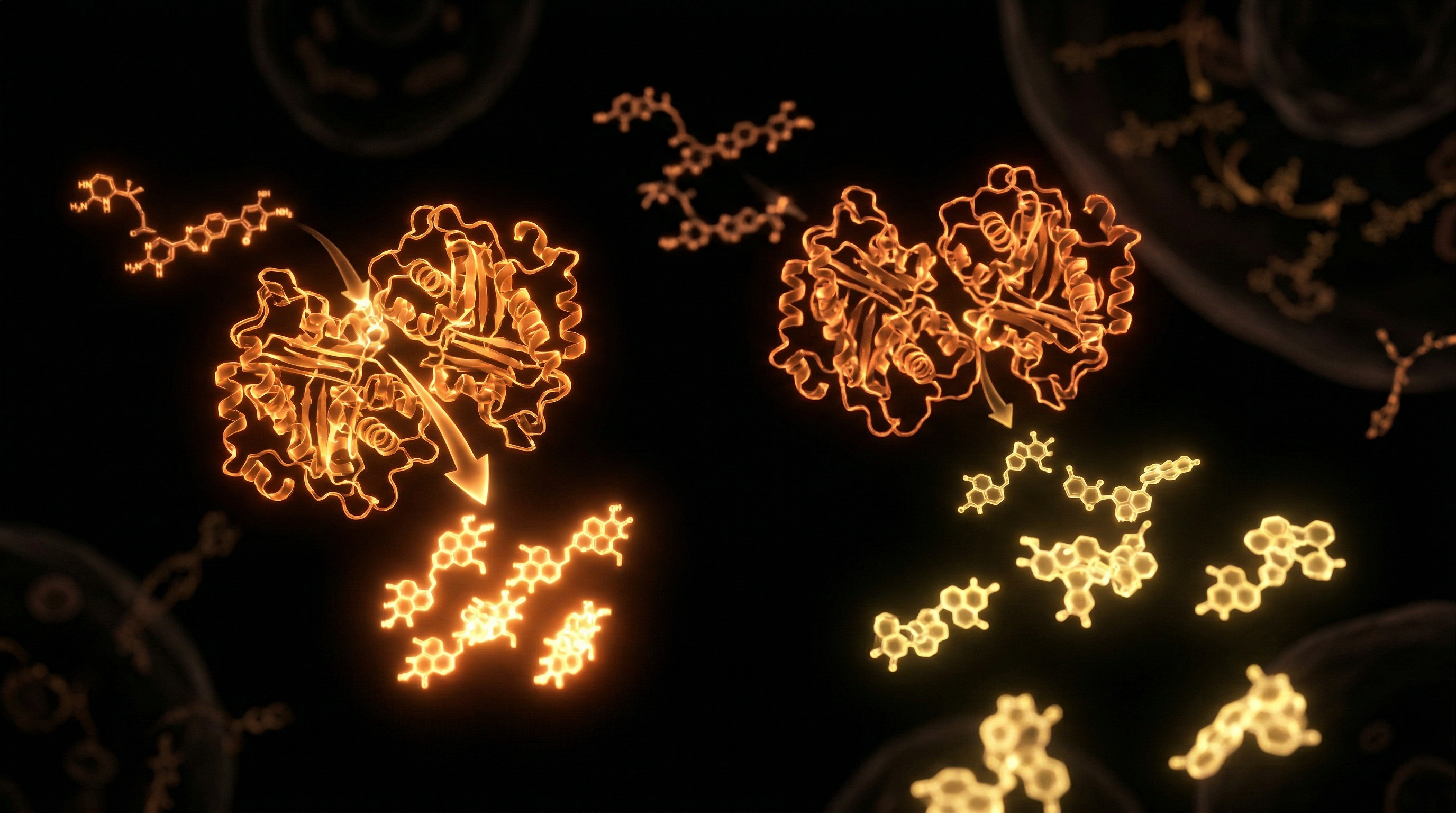
# The Riboflavin-MTHFR Connection: FAD Cofactor Dependency and the Nutritional Management of Hypertension\n\nIn the evolving field of nutrigenomics, few genetic variations have garnered as much attention as the Methylenetetrahydrofolate Reductase (MTHFR) polymorphism. While public health discussions often focus on folate (Vitamin B9), an equally critical but frequently overlooked player in this metabolic pathway is Riboflavin (Vitamin B2). For individuals carrying the C677T variant of the MTHFR gene, riboflavin is not merely a co-nutrient; it is a vital chemical anchor that dictates the enzyme's stability and, by extension, cardiovascular health.\n\n## The MTHFR Enzyme as a Flavoprotein\n\nTo understand the riboflavin connection, we must first look at the structure of the MTHFR enzyme itself. MTHFR is classified as a flavoprotein. This means that to function, the enzyme must bind to a derivative of riboflavin known as Flavin Adenine Dinucleotide (FAD). \n\nThe primary role of MTHFR is to convert 5,10-methylenetetrahydrofolate into 5-methyltetrahydrofolate (5-MTHF), the active form of folate required to recycle homocysteine back into methionine.
FAD acts as the essential cofactor that provides the reducing power for this reaction. Without sufficient FAD, the MTHFR enzyme becomes sluggish, leading to a bottleneck in the methylation cycle.\n\n## The C677T Polymorphism: A Structural Vulnerability\n\nThe C677T polymorphism involves a cytosine-to-thymine transition at position 677 of the MTHFR gene. This genetic change results in an amino acid substitution (alanine to valine) which alters the protein's shape. This structural alteration has a profound consequence: it reduces the enzyme's affinity for its FAD cofactor. \n\nIn individuals with the homozygous 'TT' genotype (those who inherited the variant from both parents), the MTHFR enzyme tends to lose its FAD cofactor much more easily than in those with the 'CC' (wild-type) genotype. Research indicates that the TT enzyme is thermolabile—meaning it is sensitive to heat and prone to breaking apart.
However, biochemical studies have demonstrated that saturating the system with riboflavin can 'stabilise' this mutant enzyme, effectively preventing the loss of the FAD cofactor and restoring enzymatic activity to near-normal levels.\n\n## The Connection to Hypertension\n\nHypertension, or high blood pressure, is one of the most significant clinical manifestations of the MTHFR C677T polymorphism. While the link between elevated homocysteine and cardiovascular disease is well-documented, the specific relationship between MTHFR and blood pressure appears to be uniquely mediated by riboflavin status.\n\nWhen the MTHFR enzyme functions poorly due to FAD deficiency, it doesn't just impact homocysteine. It affects the entire folate cycle, which is inextricably linked to the production of nitric oxide (NO) in the vascular endothelium. Nitric oxide is the body's primary vasodilator, responsible for relaxing blood vessels and maintaining healthy pressure. MTHFR dysfunction can lead to uncoupling of endothelial nitric oxide synthase (eNOS), causing oxidative stress and vasoconstriction, thereby driving up blood pressure.\n\n## Clinical Evidence: The Power of Vitamin B2\n\nSignificant breakthroughs in this area have come from researchers at Ulster University and Trinity College Dublin.
Their studies have consistently shown that for individuals with the MTHFR 677 TT genotype, riboflavin is the single most important dietary factor in determining blood pressure.\n\nIn one landmark randomised controlled trial, TT individuals with hypertension were given a modest dose of riboflavin (1.6 mg/day). The results were striking: blood pressure dropped significantly (by approximately 6-13 mmHg systolic), while no such effect was seen in the CC or CT groups. This suggests that for roughly 10-15% of the UK population who carry the TT genotype, riboflavin deficiency acts as a 'genetic trigger' for hypertension that cannot be fully corrected by salt restriction or exercise alone.\n\n## Nutritional Management and Practical Applications\n\nFor those navigating MTHFR-related health challenges, the nutritional management of riboflavin is paramount. Unlike folate, which is often found in leafy greens, riboflavin is concentrated in a different set of dietary sources. Optimising B2 status involves more than just meeting the basic Recommended Dietary Allowance (RDA).\n\n### Dietary Sources of Riboflavin\n1. Organ Meats: Beef liver is the most concentrated source of riboflavin.\n2. Dairy Products: Milk, yoghurt, and cheese provide highly bioavailable B2.\n3. Eggs: Specifically the whites, though the whole egg is nutrient-dense.\n4. Almonds: A superior plant-based source.\n5. Mushrooms: Particularly shiitake and portobello varieties.\n\n### Supplementation Considerations\nWhile the RDA for riboflavin is approximately 1.1–1.3 mg/day, individuals with the C677T polymorphism may require higher 'therapeutic' doses to maintain enzyme saturation.
Clinical trials have successfully used doses between 1.6 mg and 10 mg to stabilise MTHFR activity. It is important to note that riboflavin is water-soluble; any excess is excreted via the urine (often turning it a bright neon yellow), making it remarkably safe even at higher doses.\n\n## Conclusion\n\nThe riboflavin-MTHFR connection represents a shift in how we approach chronic conditions like hypertension. It moves us away from a 'one-size-fits-all' dietary model toward a precision nutrition approach. By understanding that the C677T variant creates a heightened biological demand for Vitamin B2, we can implement targeted nutritional interventions that address the root cause of enzymatic instability. For the 'TT' individual, riboflavin is not just a vitamin; it is a foundational pillar of cardiovascular resilience.
This article is provided for informational and educational purposes only. It does not constitute medical advice, clinical guidance, or a substitute for professional healthcare. Information reflects cited research at time of publication. Always consult a qualified healthcare professional before acting on any health information.
RESEARCH FOUNDATIONS
Biological Credibility Archive
Citations provided for educational reference. Verify via PubMed or institutional databases.
Medical Disclaimer
The information in this article is for educational purposes only and does not constitute medical advice, diagnosis, or treatment. Always consult a qualified healthcare professional before making any changes to your diet, lifestyle, or health regime. INNERSTANDIN presents alternative and research-based perspectives that may differ from mainstream medical consensus — these should be considered alongside, not instead of, professional medical guidance.
Read Full DisclaimerReady to learn more?
Continue your journey through our classified biological research.
DISCUSSION ROOM
Members of THE COLLECTIVE discussing "The Riboflavin-MTHFR Connection: FAD Cofactor Dependency and the Nutritional Management of Hypertension"
SILENT CHANNEL
Be the first to discuss this article. Your insight could help others understand these biological concepts deeper.
THE ARSENAL
Based on MTHFR & B Vitamin Metabolism — products curated by our research team for educational relevance and biological support.

Magnesium L-Threonate
Magnesium Blend – The Most Important Mineral

Energy Blend Supports
INNERSTANDING may earn a commission on purchases made through these links. All products are selected based on rigorous educational relevance to our biological research.
RABBIT HOLE
Follow the biological thread deeper