The Role of Potassium Channel Dysregulation in Bladder Sensory Nerve Hyperexcitability
Discuss this resourceUpdated August 2026
An in-depth exploration of how ion channel dysfunction, specifically potassium channel impairment, drives the chronic pain and urgency associated with Interstitial Cystitis (IC/BPS).
Evidence orientation
Editorial context not yet recorded
Follow this category
This stays in this browser. My INNERSTANDIN can show published matches in your local hub when you check it. It does not send email, push, or alert notifications.
Local learning review
A private browser aid for revisiting ideas. It is not an alert or a health recommendation.
Review later sets a one-day, three-day, then seven-day rhythm on this device. Choose it only when you want to revisit this article.
Introduction to Bladder Sensitization
For those living with Interstitial Cystitis (IC) or Bladder Pain Syndrome (BPS), the bladder is not merely an organ of storage; it is a source of chronic, unrelenting neurological signaling. At the root of this pathology lies a complex interplay between the urothelium and the sensory afferent nerves that relay signals to the spinal cord. Central to this signaling is the stability of the resting membrane potential, which is heavily regulated by potassium channels.
The Electrical Architecture of Sensory Nerves
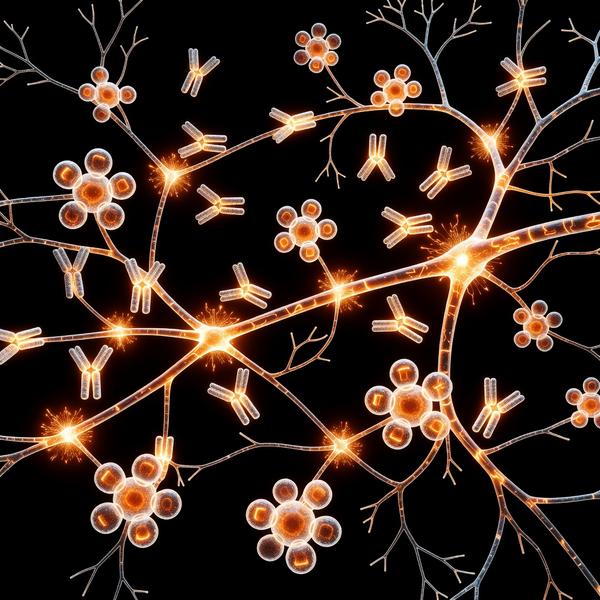
Sensory neurons in the bladder, particularly those expressing TRPV1 and P2X3 receptors, rely on a delicate balance of ion flow to remain 'silent' during bladder filling. Potassium (K+) channels are the primary gatekeepers of this silence. By allowing the controlled efflux of positively charged potassium ions, these channels maintain the cell's negative resting membrane potential. When these channels are downregulated, mutated, or functionally impaired, the neuron becomes hyperexcitable—meaning it reaches the threshold for firing an action potential much faster than a healthy nerve.
The Potassium Channel Landscape in the Bladder
Several families of potassium channels are critical to bladder health. The BK (Large-conductance calcium-activated potassium) channels and the KCNQ (Kv7) family are particularly significant. Research indicates that in states of bladder inflammation, there is a marked decrease in the density of these functional channels on the sensory nerve endings. Without the 'braking' effect of these channels, the nerves remain in a state of persistent depolarization. This is the physiological hallmark of urgency and the 'constant need to void' reported by many patients.
From Ion Flux to Chronic Pain
When potassium channels fail to effectively repolarize the membrane, the nerve enters a cycle of 'wind-up.' This process, often referred to as peripheral sensitization, means that stimuli that would normally be ignored by the brain—such as low-level bladder distension or minor chemical changes in urine composition—are interpreted as intense pain. Furthermore, the loss of potassium current often leads to a calcium influx, triggering the release of inflammatory neuropeptides like Substance P and Calcitonin Gene-Related Peptide (CGRP), which further exacerbate local inflammation, creating a self-perpetuating loop of tissue sensitization.
Implications for Therapeutic Intervention
Understanding the mechanism of potassium channel dysregulation shifts the focus from symptom management (such as analgesics) to stabilizing the membrane itself. Emerging research into potassium channel openers suggests a potential pharmacological pathway to 'silence' overactive afferents. By stabilizing the resting membrane potential, we may be able to desensitize the bladder nerves, offering a root-cause approach to managing IC/BPS symptoms. Future therapies that can selectively upregulate potassium channel expression may provide the relief that current systemic treatments have failed to achieve.
This article is provided for informational and educational purposes only. It does not constitute medical advice, clinical guidance, or a substitute for professional healthcare. Information reflects cited research at time of publication. Always consult a qualified healthcare professional before acting on any health information.
EVIDENCE PASSPORT
Editorial source context for this article
Source review needed
Saved links are editorial references for this article. They may support specific claims rather than every sentence. Open and assess each source in context. This passport does not independently verify them.
Editorial context
A complete editorial reading has not been recorded for this article, and no source links are saved on its record.
Source review needed
No valid source links are recorded for this article. Supplementary research, where available, is listed separately below.
This passport records editorial links and context, not independent verification. Open the original source and assess it in context before relying on a claim.
Medical Disclaimer
The information in this article is for educational purposes only and does not constitute medical advice, diagnosis, or treatment. Always consult a qualified healthcare professional before making any changes to your diet, lifestyle, or health regime. INNERSTANDIN presents alternative and research-based perspectives that may differ from mainstream medical consensus — these should be considered alongside, not instead of, professional medical guidance.
Read Full DisclaimerContinue the thread
Keep this question moving.
Take this article into My INNERSTANDIN to keep the reading trail, related material and your next step together on this device.
Explore this in the Body Map
Explore related body structures and their educational pages in the interactive Body Map.
Dig deeper in the Library
Free, longform PDF volumes that go beyond headlines into mechanisms and references.
RABBIT HOLE
Follow the biological thread deeper