
The Triglyceride-to-HDL Ratio: Metabolic Truths
Updated May 2026
The ratio between triglycerides and HDL is a powerful proxy for insulin resistance and cardiovascular health. Discover how UK dietary habits influence this crucial marker of metabolic syndrome.
Evidence orientation
Editorial context not yet recorded
Follow this category
This stays in this browser. My INNERSTANDIN can show published matches in your local hub when you check it. It does not send email, push, or alert notifications.
Local learning review
A private browser aid for revisiting ideas. It is not an alert or a health recommendation.
Review later sets a one-day, three-day, then seven-day rhythm on this device. Choose it only when you want to revisit this article.
Overview
In the realm of modern lipidology, a singular, reductionist obsession has dominated the clinical landscape for over half a century: the concentration of Low-Density Lipoprotein cholesterol (LDL-C). This "bad cholesterol" narrative has served as the foundation for multi-billion-pound pharmaceutical interventions and national dietary guidelines. However, as a senior biological researcher, I must posit that this focus is not merely incomplete—it is fundamentally distracting. While the medical establishment fixates on LDL, a far more potent and predictive biomarker of cardiovascular catastrophe and metabolic decay remains overlooked in routine GP consultations across the United Kingdom: the Triglyceride-to-HDL ratio (TG/HDL).
The TG/HDL ratio is not simply a number on a pathology report; it is a physiological window into the state of an individual's insulin sensitivity. It represents the "atherogenic triad"—a lethal combination of high triglycerides, low HDL, and the presence of small, dense LDL particles. Unlike total cholesterol, which often fails to distinguish between a healthy metabolic profile and a diseased one, the TG/HDL ratio serves as a powerful proxy for the presence of Metabolic Syndrome and Hyperinsulinaemia.
In this treatise, we shall expose the biological mechanisms that render this ratio a superior diagnostic tool. We will explore how the British diet, saturated with refined carbohydrates and ultra-processed seed oils, has manipulated this ratio to historic highs, and why the mainstream narrative continues to ignore the metabolic truth in favour of a more profitable, statin-centric model.
Key Fact: A TG/HDL ratio greater than 1.3 (when measured in mmol/L) or 3.0 (when measured in mg/dL) is a high-confidence indicator of insulin resistance and a significantly elevated risk of ischaemic heart disease, regardless of "normal" LDL levels.
The Biology — How It Works
To understand the TG/HDL ratio, one must first dismantle the simplistic view of "good" and "bad" cholesterol. Cholesterol is a vital lipid, essential for cell membrane integrity, hormone synthesis (such as cortisol and testosterone), and vitamin D production. The danger lies not in the cholesterol itself, but in the lipoproteins that transport it through the aqueous environment of the bloodstream.
The Lifecycle of a Lipoprotein
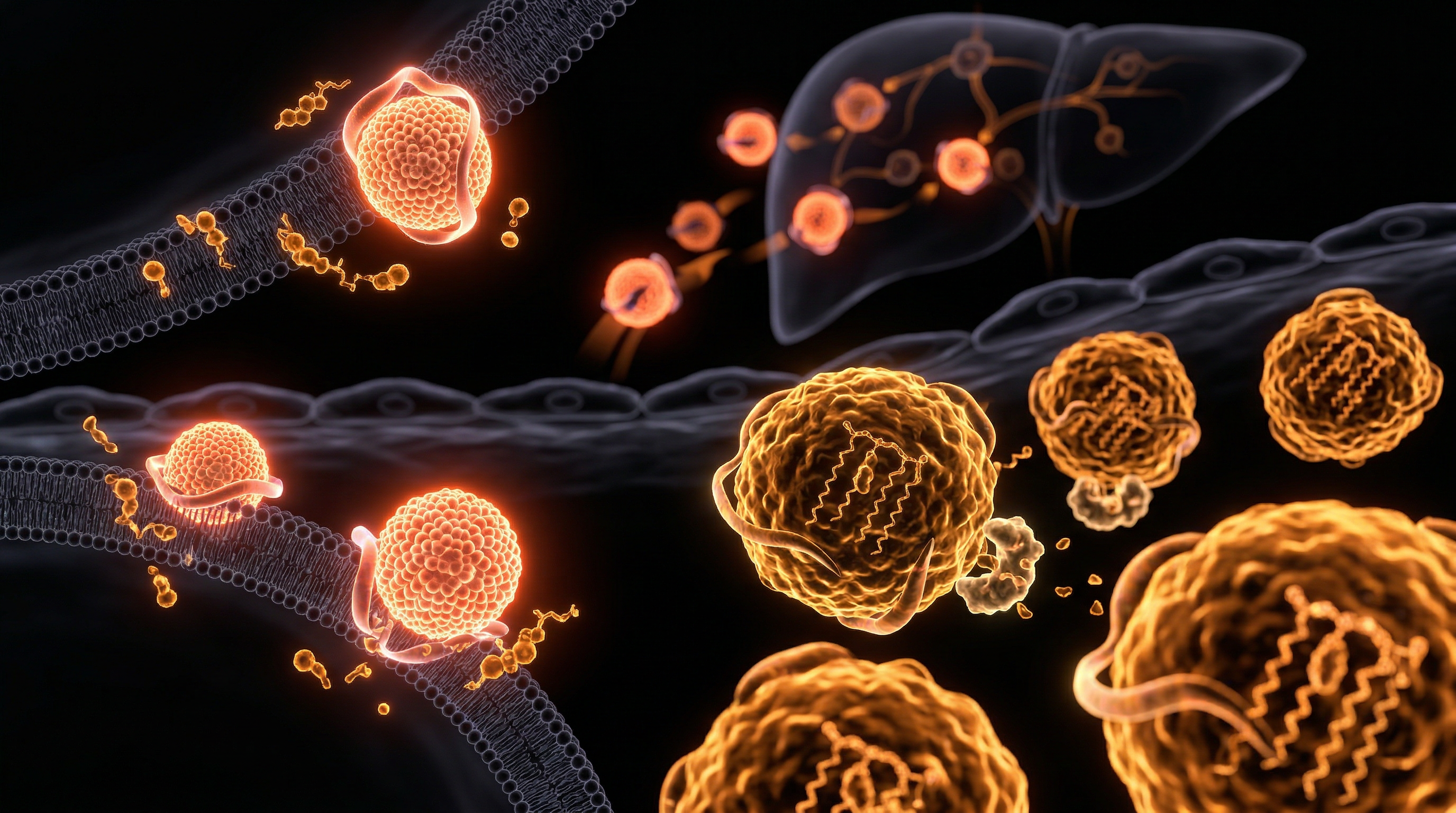
When we consume fats and carbohydrates, the liver processes these nutrients into various transport vehicles. Triglycerides are the primary form of stored energy—essentially three fatty acids bound to a glycerol backbone. These are packed into Very-Low-Density Lipoproteins (VLDL) by the liver and sent into the circulation to provide fuel to muscles and adipose tissue.
High-Density Lipoprotein (HDL), conversely, is often termed the "scavenger." Its primary role is Reverse Cholesterol Transport, picking up excess cholesterol from the peripheral tissues and returning it to the liver for excretion or recycling.
The Ratio as a Proxy for Particle Quality
The TG/HDL ratio is powerful because it reveals the quality and composition of these lipoproteins. When triglycerides are high, a specific enzyme called Cholesteryl Ester Transfer Protein (CETP) becomes hyperactive. CETP facilitates an exchange: it swaps triglycerides from VLDL into HDL and LDL particles, in exchange for cholesterol.
This exchange results in:
- Triglyceride-enriched HDL, which is rapidly cleared by the kidneys, leading to low HDL levels.
- Triglyceride-enriched LDL, which is then acted upon by an enzyme called Hepatic Lipase. This strips the triglycerides away, leaving behind a shrunken, depleted, and highly dangerous small, dense LDL (sdLDL) particle.
Therefore, a high TG/HDL ratio is a direct signal that your blood is teeming with small, dense LDL particles—the type that are small enough to penetrate the arterial wall, become oxidised, and initiate the formation of atherosclerotic plaque.
Mechanisms at the Cellular Level
The "Metabolic Truth" of the TG/HDL ratio is rooted in the liver’s response to insulin. In a metabolically healthy state, insulin acts as a signal to the liver to cease the production of glucose and VLDL. However, in the presence of Insulin Resistance, this signalling pathway is broken.
De Novo Lipogenesis (DNL)
When the liver is chronically bombarded with glucose and, more destructively, fructose, it undergoes a process called De Novo Lipogenesis. Unlike glucose, which can be used by every cell in the body, fructose is metabolised almost exclusively in the liver. It bypasses the rate-limiting enzyme phosphofructokinase, essentially forcing the liver to convert the sugar into fat (triglycerides).
- Hyperinsulinaemia: High circulating insulin levels prevent the breakdown of stored body fat (lipolysis) and simultaneously stimulate the liver to pump out more VLDL.
- Lipoprotein Lipase (LPL) Dysfunction: In a state of insulin resistance, the activity of LPL—the enzyme responsible for clearing triglycerides from the blood—is significantly impaired. This causes triglycerides to linger in the bloodstream, driving up the ratio.
The Role of the Glycocalyx
At the cellular level of the arteries, the endothelial glycocalyx—a delicate, hair-like layer that lines the blood vessels—is the first line of defence. High triglycerides and the systemic inflammation associated with a high TG/HDL ratio chemically "shave" this protective layer. Once the glycocalyx is compromised, the small, dense LDL particles generated by the high-TG environment find easy passage into the sub-endothelial space, where they are trapped and glyated.
Environmental Threats and Biological Disruptors
The modern environment is an "obesogenic" minefield designed to skew the TG/HDL ratio toward pathology. We are currently witnessing a massive biological experiment where the human genome, evolved over millennia for scarcity, is being flooded with evolutionary "mismatches."
The Fructose Bomb
Perhaps the most significant biological disruptor is the ubiquity of High-Fructose Corn Syrup (HFCS) and sucrose. In the UK, while HFCS is less prevalent than in the US, it is replaced by "isoglucose" and massive amounts of refined beet sugar. These sugars act as direct metabolic toxins to the liver. By driving DNL, they artificially inflate triglyceride levels while suppressing HDL production.
Ultra-Processed Seed Oils
The mainstream narrative has long championed "heart-healthy" vegetable oils (sunflower, rapeseed, soybean) as a replacement for saturated fats. However, these oils are high in Linoleic Acid, an omega-6 fatty acid that is highly susceptible to oxidation.
- When these oils are incorporated into the membranes of LDL particles, they make those particles more "oxidisable."
- High intake of these oils, combined with high sugar, creates a state of Oxidative Stress, which further disrupts the CETP enzyme and worsens the TG/HDL ratio.
Endocrine Disruptors
Chemicals such as Bisphenol A (BPA) and certain pesticides found in the UK food chain act as obesogens. They interfere with the PPAR-gamma receptors and other nuclear receptors in the liver that regulate lipid metabolism. These disruptors can trigger "fatty liver" (NAFLD) even in individuals who are not overtly obese, reflected immediately in a rising TG/HDL ratio.
The Cascade: From Exposure to Disease
The progression from an elevated TG/HDL ratio to clinical disease is a predictable biological cascade. It is not a sudden event, but a "slow-motion car crash" occurring over decades.
- Stage 1: The Postprandial Spike. Initially, the TG/HDL ratio only rises after meals (postprandial). The body struggles to clear the "fatty fog" from the blood.
- Stage 2: Chronic Hyperinsulinaemia. The pancreas pumps out more insulin to keep blood sugar stable. Triglycerides remain elevated even during fasting. This is the "pre-diabetic" lipid profile.
- Stage 3: Non-Alcoholic Fatty Liver Disease (NAFLD). The liver becomes engorged with fat. It begins to export large, triglyceride-rich VLDL particles as a "safety valve," leading to the classic high-TG/low-HDL phenotype.
- Stage 4: Atherogenic Dyslipidaemia. The high TG/HDL ratio now reflects a blood chemistry dominated by small, dense LDL and depleted HDL. Systemic inflammation (measured by hs-CRP) rises.
- Stage 5: End-Organ Damage. This manifests as Ischaemic Heart Disease, Type 2 Diabetes, or even vascular dementia.
Callout: Research indicates that the TG/HDL ratio is a better predictor of the severity of coronary artery disease than LDL cholesterol alone. In many studies, individuals with high LDL but a low TG/HDL ratio showed no increased risk of heart disease.
What the Mainstream Narrative Omits
Why is such a powerful metric relegated to the footnotes of medical science? To understand this, we must look at the "Statin Industrial Complex."
The LDL Misdirection
The pharmaceutical industry’s primary tool for cardiovascular health is the statin. Statins are exceptionally effective at lowering LDL-C by inhibiting the HMG-CoA reductase enzyme in the liver. However, they are notably poor at improving the TG/HDL ratio or reducing the number of small, dense LDL particles.
If the medical establishment shifted its focus to the TG/HDL ratio, the primary "prescription" would not be a pill, but a radical shift in nutrition—specifically the elimination of refined carbohydrates and sugar. This provides no profit margin for big pharma.
The "Low-Fat" Fallacy
For forty years, the UK’s Public Health England (and its predecessors) promoted the Eatwell Guide, which encourages a base of starchy carbohydrates (bread, pasta, potatoes). This dietary advice is the direct cause of the current TG/HDL crisis. By replacing stable saturated fats with refined carbohydrates, the guidelines have inadvertently stimulated De Novo Lipogenesis and driven the UK population into a state of chronic insulin resistance.
The Failure of Total Cholesterol
Mainstream screenings often focus on "Total Cholesterol." A person with a high HDL (protective) and a moderate LDL might be flagged as "high risk" simply because their total cholesterol is high. Conversely, a metabolically broken individual with high TGs, very low HDL, and "normal" LDL might be given a clean bill of health. This is a scientific travesty.
The UK Context
The United Kingdom presents a unique and troubling case study in metabolic derangement. Despite having a National Health Service, our population's metabolic health is in a state of freefall.
The British "Tea and Biscuits" Culture
The UK diet is traditionally heavy in "beige foods." The habitual consumption of refined wheat (biscuits, toast, crumpets) combined with hidden sugars in processed teas and "healthy" cereals creates a state of perpetual postprandial lipaemia. This keeps the TG/HDL ratio chronically elevated across the demographic spectrum.
The NHS Guidelines Gap
Currently, the NHS QRISK3 algorithm—used to predict heart attack risk—does not give the TG/HDL ratio the weight it deserves. While it considers "Total Cholesterol/HDL ratio," it ignores the TG component, which is the actual driver of particle size and insulin resistance.
- Food Deserts: In many UK cities, "food deserts" mean that the only affordable nutrition is ultra-processed, high-sugar, high-seed-oil food.
- The Sugar Tax: While the UK's Soft Drinks Industry Levy was a step in the right direction, it failed to address the sugar in "solid" ultra-processed foods, leaving the primary drivers of high triglycerides untouched.
The Rise of "TOFI"
The UK has a high prevalence of individuals who are Thin on the Outside, Fat on the Inside (TOFI). These individuals may have a "normal" Body Mass Index (BMI) but possess significant visceral fat and an abysmal TG/HDL ratio. Because they "look" healthy, their metabolic rot goes undetected until a major cardiovascular event occurs.
Protective Measures and Recovery Protocols
The beauty of the TG/HDL ratio is its plasticity. Unlike genetic markers, this ratio can be dramatically improved, often within weeks, through targeted biological interventions.
1. Carbohydrate Restriction and Ketosis
The most direct way to lower triglycerides is to restrict the substrate for their production. By reducing carbohydrate intake to below 50g–100g per day, the liver is forced to switch from De Novo Lipogenesis to Beta-Oxidation (burning fat for fuel).
- Result: Triglycerides plummet, and HDL typically rises as the liver becomes more efficient at processing lipids.
2. Elimination of Liquid Fructose
All fruit juices, sugary sodas, and even excessive whole fruit should be scrutinised. Fructose is the "prime mover" of the high-TG phenotype.
3. Intermittent Fasting (Time-Restricted Feeding)
By extending the period during which insulin levels are low (e.g., a 16:8 protocol), the body has time to clear circulating VLDL and improve insulin sensitivity. This directly lowers the TG/HDL ratio.
4. Therapeutic Supplementation
While "food first" is the mantra, certain compounds can accelerate recovery:
- Omega-3 Fatty Acids (EPA/DHA): High-dose fish oil (3–4g/day) is one of the few interventions clinically proven to lower triglycerides by inhibiting the enzymes that produce them in the liver.
- Magnesium: Essential for insulin receptor sensitivity. Most of the UK population is deficient due to soil depletion.
- Niacin (Vitamin B3): In specific therapeutic doses, niacin can significantly raise HDL and lower VLDL, though it should be used under supervision due to the "flush" effect.
5. Resistance Training
Skeletal muscle is the body's primary "glucose sink." By increasing muscle mass and intensity (High-Intensity Interval Training), you increase the expression of GLUT4 transporters, which pull glucose out of the blood without requiring massive spikes in insulin. This protects the liver from having to convert excess glucose into triglycerides.
Summary: Key Takeaways
The TG/HDL ratio is the most accessible and profound marker of your metabolic destiny. It is a biological truth that cuts through the noise of the "cholesterol wars."
- The Ratio is King: Aim for a TG/HDL ratio of less than 1.3 (mmol/L). If your ratio is above 2.0, you are likely insulin resistant and at high risk for cardiovascular disease, regardless of your LDL level.
- Triglycerides are the Signal: High triglycerides are not just "fat in the blood"; they are a sign of a liver under siege by sugar and refined carbohydrates.
- HDL is the Protector: Low HDL is a sign of metabolic exhaustion. Raising it requires healthy fats and physical activity, not low-fat "diet" foods.
- Ignore the LDL Dogma: A high LDL is often benign if the TG/HDL ratio is low (indicating Large, Buoyant LDL). A "normal" LDL is deadly if the TG/HDL ratio is high (indicating Small, Dense LDL).
- The UK Crisis: The British "Eatwell" model is a recipe for metabolic failure. Success requires a departure from mainstream guidelines in favour of ancestral, whole-food nutrition.
The path to metabolic recovery begins with understanding this ratio. We must stop counting "total" numbers and start looking at the biological reality of how our bodies process energy. The truth is in the ratio.
This article is provided for informational and educational purposes only. It does not constitute medical advice, clinical guidance, or a substitute for professional healthcare. Information reflects cited research at time of publication. Always consult a qualified healthcare professional before acting on any health information.
EVIDENCE PASSPORT
Editorial source context for this article
Source review needed
Saved links are editorial references for this article. They may support specific claims rather than every sentence. Open and assess each source in context. This passport does not independently verify them.
Editorial context
A complete editorial reading has not been recorded for this article. Source links remain available for you to open and assess directly.
Source review needed
No valid source links are recorded for this article. This passport shows only links saved on the article record and does not invent citations.
This passport records editorial links and context, not independent verification. Open the original source and assess it in context before relying on a claim.
Medical Disclaimer
The information in this article is for educational purposes only and does not constitute medical advice, diagnosis, or treatment. Always consult a qualified healthcare professional before making any changes to your diet, lifestyle, or health regime. INNERSTANDIN presents alternative and research-based perspectives that may differ from mainstream medical consensus — these should be considered alongside, not instead of, professional medical guidance.
Read Full DisclaimerContinue the thread
Keep this question moving.
Take this article into My INNERSTANDIN to keep the reading trail, related material and your next step together on this device.
Explore this in the Body Map
See where this hits your biology. Interactive anatomy, threats, and protective protocols.