
Reverse Cholesterol Transport: The Cellular Cleanup
Updated May 2026
Reverse cholesterol transport is the mechanism by which HDL removes excess cholesterol from peripheral tissues back to the liver. Enhancing this pathway is a primary target for natural and pharmaceutical lipid optimization.
Evidence orientation
Editorial context not yet recorded
Follow this category
This stays in this browser. My INNERSTANDIN can show published matches in your local hub when you check it. It does not send email, push, or alert notifications.
Local learning review
A private browser aid for revisiting ideas. It is not an alert or a health recommendation.
Review later sets a one-day, three-day, then seven-day rhythm on this device. Choose it only when you want to revisit this article.
Overview
In the realm of lipidology, we have been fed a reductionist narrative for over five decades. The mainstream medical establishment has focused almost exclusively on the "delivery" side of the cholesterol equation—viewing Low-Density Lipoprotein (LDL) as a singular villain and the "clogging" of arteries as a simple plumbing issue. However, biological reality is far more sophisticated. The true determinant of cardiovascular longevity is not merely how much cholesterol is being delivered to tissues, but how efficiently it is being removed. This is the essence of Reverse Cholesterol Transport (RCT).
RCT is the multi-step biological choreography by which excess cholesterol is scavenged from peripheral cells, specifically the macrophages within the arterial walls, and transported back to the liver for excretion in the bile. It is the body’s primary cellular cleanup mechanism. When RCT is functioning optimally, the risk of atherosclerosis is negligible, regardless of absolute LDL levels. When RCT is compromised, the system becomes "congested," leading to the accumulation of necrotic core plaques and systemic metabolic failure.
As we peel back the layers of this process, we find that the traditional marker of "Good Cholesterol"—HDL-C—is an archaic and often misleading metric. It is not the quantity of HDL that matters, but the Cholesterol Efflux Capacity (CEC) and the flux of the entire system. This article will dissect the molecular machinery of RCT, expose the environmental factors sabotaging our internal cleanup, and provide a roadmap for restoring this vital biological pathway.
Important Fact: High levels of HDL-C do not always correlate with cardiovascular protection. If the HDL particles are "dysfunctional" or "stiff," they cannot perform Reverse Cholesterol Transport, rendering a high HDL-C score clinically meaningless.
The Biology — How It Works
To understand Reverse Cholesterol Transport, one must first view the human body as a closed-loop lipid economy. Cholesterol is an essential molecule; it is a structural component of every cell membrane, a precursor to all steroid hormones (oestrogen, testosterone, cortisol), and vital for the production of vitamin D and bile acids. Because it is so precious, the body has evolved complex ways to move it around without it crystallising in the blood.
The RCT pathway can be broken down into four distinct phases:
1. Efflux: The Scavenging Phase
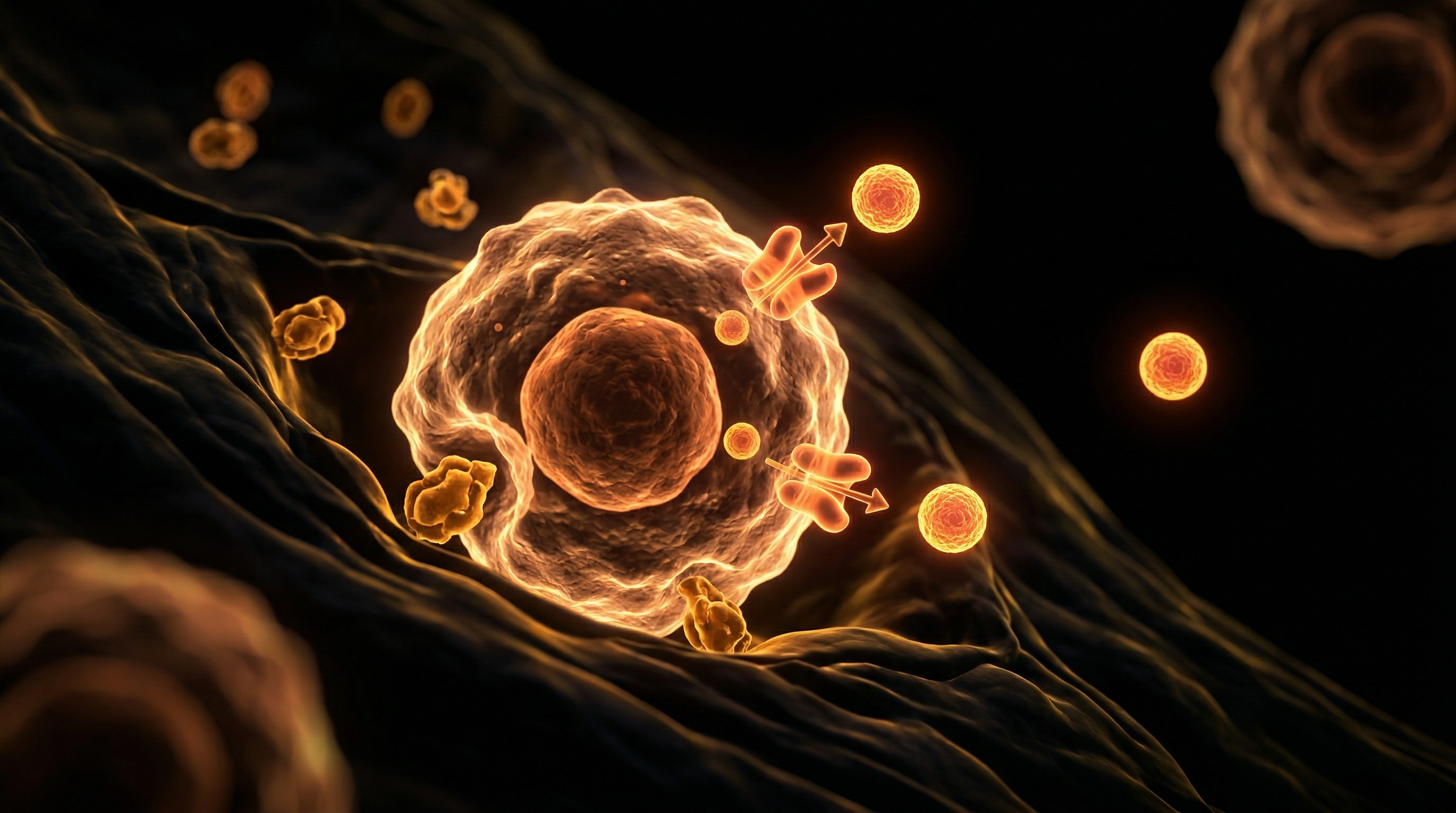
The process begins in the peripheral tissues, such as the vascular endothelium. When cells have a surplus of cholesterol, they signal for removal. Apolipoprotein A-I (ApoA-I), the primary protein component of HDL, acts as the "vacuum cleaner." It interacts with specific transporters on the cell surface to pull cholesterol out of the cell and into a "nascent" or immature HDL particle.
2. Esterification: The Packaging Phase
Once the cholesterol is inside the nascent HDL particle, it must be "locked in." An enzyme called Lecithin-Cholesterol Acyltransferase (LCAT) converts free cholesterol into cholesterol esters. This process makes the cholesterol more hydrophobic, forcing it into the core of the HDL particle. This causes the HDL to change shape from a flat disc to a mature, spherical orb.
3. Transport and Exchange: The Intermediate Phase
The mature HDL now travels through the bloodstream. Along the way, it may interact with other lipoproteins. Through the action of the Cholesterol Ester Transfer Protein (CETP), HDL can swap some of its cholesterol esters for triglycerides from VLDL or LDL. While this is a natural part of the flux, overactivity of CETP (often driven by high insulin levels) can deplete HDL of its protective cargo prematurely.
4. Hepatic Uptake and Excretion: The Final Disposal
The final destination is the liver. The HDL particle docks at the Scavenger Receptor Class B Type I (SR-BI). The liver then extracts the cholesterol esters. This cholesterol is either repurposed for hormone production or, more crucially, converted into bile acids and secreted into the intestines to be excreted from the body.
Mechanisms at the Cellular Level
At the microscopic scale, RCT is governed by a series of "gatekeeper" proteins that dictate whether a cell stays clean or becomes burdened with toxic lipid loads.
The ABCA1 and ABCG1 Transporters
The most critical components of the efflux phase are the ATP-Binding Cassette transporters, specifically ABCA1 and ABCG1.
- ABCA1 is responsible for the efflux of cholesterol to lipid-poor ApoA-I. This is the "initiation" of the HDL particle. Without functioning ABCA1, nascent HDL cannot form.
- ABCG1 facilitates the efflux of cholesterol to larger, more mature HDL particles.
These transporters are regulated by the Liver X Receptor (LXR), a nuclear receptor that acts as a "cholesterol sensor." When intracellular cholesterol levels rise, LXR activates the transcription of ABCA1 and ABCG1 to "pump" the excess out.
The Role of Macrophages and Foam Cells
In the context of heart disease, the most important cells involved in RCT are macrophages. These are immune cells that "clean up" modified or oxidised lipids in the arterial wall. However, if the RCT pathway is broken, the macrophages become overwhelmed. They swallow so much cholesterol that they transform into foam cells. These foam cells become trapped in the artery, eventually dying and forming the necrotic, inflammatory core of an atherosclerotic plaque.
LCAT: The Engine of Maturation
Without LCAT, HDL remains "immature" and unable to carry a significant load. LCAT is activated by ApoA-I. This enzyme's efficiency is a major determinant of how much cholesterol a single HDL particle can remove from a lesion. Research indicates that certain phytonutrients and a lack of systemic inflammation are required for LCAT to function at peak capacity.
Environmental Threats and Biological Disruptors
The modern world is an obstacle course for Reverse Cholesterol Transport. Our biological cleanup crew is being systematically sabotaged by environmental and lifestyle factors that the mainstream narrative rarely acknowledges.
Lipid Peroxidation and Seed Oils
The consumption of industrially processed seed oils (high in Linoleic Acid) is perhaps the greatest dietary threat to RCT. These polyunsaturated fatty acids (PUFAs) are highly unstable and prone to oxidation. When these oxidised fats are incorporated into HDL particles, they damage the ApoA-I protein. This "oxidised HDL" is not only incapable of picking up cholesterol but can actually become pro-inflammatory, delivering toxins to the liver instead of removing waste.
Glycation and Metabolic Dysfunction
In a state of chronic hyperglycaemia (high blood sugar), glucose molecules bond to proteins in a process called glycation. When ApoA-I becomes glycated, its affinity for the ABCA1 transporter drops significantly. Essentially, high sugar intake "glues" the vacuum cleaner shut, preventing it from sucking up cholesterol from the arterial walls.
Endocrine Disruptors and PFAS
Emerging research suggests that "forever chemicals" like PFAS (per-perfluorinated alkyl substances) and phthalates interfere with the PPAR and LXR receptors that govern RCT. By mimicking or blocking these nuclear receptors, environmental toxins can downregulate the production of ABCA1 transporters, effectively "turning off" the cellular exhaust system.
Chronic Endotoxaemia
Leaky gut, or intestinal permeability, allows Lipopolysaccharides (LPS)—toxins from gram-negative bacteria—to enter the bloodstream. LPS is known to suppress the activity of LCAT and increase the activity of CETP. This shift fundamentally alters the HDL profile, turning a protective system into a dysfunctional one.
Callout Fact: Studies have shown that even in individuals with "normal" cholesterol levels, high levels of systemic inflammation (measured by hs-CRP) can reduce the efficiency of Reverse Cholesterol Transport by up to 40%.
The Cascade: From Exposure to Disease
What happens when RCT fails? It is not a sudden event, but a slow, decades-long cascade of biological decay.
Stage 1: The Efflux Deficit
The first sign of trouble is a decrease in Cholesterol Efflux Capacity. At this stage, blood tests might still look "perfect." However, at the cellular level, macrophages in the coronary arteries are beginning to struggle. They are no longer able to offload the cholesterol they ingest from the sub-endothelial space.
Stage 2: The Transformation into Foam Cells
As the efflux deficit continues, macrophages become engorged. They lose their mobility. They begin to secrete pro-inflammatory cytokines like IL-1β and TNF-α. This recruits more immune cells to the site, creating a localized "fire" in the arterial wall.
Stage 3: Plaque Instability
The failure of RCT leads to the accumulation of a "necrotic core"—a mass of dead cells and crystalline cholesterol. If RCT were functioning, this debris would be cleared. Instead, it grows. The body attempts to "wall off" this mess with a fibrous cap.
Stage 4: The Event
The final stage of the cascade occurs when the inflammatory environment (driven by failed cleanup) degrades the fibrous cap. The plaque ruptures, a clot forms, and a myocardial infarction (heart attack) or stroke occurs. The mainstream blames the "high LDL," but the root cause was the failure of the cleanup crew to remove the debris in the first place.
What the Mainstream Narrative Omits
The current medical paradigm is heavily invested in the "LDL-C lowering" model, primarily because it is highly "statin-friendly." However, this narrative contains several gaping holes regarding RCT.
The "HDL-C Raising" Drug Failures
In the 2010s, several pharmaceutical companies developed drugs (CETP inhibitors) designed to skyrocket HDL-C levels. While these drugs successfully doubled or tripled HDL-C numbers, they failed to reduce heart attacks in clinical trials (such as the ILLUMINATE and dal-OUTCOMES trials). The mainstream conclusion was: "HDL doesn't matter." The scientific truth was: Raising the number of HDL particles is useless if those particles are dysfunctional. These drugs were creating "zombie HDL"—large particles full of cholesterol that couldn't actually move it back to the liver.
The Statin Paradox
Statins are remarkably effective at lowering LDL-C, but they have a negligible—and sometimes negative—effect on the functionality of RCT. In some cases, statins can increase the levels of Lipoprotein(a), a highly inflammatory and pro-thrombotic particle that interferes with the RCT process. By focusing only on the "delivery" side, the mainstream ignores the fact that statins do nothing to help the macrophages clear the existing "gunk" out of the pipes.
The Importance of ApoB vs. LDL-C
The "standard" lipid panel measures the amount of cholesterol inside the particles, not the number of particles themselves. Apolipoprotein B (ApoB) is a much more accurate marker of the "delivery" side, while Apolipoprotein A-I (ApoA-I) is the marker for the "cleanup" side. The ratio of ApoB to ApoA-I is a vastly superior predictor of risk than the LDL/HDL ratio, yet it is rarely tested in standard clinical settings.
The UK Context
In the United Kingdom, the approach to lipid management is governed strictly by NICE (National Institute for Health and Care Excellence) guidelines. While the UK has a robust healthcare system, the "conveyor belt" nature of the NHS often leads to a simplified view of cardiovascular health.
The QRISK3 Obsession
The primary tool used by UK GPs is the QRISK3 score. This algorithm calculates a 10-year risk of heart disease based on age, blood pressure, and the Total Cholesterol/HDL ratio. Because the NHS is under immense pressure, the solution is almost always a prescription for 20mg or 40mg of Atorvastatin. There is very little "clinical space" to discuss RCT functionality, LCAT activity, or the impact of ultra-processed food on HDL quality.
The British Diet and "Health Star" Deception
The UK food environment is saturated with ultra-processed "heart-healthy" spreads. For decades, the British public was told to swap butter (saturated fat) for margarines high in vegetable oils. We now know that these industrial seed oils can lead to the formation of oxidised LDL and dysfunctional HDL, directly impairing the RCT pathway. The "Health Star" or "Traffic Light" labelling system in the UK often flags high-fat whole foods (like eggs or full-fat yoghurt) as "red" while marking high-sugar, low-fat cereals—which cause the glycation of ApoA-I—as "green."
Leading Research in the UK
It is worth noting that some of the world's leading research into HDL function is happening in the UK. Institutions like Oxford University and Imperial College London have published groundbreaking work on the Cholesterol Efflux Capacity. However, there is a massive "translational gap" between this high-level research and the local GP surgery in Birmingham or Manchester.
Protective Measures and Recovery Protocols
Restoring the cellular cleanup system requires a shift away from "blocking" cholesterol and toward "optimising flux." Here is how to biologically enhance Reverse Cholesterol Transport.
1. Metabolic Flexibility and Insulin Sensitivity
The ABCA1 and ABCG1 transporters are highly sensitive to insulin. Chronic hyperinsulinaemia (insulin resistance) suppresses these transporters.
- Intermittent Fasting: Periods of fasting trigger autophagy and improve the efficiency of LXR signalling, enhancing the efflux of cholesterol.
- Carbohydrate Restriction: Reducing the "glycaemic load" prevents the glycation of ApoA-I, ensuring the HDL "vacuum cleaners" stay functional.
2. Targeted Nutraceuticals
Certain natural compounds have been shown in peer-reviewed literature to enhance the RCT pathway:
- Berberine: Known as a natural AMPK activator, berberine upregulates the expression of the LDL receptor and improves the hepatic uptake of HDL.
- Citrus Bergamot: This unique polyphenol-rich fruit (specifically the BPF fraction) has been shown to increase ApoA-I levels and enhance LCAT activity.
- Niacin (Vitamin B3): While controversial in high-dose pharmaceutical forms, Niacin remains one of the most potent stimulators of ApoA-I production and can reduce CETP activity.
- Curcumin: High-bioavailability curcumin can activate the LXR receptor, promoting the expression of ABCA1 transporters in macrophages.
3. Lifestyle Interventions
- Sauna and Heat Stress: Regular sauna use has been linked to improved lipid profiles. The heat-shock response may help maintain the structural integrity of HDL proteins.
- High-Intensity Interval Training (HIIT): Exercise increases the "pumping" action of the lymphatic system, which is a major, yet ignored, pathway for the return of HDL from the tissues to the bloodstream.
- Cold Exposure: Brown adipose tissue activation via cold exposure has been shown to accelerate the clearance of VLDL and enhance the RCT flux.
4. Gut and Bile Health
Since the "final exit" for cholesterol is the bile, the health of the liver and gallbladder is paramount.
- Soluble Fibre: Fibre (like psyllium husk or glucomannan) binds to bile acids in the gut, forcing the liver to use more cholesterol to create new bile, thus "pulling" more cholesterol through the RCT pathway.
- TUDCA / Bile Salts: Supporting bile flow ensures that once the HDL delivers the "trash" to the liver, it actually leaves the body.
Summary: Key Takeaways
Reverse Cholesterol Transport is the unsung hero of cardiovascular health. It is the difference between a clean, flexible vascular system and one that is progressively accumulating toxic waste. To truly understand and protect your heart, you must look beyond the standard "LDL vs. HDL" numbers.
- Flux over Levels: The total amount of HDL in your blood is less important than the ability of those particles to move cholesterol from cells to the liver (Cholesterol Efflux Capacity).
- Quality over Quantity: Oxidised and glycated HDL particles are "zombies"—they take up space but do no work. Reducing sugar and industrial seed oils is the first step to "repairing" your cleanup crew.
- The Transporter Key: Protecting the ABCA1 and ABCG1 transporters via metabolic health and targeted nutrients (like Berberine and Citrus Bergamot) is the most effective way to prevent foam cell formation.
- The Liver is the Exit: Optimal RCT requires a healthy liver and efficient bile flow. Without a clear "exit route," the cleanup process will always be congested.
The future of lipid science is not about more statins; it is about restoring the biological sovereignty of the cell's cleanup mechanism. By focusing on RCT, we move from a paradigm of "disease management" to one of "biological optimization."
"The cellular cleanup is not just a biological process; it is the fundamental requirement for human longevity."
This article is provided for informational and educational purposes only. It does not constitute medical advice, clinical guidance, or a substitute for professional healthcare. Information reflects cited research at time of publication. Always consult a qualified healthcare professional before acting on any health information.
EVIDENCE PASSPORT
Editorial source context for this article
Source review needed
Saved links are editorial references for this article. They may support specific claims rather than every sentence. Open and assess each source in context. This passport does not independently verify them.
Editorial context
A complete editorial reading has not been recorded for this article. Source links remain available for you to open and assess directly.
Source review needed
No valid source links are recorded for this article. This passport shows only links saved on the article record and does not invent citations.
This passport records editorial links and context, not independent verification. Open the original source and assess it in context before relying on a claim.
Medical Disclaimer
The information in this article is for educational purposes only and does not constitute medical advice, diagnosis, or treatment. Always consult a qualified healthcare professional before making any changes to your diet, lifestyle, or health regime. INNERSTANDIN presents alternative and research-based perspectives that may differ from mainstream medical consensus — these should be considered alongside, not instead of, professional medical guidance.
Read Full DisclaimerContinue the thread
Keep this question moving.
Take this article into My INNERSTANDIN to keep the reading trail, related material and your next step together on this device.
Explore this in the Body Map
See where this hits your biology. Interactive anatomy, threats, and protective protocols.