The Zinc-Copper Ratio: A Determinant of Mitochondrial Redox Potential and Metabolic Efficiency
Discuss this resourceUpdated August 2026
An in-depth exploration of how the homeostatic balance between zinc and copper dictates electron transport chain function, oxidative stress levels, and overall metabolic flexibility.
Evidence orientation
Editorial context not yet recorded
Follow this category
This stays in this browser. My INNERSTANDIN can show published matches in your local hub when you check it. It does not send email, push, or alert notifications.
Local learning review
A private browser aid for revisiting ideas. It is not an alert or a health recommendation.
Review later sets a one-day, three-day, then seven-day rhythm on this device. Choose it only when you want to revisit this article.
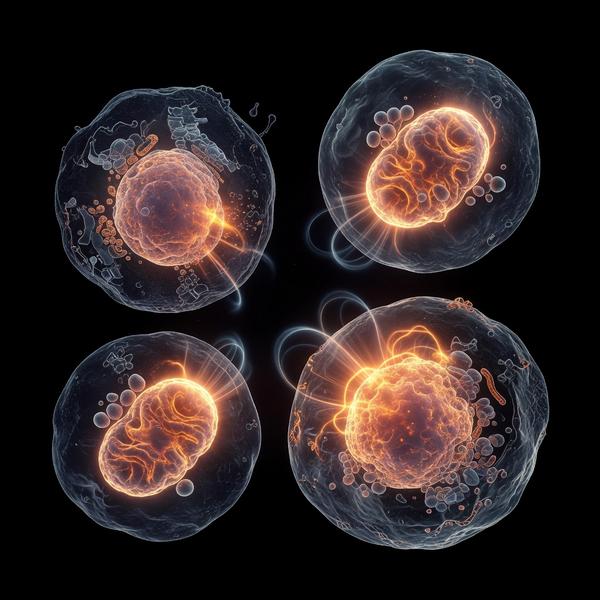
The Foundation of Redox Homeostasis. In the pursuit of metabolic optimization, we often fixate on macronutrient ratios while neglecting the precise ionic environment required for enzymatic function. At the heart of cellular respiration lies the interplay between Zinc and Copper. These two transition metals are not merely dietary requirements; they are the rheostats of mitochondrial redox potential. ### The Cytochrome c Oxidase Connection. Copper is the indispensable cofactor for Cytochrome c Oxidase (Complex IV) in the electron transport chain.
Without adequate bioavailable copper, the final step of ATP production—the reduction of oxygen to water—stalls. This bottleneck forces electrons to 'leak' from the transport chain, resulting in the formation of superoxide radicals. Simultaneously, Zinc acts as a protective chaperone and a structural component of SOD1 (Superoxide Dismutase), the enzyme responsible for neutralizing those radicals. An imbalanced ratio—often characterized by excess zinc inducing copper deficiency—leads to a catastrophic drop in metabolic efficiency: the mitochondria cannot produce energy effectively, and the cell is left defenseless against oxidative damage. ### Metabolic Consequences of Dysregulation. When the Zinc-Copper ratio shifts significantly, we observe a cascade of metabolic failures.
High zinc intake, often from poorly formulated supplementation, acts as a functional copper antagonist via the induction of metallothionein in the gut, which binds copper more tightly than zinc and prevents its absorption. This copper deficiency triggers a decrease in ATP production and impairs the mobilization of iron from storage, leading to an 'anemia of chronic disease' profile that further cripples energy production. Conversely, excessive copper relative to zinc can lead to pro-oxidant states, as unbound copper participates in Fenton-like reactions, damaging mitochondrial membranes. ### Root-Cause Considerations. Achieving balance is rarely about simple supplementation; it is about systemic bioavailability. The interaction between these minerals is mediated by ceruloplasmin, a copper-carrying protein that requires adequate nutritional status to function.
When addressing mitochondrial dysfunction, clinicians must evaluate the serum copper-to-ceruloplasmin ratio to determine true copper status, rather than relying on total serum levels. ### Optimizing the Ratio. To support mitochondrial efficiency, prioritize food-first interventions. Bioavailable copper is found in organ meats, shellfish, and cacao, while zinc is best sourced from pumpkin seeds, grass-fed beef, and oysters. Supplementation should only be considered under the guidance of targeted blood work, as the antagonism between these minerals can easily swing the pendulum toward a deficiency in the nutrient you intended to support.
This article is provided for informational and educational purposes only. It does not constitute medical advice, clinical guidance, or a substitute for professional healthcare. Information reflects cited research at time of publication. Always consult a qualified healthcare professional before acting on any health information.
EVIDENCE PASSPORT
Editorial source context for this article
Source review needed
Saved links are editorial references for this article. They may support specific claims rather than every sentence. Open and assess each source in context. This passport does not independently verify them.
Editorial context
A complete editorial reading has not been recorded for this article, and no source links are saved on its record.
Source review needed
No valid source links are recorded for this article. Supplementary research, where available, is listed separately below.
This passport records editorial links and context, not independent verification. Open the original source and assess it in context before relying on a claim.
Medical Disclaimer
The information in this article is for educational purposes only and does not constitute medical advice, diagnosis, or treatment. Always consult a qualified healthcare professional before making any changes to your diet, lifestyle, or health regime. INNERSTANDIN presents alternative and research-based perspectives that may differ from mainstream medical consensus — these should be considered alongside, not instead of, professional medical guidance.
Read Full DisclaimerContinue the thread
Keep this question moving.
Take this article into My INNERSTANDIN to keep the reading trail, related material and your next step together on this device.
Explore this in the Body Map
Explore related body structures and their educational pages in the interactive Body Map.
Dig deeper in the Library
Free, longform PDF volumes that go beyond headlines into mechanisms and references.
RABBIT HOLE
Follow the biological thread deeper