
Thermogenesis and the Metabolic Power of Brown Adipose Tissue
Updated May 2026
Uncover the science of how your body generates heat and the unique role of brown fat in metabolic health. Learn why cold exposure might be a secret weapon for improving insulin sensitivity and caloric expenditure.
Overview
For decades, the mainstream medical establishment has peddled a reductive, almost insulting, view of human adipose tissue. We have been conditioned to view "fat" as nothing more than an inert, unsightly storage locker for excess calories—a biological failure of willpower. This narrative is not only simplistic; it is a profound scientific deception. Beneath the surface of the skin lies a complex, multi-functional endocrine system, within which exists a specific type of tissue that does not store energy, but aggressively consumes it. This is Brown Adipose Tissue (BAT), and it represents the most potent metabolic furnace in the human body.
While white adipose tissue (WAT) acts as a reservoir for triglycerides, brown fat is a high-octane biological engine. Its primary purpose is thermogenesis—the production of heat. For an infant, BAT is a survival mechanism, protecting against lethal hypothermia. For the modern adult, BAT is the "holy grail" of metabolic health, capable of sequestering glucose and fatty acids from the bloodstream at rates that dwarf almost any other tissue.
However, we are currently living through an era of "thermal monotony." In the United Kingdom and across the developed world, we have insulated ourselves into a state of metabolic atrophy. By maintaining our homes, offices, and cars at a constant, comfortable 21°C, we have effectively "switched off" our brown fat. This chronic lack of thermal stress, combined with an onslaught of environmental toxins and circadian disruptions, has led to a catastrophic decline in our innate ability to regulate energy. The result is a population that is "metabolically frozen," unable to tap into the heat-generating power of their own cells, leading directly to the spiralling crises of obesity, Type 2 diabetes, and cardiovascular decay.
##
##
The Biology — How It Works
To understand the power of thermogenesis, we must first distinguish between the three primary types of fat cells found in the human body: white, brown, and the elusive "beige" adipocytes.
White Adipose Tissue (WAT) is the predominant form. Structurally, a white fat cell contains a single, massive lipid droplet that pushes the nucleus to the periphery. It is designed for long-term energy storage and provides insulation. When WAT becomes excessive, particularly in the visceral cavity surrounding organs, it becomes highly inflammatory, secreting a cocktail of pro-inflammatory cytokines such as Interleukin-6 (IL-6) and Tumour Necrosis Factor-alpha (TNF-α).
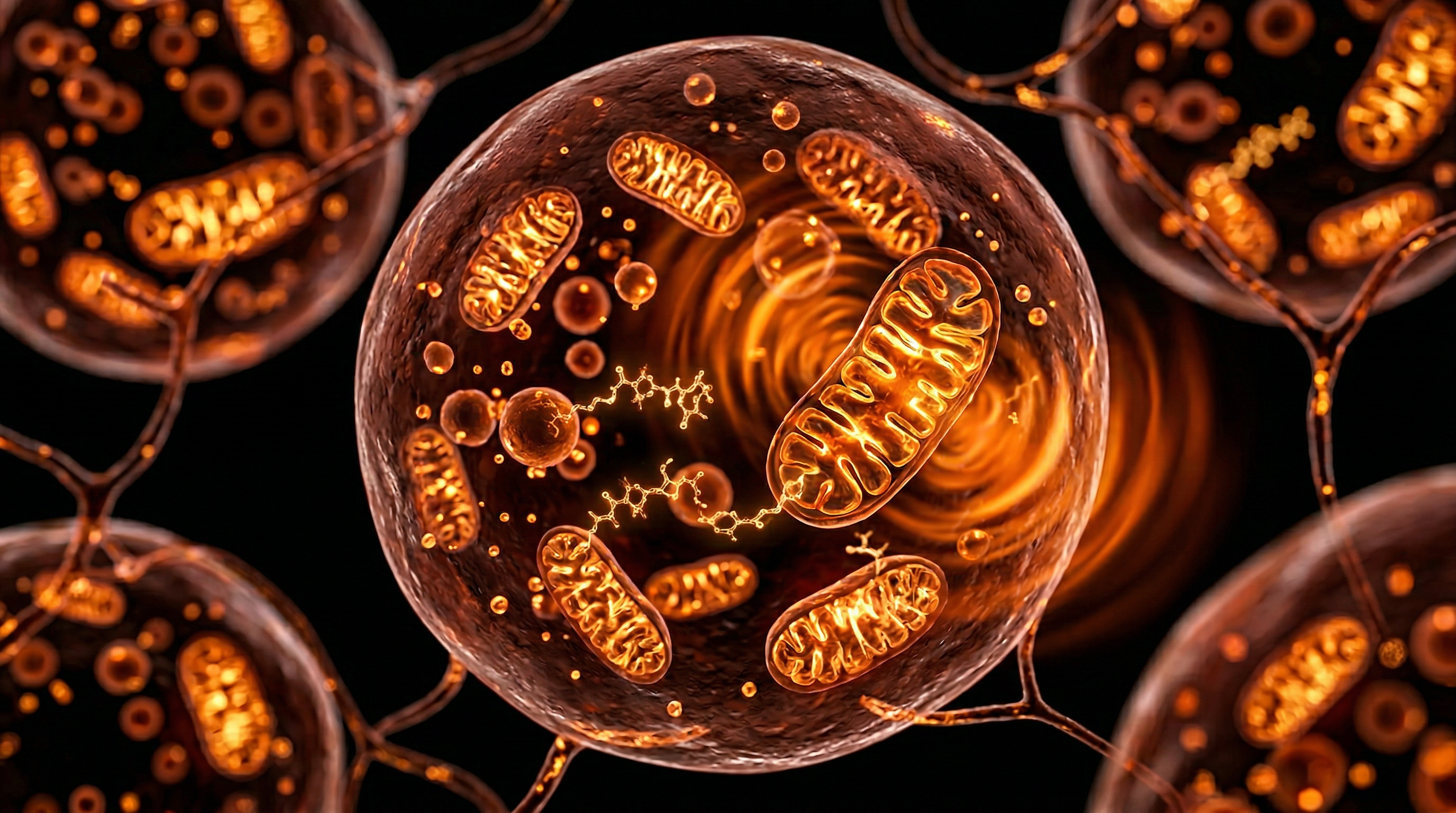
In stark contrast, Brown Adipose Tissue (BAT) is anatomically and functionally distinct. A brown adipocyte is packed with multiple, smaller lipid droplets (multilocular) and, most importantly, an extraordinary density of mitochondria. These mitochondria are unique; they contain high concentrations of iron-bearing cytochromes, which give the tissue its deep reddish-brown hue. Unlike WAT, which is found primarily in the subcutaneous and visceral layers, BAT is strategically deposited in the supraclavicular, paravertebral, and mediastinal regions—close to major blood vessels. This placement ensures that the heat generated by BAT is immediately transferred to the blood, warming the core organs with maximum efficiency.
The Recruitment of "Beige" Fat
One of the most exciting revelations in modern physiology is the phenomenon of browning or "brite" (brown-in-white) adipocytes. These are cells residing within white fat depots that possess the genetic potential to transform into brown-like cells. Under specific stimuli—primarily cold exposure and certain hormonal triggers like Irisin—these cells undergo a profound morphological change. They increase their mitochondrial biogenesis and begin expressing the specific proteins required for thermogenesis. This process, known as transdifferentiation, means that your metabolic capacity is not fixed; it is a plastic, adaptable system that can be "trained" just like a muscle.
The Role of the Sympathetic Nervous System
The activation of BAT is not a passive process. It is tightly regulated by the brain, specifically the hypothalamus. When the skin's thermoreceptors detect a drop in ambient temperature, they send rapid signals to the preoptic area of the hypothalamus. This triggers a surge in sympathetic nervous system (SNS) activity. The SNS releases noradrenaline (norepinephrine) directly onto the β3-adrenergic receptors of the brown adipocytes. This chemical "spark" initiates a cascade that wakes the dormant furnace, beginning a process of rapid lipid oxidation that produces heat instead of chemical energy (ATP).
Fact: Research indicates that as little as 50 grams of fully active brown fat can account for up to 20% of a human's basal metabolic rate, potentially burning through several kilograms of body fat per year if consistently activated.
##
##
Mechanisms at the Cellular Level
At the heart of brown fat’s power is a single, remarkable protein: Uncoupling Protein 1 (UCP1), also known as thermogenin. To understand UCP1, we must revisit the fundamental way cells produce energy.
In a standard cell, the mitochondria act as power plants. They take electrons from the food we eat and pass them along the Electron Transport Chain (ETC). This process creates a proton gradient across the inner mitochondrial membrane. Normally, these protons are forced to flow through a molecular turbine called ATP Synthase, which generates ATP (adenosine triphosphate)—the "currency" of cellular energy.
Mitochondrial Uncoupling: Short-Circuiting the System
UCP1 changes the rules of the game. It sits in the inner mitochondrial membrane and acts as a "leak" or a "short circuit." When UCP1 is activated, it allows protons to bypass ATP Synthase and flow freely back into the mitochondrial matrix. Because the energy of the proton gradient is not being captured to make ATP, the energy is dissipated entirely as heat.
This is Non-Shivering Thermogenesis (NST). While shivering uses muscle contractions to generate heat (a crude and exhausting method), BAT uses this elegant molecular "leak" to generate heat silently and efficiently at the cellular level.
The Fuel Source: Intracellular and Extracellular Lipolysis
When noradrenaline binds to the β3-adrenergic receptors, it activates Adenylate Cyclase, which increases levels of cyclic AMP (cAMP). This, in turn, activates Protein Kinase A (PKA). PKA then phosphorylates Hormone-Sensitive Lipase (HSL) and Perilipin, which begin breaking down the small lipid droplets inside the brown fat cell into free fatty acids.
These fatty acids serve a dual purpose:
- —They directly activate the UCP1 protein, switching the "leak" on.
- —They are transported into the mitochondria to be "burned" (via β-oxidation) to provide the electrons needed to maintain the proton gradient.
The "Vacuum" Effect: Glucose and Lipid Clearance
Because BAT is so metabolically demanding when active, it acts like a "metabolic vacuum" for the entire body. It doesn't just burn the fat stored within itself; it aggressively pulls glucose and triglycerides from the bloodstream.
- —Activated BAT increases the translocation of GLUT4 transporters to the cell membrane, allowing it to suck up glucose at a rate that rivals insulin-stimulated muscle tissue.
- —It also expresses high levels of Lipoprotein Lipase (LPL), which breaks down circulating VLDL and chylomicrons, rapidly clearing fats from the blood.
This mechanism is why brown fat is increasingly recognised as a primary defence against Hyperlipidaemia and Hyperglycaemia. It is not just about "weight loss"; it is about systemic metabolic purification.
##
##
Environmental Threats and Biological Disruptors
If BAT is so beneficial, why is it seemingly "missing" or inactive in the majority of the UK population? The answer lies in our modern environment, which has become hostile to thermogenic biology. We are currently facing a "perfect storm" of factors that actively suppress brown fat function.
The Obesogen Crisis
The term "obesogen" refers to foreign chemical compounds that disrupt normal development and balance of lipid metabolism. Many of these chemicals specifically target the development and activation of brown fat.
- —PFAS (Per- and polyfluoroalkyl substances): Often called "forever chemicals," these are found in non-stick cookware and water-resistant fabrics. Studies have linked higher PFAS blood levels to a lower resting metabolic rate and a decreased ability to maintain weight loss, likely through the inhibition of BAT activity.
- —Phthalates and BPA: Found in plastics and personal care products, these endocrine disruptors interfere with PPAR-gamma (Peroxisome proliferator-activated receptor gamma), a master regulator of adipocyte differentiation. They can "steer" stem cells toward becoming white fat rather than brown or beige fat.
Thermal Monotony
As previously mentioned, the lack of "thermal stress" is a primary culprit. In the UK, the Building Regulations and the general push for energy-efficient, highly insulated homes have created internal environments that rarely deviate from the 19–22°C range. This is known as the Thermoneutral Zone (TNZ)—the temperature range where the body does not need to expend energy to maintain its core temperature. By spending 99% of our lives in the TNZ, we allow our BAT to undergo whitening, a process where brown fat loses its mitochondria and starts behaving like standard, inert white fat.
Blue Light and Circadian Mismatch
Mitochondrial function is deeply tied to our circadian rhythms. The master clock in the hypothalamus (the Suprachiasmatic Nucleus) regulates the SNS output to brown fat. Exposure to artificial blue light from screens and LED bulbs after sunset suppresses Melatonin production. Melatonin is not just a "sleep hormone"; it is a potent antioxidant that has been shown to stimulate BAT activity and promote the browning of white fat. By destroying our sleep-wake cycles, we are effectively "muting" the hormonal signals that tell our brown fat to stay active.
Alarming Statistic: According to data from the Health Survey for England, nearly 28% of adults in the UK are obese and a further 36% are overweight. This correlates precisely with the rise in sedentary, indoor lifestyles and the abandonment of traditional "seasonal" living.
##
##
The Cascade: From Exposure to Disease
The suppression of brown fat is not a benign change; it sets off a devastating physiological cascade that leads directly to the chronic diseases currently bankrupting the NHS. When BAT is inactive, the body loses its most efficient "overflow" valve for excess energy.
Step 1: Metabolic Inflexibility
Without the thermogenic "drain," excess calories have nowhere to go but into white adipose depots. As WAT expands, it becomes hypoxic (oxygen-deprived) and begins to secret inflammatory markers. This leads to Metabolic Inflexibility—the body's inability to switch efficiently between burning carbohydrates and burning fat.
Step 2: The Insulin Resistance Spiral
In the absence of BAT’s glucose-clearing action, the pancreas must secrete more insulin to manage blood sugar levels. This chronic Hyperinsulinaemia eventually leads to insulin resistance in the muscles and liver. Because brown fat is a major site of non-insulin-dependent glucose disposal, its absence makes the body more reliant on insulin, accelerating the path to Type 2 Diabetes.
Step 3: Lipid Overflow and Ectopic Fat
When white fat depots reach their limit and BAT is not burning off excess lipids, fats begin to spill over into organs where they do not belong. This is ectopic fat deposition. It manifests as Non-Alcoholic Fatty Liver Disease (NAFLD), fat accumulation in the pancreas, and even "perivascular fat" surrounding the heart. This ectopic fat is highly toxic (lipotoxicity), causing organ dysfunction and increasing the risk of "sudden" cardiac events.
Step 4: The Vicious Cycle of Inflammation
Finally, the "whitened" fat depots and the inflamed organs produce a systemic state of low-grade chronic inflammation. This inflammation further inhibits UCP1 expression in any remaining brown fat cells, creating a "feedback loop of metabolic failure." The body becomes a "closed system" that can only store energy, never dissipate it, making weight loss through standard "diet and exercise" almost impossible for those with severely compromised BAT.
##
##
What the Mainstream Narrative Omits
The conventional wisdom regarding weight management and metabolic health is built on the First Law of Thermodynamics: Calories In vs. Calories Out. While mathematically true, this model is practically useless because it ignores the *biological regulation* of the "Calories Out" side of the equation.
The Pharmaceutical Bias
The mainstream medical establishment, heavily influenced by the pharmaceutical industry, prefers to view metabolic disease through the lens of "deficiency in medication." There is very little profit to be made in recommending free, accessible "thermal stress" like cold showers or lowering the thermostat. Instead, the focus is on developing expensive "blockbuster" drugs like GLP-1 agonists (e.g., Semaglutide). While these drugs are effective at suppressing appetite, they do not address the underlying "thermogenic atrophy" of the patient.
BAT as an Endocrine Organ
What the "calorie counters" omit is that brown fat is a sophisticated endocrine organ. When activated, BAT secretes signalling molecules known as Batokines. These include:
- —FGF21 (Fibroblast Growth Factor 21): Improves insulin sensitivity and reduces sugar cravings by acting directly on the brain.
- —Neuregulin 4 (NRG4): Protects the liver against the development of fatty liver disease.
- —12,13-diHOME: A signalling lipid that increases the uptake of fatty acids by skeletal muscle.
By ignoring BAT, the mainstream narrative ignores an entire branch of the human hormonal system. We are not just "burning calories"; we are communicating with our entire physiology. To "expose" the truth is to recognise that obesity is often a hormonal and thermal deficiency, not a moral failing or a simple math error.
##
##
The UK Context
The United Kingdom presents a unique and frustrating case study in the decline of thermogenic health. Historically, the British population was exposed to significant thermal variation. Traditional UK housing was notoriously difficult to heat, and "outdoor" work was the norm for centuries.
The Modern UK Environment
Today, the UK has some of the most "thermally stagnant" indoor environments in Europe. Furthermore, the UK's water infrastructure is increasingly contaminated with endocrine-disrupting chemicals. The Environment Agency has frequently reported on the presence of "persistent organic pollutants" in UK waterways, many of which are known obesogens that interfere with thyroid function—the primary hormonal driver of basal thermogenesis.
The NHS Burden
The NHS spends approximately £6.1 billion per year on overweight and obesity-related ill-health. This figure is projected to rise to £9.7 billion by 2050. Despite this, there is almost no clinical focus on "metabolic hardening" through environmental intervention. The MHRA (Medicines and Healthcare products Regulatory Agency) focuses on the safety of drugs, but there is no regulatory body focusing on the "safety" of our thermal environment or the protection of our innate thermogenic capacity.
The Energy Crisis "Silver Lining"
Ironically, the recent energy crisis in the UK, which forced many households to lower their thermostats during the winter months, may have inadvertently "rescued" some metabolic health. For those who allowed their homes to drop to 16–18°C, the cold stimulus would have been sufficient to begin the "browning" process of their adipose tissue. This highlights a profound irony: the "comfort" we have worked so hard to afford is actually killing us.
##
##
Protective Measures and Recovery Protocols
Reversing metabolic atrophy requires a deliberate and sustained effort to re-engage the thermogenic system. It is about "metabolic conditioning"—moving from a state of thermal fragility to thermal resilience.
The Protocol of Cold Exposure
Cold is the most potent activator of BAT known to science. However, it must be approached systematically.
- —The "Soberg" Principle: Named after Dr. Susanna Soberg, research suggests that a minimum of 11 minutes of deliberate cold exposure per week, spread across 2-3 sessions, is the threshold for significant BAT activation and metabolic improvement.
- —Thermal Cycling: Instead of a constant 21°C, aim for a "variable" home environment. Lowering the thermostat to 17°C for just two hours a day can induce BAT recruitment.
- —Cold Showers: Ending a warm shower with 30-60 seconds of cold water is a simple "gateway" to SNS activation. The focus should be on the upper back and neck area, where BAT is most concentrated.
Dietary and Lifestyle Activators
While cold is king, certain compounds can "prime" the system:
- —Capsaicinoids: Found in chilli peppers, these compounds activate TRPV1 receptors, which then stimulate the SNS to activate brown fat.
- —Polyphenols: Compounds like Resveratrol (grapes/berries) and Quercetin (onions/apples) have been shown in animal models to promote the browning of white fat.
- —Omega-3 Fatty Acids: High-quality fish oils (EPA/DHA) are essential for healthy mitochondrial membranes. They act via the GPR120 receptor to promote BAT thermogenesis.
- —Movement: Physical exercise triggers the release of Irisin from skeletal muscle, which travels to white fat depots and initiates the "browning" genetic programme.
Circadian and Light Hygiene
To protect the mitochondrial "clock":
- —Eliminate blue light exposure 2 hours before bed using "amber" tinted glasses or software filters.
- —Ensure total darkness during sleep to maximise Melatonin production.
- —Get 10–20 minutes of direct sunlight as soon as possible after waking to "set" the hypothalamic clock.
Chemical Detoxification
- —Filtration: Use high-quality water filters (activated carbon and reverse osmosis) to reduce the intake of PFAS and other endocrine disruptors.
- —Plastic Reduction: Avoid heating food in plastic containers and switch to glass or stainless steel to minimise BPA and phthalate exposure.
##
##
Summary: Key Takeaways
The metabolic power of brown adipose tissue is not a "theory"; it is an ancient biological reality that has been suppressed by the comforts and toxins of the 21st century.
- —Brown fat is a metabolic engine, not a storage depot. It contains a high density of mitochondria and uses UCP1 to burn fat and sugar specifically for heat.
- —Non-shivering thermogenesis is the body’s most efficient way to maintain metabolic health and clear excess energy from the bloodstream.
- —Environmental "Thermal Monotony" is a primary driver of the UK’s obesity epidemic. By avoiding the cold, we have allowed our brown fat to "whiten" and become inactive.
- —Environmental toxins (obesogens) like PFAS and phthalates are actively sabotaging our mitochondria and "steering" our cells toward becoming inflammatory white fat.
- —The mainstream narrative is incomplete. It focuses on "calories" but ignores the hormonal and thermogenic "drain" provided by BAT.
- —Recovery is possible. Through deliberate cold exposure, circadian alignment, and the removal of disruptors, anyone can "re-brown" their fat and reclaim their metabolic power.
The path to health is not found in the pharmaceutical aisle or in a climate-controlled "comfort trap." It is found in the embrace of our biological heritage—an existence that includes the occasional chill, the movement of the body, and a deep respect for the cellular furnaces that keep us alive. It is time to stop fearing the cold and start using it as the potent metabolic weapon it truly is.
This article is provided for informational and educational purposes only. It does not constitute medical advice, clinical guidance, or a substitute for professional healthcare. Information reflects cited research at time of publication. Always consult a qualified healthcare professional before acting on any health information.
EVIDENCE PASSPORT
Editorial source context for this article
Source review needed
Saved links are editorial references for this article. They may support specific claims rather than every sentence. Open and assess each source in context. This passport does not independently verify them.
Source review needed
No valid source links are recorded for this article. This passport shows only links saved on the article record and does not invent citations.
This passport records editorial links, not independent verification. Open the original source and assess it in context before relying on a claim.
Medical Disclaimer
The information in this article is for educational purposes only and does not constitute medical advice, diagnosis, or treatment. Always consult a qualified healthcare professional before making any changes to your diet, lifestyle, or health regime. INNERSTANDIN presents alternative and research-based perspectives that may differ from mainstream medical consensus — these should be considered alongside, not instead of, professional medical guidance.
Read Full DisclaimerReady to learn more?
Continue your journey through our classified biological research.
THE ARSENAL
Based on Physiology — products curated by our research team for educational relevance and biological support.
Methylene Blue – Advanced Cellular Chemistry
Magnesium Blend – The Most Important Mineral
Magnesium L-Threonate
INNERSTANDING may earn a commission on purchases made through these links. All products are selected based on rigorous educational relevance to our biological research.
Explore this in the Body Map
See where this hits your biology. Interactive anatomy, threats, and protective protocols.
Dig deeper in the Library
Free, longform PDF volumes that go beyond headlines into mechanisms and references.