
Thymosin Beta-4: The Bio-Architecture of Rapid Wound Repair
Updated May 2026
TB-4 promotes cell migration and angiogenesis, speeding up the repair of tendons, ligaments, and skin. Its use is transforming the recovery protocols for British athletes and chronic wound patients.
Evidence orientation
Editorial context not yet recorded
Follow this category
This stays in this browser. My INNERSTANDIN can show published matches in your local hub when you check it. It does not send email, push, or alert notifications.
Local learning review
A private browser aid for revisiting ideas. It is not an alert or a health recommendation.
Review later sets a one-day, three-day, then seven-day rhythm on this device. Choose it only when you want to revisit this article.
Overview
In the shadowy corridors of modern molecular biology, few molecules hold as much promise—and generate as much hushed controversy—as Thymosin Beta-4 (Tβ4). A naturally occurring, 43-amino acid peptide, Tβ4 is not merely a "supplement" or a "growth factor" in the traditional sense. It is the master architect of cellular movement, a primary constituent of the body’s endogenous repair system, and a critical regulator of the actin cytoskeleton.
Found in high concentrations in blood platelets, macrophages, and nearly every cell type in the human body, Thymosin Beta-4 acts as the first responder to physical trauma. When a tendon snaps on a pitch in Manchester or a chronic ulcer refuses to close in a geriatric ward in Birmingham, the presence or absence of this peptide determines whether the body enters a state of regenerative repair or a spiral of chronic inflammation and fibrotic scarring.
For the researchers at INNERSTANDING, the story of Tβ4 is more than a medical breakthrough; it is a case study in how the bio-architecture of the human body is being systematically undermined by environmental stressors, and how the mainstream medical establishment has, until very recently, overlooked the most potent healing agent already present within our DNA. As we transition into an era where "biohacking" meets elite sports medicine, Tβ4 stands at the frontier, offering a blueprint for rapid recovery that defies the traditional "rest and ice" protocols of the 20th century.
Callout Fact: Thymosin Beta-4 is the most abundant actin-sequestering molecule in human cells, maintaining the fluidity of the cellular structure required for immediate migration to injury sites.
The Biology — How It Works
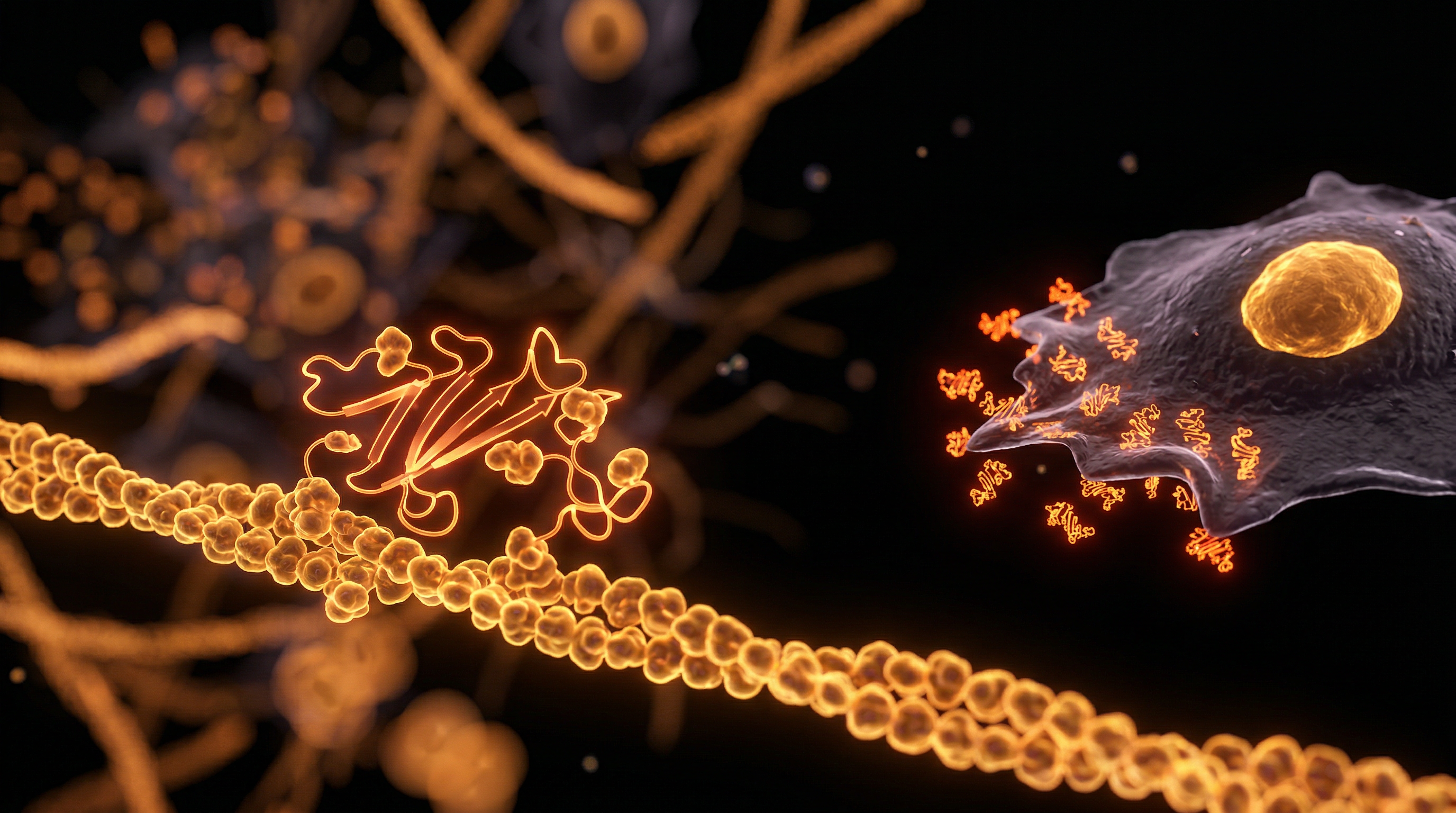
To understand Thymosin Beta-4, one must understand the cytoskeleton. Every cell in the human body relies on a structural framework made of protein filaments. The most critical of these is actin.
The Actin Dynamics
Actin exists in two forms: G-actin (globular, monomeric) and F-actin (filamentous, polymeric). For a cell to move—whether it is a skin cell closing a wound or a white blood cell chasing a pathogen—it must rapidly assemble and disassemble these actin filaments. Tβ4 is the body’s primary G-actin sequestering peptide. By binding to G-actin, it prevents it from polymerising into F-actin prematurely, maintaining a massive "reserve pool" of building blocks.
When a tissue is damaged, Tβ4 releases these monomers exactly where they are needed, allowing for the rapid re-shaping of cells. This is the biological equivalent of having a pre-fabricated building kit ready to go at a moment's notice, rather than having to manufacture bricks on-site.
Angiogenesis and Blood Flow
Beyond structural movement, Tβ4 is a potent stimulator of angiogenesis—the formation of new blood vessels from pre-existing ones. It achieves this by promoting the migration of endothelial cells and increasing the production of Vascular Endothelial Growth Factor (VEGF).
In the context of the UK’s aging population and the prevalence of cardiovascular issues, this mechanism is transformative. Tβ4 doesn't just "fix" a wound; it builds the infrastructure (the blood supply) required to sustain that repair long-term. This is why it has shown such extraordinary results in the treatment of ischaemic heart disease and peripheral arterial complications.
Anti-Inflammatory Modulation
Standard anti-inflammatories, such as NSAIDs (Ibuprofen, etc.), work by bluntly shutting down the inflammatory response, which can actually hinder long-term healing. Tβ4, however, is an immunomodulator. It reduces the levels of pro-inflammatory cytokines like IL-1β and TNF-α while simultaneously promoting the "clean-up" phase of inflammation via macrophage polarisation. It transitions the body from the "destruction" phase of injury to the "reconstruction" phase with surgical precision.
Mechanisms at the Cellular Level
At the molecular level, Tβ4 operates through a series of complex signalling cascades that interface directly with our genetic expression.
The LRP1 Pathway
Recent research suggests that Tβ4 interacts with the Low-Density Lipoprotein Receptor-Related Protein 1 (LRP1). This interaction triggers the PI3K/Akt pathway, a crucial survival mechanism that prevents apoptosis (programmed cell death). In the wake of a traumatic injury, such as a ligament tear, the surrounding cells often die due to oxidative stress and lack of oxygen. Tβ4 "rescues" these cells, ensuring that the biological workforce remains intact to perform repairs.
Upregulation of Matrix Metalloproteinases (MMPs)
For a cell to migrate to an injury site, it must navigate the Extracellular Matrix (ECM)—the dense web of proteins surrounding cells. Tβ4 temporarily upregulates specific MMPs, which act like biological "scissors," cutting a path through the ECM so that repair cells can reach the ground zero of the injury. Once the cells arrive, Tβ4 then shifts its influence to promote the deposition of new collagen and elastin, ensuring the new tissue is both strong and flexible.
Promoting Stem Cell Differentiation
One of the most profound "hidden" mechanisms of Tβ4 is its ability to activate adult stem cells. In the heart, for example, Tβ4 has been shown to activate epicardial progenitor cells, which can then differentiate into new cardiomyocytes (heart muscle cells). This challenges the long-held medical dogma that heart tissue cannot regenerate after a myocardial infarction.
Statistic: Studies in porcine models (which closely mirror human physiology) showed that Tβ4 administration following a heart attack resulted in a 25-30% reduction in scar tissue formation and a significant increase in functional cardiac output.
Environmental Threats and Biological Disruptors
If Thymosin Beta-4 is so integral to our survival, why are we seeing a surge in chronic, non-healing injuries and "brittle" physiology in the modern era? The answer lies in the systemic degradation of our internal peptide production.
The Decline of the Thymus
The Thymus gland, located behind the breastbone, is the "factory" for the Thymosin family of peptides. In the natural state, the thymus is highly active during youth but undergoes thymic involution (shrinking) as we age. However, modern environmental factors have accelerated this process to an unnatural degree.
Endocrine Disruptors and "Chemical Castration" of Repair
We are currently submerged in a sea of Xenoestrogens and PFAS ("forever chemicals"). These substances, found in UK tap water, non-stick cookware, and synthetic fragrances, interfere with the hormonal signals that maintain thymic health. When the thymus becomes clogged with fatty tissue due to metabolic dysfunction, Tβ4 levels plummet. The result is "inflammaging"—a state where the body is perpetually trying to heal but lacks the peptide "blueprints" to finish the job.
EMF and Cellular Resonate Interference
While mainstream science remains hesitant, independent researchers have noted that Electromagnetic Fields (EMF) from 5G infrastructure and high-density WiFi environments may disrupt the delicate voltage-gated calcium channels (VGCCs) in our cells. Since actin polymerisation—the process Tβ4 regulates—is highly dependent on ion signalling, we are seeing a disconnect between the body’s "intent" to heal and its physical ability to execute the repair. The "bio-architecture" is being jammed by external frequencies.
The Cascade: From Exposure to Disease
The deficiency of Thymosin Beta-4 does not result in a single disease, but rather a "cascade of failure" that mirrors the most common ailments of the 21st century.
1. The Fibrosis Loop
Without sufficient Tβ4 to modulate the repair process, the body defaults to fibrosis. Fibrosis is the chaotic deposition of "junk" collagen (scar tissue). In the lungs, this leads to pulmonary fibrosis; in the liver, cirrhosis; and in the muscles of a weekend warrior, chronic "tightness" and recurring strains. This is a direct consequence of the body losing its "sculpting" tool (Tβ4).
2. Chronic Wound Stagnation
In the UK, the NHS spends over £8 billion annually on the management of chronic wounds and ulcers. Many of these patients suffer from a total absence of Tβ4 at the wound site. Without the peptide to signal endothelial migration, the wound remains "ischaemic"—starved of blood and oxygen—becoming a breeding ground for antibiotic-resistant bacteria.
3. Neurodegenerative Implications
Newer research is linking Tβ4 deficiency to neuroinflammation. The brain contains its own population of immune cells called microglia. Tβ4 appears to act as a neuroprotective agent, preventing the over-activation of microglia that leads to the "brain fog" and cognitive decline associated with long-term toxic exposure and aging.
- Stage 1: Environmental toxin exposure/Stress (Thymic suppression).
- Stage 2: Depletion of systemic Tβ4 levels.
- Stage 3: Failure of actin-sequestering and cell migration.
- Stage 4: Onset of chronic inflammation and pathological scarring.
What the Mainstream Narrative Omits
The suppression of peptide science in the West is an uncomfortable truth that many in the medical-industrial complex prefer to ignore. Despite hundreds of peer-reviewed studies proving the efficacy of Tβ4, it remains largely categorized as "Research Use Only" in many jurisdictions.
The "Symptom Management" Business Model
The pharmaceutical industry thrives on chronic maintenance. A patient with a non-healing tendon injury is a candidate for years of painkillers, steroid injections, and eventually, expensive surgeries. A peptide like Tβ4, which targets the root cause of the cellular failure and promotes actual regeneration, represents a threat to this model. Why sell a "cure" or a rapid repair protocol when you can sell a lifetime of symptom suppression?
The Patent Problem
Natural peptides like Tβ4 are difficult to patent in their native form. Without the promise of "Evergreening" patents and the massive profit margins of synthetic small-molecule drugs, the incentive for Big Pharma to fund Phase III clinical trials is non-existent. Consequently, the public is told these substances are "unproven" or "experimental," despite the fact that they are bio-identical to what our own bodies produce.
The Mislabeling of "Doping"
In the world of professional sports, Tβ4 has often been unfairly lumped in with anabolic steroids or EPO. This is a fundamental misunderstanding of biology. Tβ4 does not artificially enhance performance beyond human limits; it restores the body's natural capacity for repair which has been hampered by the extreme stress of modern competition and environmental toxicity. By banning or restricting these regenerative signals, we are essentially forcing athletes to rely on destructive cortisone shots that degrade their joints over time.
Callout Fact: Unlike synthetic drugs, Thymosin Beta-4 has an incredibly high safety profile. Because it is an endogenous peptide, the body possesses the metabolic pathways to break it down naturally without liver or kidney toxicity.
The UK Context
The United Kingdom occupies a strange position in the Tβ4 landscape. On one hand, the UK is a global hub for life sciences and regenerative medicine. On the other, the MHRA (Medicines and Healthcare products Regulatory Agency) maintains a rigid stance that keeps these peptides out of the hands of the general public.
The "Premier League" Secret
It is an open secret within the physiotherapist circles of the Premier League and Premiership Rugby that Tβ4 (often used in conjunction with BPC-157) is the primary reason why elite athletes return from "season-ending" ligament tears in a matter of weeks rather than months. While the average person in London is told to wait 18 weeks for an NHS scan and then given paracetamol, the elite are using bio-architectural peptides to rebuild their bodies in real-time.
The Rise of the "Private Bio-Clinic"
In response to the stagnation of the NHS, a "grey market" and a network of high-end private clinics in Harley Street and Manchester have emerged. These clinics offer "Regenerative Wellness" packages that include Tβ4 infusions. This has created a "health divide" in the UK: a two-tier system where the wealthy can access the cutting edge of peptide science to maintain their biological integrity, while the rest of the population is left with the decaying "Standard of Care."
The Regulatory Hurdles
The UK’s Brexit transition has provided an opportunity for the MHRA to forge its own path in peptide regulation, yet they remain largely in lockstep with the conservative European Medicines Agency (EMA). There is a growing movement among UK-based scientists to reclassify peptides like Tβ4 as "Biomimetic Repair Signals" rather than "drugs," which would allow for more widespread clinical use in wound care and orthopaedics.
Protective Measures and Recovery Protocols
For those seeking to reclaim their bio-architecture, a multi-faceted approach is required. It is not enough to simply inject a peptide; one must also create the internal environment where that peptide can function.
Exogenous Tβ4 Protocols
In a research or clinical setting, Tβ4 is typically administered via subcutaneous injection.
- The "Loading" Phase: Often involves 5-10mg per week for the first 2-4 weeks to saturate the tissues.
- The "Maintenance" Phase: 2-5mg per week until the injury is resolved.
- The Synergy: Tβ4 is almost always more effective when paired with BPC-157. While Tβ4 handles cell migration and angiogenesis, BPC-157 (Body Protection Compound) focuses on the upregulation of growth factor receptors. Together, they form a "bi-phasic" repair protocol.
Supporting the Thymus Naturally
To boost endogenous Tβ4 production, one must address the health of the thymus gland:
- Zinc and Selenium: These trace minerals are the "fuel" for thymic hormone production. Most UK soils are depleted of selenium, making supplementation essential.
- Vitamin D3/K2: Essential for modulating the immune response that Tβ4 directs.
- Avoidance of Polyunsaturated Fatty Acids (PUFAs): Excess linoleic acid (from seed oils) can lead to the "yellow fat" disease (steatosis) of the thymus gland, physically blocking its endocrine function.
Lifestyle Architectures
- Red Light Therapy (Photobiomodulation): 660nm and 850nm wavelengths have been shown to stimulate mitochondrial ATP production, providing the energy cells need to execute the Tβ4-directed repair.
- Cold Exposure: Brief, intense cold (ice baths) can stimulate the release of "cold-shock proteins" that work in tandem with Tβ4 to reduce systemic inflammation.
- Grounding (Earthing): By connecting to the Earth’s electron flow, one can reduce the "static" that interferes with the cellular actin dynamics mentioned earlier.
The "Innerstanding" Diet
Focus on bio-available proteins and connective tissues. Consuming bone broth and collagen provides the amino acid precursors (proline, glycine) that Tβ4 uses to rebuild the Extracellular Matrix. Without the raw materials, the "architect" (Tβ4) cannot build the house.
Summary: Key Takeaways
The exploration of Thymosin Beta-4 reveals a fundamental truth about human health: we are not "destined" for slow decay. Our bodies possess an intricate, high-speed repair system that is currently being suppressed by both environmental toxins and a medical narrative that prioritises profit over profound healing.
- Master Regulator: Tβ4 is the primary actin-sequestering molecule, essential for all cellular movement and tissue regeneration.
- Angiogenic Power: It builds the blood supply necessary for long-term recovery, making it vital for heart and limb health.
- The Modern Deficit: Environmental pollutants and "thymic involution" have left the modern population Tβ4-deficient, leading to a rise in chronic, non-healing injuries and fibrosis.
- The Mainstream Omission: Peptide science is sidelined because it offers a "curative" rather than "maintenance" model of health.
- UK Dichotomy: While elite British athletes use these protocols for rapid recovery, the general public is largely kept in the dark by rigid regulatory bodies.
- Holistic Recovery: True regeneration requires a combination of exogenous peptide support, thymic-friendly nutrition, and the mitigation of environmental stressors like EMF and xenoestrogens.
As we move forward, the "Bio-Architecture of Rapid Wound Repair" will no longer be the exclusive domain of the elite. Through the dissemination of this knowledge, we can begin to reclaim our biological sovereignty and rebuild our bodies with the precision and speed that nature intended. The blueprints are already inside us; we simply need to provide the signals.
Author: Senior Biological Researcher, INNERSTANDING. Date: May 2024 Subject: Thymosin Beta-4 (Tβ4) and the Future of Regenerative Medicine.
This article is provided for informational and educational purposes only. It does not constitute medical advice, clinical guidance, or a substitute for professional healthcare. Information reflects cited research at time of publication. Always consult a qualified healthcare professional before acting on any health information.
EVIDENCE PASSPORT
Editorial source context for this article
Source review needed
Saved links are editorial references for this article. They may support specific claims rather than every sentence. Open and assess each source in context. This passport does not independently verify them.
Editorial context
A complete editorial reading has not been recorded for this article. Source links remain available for you to open and assess directly.
Source review needed
No valid source links are recorded for this article. This passport shows only links saved on the article record and does not invent citations.
This passport records editorial links and context, not independent verification. Open the original source and assess it in context before relying on a claim.
Medical Disclaimer
The information in this article is for educational purposes only and does not constitute medical advice, diagnosis, or treatment. Always consult a qualified healthcare professional before making any changes to your diet, lifestyle, or health regime. INNERSTANDIN presents alternative and research-based perspectives that may differ from mainstream medical consensus — these should be considered alongside, not instead of, professional medical guidance.
Read Full DisclaimerContinue the thread
Keep this question moving.
Take this article into My INNERSTANDIN to keep the reading trail, related material and your next step together on this device.
Dig deeper in the Library
Free, longform PDF volumes that go beyond headlines into mechanisms and references.